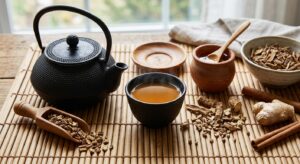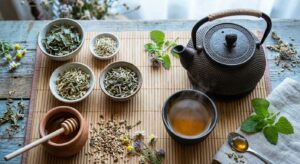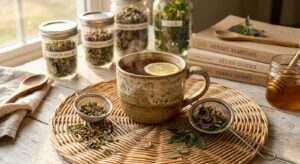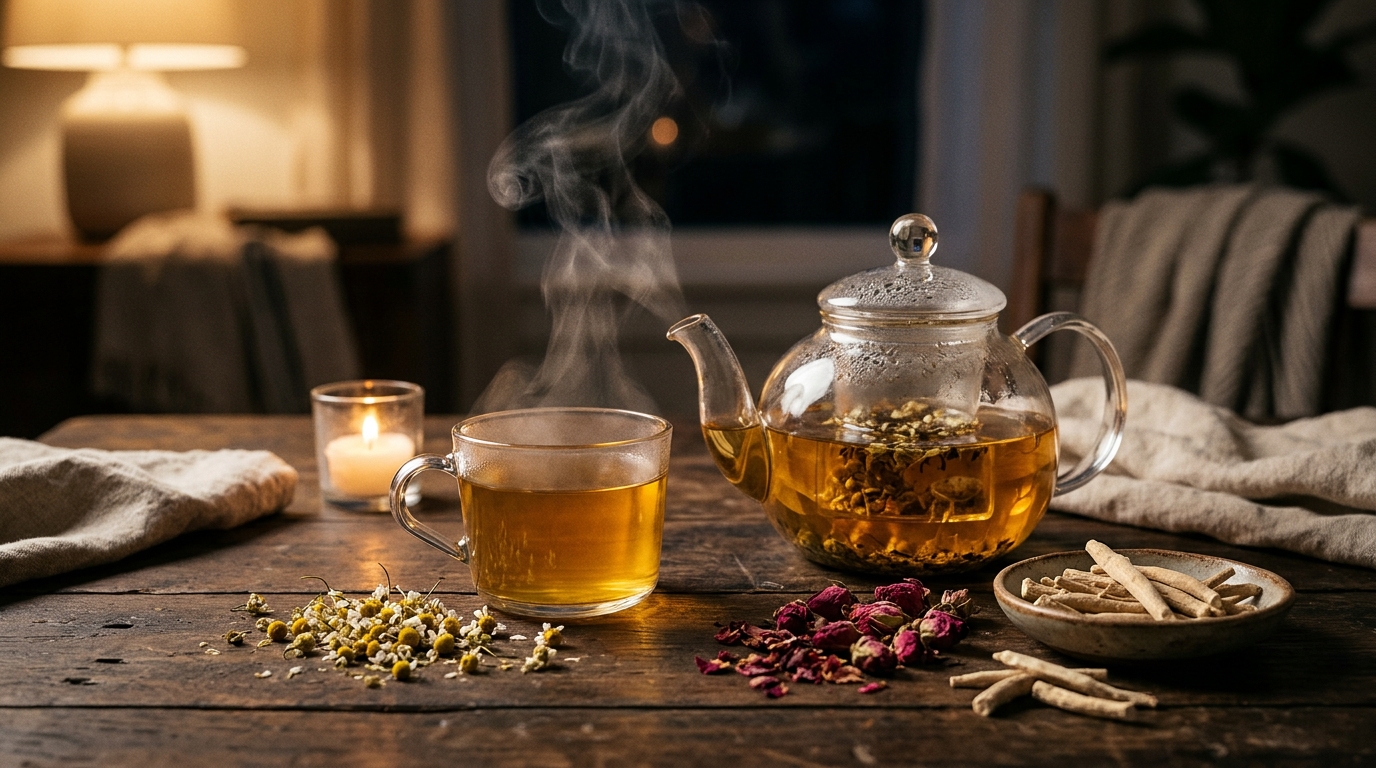
Few herbs have a longer relationship with bedtime than chamomile. Ancient Egyptians dedicated it to their sun god and used it as a remedy for fevers, while Greek and Roman physicians prescribed it for digestive upset and restlessness. Today, a cup of chamomile before bed is one of the most recognizable rituals in the world of herbal tea, prized for its gentle apple-like sweetness and its quieting effect on a busy mind.
Ashwagandha (Withania somnifera) comes from a very different tradition. For more than three thousand years, Ayurvedic practitioners in India have used the root as a rasayana, a rejuvenating tonic. Its Sanskrit name is often translated as ‘smell of the horse,’ a nod both to its earthy aroma and to the strength it was said to confer. Classified as an adaptogen, it is traditionally used to help the body cope with stress and to support sleep, which is why it is also known by the nickname ‘Indian winter cherry’ and sometimes ‘sleep-inducing’ withania (somnifera means ‘sleep-bringing’ in Latin).
Rose petals complete the trio. Cultivated for thousands of years across Persia, Greece, and China, rose has long been used in both perfumery and traditional medicine as a heart-softening, mood-lifting herb. In tea, it adds a delicate floral perfume and a hint of tartness that rounds off the earthiness of ashwagandha. Together, the three herbs create a layered cup: floral and honeyed from the chamomile, romantic and soft from the rose, and deeply grounding from the root beneath.
2
cups
Ingredients
- 2 tspdried chamomile flowers
- 1 tspdried ashwagandha root, cut and sifted
- 1 tspdried rose petals, culinary grade
- 480 mlfiltered water
- —raw honey to taste (optional)
- —a splash of warm oat or almond milk (optional)
How to Brew
Click on an item below to shop for the recommended items for this recipe on Amazon.
As an Amazon Associate, we earn from qualifying purchases.
- Bring fresh filtered water to a boil, then let it rest for 30 to 60 seconds so it falls to roughly 90 to 95°C (194 to 203°F). Water that is too hot can make chamomile taste harsh and grassy.
- Measure the chamomile, ashwagandha root, and rose petals into a teapot or a large mug fitted with a mesh infuser. Gently crush the ashwagandha pieces between your fingers first to help release their flavor.
- Pour the hot water over the herbs, cover the vessel with a lid or saucer to hold in the volatile aromatic oils, and set a timer for 7 to 10 minutes.
- Strain the tea into two cups, pressing lightly on the herbs to extract the last of the liquid.
- Stir in raw honey or a splash of warm plant milk if desired, then sip slowly about 30 to 60 minutes before bed.
- Combine the chamomile, ashwagandha root, and rose petals in a clean glass jar, using the same quantities as the hot brew but doubling the herbs if you prefer a stronger flavor.
- Pour 480 ml of cold filtered water over the herbs, stir gently with a spoon to wet everything, and seal the jar with its lid.
- Refrigerate for 8 to 12 hours, or overnight. Avoid steeping longer than 12 hours, as the root can begin to taste muddy.
- Strain through a fine mesh sieve into a clean pitcher or glass, discarding the spent herbs.
- Serve over ice with a thin slice of lemon or a drizzle of honey. Drink within 48 hours for best flavor and freshness.
- Add the ashwagandha root and 480 ml of cold filtered water to a small saucepan. Bring to a gentle boil, then reduce the heat to low.
- Simmer the root uncovered for about 15 minutes, until the liquid has reduced slightly and taken on a pale tan color and earthy aroma.
- Remove the pan from the heat and immediately add the chamomile flowers and rose petals. Cover with a lid and let the delicate flowers steep in the hot liquid for 5 minutes.
- Strain through a fine mesh sieve into a mug, pressing gently on the herbs.
- For a traditional touch, stir in a splash of warm milk or oat milk and a small spoonful of honey or maple syrup. The fat in milk is said in Ayurveda to help carry the root’s properties.
Health Benefits
Several randomized controlled trials have found that standardized ashwagandha root extract lowered serum cortisol and scores on stress and anxiety scales compared with placebo. Chamomile has also shown benefit for generalized anxiety in clinical research.
Apigenin in chamomile and the triethylene glycol compound found in ashwagandha leaf have both been linked to improved sleep onset and quality in small human studies, making this blend a natural fit for a pre-bed ritual.
Chamomile has a long history as a carminative, and compounds like bisabolol help relax intestinal muscle, easing the bloating and tension that often accompany stress.
The aroma of rose petals has been shown in small aromatherapy studies to reduce feelings of anxiety, and the sensory ritual of sipping a fragrant warm drink is itself a proven way to cue the body to relax.
Flavonoids from chamomile and rose, along with ashwagandha’s phenolic compounds, help counter oxidative stress, which is often elevated during periods of chronic tension.
🧪 Key Bioactive Compounds
The Science Behind Chamomile
The three herbs in this blend work on the nervous system through quite different routes, which is part of why they complement one another. Chamomile’s calming reputation rests largely on apigenin, a flavonoid that has been shown to bind to benzodiazepine sites on GABA-A receptors. Unlike pharmaceutical sedatives, this binding is weak and gentle, producing a soft sense of relaxation rather than drowsiness or dependence. Chamomile’s essential oil, rich in alpha-bisabolol and chamazulene, adds anti-inflammatory and antispasmodic effects that relax the gut.
Ashwagandha acts upstream, on the body’s stress-response machinery. Its withanolides appear to modulate the hypothalamic-pituitary-adrenal (HPA) axis, the hormonal pathway that governs cortisol release. In randomized, placebo-controlled trials lasting around eight weeks, participants taking standardized root extracts showed meaningful reductions in cortisol and in self-reported stress and anxiety. Most of these studies used concentrated extracts, so a tea is a milder, gentler version of the effect, best viewed as a supportive daily ritual rather than a clinical dose.
Rose petals contribute fewer pharmacologically studied compounds but add genuine value. Their volatile terpenes, including geraniol, citronellol, and phenylethyl alcohol, are well documented in aromatherapy research, where inhaling rose scent has been associated with lower heart rate, reduced anxiety, and improved mood. Because tea is as much an aromatic experience as a drink, the fragrance of rose rising in the steam contributes meaningfully to the wind-down effect. Combined with the warmth of the cup and the pause it creates in the evening, the blend supports relaxation on chemical, sensory, and behavioral levels at once.
Brewing Tips
- Choose ashwagandha root that is cut and sifted rather than fine powder. Powder clouds the tea and can leave a gritty texture, while small root pieces strain cleanly.
- Buy culinary-grade rose petals intended for consumption, and avoid florist roses, which are often treated with pesticides.
- Start with a smaller amount of ashwagandha, such as half a teaspoon, if you are new to the herb, and increase gradually to see how your body responds.
- Make the tea part of a consistent evening routine. Drinking it at the same time each night, away from screens, strengthens the relaxation cue.
- Prepare a dry jar of the blend in advance by mixing two parts chamomile to one part ashwagandha and one part rose, then scoop about four teaspoons per two servings.