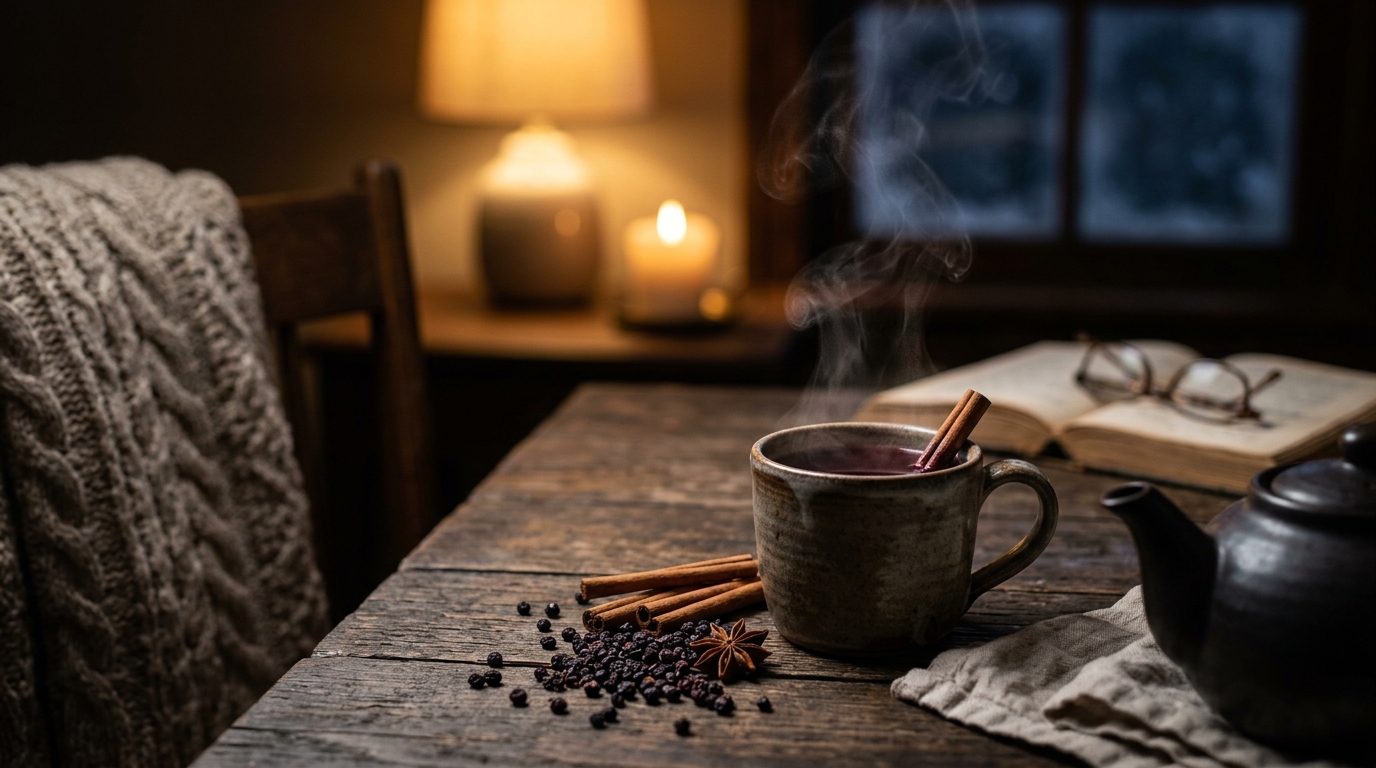
Elderberry (Sambucus nigra) has been gathered and brewed for thousands of years. Hippocrates reportedly called the elder tree his ‘medicine chest,’ and folk herbalists across Europe turned its dark berries into syrups, wines, and warm infusions to carry families through the coldest months. In Britain and Scandinavia, a steaming mug of elderberry was a classic remedy when the first sniffle of winter arrived, often sweetened with honey and spiced with whatever warming bark or root was in the pantry.
Cinnamon is the natural partner for that tradition. The inner bark of the Cinnamomum tree has been prized since ancient Egypt, valued as both a flavoring and a warming remedy. In traditional systems from Ayurveda to Traditional Chinese Medicine, cinnamon is used to ease chills, support digestion, and bring comfort to the body when the weather turns raw. Together, tart-sweet elderberry and aromatic cinnamon create a cup that is as cozy as it is purposeful.
This evening blend is caffeine-free, which makes it an ideal nightcap. The deep purple color, the gentle berry tartness, and the spiced aroma make it a ritual worth slowing down for, whether you are fending off a cold or simply want a soothing end to a long winter day.
2
cups
Ingredients
- 2 tbspdried elderberries
- 1 stickCeylon cinnamon (about 3 inches)
- 480 mlwater
- 2 slicesfresh ginger (optional)
- —raw honey or maple syrup to taste (optional)
- —a squeeze of fresh lemon (optional)
How to Brew
Click on an item below to shop for the recommended items for this recipe on Amazon.
As an Amazon Associate, we earn from qualifying purchases.
- Add the dried elderberries, cinnamon stick, and water to a small saucepan. Add ginger slices now if you are using them.
- Bring the mixture to a gentle boil over medium-high heat, then immediately reduce to a low simmer.
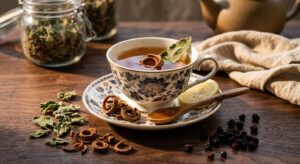
- Cover the pan and simmer for 10 to 15 minutes. The liquid will turn a deep, inky purple and the aroma of berries and spice will fill the kitchen.
- Remove the pan from the heat and let it steep, covered, for 5 more minutes so the cinnamon can release its sweetness.
- Strain through a fine mesh sieve into two mugs, gently pressing the berries with the back of a spoon to release their juices.
- Stir in honey or maple syrup while the tea is still warm, add a squeeze of lemon if you like, and sip slowly.
- Place the dried elderberries and a cinnamon stick in a saucepan with 120 ml of water. Simmer for 10 minutes to make the berries safe to consume and to extract their deep color.
- Pour the hot concentrate, berries and all, into a clean glass jar. Add 360 ml of cold filtered water and stir well.
- Let the jar cool to room temperature, then seal and refrigerate for 10 to 12 hours or overnight.
- Strain through a fine mesh sieve or cheesecloth, pressing the berries lightly. Discard the solids and keep the cinnamon stick if you want a stronger spice note.
- Serve chilled over ice with a drizzle of honey. The result is rounder, less tannic, and more jammy than the hot version.
- Combine 4 tablespoons of dried elderberries, 2 cinnamon sticks, 2 slices of ginger, and 480 ml of water in a saucepan.
- Bring to a boil, then reduce to a low simmer with the lid slightly ajar. Simmer for 30 to 40 minutes, stirring occasionally, until the liquid has reduced by about half and looks thick and dark.
- Mash the berries gently against the side of the pan with a spoon to release their juices, then remove from heat and let it cool for 10 minutes.
- Strain through a fine mesh sieve, pressing well. Stir in 2 to 3 tablespoons of honey once the liquid has cooled slightly, so the honey’s delicate properties are not overheated.
- Transfer to a clean glass jar and refrigerate for up to 7 days.
- To serve, stir 2 to 3 tablespoons of concentrate into a mug of hot water, or into sparkling water over ice for a refreshing alternative.
Health Benefits
Elderberry’s anthocyanins and flavonoids have been studied for their ability to support the immune response, and some clinical trials suggest elderberry extract may shorten the duration of cold and flu symptoms.
Elderberries rank among the highest antioxidant fruits, thanks to their dense anthocyanin content, which helps protect cells from oxidative stress.
Cinnamon’s warming nature and the heat of a freshly brewed cup help promote a sense of comfort and circulation, traditionally used to ease the feeling of being cold and run-down.
Cinnamon has been studied for its ability to improve insulin sensitivity, making this naturally sweet-tasting tea a gentle option when you want flavor without much added sugar.
Cinnamon and optional ginger are traditionally used to calm the stomach and ease bloating, which makes this a comfortable evening drink.
🧪 Key Bioactive Compounds
The Science Behind Elderberry
The standout feature of elderberry is its extraordinary anthocyanin content. These water-soluble pigments, especially cyanidin-3-glucoside and cyanidin-3-sambubioside, give the berries their near-black color and are responsible for much of their antioxidant capacity. Laboratory studies suggest elderberry compounds may interfere with the ability of certain viruses to attach to and enter host cells, and small clinical trials have reported shorter symptom duration in people with influenza-like illness who took standardized elderberry extract. While the research is promising, most trials are small, so elderberry is best viewed as a supportive aid rather than a cure.
Cinnamon contributes a different set of actions. Cinnamaldehyde, the dominant volatile compound in the bark, shows antimicrobial activity in laboratory settings and gives cinnamon its characteristic warming sensation. Cinnamon polyphenols have also been studied for their effect on glucose metabolism, with several trials showing modest improvements in fasting blood sugar. Ceylon cinnamon (Cinnamomum verum) is generally preferred for daily tea because it contains far less coumarin than cassia varieties.
Simmering rather than steeping is important for this blend. Heat deactivates the potentially irritating compounds found in raw elderberries while extracting the water-soluble anthocyanins and the aromatic oils from the cinnamon bark. A gentle simmer with a lid also helps retain the volatile cinnamon aroma that would otherwise escape with the steam.
Brewing Tips
- Choose organic dried elderberries from a reputable supplier, and check that they are Sambucus nigra rather than other elder species.
- Use Ceylon cinnamon sticks when you can, as they have a more delicate, sweeter flavor and lower coumarin content than cassia.
- Add honey after the tea has cooled slightly, since very high heat can diminish its delicate aroma and some of its beneficial enzymes.
- For a creamy nightcap, stir in a splash of warm oat milk or coconut milk after straining.
- Make a double batch of the concentrate on Sunday and keep it in the fridge to enjoy quick evening mugs all week.