Few herbal pairings are as natural as peppermint and ginger. Peppermint (Mentha x piperita) is a hybrid of water mint and spearmint, and its leaves have been steeped after meals since ancient Egypt, where dried mint has been found in tombs dating back over three thousand years. Greek and Roman hosts crowned banquet tables with mint and rubbed it on the tables themselves, believing the scent aided digestion and cleared the head after rich food.
Ginger (Zingiber officinale) comes from a different corner of the plant world, a pungent rhizome cultivated across South and Southeast Asia for over 5,000 years. In Ayurveda it is called vishwabhesaj, the universal medicine, and in Traditional Chinese Medicine fresh and dried ginger are prescribed to warm the middle and settle a rebellious stomach. Sailors carried it to fend off seasickness, and Victorian cooks served it with nearly everything.
What makes this blend a revisited classic is the contrast. Peppermint is cool, bright, and relaxing to smooth muscle, while ginger is warm, spicy, and stimulating to gastric motility. One calms, the other moves things along, and the result is a balanced evening cup that does not feel heavy, sugary, or sedating. It is the tea to reach for when dessert has been skipped but dinner lingers.
2
cups
Ingredients
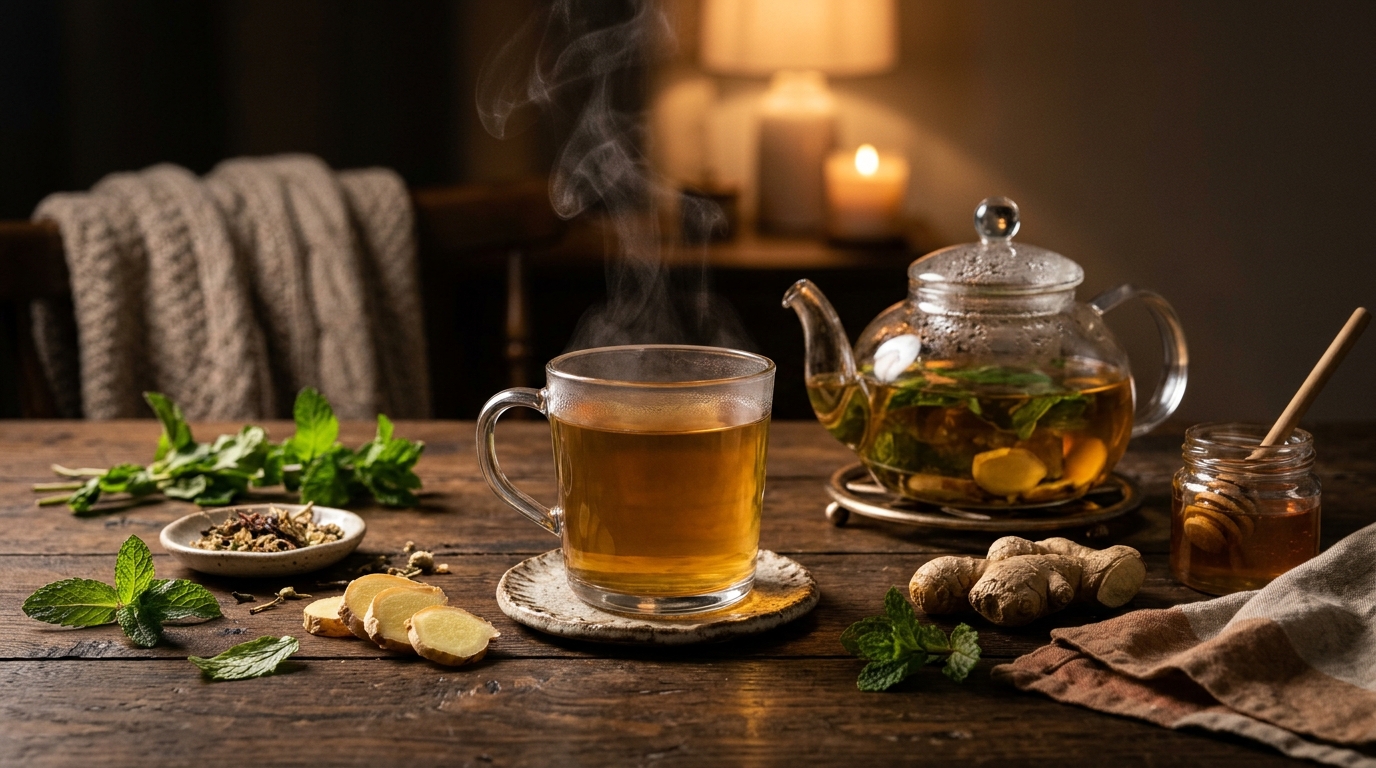
- 1 tbspdried peppermint leaves (or 2 tbsp fresh, lightly bruised)
- 1 tbspfresh ginger root, thinly sliced or grated
- 480 mlwater (95°C / 203°F)
- —raw honey to taste (optional)
- —a thin slice of lemon (optional)
How to Brew
Click on an item below to shop for the recommended items for this recipe on Amazon.
As an Amazon Associate, we earn from qualifying purchases.
- Peel the ginger if the skin is thick or dry, then slice it into thin coins or grate it. Thinner slices and grated ginger release more of their spicy compounds in a short steep.
- Bring fresh water to just below a full boil, around 95°C (203°F). Peppermint does not need a rolling boil, and slightly cooler water preserves its delicate aromatic oils.
- Place the ginger and peppermint leaves in a teapot or directly into two mugs. If using dried peppermint, crumble it lightly between your fingers to wake up the oils.
- Pour the hot water over the herbs and cover immediately with a lid or saucer. Steep for 7 to 10 minutes, closer to 7 for a gentler cup and closer to 10 for a bolder, spicier one.
- Strain into cups, pressing the ginger gently against the strainer to release the last of its warmth. Add honey or a lemon slice if desired and sip slowly, ideally 15 to 30 minutes after eating.
- Slice the ginger into thin coins, leaving them in larger pieces than you would for a hot brew since cold water extracts more slowly. Use roughly 1 tablespoon of ginger per 480 ml.
- Add the ginger and 1 tablespoon of dried peppermint (or a generous handful of fresh leaves) to a clean glass jar. Pour in 480 ml of cold, filtered water.
- Stir once, seal the jar, and refrigerate for 8 to 12 hours, or overnight. Avoid steeping longer than 12 hours, as the peppermint can turn slightly grassy.
- Strain through a fine mesh sieve into a clean pitcher or glass, discarding the herbs.
- Serve over ice or straight from the fridge. The cold-brewed tea keeps well in a sealed container for up to 3 days.
- Slice or roughly chop 2 tablespoons of fresh ginger, which is double the amount used in the hot brew, and add it to a small saucepan with 500 ml of cold water.
- Bring the water to a boil, then reduce to a gentle simmer. Partially cover and simmer for 10 minutes, until the liquid turns pale gold and smells sharply of ginger.
- Remove the saucepan from the heat. Immediately add 1 tablespoon of dried peppermint (or a handful of fresh leaves), stir once, and cover tightly.
- Let the peppermint steep off the heat for 5 minutes. This brief infusion captures the menthol without cooking it away.
- Strain into mugs and sweeten with honey if you like. This version is noticeably stronger and spicier, perfect for chilly nights or after a particularly heavy meal.
Health Benefits
Peppermint’s menthol relaxes the smooth muscle of the gut, while ginger’s carminative compounds help move trapped gas along. Clinical trials on peppermint oil show meaningful relief of bloating in people with irritable bowel syndrome.
Ginger is one of the best-studied natural anti-nausea remedies, with evidence supporting its use for motion sickness, pregnancy-related nausea, and post-operative queasiness. Peppermint’s aroma and cooling action can add to the settling effect.
Studies show ginger accelerates gastric emptying, helping food leave the stomach sooner and reducing that heavy, overfull feeling. This makes it especially suited to a post-dinner cup.
Peppermint’s antispasmodic activity reduces the intestinal cramping that can follow rich or large meals. Many people find the effect noticeable within 20 to 30 minutes.
Both gingerols and rosmarinic acid have demonstrated anti-inflammatory activity in laboratory and human studies, which may contribute to long-term gut comfort, though more research is needed on tea-strength doses.
🧪 Key Bioactive Compounds
The Science Behind Peppermint
The digestive reputation of this pairing rests on two different but complementary mechanisms. Peppermint’s primary active compound, menthol, acts on calcium channels in intestinal smooth muscle cells, reducing the muscle contractions that cause cramping and spasm. Peppermint oil is among the better-studied herbal treatments for irritable bowel syndrome, and meta-analyses of randomized trials have found it more effective than placebo for relieving abdominal pain and global symptoms. Tea contains far less oil than the enteric-coated capsules used in these studies, so the effect is gentler, but the aromatic compounds are still present and active.
Ginger works from a different angle. Its gingerols and shogaols interact with serotonin and other receptors in the gut and brain involved in nausea, and they appear to stimulate gastric motility. Several studies have shown that ginger speeds the rate at which the stomach empties after a meal, which can reduce fullness, early satiety, and the sluggish feeling that follows overeating. Interestingly, the chemistry shifts with preparation: fresh ginger is rich in gingerols, while heating or drying converts them into shogaols, which are more pungent and often more potent, which is why the decoction method yields a distinctly warmer, spicier tea.
It is worth being honest about the limits of the evidence. Most clinical trials use concentrated extracts, capsules, or essential oil rather than brewed tea, so the exact benefit of a single cup varies with how strong you make it. Even so, the traditional use is long and consistent, the safety profile is excellent for most healthy adults, and the sensory ritual of sipping something warm and aromatic after dinner is itself known to support relaxation and mindful eating, both of which help digestion.
Brewing Tips
- Use fresh ginger whenever possible. Its flavor is brighter and more complex than powdered ginger, and the gingerol content is higher.
- Always cover your cup while steeping peppermint. The menthol that makes it soothing is highly volatile and escapes quickly as steam.
- Freeze unpeeled ginger root and grate it straight from the freezer. It is easier to grate, produces fine shreds that infuse quickly, and keeps for months.
- Sip the tea slowly 15 to 30 minutes after eating rather than during the meal, so it supports digestion without diluting your stomach’s natural enzymes.