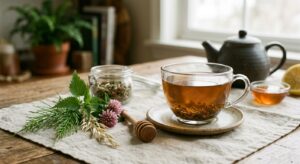
Modern life places enormous demands on women’s bodies, and chronic stress is one of the most underacknowledged drivers of hormonal imbalance. When cortisol, the body’s primary stress hormone, remains elevated for extended periods, it disrupts the delicate interplay between the adrenal glands, the thyroid, and the reproductive hormones estrogen and progesterone. Across Ayurvedic tradition in India, Persian herbal medicine, and traditional Chinese practice, healers recognized this connection long before modern endocrinology gave it a name, and they reached for adaptogens and nervines to restore what stress had depleted.
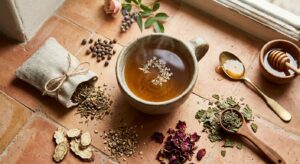
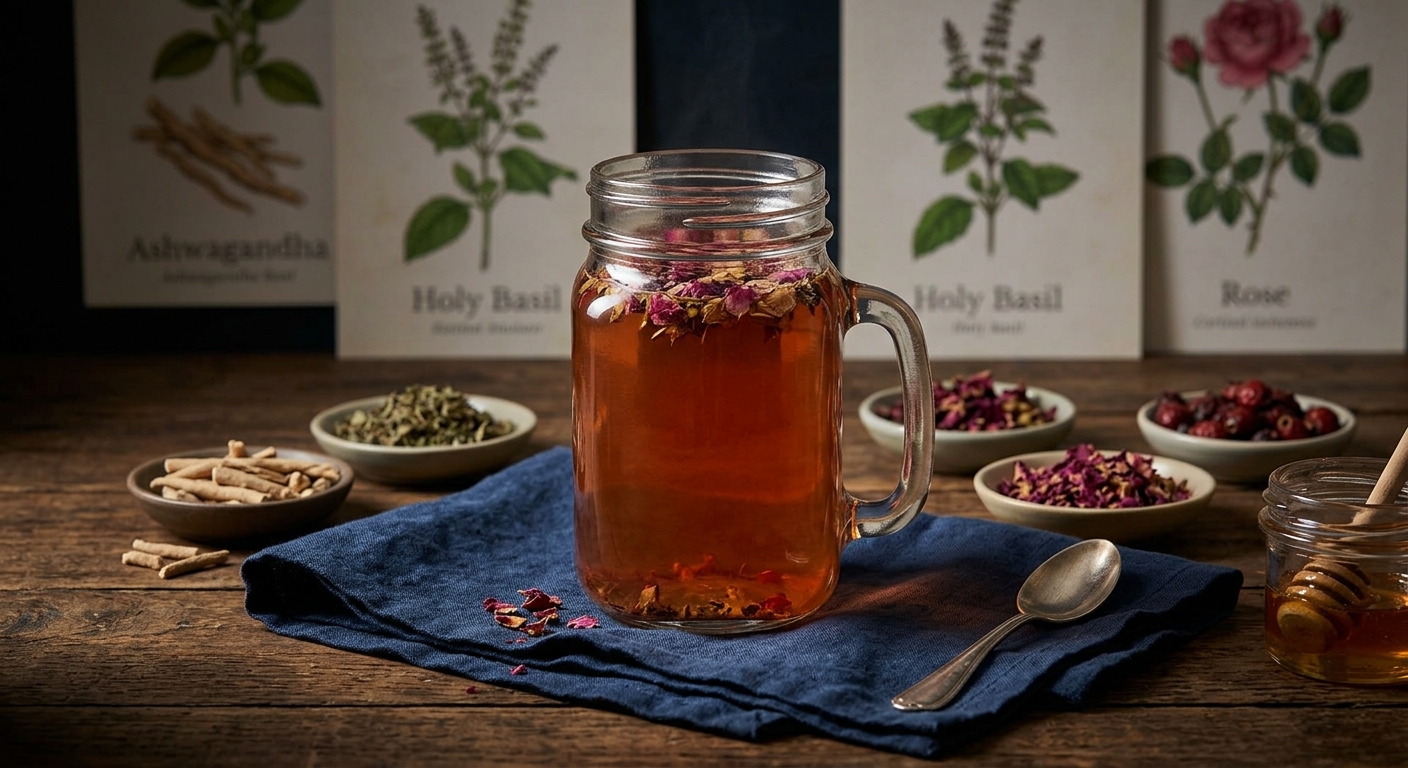
This cortisol balance blend draws on three well-studied herbs: ashwagandha root, prized in Ayurveda for over 3,000 years as a rasayana or rejuvenating tonic; holy basil (tulsi), considered sacred in Hindu tradition and used to quiet the mind and fortify the spirit; and rose petals, which carry a long history in Persian and Middle Eastern herbalism as a gentle heart tonic and mood lifter. Together they form a tea that addresses the nervous system, the adrenal response, and emotional resilience from multiple angles. The result is a cup that tastes as nourishing as it feels, warm and floral with a subtly earthy, grounding depth.
What makes this blend particularly well suited to women is the way each herb interacts with the hormonal ecosystem. Ashwagandha has been shown in clinical trials to significantly reduce serum cortisol levels, while holy basil supports blood sugar stability, which directly influences cortisol spikes. Rose petals add a gentle nervine quality and provide antioxidant support that helps protect cells from the oxidative damage that chronic stress causes. Brewed daily as a mindful ritual, this tea offers both biochemical and psychological support during demanding seasons of life.
2
cups
Ingredients
- 1 tspashwagandha root powder or sliced dried root
- 1 tspdried holy basil (tulsi) leaves
- 1 tspdried rose petals
- 0.5 tspdried rose hips (optional, for tartness and vitamin C)
- 480 mlwater (95°C / 203°F)
- —raw honey or coconut sugar to taste (optional)
- —a splash of oat milk or warm coconut milk (optional, for a creamier cup)
How to Brew
Click on an item below to shop for the recommended items for this recipe on Amazon.
As an Amazon Associate, we earn from qualifying purchases.
- Bring 480 ml of filtered water to 95°C (203°F). If using sliced ashwagandha root rather than powder, place it in a small saucepan with the water and bring to a gentle simmer for 5 minutes before proceeding to steep the other herbs.
- Place ashwagandha powder (or remove the simmered root slices to a teapot), dried tulsi leaves, rose petals, and rose hips into a fine-mesh tea infuser or directly into a teapot.
- Pour the hot water over the herbs and cover the pot or mug immediately with a lid or small saucer. Covering is important because tulsi and rose contain volatile aromatic compounds that escape in steam.
- Steep for 10 to 15 minutes. The longer end of the range produces a stronger, more deeply earthy cup with greater withanolide extraction from the ashwagandha.
- Strain into two warmed mugs. Stir in honey or coconut sugar if desired, and add a splash of warm oat milk or coconut milk to soften the bitterness of the ashwagandha and create a latte-like finish.
- Sip slowly, ideally in the morning to set a calm tone for the day or in the late afternoon when cortisol naturally dips and stress cravings often peak.
- Combine 1.5 teaspoons of ashwagandha root powder (or 2 teaspoons of sliced dried root), 2 teaspoons of dried tulsi, 2 teaspoons of dried rose petals, and 1 teaspoon of rose hips in a clean glass jar. Cold brewing requires slightly higher herb ratios because the low temperature extracts compounds more slowly.
- Pour 600 ml of room-temperature filtered water over the herbs. Stir well to ensure the ashwagandha powder is fully dispersed and not clumped at the surface.
- Cover the jar with a tight lid or cheesecloth secured with a rubber band. Leave the jar at room temperature for 1 hour to begin the extraction, then transfer to the refrigerator.
- Let the blend steep in the refrigerator for 10 to 12 hours, or overnight. The cold environment preserves the delicate antioxidant compounds in the rose petals and the eugenol in the tulsi more effectively than heat.
- In the morning, strain through a fine-mesh sieve lined with cheesecloth into a clean jug, pressing gently on the herbs to extract the last of the liquid.
- Serve over ice with a drizzle of honey, a slice of fresh orange, and a few fresh rose petals for garnish. This cold brew keeps refrigerated for up to 48 hours.
- Place 2 teaspoons of sliced or coarsely ground dried ashwagandha root and 600 ml of cold filtered water into a small stainless steel or ceramic saucepan. Starting with cold water and a slow rise to temperature improves extraction of water-soluble withanolides.
- Bring the water to a gentle simmer over medium heat, then reduce the heat to low. Simmer uncovered for 15 minutes, allowing the liquid to reduce by approximately one-quarter. Stir occasionally.
- Add the dried tulsi leaves and rose hips to the simmering decoction, cover the pan, and continue to simmer gently for another 5 to 8 minutes. Adding these more delicate herbs at the end protects their volatile oils from over-extraction.
- Remove the pan from heat and add the dried rose petals. Cover and allow to steep off the heat for a further 5 minutes. The residual heat is sufficient to extract the rose’s color and flavonoids without destroying them.
- Strain the decoction through a fine-mesh sieve into two mugs. The resulting liquid will be a rich amber-copper color with a noticeably deeper, more robust flavor than a standard hot brew.
- Stir in honey, a pinch of ashwagandha-friendly warming spices such as cardamom or cinnamon, and a generous splash of full-fat coconut milk. The fat in coconut milk aids absorption of the fat-soluble withanolides in ashwagandha, making this the most bioavailable preparation of the three methods.
Health Benefits
A double-blind, randomized controlled trial published in the Indian Journal of Psychological Medicine found that ashwagandha root extract significantly reduced serum cortisol levels compared to placebo over 60 days. The withanolides in ashwagandha normalize HPA axis activity, reducing the overproduction of cortisol that occurs during chronic stress.
Chronically elevated cortisol suppresses the production of progesterone and disrupts the luteinizing hormone surge necessary for ovulation. By helping to regulate cortisol, this blend indirectly supports a healthier hormonal environment for estrogen-progesterone balance and menstrual regularity. Ashwagandha has also demonstrated thyroid-supporting activity in clinical trials, which is closely tied to reproductive hormone function.
Both ashwagandha and holy basil have been shown in clinical trials to significantly reduce scores on validated stress and anxiety scales. Holy basil’s eugenol and other phenolic compounds modulate the activity of cortisol-related neurotransmitters, while ashwagandha’s withanolides appear to enhance GABAergic signaling, producing a calming effect without sedation.
Holy basil has demonstrated hypoglycemic activity in multiple human trials, helping to prevent rapid blood sugar fluctuations that trigger secondary cortisol release. Maintaining stable blood glucose throughout the day is a practical and often overlooked strategy for reducing the total cortisol burden on the female body.
Chronic elevation of cortisol generates significant oxidative stress, damaging cell membranes, mitochondria, and DNA. The rose petals and rose hips in this blend contribute vitamin C and a rich array of flavonoids including quercetin and kaempferol, which neutralize reactive oxygen species and help repair the cellular damage that prolonged stress causes.
🧪 Key Bioactive Compounds
The Science Behind Ashwagandha
The cortisol-lowering mechanism of ashwagandha is one of the most rigorously studied areas in adaptogen research. Withanolides, the primary bioactive steroidal lactones unique to the Withania somnifera plant, act on the hypothalamic-pituitary-adrenal (HPA) axis, which is the body’s central stress-response system. Under chronic stress, the HPA axis becomes dysregulated, releasing cortisol in patterns that are either persistently elevated or, in later-stage adrenal fatigue, blunted at the wrong times of day. Withanolides appear to normalize this rhythm by reducing the sensitivity of cortisol receptors to overstimulation while simultaneously supporting the adrenal glands’ capacity to produce an appropriate short-term response. A 2012 randomized, double-blind, placebo-controlled trial published in the Indian Journal of Psychological Medicine found that participants taking a standardized ashwagandha root extract showed a 27.9% reduction in serum cortisol compared to placebo, along with significant improvements in all stress and anxiety measures.
Holy basil (Ocimum tenuiflorum) contributes to this blend’s action through a complementary but distinct mechanism. Its key phenolic compound, eugenol, functions as a natural COX-2 inhibitor, reducing the inflammatory signaling that chronic cortisol elevation provokes. Separately, holy basil has demonstrated significant hypoglycemic activity in multiple human clinical trials, reducing fasting blood glucose and improving insulin sensitivity. This matters enormously for cortisol regulation because reactive hypoglycemia, the sharp blood sugar drop that follows a glucose spike, is one of the most reliable triggers for a secondary cortisol surge. By flattening the blood sugar curve throughout the day, holy basil addresses a root cause of cortisol dysregulation that is often overlooked in stress management protocols. Additionally, the ursolic acid in tulsi leaves shows direct adaptogenic activity, helping the body maintain metabolic homeostasis under physical and psychological stress.
The rose petals in this formula play a quieter but biochemically meaningful role. Quercetin, one of the most abundant flavonoids in rose petals, has been shown to inhibit the enzyme 11-beta-hydroxysteroid dehydrogenase type 1, which converts inactive cortisone into active cortisol within peripheral tissues. This means quercetin may reduce cortisol activity at the tissue level even when adrenal output itself remains unchanged, representing a valuable second line of defense. Beyond its direct biochemical effects, the aromatic compounds in rose, particularly geraniol and citronellol, activate olfactory receptors that have measurable calming effects on the autonomic nervous system. In this way, the act of inhaling a warm rose petal tea before drinking it is not simply sensory pleasure; it is an evidence-informed part of the therapeutic experience itself.
Brewing Tips
- For maximum withanolide extraction, always use ashwagandha root powder rather than capsule contents or tea bags, and pair your cup with a small amount of healthy fat such as coconut milk or a handful of nuts, as withanolides are fat-soluble and absorption increases significantly in the presence of dietary fat.
- Build this tea into a consistent daily ritual at the same time each day, ideally morning or mid-afternoon, because adaptogenic herbs work best when taken regularly over 4 to 8 weeks rather than occasionally. The cumulative effect on HPA axis regulation is where the real benefit lies.
- Source your rose petals from certified organic suppliers or grow your own, as conventionally grown roses are among the most heavily pesticide-treated flowers in commercial horticulture. Pesticide residues on rose petals used in tea can undermine the very health goals this blend supports.