Long before vitamin C was isolated in a laboratory, herbalists and healers across Europe, Asia, and the Americas were harvesting the small, crimson fruits that form after rose flowers fade. Known as rose hips, these seed-filled berries of Rosa canina (the dog rose) and related wild rose species contain up to 20 times more vitamin C per gram than oranges. During World War II, when citrus imports to Britain were disrupted, the British government organized mass rose hip harvests to produce syrup for children, recognizing what traditional healers had long understood: these humble fruits are a nutritional treasure.
In Ayurvedic and traditional European herbalism, rose hips have been used to support the adrenal glands, which play a central role in the body’s stress response. The adrenal glands consume large amounts of vitamin C when producing cortisol, the primary stress hormone. A cup of rose hip tea is therefore not just a pleasant ritual but a targeted act of nutritional replenishment after periods of physical or emotional strain. Scandinavian cultures have brewed nyponte (rose hip soup and tea) for generations as a winter tonic, valuing its warming, fortifying qualities.
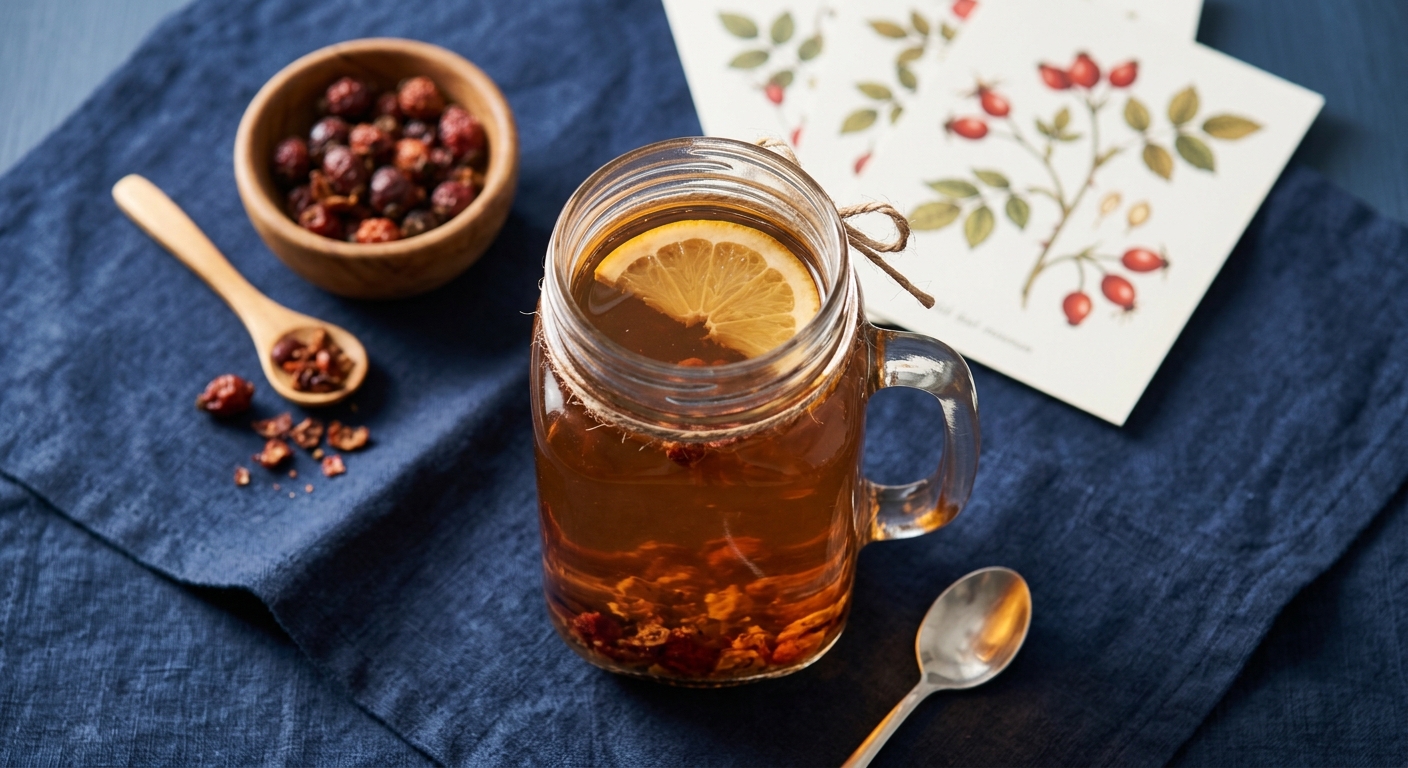
The flavor of rose hip tea is one of its great pleasures: brightly tart with a floral, berry-like sweetness, somewhere between cranberry and hibiscus, with a deep ruby color that feels inherently restorative. Whether you are reaching for it after a stressful workday or as a morning ritual to build resilience over time, rose hip tea offers a sensory experience as compelling as its health credentials.
2
cups
Ingredients
- 2 tbspdried rose hips (whole or roughly crushed)
- 480 mlwater (95°C / 203°F)
- —raw honey or maple syrup to taste (optional)
- —a thin slice of fresh orange (optional, for garnish and added citrus note)
How to Brew
Click on an item below to shop for the recommended items for this recipe on Amazon.
As an Amazon Associate, we earn from qualifying purchases.
- Place the dried rose hips in a mortar and pestle or on a cutting board and lightly crush them to break the skins without fully pulverizing them. This step is important for maximizing nutrient and flavor extraction.
- Bring filtered water to approximately 90 to 95°C (194 to 203°F). Avoid a rolling boil, as sustained boiling can degrade heat-sensitive vitamin C. If using a standard kettle, bring to a boil and allow it to rest for 60 seconds before pouring.
- Place the crushed rose hips in a fine-mesh infuser, tea strainer, or reusable muslin bag and set inside your mug or teapot. Rose hip seeds and hairs can be irritating if ingested, so a fine-mesh strainer is essential.
- Pour the hot water over the rose hips and steep for 10 to 15 minutes. The longer steep will yield a deeper color, more intense tartness, and higher polyphenol content. Taste at 10 minutes and continue if you prefer a bolder brew.
- Remove the infuser and strain the liquid carefully through a second fine-mesh strainer to catch any small hairs or seed fragments that may have escaped.
- Sweeten with raw honey or maple syrup if desired. Serve immediately with a thin orange slice on the rim for a complementary citrus aroma.
- Lightly crush 3 tablespoons of dried rose hips per 480 ml of cold filtered water to increase surface area without breaking them apart entirely.
- Combine the crushed rose hips and cold water in a clean glass jar or pitcher. Stir briefly to ensure all the hips are submerged. Do not add any hot water at this stage.
- Cover the jar with a lid or a piece of cloth secured with a rubber band. Allow the jar to sit at room temperature for 1 hour to begin the extraction, then transfer it to the refrigerator.
- Let the mixture steep in the refrigerator for a minimum of 10 hours and up to 14 hours. The slow, cold extraction draws out polyphenols and color while keeping the tart edge softer than a hot brew would produce.
- Strain the liquid through a fine-mesh strainer lined with a piece of cheesecloth into a clean pitcher or serving jar. Press gently on the solids to extract the last of the liquid, then discard the spent hips.
- Serve directly over ice. The cold brew is naturally bright and refreshing on its own. For added complexity, garnish with a sprig of fresh mint or a few slices of fresh strawberry.
- Add 3 tablespoons of whole dried rose hips and 600 ml of cold filtered water to a small stainless steel or ceramic saucepan. Starting in cold water allows a gradual extraction to begin as the temperature rises.
- Place the saucepan over medium heat and bring the water slowly up to a gentle simmer, approximately 85 to 90°C (185 to 194°F). Do not allow the water to reach a hard boil, as this can degrade vitamin C and cause the liquid to become bitter.
- Reduce the heat to low and maintain a gentle, steady simmer for 20 to 25 minutes. The liquid will deepen from a pale pink to a rich, dark garnet as the skins soften and the inner pulp begins to dissolve. Stir occasionally.
- Remove the saucepan from the heat and allow the decoction to cool slightly for 5 minutes. This brief rest allows remaining volatile aromatic compounds to settle back into the liquid.
- Strain the decoction through a fine-mesh strainer lined with cheesecloth into a mug or heatproof pitcher, pressing the softened hips firmly to extract all remaining liquid. Discard the solids.
- Taste and adjust sweetness with raw honey. Because this method produces a concentrated, deeply flavored brew, you may wish to dilute with a small amount of hot water if the tartness is too intense. Serve warm as a restorative evening tonic.
Health Benefits
The adrenal glands consume extraordinary amounts of vitamin C during the production of cortisol. Rose hips are among the most concentrated natural sources of vitamin C, directly replenishing this nutrient and helping the body recover from both acute and chronic stress more efficiently.
Emerging research has established a strong link between systemic inflammation and anxiety disorders. Rose hip flavonoids, particularly quercetin, reduce pro-inflammatory cytokines that can elevate anxiety symptoms, offering an indirect but meaningful calming effect.
Vitamin C is essential for the proliferation and function of T-cells, natural killer cells, and antibodies. Regular consumption of rose hip tea has been shown in randomized trials to reduce the duration and severity of common colds by supporting innate and adaptive immune responses.
Chronic psychological stress elevates reactive oxygen species in the body, accelerating cellular aging and contributing to fatigue. The dense antioxidant profile of rose hips, including carotenoids, lycopene, and polyphenols, actively neutralizes these free radicals.
The galactolipid GOPO, a compound unique to rose hips, has been the subject of several clinical trials demonstrating significant reductions in joint inflammation and pain, particularly relevant for people who carry stress as physical tension or stiffness.
🧪 Key Bioactive Compounds
The Science Behind Rose Hip
The most celebrated compound in rose hips is ascorbic acid, better known as vitamin C, and its concentration in Rosa canina is among the highest of any whole food source. What makes this particularly relevant to stress and anxiety is the direct relationship between cortisol synthesis and vitamin C depletion. When the adrenal glands are activated by stress, they release large quantities of cortisol, a process that consumes vitamin C at an accelerated rate. Studies measuring plasma vitamin C levels in individuals under chronic stress consistently show significant depletion, and supplementation with food-based vitamin C sources has been shown to blunt the cortisol spike following acute psychological stressors, helping the nervous system return to baseline more quickly.
Beyond vitamin C, rose hips contain quercetin, a well-researched flavonoid with meaningful anti-anxiety properties. Quercetin inhibits the enzyme that breaks down cyclic AMP (cAMP), a cellular messenger involved in calming signals within the nervous system. It also downregulates the production of interleukin-6 and tumor necrosis factor-alpha, two inflammatory cytokines that are elevated in anxiety disorders and depression. The galactolipid GOPO, a compound found almost exclusively in rose hips, has received significant scientific attention for its potent anti-inflammatory activity. Multiple randomized controlled trials have demonstrated that GOPO supplementation reduces markers of systemic inflammation and alleviates joint pain, suggesting that rose hips work on stress-related physical tension as well as emotional stress.
The carotenoid profile of rose hips, including lycopene, beta-carotene, and zeaxanthin, adds another layer of antioxidant protection. Chronic stress generates reactive oxygen species that damage mitochondria, lipid membranes, and DNA over time, a process associated with accelerated aging and increased susceptibility to illness. Carotenoids quench these free radicals and have been associated in epidemiological studies with lower rates of anxiety, depression, and cognitive decline. The synergy between vitamin C, flavonoids, and carotenoids in rose hip tea creates a comprehensive antioxidant and adaptogenic profile that is genuinely difficult to replicate with any single isolated nutrient.
Brewing Tips
- Always use a fine-mesh strainer lined with cheesecloth when brewing rose hips, since the tiny hairs inside the fruit can pass through a standard tea strainer and cause throat irritation.
- For maximum vitamin C preservation in a hot brew, avoid water above 95°C and steep for no more than 15 minutes. Prolonged boiling degrades ascorbic acid rapidly, reducing the tea’s primary nutritional benefit.
- Dried rose hips should be stored in an airtight container away from light and heat. Exposure to oxygen and UV light degrades vitamin C and carotenoids quickly, so always check that your dried hips still have a vibrant reddish-orange color before brewing.