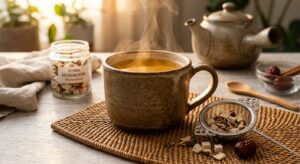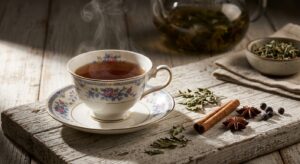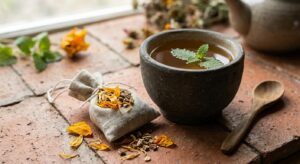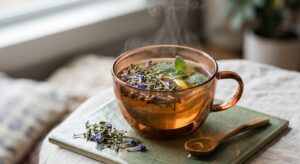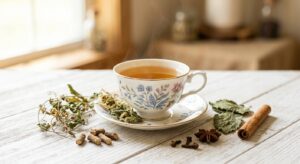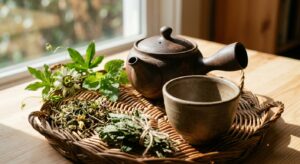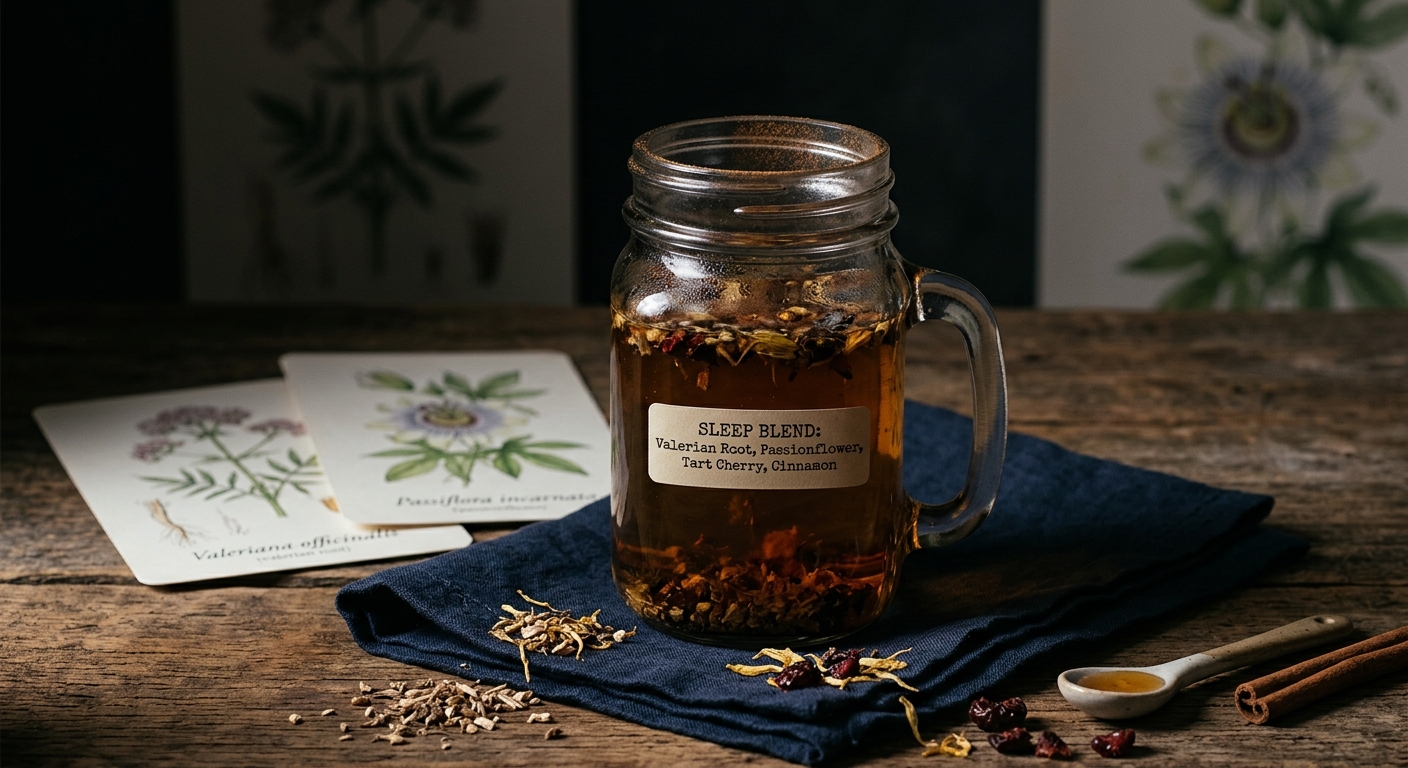
Long before sleep aids filled pharmacy shelves, traditional healers across Europe, the Americas, and Asia turned to specific plants to coax the body into rest. Valerian root, documented by the ancient Greeks and Romans, was prescribed by Hippocrates himself for nervousness and insomnia. Passionflower, discovered by Spanish explorers in South America in the 16th century, was adopted by Indigenous peoples as a remedy for anxiety and sleeplessness and later carried back to Europe where it became a staple of folk medicine. Tart cherry, the most modern addition to this trio, has emerged from clinical nutrition research as one of the richest natural dietary sources of melatonin and melatonin-precursor compounds ever studied. Together, these three ingredients form a blend that is both ancient in tradition and supported by contemporary science.
What makes this tea genuinely different from a standard chamomile or lavender nightcap is its multi-pathway approach to sleep. Rather than relying on a single sedative mechanism, this blend works along several biological routes simultaneously. Valerian root targets GABA activity in the brain, calming overactive neural firing. Passionflower reinforces that GABAergic pathway while also reducing racing thoughts and cortisol-driven wakefulness. Tart cherry supplies actual melatonin alongside tryptophan and anthocyanins that help the body synthesize and protect its own melatonin supply. The result is a cup that invites sleep rather than forcing it, working in harmony with your natural circadian rhythm.
The sensory experience of this tea is as comforting as its effects. Valerian contributes a deep, earthy base note, assertive and grounding. Passionflower softens the blend with a mildly herbaceous, subtly floral quality. Tart cherry adds a gentle fruity tartness that brightens the overall flavor and makes the blend far more pleasant to drink than valerian alone. A touch of raw honey and a small pinch of cinnamon round everything out, creating a warming evening ritual that signals to both mind and body that the day is done.
2
cups
Ingredients
- 1 tspdried valerian root (cut and sifted)
- 1 tspdried passionflower herb
- 2 tbsptart cherry juice (unsweetened) or 1 tsp dried tart cherry pieces
- 480 mlwater (90°C / 194°F)
- —raw honey to taste (optional)
- —pinch of cinnamon (optional)
How to Brew
Click on an item below to shop for the recommended items for this recipe on Amazon.
As an Amazon Associate, we earn from qualifying purchases.
- Heat filtered water to 90 to 93°C (194 to 200°F). If you do not have a temperature-controlled kettle, bring water to a full boil and allow it to rest off heat for 90 seconds before using.
- Place 1 tsp dried valerian root and 1 tsp dried passionflower into a fine-mesh tea infuser or muslin tea bag. Set the infuser inside your mug or teapot.
- Pour the hot water directly over the infuser and immediately cover the mug with a small plate or lid. Covering the tea is important because volatile aromatic compounds, including some of valerian’s calming constituents, will escape as steam if left uncovered.
- Steep for a full 10 to 15 minutes. The longer steep time extracts deeper sedative compounds from valerian root. Shorter steeping produces a milder effect.
- Remove the infuser. Add 2 tbsp of unsweetened tart cherry juice (or steep 1 tsp of dried tart cherry pieces along with the herbs and remove them with the infuser). Stir well.
- Sweeten with raw honey if desired and dust with a pinch of cinnamon. Drink 30 to 45 minutes before bedtime for best results.
- Combine 2 tsp dried valerian root and 2 tsp dried passionflower in a clean glass jar. For cold brew, use double the herb quantity compared to hot brew because cold water extracts active compounds more slowly and less completely.
- Add 480 ml of cold, filtered water to the jar. Do not use warm or hot water at this stage. Stir briefly to ensure the herbs are fully submerged.
- Seal the jar with a lid and allow it to sit at room temperature for 1 hour to begin extraction, then transfer to the refrigerator and steep for a further 7 to 9 hours, or overnight.
- Strain the liquid through a fine-mesh strainer or cheesecloth into a glass, pressing the herbs gently to release remaining liquid.
- Add 2 to 3 tbsp of unsweetened tart cherry juice and stir well. Sweeten with a small amount of honey if desired, noting that honey dissolves more slowly in cold liquid and should be stirred thoroughly.
- Drink chilled or allow to come to room temperature before consuming 30 to 45 minutes before bed. Store any unused portion in the refrigerator for up to 24 hours.
- Place 1.5 tsp of dried valerian root (coarsely chopped or whole pieces) into a small saucepan with 600 ml of cold filtered water. Starting in cold water and gradually heating draws out the iridoid glycosides more thoroughly than adding root to boiling water.
- Bring the water slowly to a gentle simmer over medium-low heat. Do not allow it to reach a full rolling boil. Maintain a gentle simmer between 85 and 90°C (185 to 194°F).
- Simmer uncovered for 20 minutes, allowing the liquid to reduce slightly. Stir occasionally. The liquid will deepen to a dark amber-red color and the aroma will intensify significantly.
- In the final 5 minutes of simmering, add 1 tsp of dried passionflower directly to the saucepan. Passionflower is more delicate and should not be simmered for the full duration, as prolonged heat can degrade its flavonoids.
- Remove the saucepan from heat and strain the liquid through a fine-mesh strainer into two mugs, aiming for approximately 240 ml per serving after reduction.
- Stir in 2 to 3 tbsp of unsweetened tart cherry juice per mug, sweeten with raw honey, and dust lightly with cinnamon. Allow to cool slightly before drinking. This preparation is strong; begin with one cup taken 45 to 60 minutes before bed.
Health Benefits
Valerian root has been studied in multiple randomized controlled trials showing that regular consumption can reduce the time it takes to fall asleep. A 2006 meta-analysis in the American Journal of Medicine reviewed 16 studies and concluded that valerian may improve sleep quality without producing side effects, with sleep latency reductions observed across several trials.
A clinical study published in the European Journal of Nutrition found that volunteers who consumed tart cherry juice twice daily showed significantly elevated urinary melatonin levels and improved total sleep time and sleep efficiency compared to a placebo group. This makes tart cherry a uniquely evidence-backed natural melatonin source.
Passionflower has demonstrated anxiolytic effects in human trials, including a 2001 double-blind study in the Journal of Clinical Pharmacy and Therapeutics that found passionflower extract was as effective as oxazepam for generalized anxiety disorder, with fewer impairments to job performance, suggesting it calms the mind without the cognitive dulling of pharmaceuticals.
Valerenic acid’s inhibition of GABA transaminase increases overall GABAergic tone in the brain, which is associated with deeper slow-wave sleep stages. Animal studies and some human data suggest valerian use is linked to more time spent in restorative deep sleep phases, not just faster sleep onset.
The anthocyanins in tart cherry, particularly cyanidin-3-glucoside and cyanidin-3-rutinoside, have potent anti-inflammatory activity and inhibit COX-1 and COX-2 enzymes. Chronic low-grade inflammation is increasingly linked to disrupted sleep architecture, and reducing inflammatory markers may contribute to the sleep quality improvements observed in tart cherry research.
🧪 Key Bioactive Compounds
The Science Behind Valerian Root
The sleep-supporting action of this blend centers on the GABAergic system, the brain’s primary inhibitory neurotransmitter network. Gamma-aminobutyric acid (GABA) reduces neuronal excitability throughout the nervous system, and low GABAergic tone is strongly associated with insomnia, anxiety, and difficulty transitioning from wakefulness into sleep. Valerian root’s primary bioactive sesquiterpene, valerenic acid, works by inhibiting GABA transaminase, the enzyme responsible for breaking down GABA in the synapse. The result is an accumulation of GABA between neurons, which prolongs and deepens its calming signal. The iridoid glycosides called valepotriates add further GABA-A receptor modulation, mirroring the mechanism of prescription anxiolytics but at a milder, non-habit-forming intensity when consumed as a tea.
Passionflower reinforces and extends this GABAergic action through its own distinct flavonoid compounds. Vitexin and chrysin have both demonstrated binding affinity for GABA-A receptor subunits in laboratory and animal studies, and chrysin additionally inhibits the catabolic enzyme GABA-T, similar to valerenic acid. A 2011 randomized clinical trial in Phytotherapy Research confirmed that passionflower extract significantly reduced anxiety scores within one week of use. The dual GABAergic action of valerian and passionflower together creates a synergistic effect that neither herb achieves as powerfully alone, a phenomenon sometimes described in phytopharmacology as botanical synergy or the entourage effect of whole-plant preparations.
Tart cherry completes the triad by addressing sleep regulation from an entirely different biological angle: the melatonin axis. Melatonin, secreted by the pineal gland in response to darkness, is the body’s primary circadian timing hormone. Its production depends on an uninterrupted biosynthetic pathway that begins with dietary tryptophan, proceeds through serotonin, and terminates in melatonin. Tart cherry supplies both exogenous melatonin and tryptophan, effectively seeding both ends of this pathway simultaneously. Moreover, tart cherry’s anthocyanins inhibit indoleamine 2,3-dioxygenase (IDO), an enzyme that can shunt tryptophan away from the melatonin pathway toward pro-inflammatory metabolites. By blocking IDO activity, tart cherry preserves the tryptophan pool available for melatonin synthesis, making it a genuinely mechanistic sleep aid rather than simply a pleasant fruit addition.
Brewing Tips
- Always cover your mug while hot brewing this blend. Valerian’s volatile compounds, including some of its most therapeutically active sesquiterpenes, evaporate rapidly with steam. A simple plate or saucer placed on top of the mug during steeping can meaningfully preserve potency.
- Be consistent rather than occasional with this tea. Most clinical studies on valerian show that effects become more reliable and pronounced after 2 to 4 weeks of nightly use, as valerenic acid appears to have cumulative effects on GABA receptor sensitivity. Do not judge its effectiveness by a single night.
- Source your valerian root carefully. Freshness matters enormously because valepotriates are unstable compounds that degrade with age, improper storage, or excessive heat during drying. Purchase from reputable herbal suppliers who store root in airtight, light-protected packaging and provide harvest or batch dates. Pale, straw-colored root that smells strongly earthy-musty is a good sign of quality.