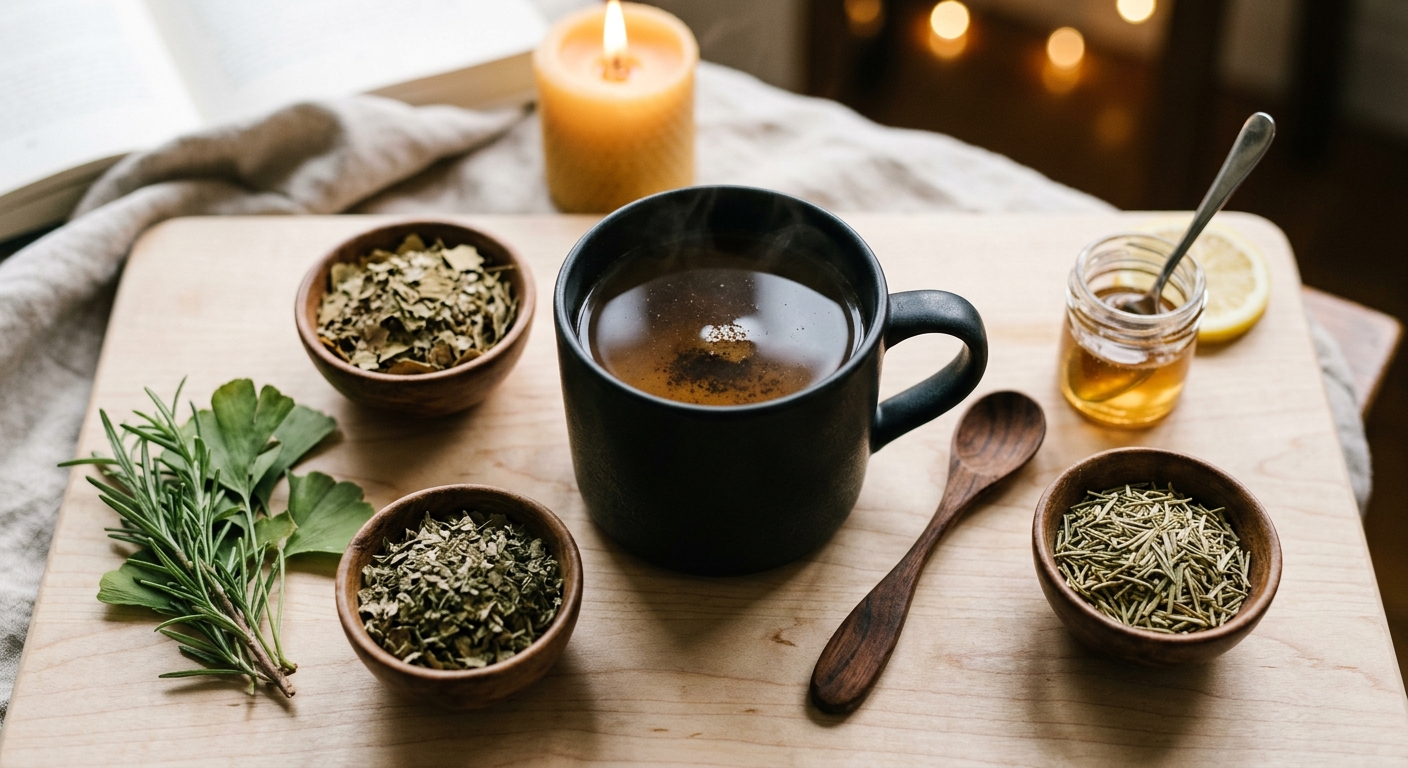
Long before the age of nootropic supplements and smart drugs, healers across Asia, the Mediterranean, and the Indian subcontinent were already reaching for specific plants to sharpen the minds of scholars, monks, and strategists. Ginkgo biloba, one of the oldest living tree species on Earth with a lineage stretching back over 270 million years, was prized in Traditional Chinese Medicine for its ability to invigorate the brain and support memory well into old age. Gotu kola, a small creeping herb native to the wetlands of Southeast Asia, earned the nickname “the herb of enlightenment” among Ayurvedic practitioners who prescribed it to students preparing for lengthy periods of study and meditation. Rosemary, the sun-loving Mediterranean shrub, was carried by Greek scholars who wove sprigs into their hair during examinations, believing its scent alone could strengthen recall.
What unites these three botanicals is not merely tradition but a growing body of modern research confirming what traditional healers long understood. Each herb works through distinct biochemical pathways, ginkgo by improving cerebral blood flow and acting as a potent antioxidant, gotu kola by modulating stress hormones and stimulating nerve growth factor, and rosemary by inhibiting the breakdown of acetylcholine, the neurotransmitter most closely associated with learning and memory. Together, they create a synergistic blend that addresses multiple dimensions of cognitive performance simultaneously, making this tea far more nuanced than any single-herb remedy.
The flavor experience is equally compelling. Ginkgo contributes a subtly grassy, slightly astringent base, gotu kola adds a mellow, slightly bitter earthiness reminiscent of fresh green tea, and rosemary lifts the entire cup with a resinous, camphor-tinged brightness that wakes up the senses before the first sip has even been taken. The result is a tea that signals to your brain, through aroma alone, that it is time to focus. Brew a pot before a demanding writing session, a long study block, or any morning when clarity feels just out of reach.
2
cups
Ingredients
- 1.5 tspdried ginkgo biloba leaves
- 1 tspdried gotu kola leaf
- 0.75 tspdried rosemary leaves
- 480 mlwater (90°C / 194°F)
- —raw honey or lemon to taste (optional)
How to Brew
Click on an item below to shop for the recommended items for this recipe on Amazon.
As an Amazon Associate, we earn from qualifying purchases.
- Heat filtered water to 88 to 92°C (190 to 198°F). If you do not have a temperature-controlled kettle, bring water to a full boil and allow it to rest for 90 seconds before using.
- Combine the dried ginkgo biloba leaves, gotu kola, and rosemary in a tea infuser or small muslin bag. Gently crush the rosemary between your fingers before adding it to the infuser, which helps release its volatile oils into the brew.
- Place the infuser in a preheated mug or teapot and pour the measured hot water directly over the herbs. Preheating your vessel with a splash of hot water prevents a sudden temperature drop that shortens extraction.
- Cover the mug or teapot with a lid or small saucer to trap the volatile aromatic compounds, particularly from the rosemary, which would otherwise escape as steam.
- Steep for 7 to 10 minutes. A 7-minute steep produces a lighter, greener cup; 10 minutes deepens the bitterness slightly and increases extraction of the heavier terpenoid compounds.
- Remove the infuser and, if desired, stir in a small amount of raw honey and a squeeze of lemon. The acidity of lemon can improve the bioavailability of several phenolic compounds in the blend. Sip slowly and allow the aroma to work alongside the brew.
- Use a slightly increased herb ratio for cold brewing since lower temperatures extract less efficiently. Combine 2 teaspoons of dried ginkgo biloba, 1.5 teaspoons of gotu kola, and 1 teaspoon of rosemary in a clean glass jar.
- Add 480 ml of cold, filtered water at room temperature. Do not use refrigerator-cold water at the start, as room temperature water initiates extraction before the jar is chilled, producing a more balanced flavor.
- Stir the herbs gently, seal the jar with a lid, and leave it on the countertop for 1 hour to allow initial extraction to begin at ambient temperature.
- Transfer the jar to the refrigerator and allow the brew to steep for a further 9 to 13 hours, for a total cold infusion time of 10 to 14 hours. Overnight works perfectly for a morning cup.
- Strain the chilled tea through a fine mesh strainer or cheesecloth into a glass, pressing the herbs gently to extract the last of the liquid. Discard the spent herbs.
- Serve over ice or drink chilled as-is. The flavor is notably smoother and more subtly herbal than the hot brew. A few drops of liquid honey stirred directly into the cold tea provides sweetness without altering the temperature.
- Double the herb quantities: combine 3 teaspoons of dried ginkgo biloba, 2 teaspoons of gotu kola, and 1.5 teaspoons of rosemary in a small saucepan or heatproof pitcher. The higher herb-to-water ratio and longer steep time will produce a noticeably more intense and slightly bitter concentrate.
- Heat 480 ml of filtered water to 88 to 92°C (190 to 198°F) and pour it over the herbs. This will yield a concentrate designed to be diluted 1-to-1, ultimately producing approximately 4 standard servings.
- Cover the saucepan or pitcher tightly with a lid or stretch of plastic wrap and steep for 15 to 20 minutes. The extended time is necessary to fully extract the heavier terpenoid compounds, including ginkgolides A, B, and C, that require longer contact time at temperature.
- Strain the concentrate through a fine mesh strainer into a clean glass bottle or jar, pressing the herbs firmly to maximize yield. Allow it to cool to room temperature before sealing.
- To serve hot: dilute 1 part concentrate with 1 part freshly heated water (not boiling) in a mug and sweeten to taste. To serve as a latte, dilute 1 part concentrate with 1 part warm, frothed oat milk and a light drizzle of honey. The creamy fat content of oat milk can enhance absorption of fat-soluble compounds in rosemary.
- Store the remaining concentrate in a sealed jar in the refrigerator for up to 3 days. Shake gently before each use as light sediment from the herbs may settle at the bottom.
Health Benefits
Ginkgo biloba has been evaluated in over 40 clinical trials, with meta-analyses showing statistically significant improvements in memory recall and cognitive speed in both healthy adults and those experiencing age-related cognitive decline. Its mechanism centers on improved cerebrovascular circulation and reduction of hippocampal oxidative stress.
Gotu kola’s asiaticoside content stimulates nerve growth factor production, supporting the structural integrity of the neural networks responsible for sustained attention. Unlike caffeine-based stimulants, this effect builds gradually with regular use and does not produce a rebound crash.
The combined antioxidant load of ginkgo’s flavonoid glycosides and gotu kola’s triterpenoids provides broad-spectrum protection against free radical damage in neural tissue, a significant factor in age-related cognitive decline and neuroinflammation.
Gotu kola has demonstrated adaptogenic properties in clinical research, reducing cortisol-associated mental fatigue and anxiety-driven cognitive interference. A 2016 study published in the Journal of Alzheimer’s Disease found meaningful improvements in mood and working memory in older adults supplementing with gotu kola extract.
Rosmarinic acid and carnosic acid in rosemary inhibit acetylcholinesterase, preserving acetylcholine levels at synapses. This mechanism mirrors the action of several pharmaceutical cognitive enhancers, offering a gentler, food-based pathway to supporting the brain’s primary learning neurotransmitter.
🧪 Key Bioactive Compounds
The Science Behind Ginkgo Biloba
The cognitive effects of this three-herb blend are best understood through the lens of cerebrovascular biology and neurochemistry. Ginkgo biloba’s most pharmacologically significant components are its terpenoid lactones, particularly ginkgolide B and bilobalide, and its flavonoid glycosides including quercetin-3-rutinoside and kaempferol glycosides. Ginkgolide B functions as a selective antagonist of platelet-activating factor (PAF), a signaling lipid that contributes to vasoconstriction and platelet aggregation in cerebral blood vessels. By blocking PAF activity, ginkgolide B promotes smoother blood flow through the brain’s fine capillary networks, directly increasing the delivery of oxygen and glucose to neurons that are energetically demanding during periods of sustained cognitive work. Bilobalide complements this by protecting mitochondrial membrane integrity in neurons, ensuring that the cells receiving that enhanced blood supply can efficiently convert it into ATP for neural signaling.
Gotu kola operates through a fundamentally different mechanism, one centered on neuroplasticity rather than circulation. Its primary bioactive compounds, the triterpenoid saponins asiaticoside, madecassoside, and their aglycone derivatives, have been demonstrated in cell culture and animal studies to upregulate the expression of nerve growth factor (NGF) and brain-derived neurotrophic factor (BDNF). These proteins are essential for the growth, maintenance, and branching of dendrites, the receiving structures of neurons that form the physical basis of memory storage and synaptic connectivity. Higher NGF activity translates, over weeks of regular use, into more robust neural networks and improved capacity for long-term potentiation, the cellular mechanism underlying learning and memory consolidation. Additionally, gotu kola’s brahmoside and brahminoside compounds exert mild anxiolytic effects by modulating GABAergic tone, which reduces the cognitive interference caused by low-level chronic anxiety.
Rosemary contributes its cognitive effects through a well-characterized cholinergic mechanism. Rosmarinic acid and carnosic acid, two abundant phenolic compounds in rosemary, have been identified as inhibitors of acetylcholinesterase (AChE), the enzyme responsible for clearing acetylcholine from synaptic clefts after neural transmission. By slowing AChE activity, these compounds extend the duration and intensity of cholinergic signaling, which governs attention, working memory, and the consolidation of new information. This is the same mechanism targeted by a class of pharmaceutical drugs known as cholinesterase inhibitors, used in the clinical management of Alzheimer’s disease, making rosemary’s contribution to this blend both scientifically credible and clinically meaningful at realistic consumption levels. Beyond cholinergic effects, the volatile monoterpene 1,8-cineole, which is released as steam during brewing and inhaled passively as you drink, has been shown in human trials to significantly improve working memory performance via direct olfactory-to-prefrontal cortex signaling pathways, a rare example of an aromatic compound producing measurable cognitive effects through inhalation alone.
Brewing Tips
- Source your ginkgo biloba leaves from a reputable supplier that provides standardized dried leaf product rather than raw leaves collected from ornamental trees, as wild-collected ginkgo leaves vary enormously in terpenoid and flavonoid concentration and raw leaves may contain ginkgolic acids, which are allergenic at high levels.
- Brew this tea consistently at the same time each morning rather than sporadically. The cognitive benefits of gotu kola in particular are cumulative, building over two to four weeks of regular use as nerve growth factor levels gradually rise. Treating it as a daily ritual rather than an occasional pick-me-up will yield significantly better results.
- If the bitter astringency of the hot brew is too intense, reduce the ginkgo biloba by half and increase the gotu kola slightly. Gotu kola is considerably milder in flavor and still delivers meaningful cognitive support on its own, making it the most palatable component of the blend for those new to medicinal herbal teas.