High on the rocky cliffs of Siberia, Scandinavia, and the Tibetan plateau, a small flowering plant clings to the earth where little else survives. Rhodiola rosea, sometimes called golden root or rose root, has been harvested for over a thousand years by the peoples who live at altitude and in extreme cold. Viking warriors reportedly drank it to build endurance before long voyages. Siberian healers prescribed it for physical stamina and to help the body endure the punishing winters of the Russian steppe. In the 17th century, Swedish King Charles XII is said to have relied on it to sustain his troops, and the plant appeared in formal materia medica texts across northern Europe not long after.
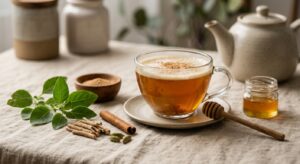
What makes rhodiola so remarkable is its classification as a true adaptogen, a category of medicinal plants defined by their ability to help the body resist physical, chemical, and biological stressors without causing harm or dependency. Unlike stimulants that force the body into a heightened state, rhodiola works more subtly, supporting the adrenal system, moderating cortisol response, and improving the efficiency of cellular energy production. The dried root releases a complex of bioactive rosavins and salidroside when steeped in hot water, yielding a tea that is earthy, faintly bitter, and slightly rose-scented, an unusual and surprisingly pleasant sensory experience.
Modern research has caught up with centuries of traditional use. Clinical trials published in peer-reviewed journals have confirmed rhodiola’s effects on burnout, mental fatigue, and anxiety-related stress, making it one of the most scientifically validated adaptogens in use today. For anyone navigating a demanding work schedule, recovering from sustained stress, or simply seeking a coffee alternative that supports rather than depletes the nervous system, rhodiola rosea tea is an intelligent place to start.
2
cups
Ingredients
- 1 tspdried rhodiola rosea root (cut and sifted or lightly crushed)
- 300 mlwater (80 to 85°C / 176 to 185°F)
- —raw honey or maple syrup to taste (optional)
- —a thin slice of fresh ginger (optional, to balance bitterness)
How to Brew
Click on an item below to shop for the recommended items for this recipe on Amazon.
As an Amazon Associate, we earn from qualifying purchases.
- Measure 1 teaspoon of dried rhodiola rosea root per 300 ml of water. If using whole dried pieces, gently crush them with the back of a spoon to increase surface area and improve extraction.
- Heat filtered water to 80 to 85°C (176 to 185°F). If you do not have a temperature-controlled kettle, bring water to a full boil then allow it to rest uncovered for 3 to 4 minutes before pouring.
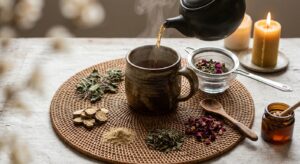
- Place the rhodiola root in a fine-mesh tea infuser or tea strainer and set it in your mug. Pour the measured hot water directly over the root and note the time.
- Steep for 8 to 10 minutes with a lid or small plate resting over the mug to trap volatile aromatic compounds and maintain temperature throughout the steep.
- Remove the infuser and taste. The liquor should be amber-gold with a dry, faintly floral, earthy character. Add raw honey or a slice of fresh ginger to complement and soften the natural bitterness if desired.
- Drink in the morning or early afternoon. Rhodiola is mildly stimulating and is best avoided within 4 to 5 hours of bedtime.
- Measure 2 teaspoons of dried rhodiola rosea root per 600 ml of cold, filtered water. Cold brew requires a slightly higher herb-to-water ratio to compensate for the slower, less aggressive extraction.
- Combine the root and water in a glass jar with a tight-fitting lid. No heating is required. Stir gently to ensure all the root material is fully submerged.
- Leave the jar at room temperature for the first hour to initiate extraction, then transfer it to the refrigerator. Allow the tea to steep for a total of 10 to 14 hours. An overnight steep from evening to morning is the most practical approach.
- In the morning, strain the liquid through a fine-mesh strainer or cheesecloth into a clean glass or bottle. Press gently on the root material to recover the full infusion.
- Taste and adjust. Cold-brewed rhodiola has a cleaner, slightly sweeter profile than the hot version. Serve over ice, or warm a portion gently on the stovetop without boiling if you prefer it warm. Add a squeeze of lemon or a small drizzle of honey to brighten the flavour.
- Store any unused cold brew in a sealed glass jar in the refrigerator and consume within 48 hours for best potency and freshness.
- Measure 1.5 teaspoons of dried rhodiola rosea root per 350 ml of cold, filtered water. Place both the root and the cold water together into a small saucepan. Starting in cold water allows a gradual extraction of compounds as the water heats, yielding a more complete and complex brew.
- Set the saucepan over medium heat and bring the water slowly to a gentle simmer, around 90 to 95°C (194 to 203°F). Do not allow the liquid to reach a rolling boil, as sustained high heat will begin to break down heat-sensitive rosavins.
- Once a steady simmer is reached, reduce heat to low and maintain a gentle simmer for 15 to 20 minutes. Keep the saucepan partially covered with a lid to reduce evaporation while still allowing steam to escape.
- After simmering, remove the pan from heat and allow the decoction to rest, covered and undisturbed, for an additional 10 minutes. This resting period allows residual extraction to continue as the liquid cools slightly.
- Strain the decoction through a fine-mesh strainer into a mug or heat-safe vessel, pressing the softened root material with the back of a spoon to extract every last drop.
- The resulting liquid will be a deeper amber than a standard hot brew, with a fuller, more pronounced flavour. Sweeten with honey and consider adding a small strip of licorice root or a pinch of cinnamon during the simmer to round out the earthy bitterness. Sip slowly and mindfully.
Health Benefits
Multiple randomised controlled trials have shown that rhodiola rosea extract significantly reduces symptoms of burnout and mental exhaustion in stressed professionals and students. Its active compounds appear to regulate the stress-hormone axis by moderating cortisol output from the adrenal glands, helping the body sustain cognitive performance under pressure.
Salidroside and the rosavins improve the availability of serotonin and dopamine in the prefrontal cortex, the brain region responsible for attention, decision-making, and working memory. Studies in night-shift workers and medical students have reported measurable improvements in concentration and accuracy following rhodiola supplementation.
Rhodiola has been studied in athletes and physically active individuals, with evidence suggesting it reduces perceived exertion, speeds post-exercise recovery, and improves oxygen utilisation in muscle tissue. These effects are linked to salidroside’s role in mitochondrial energy pathways and its ability to reduce exercise-induced oxidative stress.
A 2015 clinical study published in Phytomedicine found that rhodiola rosea extract significantly reduced generalised anxiety, stress, anger, confusion, and depression after just 14 days of use. Its action on serotonin reuptake and GABAergic pathways is thought to underlie this anxiolytic effect without causing the sedation associated with pharmaceutical interventions.
Research suggests rhodiola may inhibit monoamine oxidase (MAO), an enzyme that breaks down serotonin and dopamine, thereby extending the availability of mood-regulating neurotransmitters. A small clinical trial found rhodiola comparable to sertraline for mild to moderate depression with a significantly better side-effect profile.
🧪 Key Bioactive Compounds
The Science Behind Rhodiola Rosea
The adaptogenic activity of Rhodiola rosea is rooted in a set of unique phenylpropanoid glycosides, primarily rosavin, rosarin, and rosin, that are found exclusively in this species and serve as its botanical fingerprint in quality testing. These compounds interact with the hypothalamic-pituitary-adrenal (HPA) axis, the body’s central stress-response system, by helping to normalise cortisol secretion without suppressing it entirely. Unlike pharmaceutical anxiolytics that dampen the entire stress response, rhodiola appears to act as a biological buffer, keeping the system responsive when it is needed while preventing the chronic over-activation that leads to burnout and adrenal fatigue.
Salidroside, the other primary bioactive compound, works through a different but complementary pathway. It is a potent neuroprotective agent that reduces reactive oxygen species (ROS) in brain tissue, preserves mitochondrial membrane potential under conditions of stress, and has been shown in laboratory studies to promote neurogenesis in the hippocampus, the brain region central to memory and emotional regulation. Salidroside also appears to influence serotonin and dopamine transporter activity, which explains the herb’s well-documented positive effects on mood, concentration, and motivation. Research into salidroside has expanded significantly in the past decade, with studies exploring its potential in neurodegenerative conditions including Parkinson’s disease.
From a pharmacological standpoint, one of rhodiola’s most studied mechanisms is its apparent inhibition of monoamine oxidase A and B (MAO-A and MAO-B), enzymes responsible for the metabolic breakdown of serotonin, dopamine, and norepinephrine. By partially inhibiting these enzymes, rhodiola extends the time these neurotransmitters remain active in the synaptic cleft, producing effects on mood and energy similar in direction, though far milder in magnitude, to pharmaceutical MAO inhibitors. This mechanism supports both its antidepressant and its anti-fatigue properties and underscores why caution is warranted when combining it with other serotonergic medications.
Brewing Tips
- Source rhodiola root that is standardised to a minimum of 3 percent rosavins and 1 percent salidroside. This ratio is used in most clinical studies and ensures you are working with a potent, authentic product rather than an adulterated or low-grade root.
- Cycle your rhodiola use to preserve its effectiveness. A common protocol among herbalists is to use it for 6 to 8 weeks, then take a 1 to 2 week break before resuming. This prevents tolerance from developing and keeps the adaptogenic response strong.
- Drink rhodiola tea on an empty stomach in the morning for maximum absorption and the clearest cognitive effects. Taking it with food slightly slows absorption but can help if you find it causes mild stomach sensitivity.