Few herbal pairings feel as natural as peppermint and chamomile. Peppermint (Mentha x piperita) has been used for digestive complaints since ancient Egypt, where dried leaves were found in tombs dating to around 1000 BCE, and Greek and Roman physicians prescribed it for upset stomachs. Chamomile (Matricaria chamomilla) has an equally long record, valued in European folk medicine for centuries as a soothing remedy for restlessness, colic, and indigestion.
What makes the blend so effective is that the two herbs work on different parts of the same problem. Peppermint acts directly on the smooth muscle of the gut, while chamomile soothes both the digestive lining and the mind that so often tenses up alongside a full stomach. Together they address the physical heaviness and the mental restlessness that can follow a big dinner.
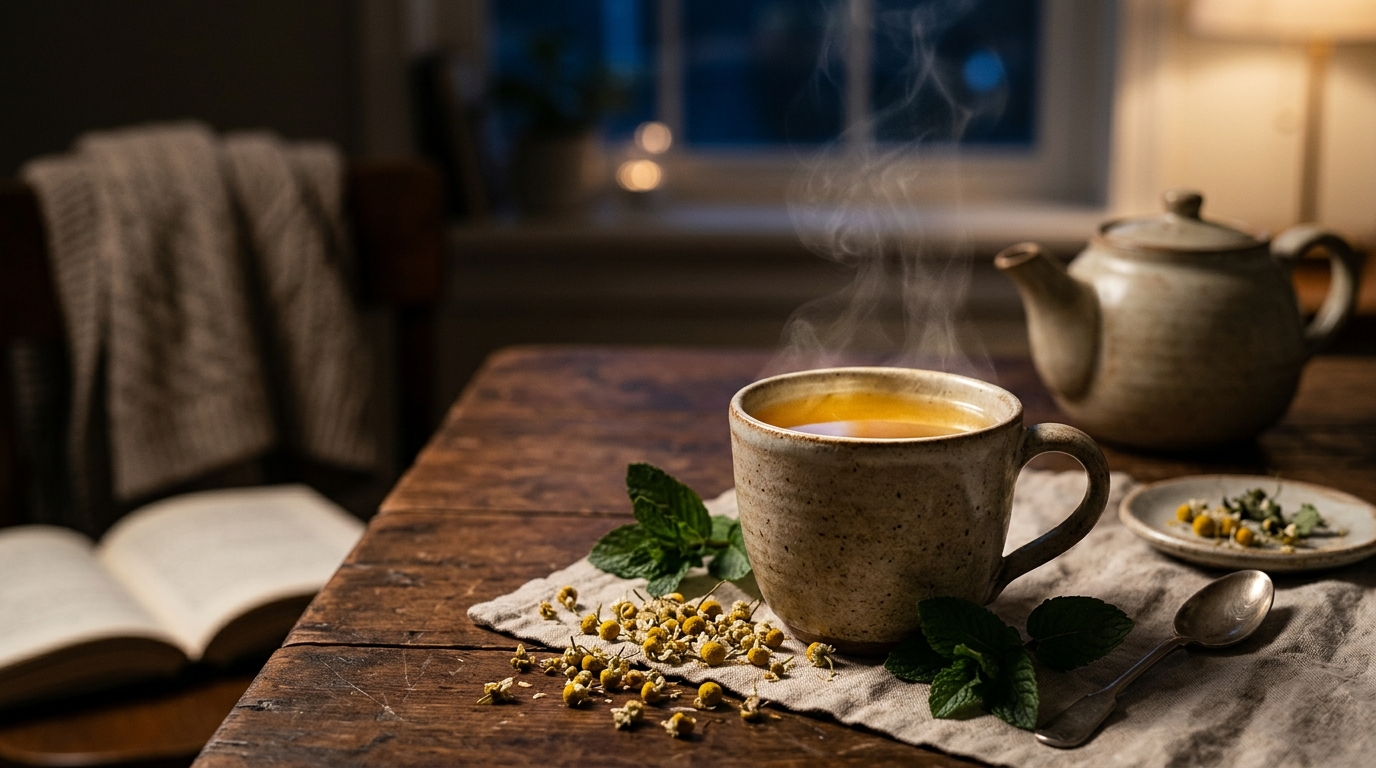
In the cup, the blend is a study in contrast: the bright, cooling snap of menthol on top and the mellow, honeyed, hay-and-apple sweetness of chamomile underneath. It is naturally caffeine-free, which makes it an ideal last drink of the evening, and it is forgiving enough for beginners to brew well on the first try.
2
cups
Ingredients
- 2 tspdried peppermint leaves
- 2 tspdried chamomile flowers
- 480 mlwater (95°C / 203°F)
- —raw honey to taste (optional)
- —a thin lemon slice (optional)
How to Brew
Click on an item below to shop for the recommended items for this recipe on Amazon.
As an Amazon Associate, we earn from qualifying purchases.
- Bring fresh, filtered water to a boil, then let it rest for about 30 seconds so it drops to roughly 95°C (203°F). Water straight off a hard boil can make chamomile taste harsh.
- Combine the dried peppermint leaves and chamomile flowers in a tea infuser or teapot. Gently crush the peppermint between your fingers first to help release its oils.
- Pour the hot water over the herbs and immediately cover the vessel with a saucer or lid to trap the aromatic oils.
- Steep for 5 to 7 minutes. Closer to 5 gives a lighter, floral cup, while 7 brings out more menthol and a slight bitterness from the chamomile.
- Remove the infuser, stir in honey or add a lemon slice if desired, and sip slowly about 20 to 30 minutes after your meal.
- Add 2 tablespoons of dried peppermint leaves and 2 tablespoons of dried chamomile flowers to a clean glass jar. This is a heavier ratio than hot brew to make up for the gentler extraction.
- Fill the jar with 1 liter of cold, filtered water and stir once to wet all of the herbs.
- Seal the jar and refrigerate for 8 to 10 hours, or overnight. Avoid going past 12 hours, as the chamomile can turn faintly grassy.
- Strain through a fine-mesh sieve or a cloth-lined strainer, pressing lightly on the herbs to release the last of the liquid.
- Serve over ice with a thin slice of cucumber or lemon. Store the finished tea in the refrigerator for up to 3 days.
- Use double the usual amount of herbs for a concentrate: 4 teaspoons of dried peppermint and 4 teaspoons of dried chamomile in 240 ml of hot water at 95°C (203°F).
- Cover and steep for just 4 minutes. The short time keeps the chamomile from turning bitter, and the strong ratio compensates for the dilution to come.
- Fill a tall glass or heatproof pitcher about two-thirds full with ice cubes.
- Strain the hot concentrate directly over the ice, stirring for 10 seconds as it chills and dilutes to the right strength.
- Sweeten with honey while the tea is still warm so it dissolves fully, and garnish with a fresh mint sprig.
Health Benefits
Menthol relaxes the smooth muscle of the gut and may help trapped gas pass more comfortably. Peppermint oil has the strongest clinical support for easing symptoms of irritable bowel syndrome, and tea offers a milder version of the same effect.
Both herbs have a long history as carminatives, substances traditionally used to relieve fullness and discomfort after eating. Chamomile’s anti-inflammatory compounds may also calm an irritated stomach lining.
Chamomile’s apigenin interacts with calming pathways in the brain, and small trials have linked chamomile to modest improvements in sleep quality. The warm, aromatic ritual itself also helps signal the body to wind down.
Peppermint aroma and tea have traditionally been used for queasiness, and some studies suggest peppermint can ease nausea in certain settings. Chamomile adds a soothing, settling quality for a sensitive stomach.
Rosmarinic acid from peppermint and flavonoids from chamomile both show antioxidant activity in laboratory studies, supporting the body’s defenses against everyday oxidative stress.
🧪 Key Bioactive Compounds
The Science Behind Peppermint
The digestive reputation of peppermint rests largely on menthol, which acts on calcium channels in smooth muscle cells of the gastrointestinal tract. By limiting calcium influx, menthol reduces muscle contraction, which helps explain why peppermint oil is used for spasm-related abdominal pain. Most clinical trials use enteric-coated peppermint oil capsules rather than tea, so the effect of a cup of tea is gentler, but the same active compounds are present in the steam and infusion.
Chamomile’s calming effects are tied to apigenin, a flavonoid that binds to benzodiazepine receptors without the strong sedative action of pharmaceutical drugs. A few small clinical studies have found chamomile extract may improve sleep quality and reduce mild anxiety, although results are modest and the evidence base is still developing. Chamomile’s alpha-bisabolol and chamazulene also show anti-inflammatory activity in laboratory and animal research, which fits its traditional use for upset stomachs.
Taken together, the two herbs offer complementary mechanisms: one acting on gut muscle tone, the other on inflammation and nervous system tension. It is worth remembering that herbal tea is a gentle, supportive practice rather than a treatment, and that persistent digestive symptoms deserve a conversation with a healthcare provider.
Brewing Tips
- Use whole dried leaves and flowers rather than fine tea-bag dust when possible. Larger pieces hold more volatile oil and give a cleaner, sweeter cup.
- Always steep covered, since peppermint’s menthol and chamomile’s aromatic oils evaporate quickly with the steam.
- Adjust the ratio to taste: use more chamomile for a softer, sleepier cup and more peppermint for a brighter, more digestive-focused one.
- Store dried herbs in airtight glass jars away from light and heat, and replace them within 12 months for the best flavor and potency.
- Drink the tea warm rather than scalding hot, about 20 to 30 minutes after eating, to get the most soothing effect.