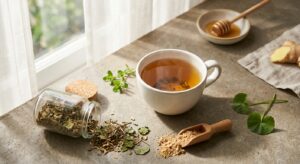
Gotu kola grows in damp, sun-dappled places across India, Sri Lanka, Indonesia, and Madagascar, spreading in low carpets of small, scalloped, fan-shaped leaves. In Ayurveda it is known as mandukaparni and is classed as a medhya rasayana, a rejuvenating herb for the intellect. Sri Lankan folklore holds that elephants, famed for their long memories and long lives, feed on the leaves, and this charming story is often told when explaining the herb’s name and reputation.
In Traditional Chinese Medicine the same plant is called ji xue cao, or ‘collect snow herb,’ and has been used for centuries to cool heat, support skin healing, and calm the spirit. Across these traditions, gotu kola is described as both gently stimulating to the mind and quieting to the nerves, a pairing that sounds contradictory but fits the needs of a late-night study session surprisingly well.
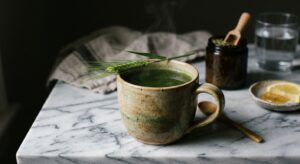
What makes gotu kola special for evening use is that it contains no caffeine at all. Where coffee and black tea can leave you wired and staring at the ceiling at midnight, a cup of gotu kola tea offers a clear, steady, grounded kind of attention. Its flavor is green, slightly bitter, and faintly like cooked spinach or fresh hay, a taste that pairs beautifully with a little honey, mint, or lemon and turns an ordinary study break into a small ritual.
2
cups
Ingredients
- 2 tspdried gotu kola leaf (cut and sifted)
- 480 mlwater (90°C / 194°F)
- 1 tspdried peppermint leaf (optional, for brightness)
- —raw honey to taste (optional)
- —fresh lemon slice (optional)
How to Brew
Click on an item below to shop for the recommended items for this recipe on Amazon.
As an Amazon Associate, we earn from qualifying purchases.
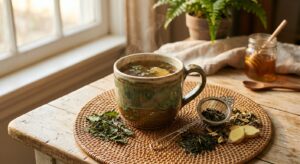
- Measure 2 teaspoons of dried gotu kola leaf into a tea infuser or directly into a teapot. If you want a brighter, cooler flavor, add 1 teaspoon of dried peppermint now.
- Heat fresh water to just below boiling, around 90 to 95°C (194 to 203°F). Let the kettle sit for about 30 seconds after it clicks off so the water is not fully rolling.
- Pour 480 ml of hot water over the leaves and immediately cover the pot or mug with a saucer or lid.
- Steep for 8 to 10 minutes. Gotu kola is a leafy, light herb that releases its compounds slowly, so a longer steep than most green teas is appropriate.
- Remove the infuser or strain the leaves. Add honey or a slice of lemon if you like, and sip slowly while you work.
- Place 3 teaspoons of dried gotu kola leaf in a clean glass jar. Cold brewing extracts less per teaspoon, so the ratio is a little higher than the hot method.
- Pour 720 ml of cool, filtered water over the leaves and stir gently to make sure all the herb is wet.
- Seal the jar and leave it on the counter for 30 minutes to begin the infusion, then transfer to the refrigerator.
- Steep in the refrigerator for 8 to 12 hours. Taste at 8 hours and decide whether you want it stronger.
- Strain through a fine-mesh sieve into a clean glass or pitcher, pressing lightly on the leaves to release remaining liquid.
- Serve over ice or straight from the fridge. Drink within 24 hours for best flavor and freshness.
- Add 2 teaspoons of dried gotu kola leaf and 360 ml of cold water to a small saucepan.
- Bring the pot slowly to a bare simmer over medium-low heat. Watch for small bubbles at the edges rather than a rolling boil, which would make the tea harsh.
- Reduce the heat to low, partially cover the pot, and simmer gently for 10 minutes. Stir once or twice.
- Remove the pan from the heat, cover fully, and let the tea rest for 5 minutes so the flavors settle.
- Strain through a fine-mesh sieve into a mug. Add a splash of hot water if you want to dilute, then stir in honey or a squeeze of lemon.
Health Benefits
Small human trials and animal studies suggest Centella asiatica extracts may improve attention and working memory, likely through antioxidant effects and support of neuronal growth. Most research uses concentrated extracts rather than tea, so effects from a cup are likely milder.
Gotu kola is traditionally used as a calming nervine, and some clinical research on standardized extracts reports reduced anxiety and startle response. This makes it appealing for evening focus when you want to feel settled but alert.
Triterpenoids from gotu kola have been studied for improving microcirculation and vein health, notably in people with chronic venous insufficiency. Better circulation may be one reason the herb has a reputation for clear-headed energy.
The flavonoids, phenolic acids, and triterpenoids in gotu kola show strong antioxidant activity in laboratory tests. This may help protect brain and tissue cells from oxidative stress over time.
Gotu kola has a long tradition of use for wounds, scars, and skin health, and asiaticoside has been shown to stimulate collagen synthesis in experimental studies. Drinking the tea offers a gentle internal complement to this traditional use.
🧪 Key Bioactive Compounds
The Science Behind Gotu Kola
The attention gotu kola has received from researchers centers on a family of compounds called triterpenoid saponins, especially asiaticoside, madecassoside, asiatic acid, and madecassic acid. In cell and animal studies these molecules appear to protect neurons from oxidative damage, reduce inflammation, and encourage the growth of dendrites, the branching extensions that nerve cells use to communicate. This is the likely biological basis for the herb’s centuries-old reputation as a memory tonic.
Human evidence is more modest but promising. Small clinical studies using standardized Centella asiatica extracts have reported improvements in attention, mood, and working memory in healthy older adults, and some work suggests a calming effect on acute stress responses. Importantly, these studies typically use measured doses of concentrated extract, so a cup of tea should be understood as a gentle, supportive ritual rather than a guaranteed cognitive boost.
Because gotu kola contains no caffeine, any sense of focus likely comes from a combination of the herb’s mild effects on circulation and the nervous system, the calming ritual of preparing and sipping a warm drink, and the absence of the jitters and sleep disruption that stimulants can cause. For night study sessions, that quiet, steady support may be exactly the point.
Brewing Tips
- Buy dried gotu kola that is still visibly green. Dull brown leaf is often old and will taste flat and hay-like.
- Because gotu kola is mildly bitter, start with a shorter steep of 5 to 6 minutes and extend it as your palate adjusts.
- Store dried leaf in an airtight, opaque container away from heat and light, and use within a year for best potency.
- Make a double batch of cold brew in the morning and keep it in the fridge for an easy, no-effort evening cup.
- Use gotu kola in cycles, for example five days on and two days off, or three weeks on and one week off, in keeping with traditional practice.