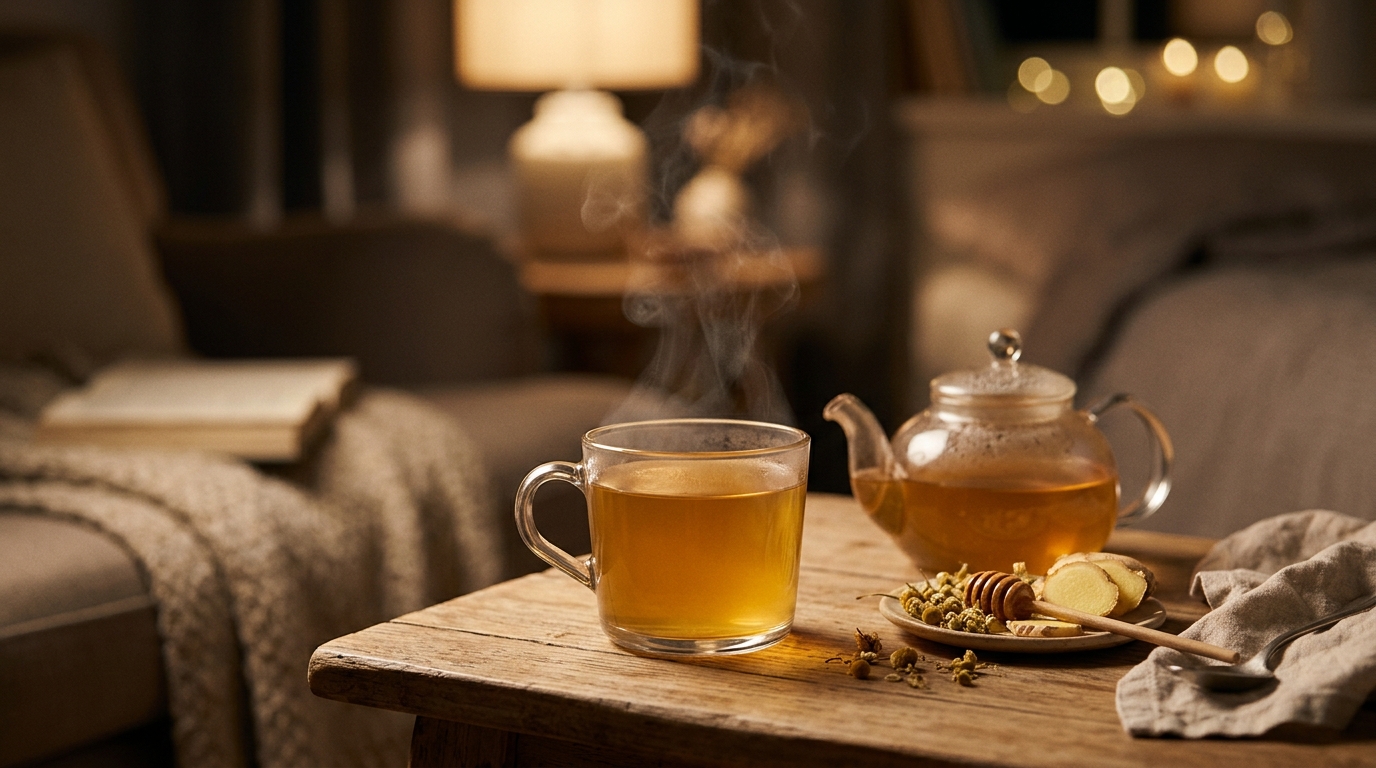
Chamomile has been steeped for centuries, from the temples of ancient Egypt, where it was dedicated to the sun god Ra, to the apothecaries of medieval Europe. The Greeks called it “ground apple” (chamaimelon) for its sweet, apple-like fragrance, and it has long been the herbalist’s first choice for restless nights, nervous stomachs, and fretful children. German chamomile, the variety most often used in tea, was so valued for its soothing effects on the gut that it earned a place in the official pharmacopoeias of many countries.
Ginger, meanwhile, has been a pillar of Ayurvedic, Traditional Chinese, and Greco-Arabic medicine for well over two thousand years. Its pungent, warming rhizome was prized for stirring sluggish digestion, easing nausea, and driving out chill. In Ayurveda it is called vishwabheshaj, the “universal medicine,” a fitting name for a root that has traveled the spice routes and kitchen shelves of nearly every culture.
Brought together, these two herbs balance each other beautifully. Chamomile brings floral softness and a calming, spasm-easing quality, while ginger adds a gentle, glowing heat that encourages comfortable digestion. This is an ideal after-dinner cup for anyone who finds that a heavy meal or a busy mind keeps them from settling down at night.
2
cups
Ingredients
- 2 tbspdried chamomile flowers
- 1 tbspfresh ginger root, thinly sliced or lightly grated
- 480 mlwater (95°C / 203°F)
- —raw honey to taste (optional)
- —a thin slice of lemon (optional)
How to Brew
Click on an item below to shop for the recommended items for this recipe on Amazon.
As an Amazon Associate, we earn from qualifying purchases.
- Bring fresh water to a boil, then let it rest for about 30 seconds so it settles near 95°C (203°F). Chamomile flowers are delicate, and water straight off a rolling boil can drive off some of their aromatic oils.
- Peel the ginger if the skin is thick, then slice it into thin coins or grate it coarsely. Thinner pieces expose more surface area and give a more flavorful, warming cup in a short steep.
- Place the chamomile flowers and ginger into a teapot or directly into a large mug fitted with an infuser, giving the flowers room to expand.
- Pour the hot water over the herbs, then immediately cover the vessel with a lid or saucer. Covering traps the volatile oils in chamomile that would otherwise escape with the steam.
- Steep for 7 to 10 minutes. Closer to 7 minutes gives a lighter, more floral cup; closer to 10 gives a stronger, spicier ginger presence.
- Strain into cups, stir in raw honey if desired, and add a thin slice of lemon. Sip slowly, ideally 30 to 60 minutes before bed.
- Slice the ginger into thin coins and lightly bruise them with the flat of a knife to help release their oils into cool water.
- Combine the chamomile flowers and ginger in a clean glass jar or pitcher, using a slightly higher ratio of herb to water than hot brew since cold water extracts more slowly.
- Pour in 480 ml of cool, filtered water, stir gently, and seal the jar.
- Refrigerate for 8 to 12 hours, or overnight. Avoid leaving it much longer than 12 hours, as the ginger can turn harsh and the flavor flat.
- Strain through a fine mesh sieve or cheesecloth, pressing gently on the flowers to release the last of the liquid.
- Serve over ice or straight from the fridge, and drink within 48 hours for the freshest flavor. For a bedtime cup, you can gently warm a portion on the stove without boiling.
- Slice or coarsely grate 1 tablespoon of fresh ginger and place it in a small saucepan with 480 ml of cold water.
- Bring the water to a gentle simmer over medium-low heat. Keep it at a soft simmer rather than a hard boil, and let the ginger cook uncovered for about 10 minutes, until the water turns pale gold and smells distinctly spicy.
- Remove the pan from the heat and let it stand for about 1 minute so the temperature drops slightly.
- Add the dried chamomile flowers to the pan, stir once, and cover with a lid.
- Steep for 5 to 7 minutes off the heat. The chamomile will release its sweet, apple-like aroma without turning bitter.
- Strain through a fine mesh sieve into a warmed mug, sweeten with honey if you like, and enjoy while hot.
Health Benefits
Chamomile’s apigenin acts gently on GABA receptors, and small clinical studies suggest regular chamomile consumption may modestly improve sleep quality, particularly in people with mild sleep disturbances.
Ginger is among the best-studied herbal remedies for nausea, with trials supporting its use for pregnancy-related, motion-related, and post-operative nausea. Its gingerols and shogaols appear to act on both the gut and the signaling pathways that trigger nausea.
Chamomile has a long history as an antispasmodic and carminative, helping relax smooth muscle in the gut, while ginger encourages gastric emptying, which may relieve the heavy, full feeling after a large meal.
The ritual of a warm, aromatic cup combined with chamomile’s mild anxiolytic effects can help lower the mental arousal that often keeps the mind racing at bedtime.
Both bisabolol and chamazulene from chamomile and the gingerols from ginger show anti-inflammatory activity in laboratory and some human studies, which may contribute to the tea’s soothing effect on the digestive lining.
🧪 Key Bioactive Compounds
The Science Behind Chamomile
The calming reputation of chamomile rests largely on its flavonoid content, especially apigenin. Research suggests that apigenin binds to benzodiazepine receptors on GABA-A channels in the brain, though far more weakly than pharmaceutical sedatives. This helps explain why chamomile tends to produce a gentle sense of ease rather than drowsiness or impairment. Small randomized trials have reported improvements in sleep quality and anxiety scores with chamomile extract, although results vary and more large-scale research is still needed.
On the digestive side, chamomile’s essential oil components, notably alpha-bisabolol and chamazulene, show anti-inflammatory and antispasmodic activity in laboratory studies. This aligns with its centuries-old use for cramping, gas, and nervous stomach. Because chamomile’s volatile oils are easily lost, covering the cup during steeping is more than a tradition; it genuinely helps preserve these compounds in your tea.
Ginger’s activity is driven by gingerols in the fresh root, which convert into shogaols when heated, giving a spicier and in some assays more potent preparation. These compounds appear to influence serotonin receptors in the gut and to encourage gastric emptying, which supports ginger’s well-documented anti-nausea effects. Using fresh ginger in a hot or simmered brew helps ensure a good yield of both gingerols and shogaols, making the pairing with chamomile a thoughtful partnership between a nervous-system soother and a digestive stimulant.
Brewing Tips
- Use whole dried chamomile flowers rather than finely powdered tea bag dust, which tends to taste flat and dusty and loses its aroma quickly.
- Keep your ginger in the freezer and grate it from frozen; it is easier to handle, less fibrous, and keeps for weeks.
- Drink this tea about 30 to 60 minutes before bed so you have time to enjoy the warmth and still avoid late-night trips to the bathroom.
- Store dried chamomile in an airtight, opaque container away from heat and light, and use within a year for the best flavor and aroma.