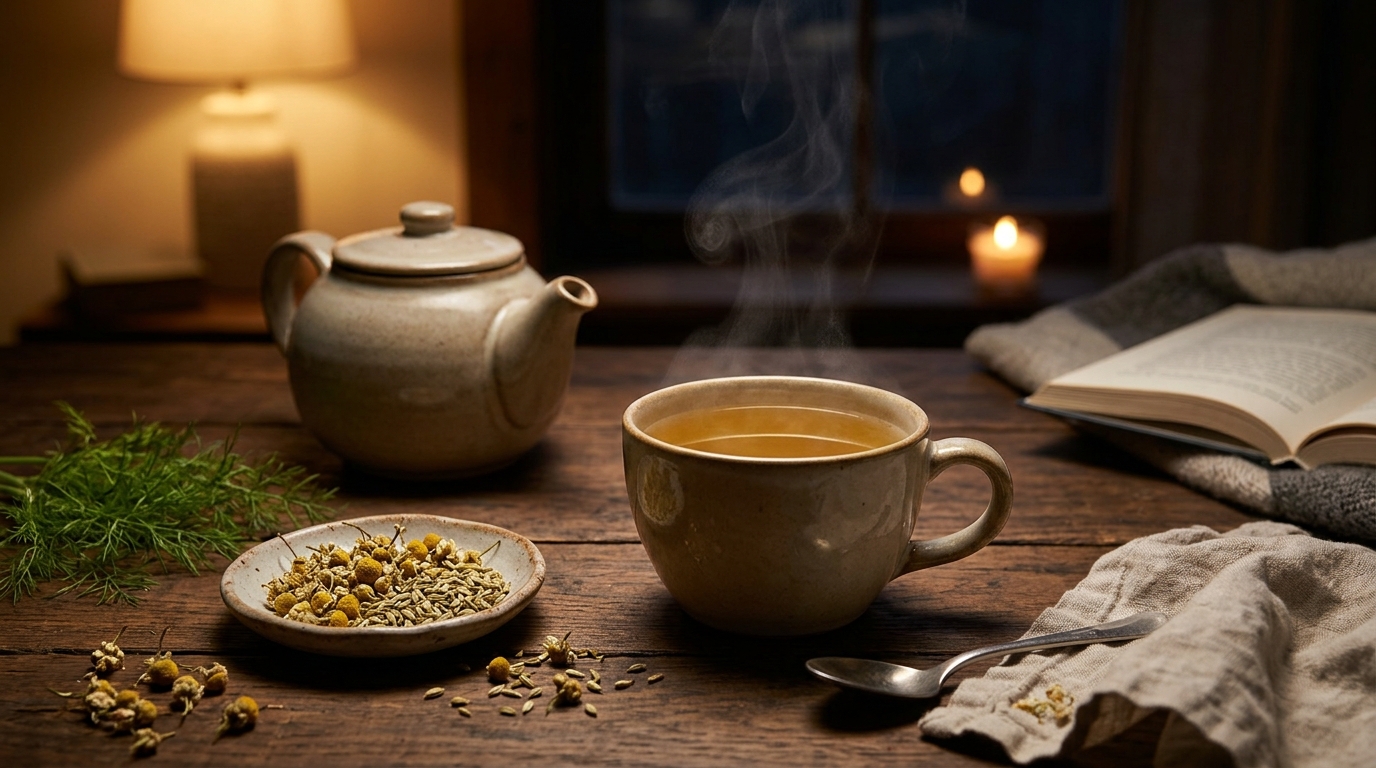
Chamomile and fennel have shared a place in kitchens and apothecaries for thousands of years. Ancient Egyptians dedicated chamomile to their sun gods and used it for fevers, while Roman and Greek physicians reached for fennel seed to settle the stomach after heavy feasts. In many Mediterranean and Middle Eastern households, a pot of chamomile or fennel tea after the evening meal is as routine as washing up, a quiet signal that the day’s eating is done and the body can begin to rest.
What makes this pairing special is how neatly the two plants divide the work. Fennel seed has a long reputation as a carminative, an herb traditionally used to relieve bloating, gas, and the heavy, tight feeling that can follow a large meal. Chamomile brings gentle antispasmodic action to the gut along with its famous calming influence on the nervous system. Since stress and digestion are so tightly linked, soothing both at once makes intuitive sense, and it is why this blend feels so natural as a nightly ritual.
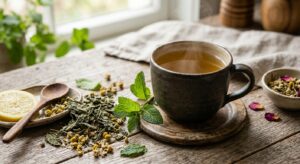
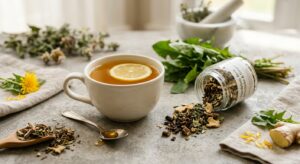
In the cup, the combination is soft and unhurried. Chamomile contributes honeyed, apple-like florals, while lightly crushed fennel seed adds a warm, sweet anise note that lingers pleasantly on the tongue. It needs no sweetener for most palates, and it is caffeine-free, making it an easy final cup of the day.
2
cups
Ingredients
- 2 tbspdried chamomile flowers
- 2 tspfennel seeds, lightly crushed
- 480 mlwater (95°C / 203°F)
- —raw honey or a slice of fresh lemon (optional)
How to Brew
Click on an item below to shop for the recommended items for this recipe on Amazon.
As an Amazon Associate, we earn from qualifying purchases.
- Measure the fennel seeds into a mortar, or onto a cutting board, and crush them lightly with the back of a spoon or a pestle. You only want to crack the seeds open, not grind them to powder, so the aromatic oils can escape into the water.
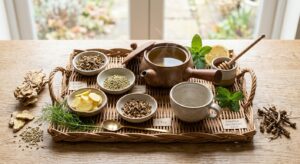
- Add the crushed fennel and the dried chamomile flowers to a teapot or large mug fitted with a mesh infuser. Use about 1 tablespoon of chamomile and 1 teaspoon of fennel per 240 ml cup.
- Bring fresh water to a boil, then let it rest for about 30 seconds so it settles near 95°C. Pour it over the herbs.
- Cover immediately with a lid or saucer and steep for 7 to 10 minutes. Fennel seed is tougher than flower petals and needs the longer time to release its oils, while chamomile stays pleasant at this length without turning bitter.
- Remove the infuser, give the tea a gentle stir, and inhale the steam for a moment before sipping. Add a little honey or lemon if you like, and drink slowly about 30 to 60 minutes before bed.
- Lightly crush the fennel seeds so they crack open, then combine 2 tablespoons of chamomile flowers and 2 teaspoons of fennel seed in a clean glass jar.
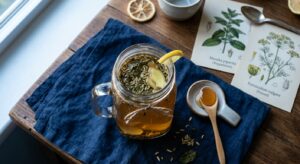
- Pour in 1 liter of cold, filtered water and stir once to wet all of the herbs. Seal the jar with its lid.
- Place the jar in the refrigerator and let it steep for 8 to 12 hours, or overnight. Shake the jar gently once or twice if you happen to pass by it.
- Strain through a fine mesh sieve or a coffee filter into a clean pitcher, pressing lightly on the herbs to release the last of the liquid.
- Serve over ice or straight from the fridge, and drink within 48 hours. The cold version is mellow and almost dessert-like, so it rarely needs added sweetener.
- Lightly crush 2 teaspoons of fennel seeds and add them to a small saucepan with 480 ml of cold water.
- Bring the water to a gentle simmer over medium-low heat. Reduce the heat so it barely bubbles, cover the pan, and simmer for 10 minutes. The kitchen will fill with a sweet, anise-like fragrance.
- Turn off the heat and remove the pan from the burner. Add 2 tablespoons of dried chamomile flowers directly to the hot liquid and stir once.
- Replace the lid and let the chamomile steep for 5 minutes. Adding it off the heat prevents the delicate flowers from turning grassy or bitter.
- Strain the tea through a fine sieve into two mugs, pressing the herbs gently. Sweeten lightly if desired and sip warm.
Health Benefits
Fennel’s anethole and fenchone have been shown in laboratory and small clinical studies to relax intestinal smooth muscle, which may help release trapped gas and reduce post-meal fullness.
Chamomile’s bisabolol and flavonoids have antispasmodic and anti-inflammatory properties, and the herb has a long traditional use for cramping and nervous stomach.
Chamomile’s apigenin interacts with GABA receptors, and small trials suggest chamomile can modestly improve sleep quality, particularly in people under stress.
Clinical research on chamomile extract has found reductions in mild to moderate anxiety symptoms, and the warm, aromatic ritual of the tea itself encourages a slower, calmer pace.
Pairing a digestive herb with a calming one addresses the stress-gut connection, so tension in the body and tension in the mind can both ease before bedtime.
🧪 Key Bioactive Compounds
The Science Behind Chamomile
Chamomile’s reputation for relaxation rests largely on apigenin, a flavonoid that binds weakly to benzodiazepine receptors on the GABA-A complex in the brain. Unlike pharmaceutical sedatives, the effect is subtle, which is consistent with how gentle the tea feels. Human trials are modest in size, but several have reported improvements in sleep quality and reductions in anxiety scores, and chamomile is widely regarded as safe for most adults at normal tea strength.
The digestive side of the story comes from both plants. Chamomile’s bisabolol and chamazulene have demonstrated anti-inflammatory and antispasmodic activity in laboratory models, supporting its traditional use for cramps and a nervy stomach. Fennel’s primary aromatic, trans-anethole, along with fenchone, appears to relax smooth muscle and may promote the movement of gas through the gut. Some small studies, including work on infant colic and functional bloating, have supported fennel’s carminative reputation, though larger trials are still needed.
Preparation matters because these compounds are volatile. Fennel seeds are dense and benefit from light crushing and a longer steep, while chamomile’s delicate oils are best protected by covering the cup. This is why the decoction method simmers the seeds first and adds the flowers only at the end. Covering any hot brew keeps the fragrant, active oils in the cup rather than letting them drift off with the steam.
Brewing Tips
- Crush the fennel seeds just before brewing, since whole seeds release little flavor and pre-ground fennel loses its aroma quickly.
- Always cover your cup or pot while steeping to trap the volatile oils that give this tea both its scent and its effect.
- Look for whole, pale-gold chamomile flowers with a sweet, apple-like smell rather than dusty, brownish tea-bag fannings.
- Drink the tea 30 to 60 minutes before bed so the digestive benefits can settle in and you avoid a late-night bathroom trip.
- Store both herbs in airtight glass jars away from light and heat, and use them within a year for the best flavor.