Few flowers carry as much mystique as the blue lotus. Nymphaea caerulea, the blue water lily that floats on the Nile, was painted on tomb walls, carved into temple columns, and tucked into the burial offerings of Egyptian royalty. Because the blossom opens at dawn and closes at dusk, the ancient Egyptians linked it with the sun, rebirth, and the cycle of day and night. Tutankhamun’s tomb contained blue lotus garlands, and the flower appears in scenes of banquets where guests are shown holding the blooms to their noses.
Historians believe the petals were steeped in wine or water and enjoyed during gatherings and ceremonies, though the exact preparations are debated and much of what is said online about ancient use is speculation. What we can say with confidence is that the flower held deep cultural and symbolic importance, and that its fragrance was treasured. Today, dried blue lotus petals are enjoyed as a caffeine-free herbal infusion, usually in the evening, as a quiet ritual to mark the shift from a busy day into rest.
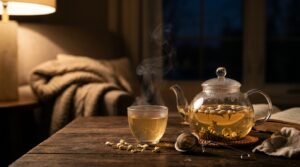
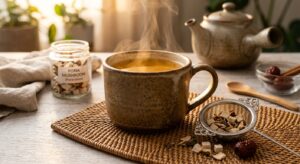
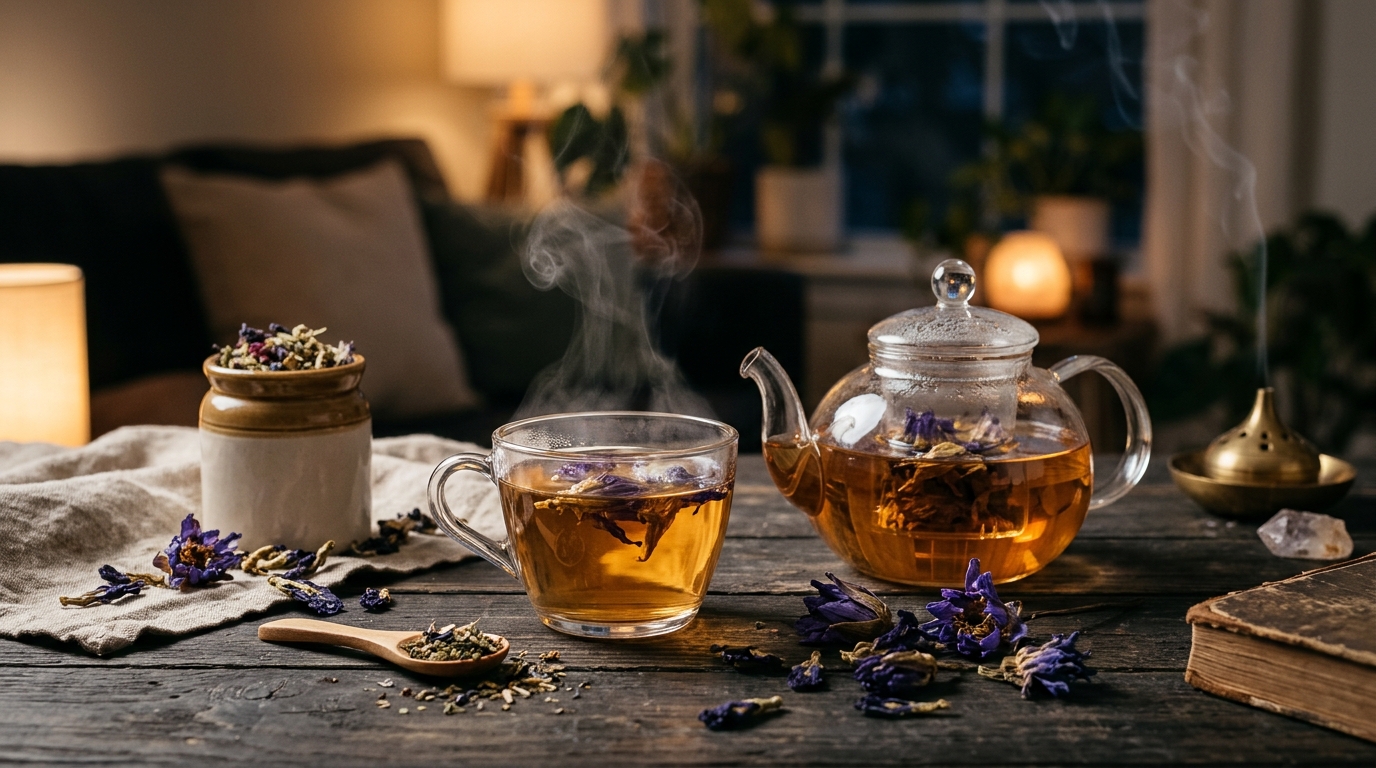
In the cup, blue lotus is delicate rather than dramatic. The flavor is soft, lightly floral, and a little earthy, with a faint sweetness that pairs well with other calming herbs. Many people find the act of preparing it, watching the pale petals unfurl in hot water, to be as relaxing as the drink itself. Treat it as a gentle evening companion rather than a sedative, and it rewards you with a calm, aromatic pause.
2
cups
Ingredients
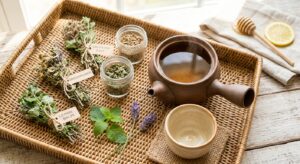
- 2 tspdried blue lotus petals
- 480 mlwater (90°C / 194°F)
- —raw honey to taste (optional)
- —a slice of lemon or a pinch of dried lavender (optional)
How to Brew
Click on an item below to shop for the recommended items for this recipe on Amazon.
As an Amazon Associate, we earn from qualifying purchases.
- Bring fresh water to a boil, then let it rest for about a minute so it cools to roughly 90°C (194°F). Boiling water can scorch the delicate petals and push the flavor toward bitter.
- Place the dried blue lotus petals in a tea infuser or directly into a warmed teapot. Use about 1 teaspoon of petals per 240 ml of water.
- Pour the hot water over the petals slowly and watch them open and float. Cover the cup or pot with a small saucer to trap the steam and aroma.
- Steep for 7 to 10 minutes. Start tasting at 7 minutes, as longer steeping deepens the earthy notes without adding much sweetness.
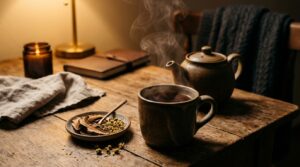
- Strain out the petals, sweeten with a little raw honey if you like, and sip slowly in a dim, quiet space.
- Add 2 tablespoons of dried blue lotus petals to a clean glass jar, which is a little more than the hot ratio because cold water extracts more gently.
- Pour 1 liter of cold, filtered water over the petals and stir once so every petal is wet.
- Seal the jar and refrigerate for 8 to 12 hours, or overnight. Avoid leaving it longer than 12 hours, as the flavor can turn flat.
- Strain through a fine mesh strainer into a pitcher or fresh jar, gently pressing the petals to release the last of the liquid.
- Serve chilled over ice, with a thin slice of cucumber or a few mint leaves. Drink within 48 hours and keep refrigerated.
- Heat 240 ml of water to about 95°C (203°F) and add 2 heaped teaspoons of dried blue lotus petals, double the usual strength, since the ice will dilute it.
- Steep, covered, for 10 minutes so the petals release their full aroma, then strain out the plant material.
- Stir in honey or agave while the concentrate is still warm so it dissolves completely.
- Fill a tall glass with ice and pour the warm concentrate over it. The ice will chill and dilute it to a drinkable strength in seconds.
- Garnish with a lemon wheel or a few edible flowers and enjoy right away for the brightest floral aroma.
Health Benefits
Traditionally used to ease tension at the end of the day, with alkaloids such as nuciferine thought to contribute to a calming effect. Human clinical evidence is limited, so most support comes from traditional use and early lab research.
The warm, aromatic ritual of brewing and sipping tea helps signal the body to wind down. Caffeine-free and gently floral, it fits well into a pre-sleep routine.
The petals contain flavonoids such as quercetin and kaempferol, which help neutralize free radicals in laboratory settings. This is a supportive benefit common to many flower teas rather than a unique property of blue lotus.
Traditionally associated with a sense of ease and light euphoria, likely tied to its alkaloid content. The effect in a standard cup of tea is subtle and varies between individuals.
🧪 Key Bioactive Compounds
The Science Behind Blue Lotus
The scientific picture of blue lotus is still developing. Nymphaea caerulea contains aporphine alkaloids, notably nuciferine and apomorphine, which have been studied for their interactions with dopamine and serotonin receptors. These pathways are involved in mood, relaxation, and sleep, which may explain the plant’s long reputation as a calming flower. However, most of this research has been done in laboratory or animal settings, and the concentration of these alkaloids in a cup of tea is not well characterized.
The petals also contain a range of flavonoids, including quercetin, kaempferol, and myricetin. These polyphenols are widely studied for their antioxidant activity, meaning they help neutralize unstable molecules called free radicals. While this is beneficial, it is a property shared with many other flowers and teas, so it is best viewed as a bonus rather than the main draw.
It is important to be honest about what we do not yet know. There are very few controlled human trials on blue lotus tea, so claims about strong sedative or euphoric effects should be treated with caution. A gentle, mindful cup in the evening is well supported by tradition and by the soothing nature of the ritual itself, but it should not be considered a treatment for sleep disorders or anxiety.
Brewing Tips
- Use a covered cup or teapot while steeping to keep the fragile floral aroma from drifting away.
- Store dried petals in an airtight, opaque container away from light and heat to preserve their color and scent.
- Start with a single cup and a small amount of petals to see how your body responds before making it a regular habit.
- Pair the tea with a screen-free evening routine, such as stretching, journaling, or soft music, to get the most from its calming ritual.
- Reuse the petals for a lighter second infusion, adding an extra minute or two of steeping time.