Natural killer cells, or NK cells, are among the body’s most remarkable defenders. These specialized white blood cells patrol the bloodstream around the clock, identifying and destroying virus-infected cells and abnormal cells before they can establish a foothold. Unlike other immune cells, NK cells act fast, requiring no prior exposure to a threat before launching an attack. Supporting their activity has become a growing focus in both integrative medicine and mainstream immunology, and certain medicinal herbs have shown genuine promise in this area.
For centuries, herbalists across East Asia, Europe, and the Americas have reached for specific plants when communities faced illness and seasonal vulnerability. Reishi mushroom, revered in Traditional Chinese Medicine as the “mushroom of immortality,” was prescribed to tonify the body’s vital energy and fortify resistance to disease. Astragalus root, another cornerstone of Chinese herbal medicine, was used to strengthen what practitioners called wei qi, the protective energy that shields the body from external pathogens. Elderberry, long cherished in European folk medicine, was made into syrups, wines, and infusions as a shield against winter infections. These three herbs now share a growing body of clinical and laboratory research supporting their traditional reputations.
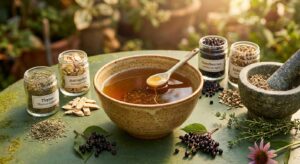
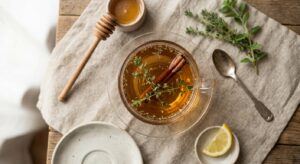
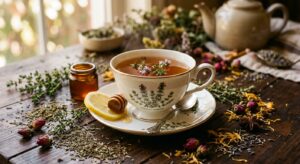
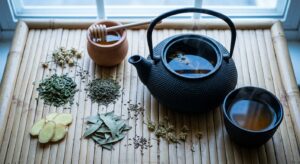
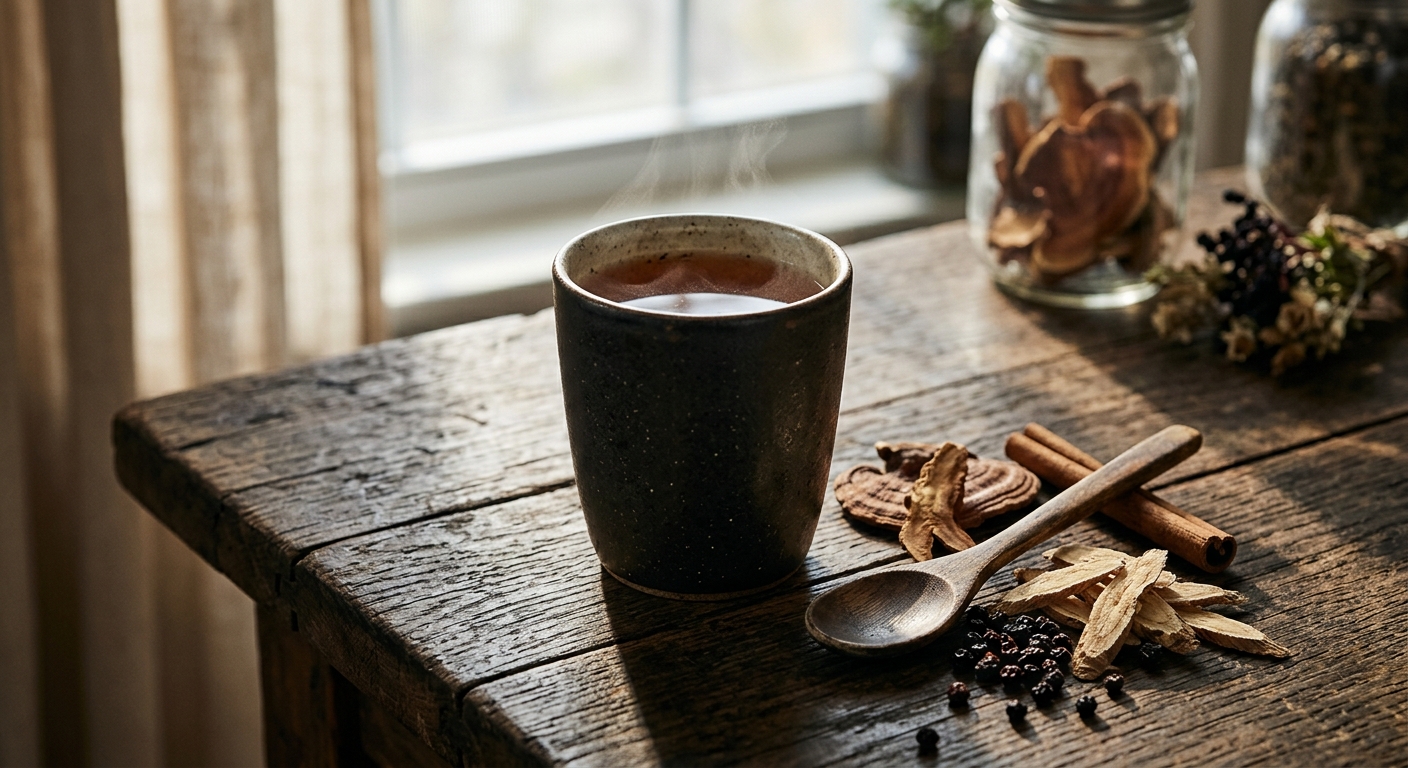
This NK Cell Activation Tea brings together these three time-honored botanicals in a single warming cup. The result is earthy, slightly sweet, and richly complex, with a deep reddish-amber hue that signals the presence of anthocyanins, beta-glucans, and polysaccharides working together. Whether you drink it at the first sign of a cold, during high-stress periods when immunity tends to dip, or as a daily tonic through autumn and winter, this blend offers both comfort and genuine physiological support.
2
cups
Ingredients
- 2 tspdried reishi mushroom slices or powder
- 2 tspdried astragalus root slices
- 1 tbspdried elderberries
- 500 mlwater (98°C / 208°F)
- —raw honey or maple syrup to taste (optional)
- —a cinnamon stick for warmth (optional)
How to Brew
Click on an item below to shop for the recommended items for this recipe on Amazon.
As an Amazon Associate, we earn from qualifying purchases.
- Add the dried reishi slices, astragalus root, and dried elderberries to a small saucepan with 500 ml of cold, filtered water.
- Bring the water to a gentle boil over medium heat, then reduce the heat to a low simmer. Add the optional cinnamon stick at this stage.
- Simmer uncovered for 20 to 25 minutes, allowing the liquid to reduce slightly and darken into a deep reddish-amber color. Stir occasionally and press the herbs lightly with a spoon to help release their compounds.
- Remove from heat and allow to rest for 3 to 5 minutes. This brief resting period allows the elderberries to release their remaining anthocyanins into the still-hot liquid.
- Strain the tea through a fine mesh strainer or cheesecloth into two mugs, pressing the spent botanicals firmly to extract every drop of liquid.
- Sweeten with raw honey or maple syrup if desired. Serve immediately while hot and fragrant.
- Place the dried reishi slices, astragalus root, and dried elderberries into a clean glass jar. Use slightly more herb than the hot brew method: 3 teaspoons of reishi, 3 teaspoons of astragalus, and 1.5 tablespoons of elderberries per 500 ml of water.
- Pour 500 ml of cold, filtered water over the herbs. Stir briefly to ensure all plant material is submerged, then press the herbs down gently with a spoon.
- Seal the jar with a lid and leave it at room temperature for 2 hours to begin the extraction process, then transfer to the refrigerator.
- Allow the herbs to steep in the refrigerator for a further 10 to 14 hours, ideally overnight. The cold and slow extraction draws out polysaccharides and milder flavonoids while leaving behind some of the harsher bitter compounds.
- When ready, strain through a fine mesh strainer or cheesecloth into a clean vessel. Squeeze the botanicals firmly to extract the full yield.
- Serve chilled over ice, or gently warm a portion in a saucepan if you prefer a warm cup. Sweeten with honey dissolved in a small amount of warm water before adding to the cold brew. Consume within 3 days and keep refrigerated.
- Combine 2 tablespoons of dried reishi slices, 2 tablespoons of astragalus root, and 3 tablespoons of dried elderberries in a medium saucepan with 1 liter of cold, filtered water.
- Bring to a boil over medium heat, then reduce immediately to the lowest possible simmer. Add 2 cinnamon sticks and a small slice of fresh ginger if desired for additional warmth and antimicrobial support.
- Simmer very gently for 45 to 60 minutes with the lid slightly ajar, allowing slow evaporation. The liquid should reduce by approximately half, yielding around 500 ml of concentrated decoction. Check occasionally and add a small splash of water if the liquid reduces too aggressively.
- Remove from heat and allow to cool for 10 minutes. Strain through a fine mesh strainer lined with cheesecloth into a clean glass jar, pressing the botanicals firmly to extract all liquid.
- Allow the concentrate to cool completely before sealing the jar. Label it with the date and refrigerate immediately.
- To serve, dilute approximately 60 to 80 ml of concentrate with 160 to 180 ml of hot water, adjusting to taste. Sweeten with honey, add a squeeze of lemon, or stir in a small amount of elderberry syrup for additional immune support. One serving of concentrate equals roughly one standard cup of the brewed tea.
Health Benefits
Multiple in vitro and animal studies have demonstrated that beta-glucans from reishi mushroom significantly increase NK cell cytotoxicity. A 2012 human pilot study found that reishi supplementation increased NK cell proliferation markers in cancer patients after just 12 weeks, suggesting meaningful immune upregulation.
A 2016 meta-analysis published in Nutrients found that standardized elderberry supplementation reduced influenza duration by an average of 3.86 days compared to placebo. The proposed mechanism involves both direct antiviral activity of anthocyanins and stimulation of cytokine production by immune cells.
Astragalus root functions as an adaptogen with a particular affinity for the immune system. Research has shown that astragalosides help restore depressed T-cell and NK cell counts in individuals experiencing chronic stress, reversing the immunosuppressive effects of elevated cortisol.
Ganoderic acids in reishi have demonstrated the ability to inhibit viral replication in studies involving influenza and herpes simplex viruses, while elderberry anthocyanins have been shown to physically bind to virus envelope proteins, preventing cellular entry.
Unlike synthetic immunostimulants that can drive excessive inflammation, the compounds in this blend tend to modulate rather than simply amplify immune response. Reishi triterpenoids, in particular, have been shown to reduce pro-inflammatory cytokines like TNF-alpha and IL-6 while preserving or enhancing antiviral immune activity.
🧪 Key Bioactive Compounds
The Science Behind Reishi Mushroom
The immune-modulating effects of this blend are rooted in a well-characterized class of molecules called beta-glucans, specifically the beta-1,3/1,6-D-glucan polysaccharides found in the cell walls of Ganoderma lucidum (reishi mushroom). These large carbohydrate molecules bind to pattern recognition receptors on the surface of NK cells, macrophages, and dendritic cells, including Dectin-1 and complement receptor 3 (CR3). This binding activates a downstream signaling cascade that increases NK cell proliferation, enhances their cytotoxic capacity, and promotes the production of interferon-gamma, one of the body’s key antiviral signaling molecules. In practical terms, this means the immune system’s first-responder cells become more numerous and more effective at detecting and eliminating threats.
Astragalus root contributes a distinct but complementary mechanism. Its primary bioactive compounds, the astragalosides, particularly Astragaloside IV and its metabolite cycloastragenol, have been studied for their ability to activate telomerase in immune cells. Telomeres are the protective caps on chromosomes that shorten with each cell division, eventually triggering cellular senescence and death. Immune cells with longer telomeres remain functionally active for longer periods. Research published in the Journal of Immunology has suggested that telomerase activation via cycloastragenol may help maintain a more youthful and responsive immune cell population, particularly in older individuals or those under chronic physiological stress. Beyond telomere biology, astragalosides also directly promote the proliferation of T-lymphocytes and have demonstrated the ability to partially reverse the immunosuppressive effects of sustained psychological stress in both animal models and preliminary human studies.
Elderberry occupies a different but equally important role in this blend. Its anthocyanins, particularly cyanidin-3-glucoside and cyanidin-3-sambubioside, have demonstrated a dual mechanism of action in antiviral research. First, these flavonoids appear to bind directly to viral surface proteins, physically blocking the hemagglutinin spikes that viruses use to attach to and penetrate host cell membranes. Second, elderberry flavonoids have been shown to stimulate the production of several immune cytokines, including interleukins IL-1-beta, IL-6, IL-8, and TNF-alpha, at concentrations that support a rapid antiviral response. A randomized controlled trial published in Nutrients in 2016 confirmed that elderberry extract reduced influenza duration by nearly four days and symptom severity significantly compared to placebo, providing meaningful clinical validation for what European herbalists have observed empirically for generations.
Brewing Tips
- Buy reishi mushroom in sliced whole form rather than powder when possible. Slices allow for cleaner straining and are easier to assess for quality and authenticity. Powder can work but requires a very fine strainer or coffee filter to prevent a gritty texture in the finished cup.
- Astragalus root slices can be reused once after their first decoction. Simply refrigerate the spent slices in water and run them through a second, slightly longer simmer the following day. The second extraction will be lighter in flavor but still rich in water-soluble polysaccharides.
- Prepare the concentrate on Sunday to create a full week of immune tonic servings with minimal daily effort. Store in a well-sealed glass jar at the back of the refrigerator where temperatures are most stable, and consume within 5 days for best potency and safety.