For centuries, herbalists and midwives across cultures have reached for specific plants to support women’s intimate health. From the astringent bark preparations of Indigenous North American healers to the calendula-infused remedies of European folk medicine, plant allies have long been used to maintain vaginal comfort, reduce irritation, and support the delicate microbial ecosystem that keeps this region healthy. Today, modern research is beginning to confirm what traditional healers knew intuitively: certain herbs carry antimicrobial, anti-inflammatory, and hormone-modulating compounds that genuinely benefit vaginal wellness.
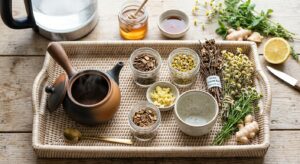
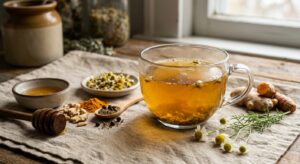
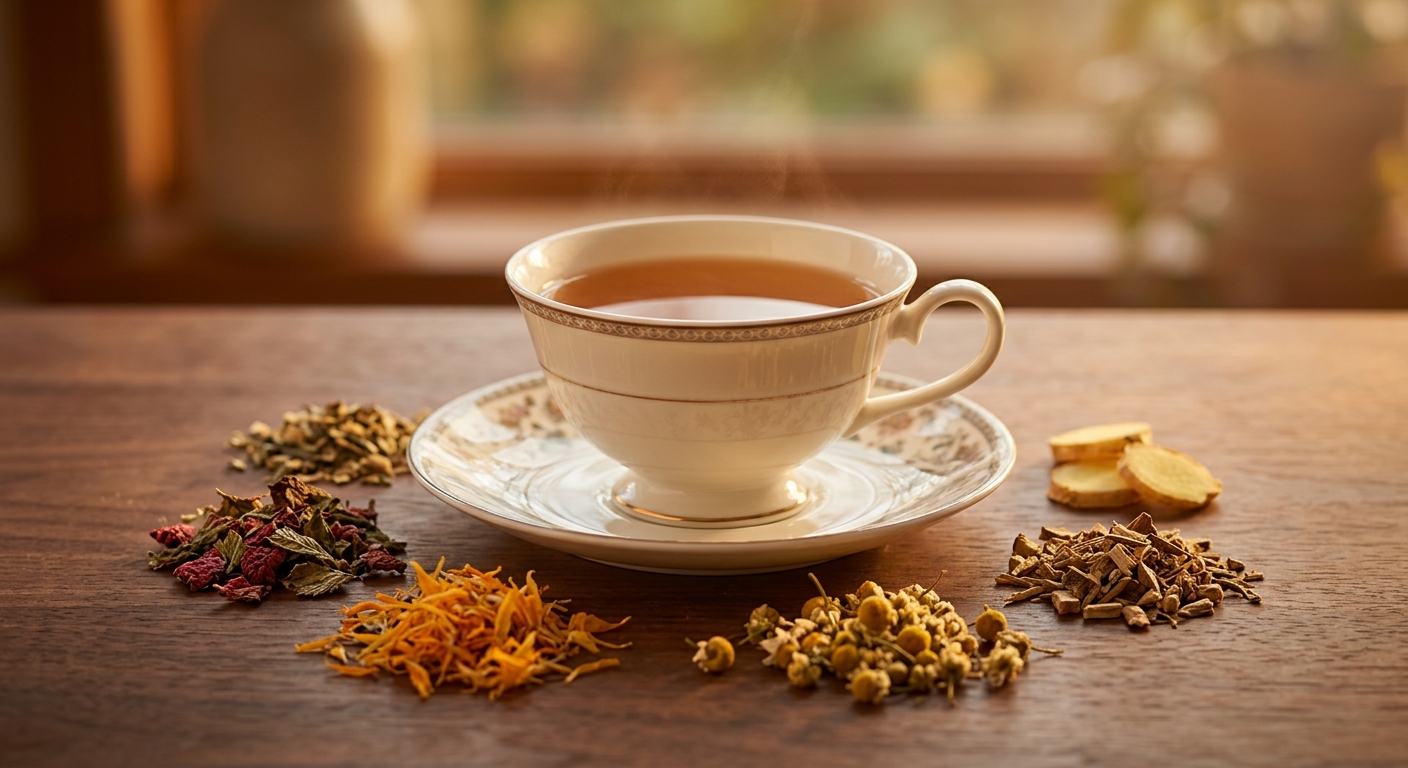
This tea blend centers on three powerful herbs: red raspberry leaf, calendula, and chamomile, with supporting notes of echinacea and ginger. Red raspberry leaf is rich in fragarine, a uterine-toning alkaloid, and tannins that help restore healthy vaginal pH. Calendula brings potent antifungal and antibacterial resin compounds, traditionally used to soothe irritated mucous membranes. Chamomile contributes its renowned anti-inflammatory flavonoids, while a touch of ginger warms the blend and supports circulation to the pelvic region. Together, they form a gentle yet effective daily ritual for feminine balance.
Whether you are managing recurring discomfort, supporting your body through hormonal transitions, or simply nurturing a proactive wellness practice, this tea offers a deeply comforting and evidence-informed approach. The flavor is earthy, gently floral, and subtly warming, a cup that feels as good to hold as it is to drink. Brewed mindfully and enjoyed consistently, it represents one of the simplest and most nourishing acts of self-care available.
2
cups
Ingredients
- 2 tspdried red raspberry leaf
- 1 tspdried calendula petals
- 1 tspdried chamomile flowers
- 0.5 tspdried echinacea root or aerial parts
- 3 slicesfresh ginger root (or 0.5 tsp dried ginger)
- 480 mlwater (90 to 95°C / 194 to 203°F)
- —raw honey or lemon juice to taste (optional)
How to Brew
Click on an item below to shop for the recommended items for this recipe on Amazon.
As an Amazon Associate, we earn from qualifying purchases.
- Heat your water to 90 to 95°C (194 to 203°F). Avoid a full rolling boil, as excessive heat can degrade delicate flavonoids in the chamomile and calendula. If using a standard kettle, bring to boil and let it rest for 60 to 90 seconds before pouring.
- Combine the dried red raspberry leaf, calendula petals, chamomile flowers, and echinacea into your tea infuser or loose-leaf strainer. Add fresh ginger slices directly to the mug or teapot alongside the infuser.
- Place the infuser in your mug or teapot and pour the hot water over all the herbs, making sure the ginger slices are fully submerged. Cover the mug with a small saucer or lid to trap volatile aromatic compounds and prevent heat loss.
- Steep for 10 to 15 minutes. For a lighter, more floral cup, remove the infuser at 10 minutes. For a deeper, more medicinal infusion with stronger astringency from the raspberry leaf tannins, steep the full 15 minutes.
- Remove the infuser and ginger slices. Add raw honey or a small squeeze of lemon juice to brighten the flavor and support the mildly acidic pH-friendly profile of the blend. Sip slowly and enjoy warm.
- Measure out the full ingredient quantities for two servings: 2 tsp red raspberry leaf, 1 tsp calendula petals, 1 tsp chamomile flowers, 0.5 tsp echinacea, and 3 slices of fresh ginger. Place all herbs into a clean glass jar with a tight-fitting lid.
- Pour 480 ml of cold or room-temperature filtered water over the herbs. Do not use hot water. Stir gently with a long spoon to ensure all dry herbs are fully saturated and there are no air pockets trapping dry material at the top.
- Seal the jar and leave it at room temperature for 1 hour to allow initial hydration of the herbs, then transfer to the refrigerator. Steep for a total of 8 to 12 hours. Overnight is the most practical and effective timing.
- In the morning, strain the infusion through a fine mesh strainer or cheesecloth into a clean glass or pitcher, pressing the herbs gently to extract the remaining liquid without forcing bitter compounds through.
- Taste before adding sweetener. Cold brew tends to be naturally smoother and slightly sweeter than hot brew. Add honey dissolved in a small amount of warm water if desired, or a few fresh mint leaves for brightness. Serve over ice or drink chilled directly from the jar.
- Combine 480 ml of cold filtered water with the ginger slices and echinacea root or aerial parts in a small saucepan. Bring this mixture to a low boil over medium heat, then immediately reduce to a gentle simmer.
- Simmer the ginger and echinacea uncovered for 15 minutes, allowing the tougher plant material to fully release its active compounds into the water. The liquid will darken slightly and take on a warm, spicy aroma.
- After 15 minutes of simmering, reduce the heat to the lowest setting and add the red raspberry leaf, calendula petals, and chamomile flowers directly to the saucepan. Cover with a lid and allow these more delicate herbs to infuse off the active heat for a further 10 minutes without boiling.
- Remove from heat entirely and allow to rest covered for an additional 5 minutes. This resting period lets volatile aromatic oils from chamomile and calendula return into the liquid rather than evaporating.
- Strain the entire decoction through a fine mesh strainer into a heatproof mug or teapot, pressing the herbs firmly to recover all liquid. Adjust flavor with honey or lemon and drink warm. This method produces the most potent and medicinally concentrated cup of the three methods.
Health Benefits
The ellagitannins in red raspberry leaf and the triterpenoids in calendula work synergistically to maintain the mildly acidic environment (pH 3.8 to 4.5) that favors beneficial Lactobacillus species and inhibits overgrowth of harmful organisms like Gardnerella vaginalis.
Apigenin from chamomile and oleanolic acid from calendula reduce the production of pro-inflammatory cytokines in mucosal tissue. Traditional herbal medicine has long used both plants topically and internally for inflamed or irritated mucous membranes, and emerging laboratory research supports this use.
Calendula’s resin compounds, including oleanolic acid and lupeol, have demonstrated antifungal activity against Candida albicans in laboratory studies. While not a replacement for antifungal treatment, regular consumption may provide supportive protection for those prone to yeast overgrowth.
Red raspberry leaf has been used for generations as a uterine tonic. Its fragarine content supports smooth muscle tone in the pelvic region, while its mild phytoestrogenic compounds may help buffer estrogen fluctuations that contribute to vaginal dryness and discomfort during hormonal transitions.
Echinacea’s alkylamides and polysaccharides have been shown in multiple clinical studies to reduce the frequency and duration of recurrent infections. For women prone to recurring bacterial vaginosis or urinary tract infections, regular immune support through echinacea-containing teas may reduce recurrence rates.
🧪 Key Bioactive Compounds
The Science Behind Red Raspberry Leaf
The science behind this vaginal health tea blend is rooted in the interplay between plant polyphenols, alkaloids, and immune-modulating compounds and the delicate ecosystem of the vaginal microbiome. The healthy vaginal environment is dominated by Lactobacillus species, which produce lactic acid and hydrogen peroxide to maintain an acidic pH that discourages pathogen colonization. Red raspberry leaf’s ellagitannins are potent antiadhesive compounds: research has shown that tannin-rich extracts can prevent harmful bacteria from binding to epithelial cell surfaces, a critical first line of defense against both bacterial vaginosis and urinary tract infections. These same tannins contribute a mild astringency that may help firm and tone inflamed mucosal tissue over time.
Calendula officinalis has attracted significant scientific interest for its resin-derived triterpenoids, particularly oleanolic acid and lupeol, which have demonstrated dose-dependent antifungal activity against Candida albicans in in vitro studies. Beyond antifungal properties, calendula’s flavonoids reduce nuclear factor kappa-B (NF-kB) signaling, a master regulator of inflammatory gene expression in mucosal tissue. This anti-inflammatory mechanism is shared with chamomile’s apigenin, which has been extensively studied for its ability to downregulate interleukin-6 and tumor necrosis factor-alpha, two cytokines centrally involved in the uncomfortable inflammation associated with vaginal infections and irritation.
Echinacea’s contribution is primarily immunological. Its alkylamides bind to cannabinoid receptor type 2 (CB2) expressed on immune cells, modulating the innate immune response without overstimulation. Clinical trials have demonstrated that standardized echinacea preparations can reduce the recurrence of vaginal candidiasis when used alongside conventional treatment. Meanwhile, ginger’s 6-gingerol inhibits cyclooxygenase (COX) enzymes similarly to non-steroidal anti-inflammatory drugs, reducing prostaglandin synthesis. Elevated prostaglandins are associated with both pelvic pain and increased susceptibility to vaginal mucosal inflammation, making ginger a mechanistically sound addition to this blend beyond its role as a flavoring agent.
Brewing Tips
- Use a covered mug or place a saucer on top during steeping for all methods. Volatile aromatic oils in chamomile and calendula evaporate easily in open air, and covering the cup preserves both the medicinal value and the floral aroma of the finished tea.
- For best results, drink one to two cups daily for at least four to six weeks before evaluating the cumulative effects on vaginal comfort and balance. Herbal teas work gently and cumulatively, not as acute treatments.
- Source your herbs from reputable organic suppliers and check that calendula is labeled as Calendula officinalis, not just ‘pot marigold,’ to ensure you are getting the correct species with documented medicinal properties.