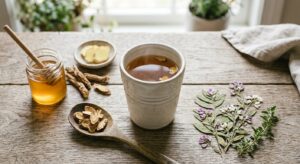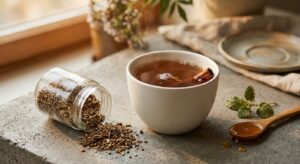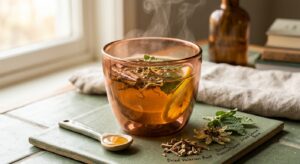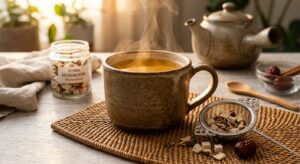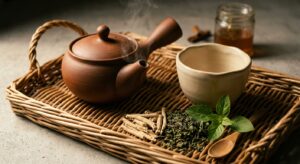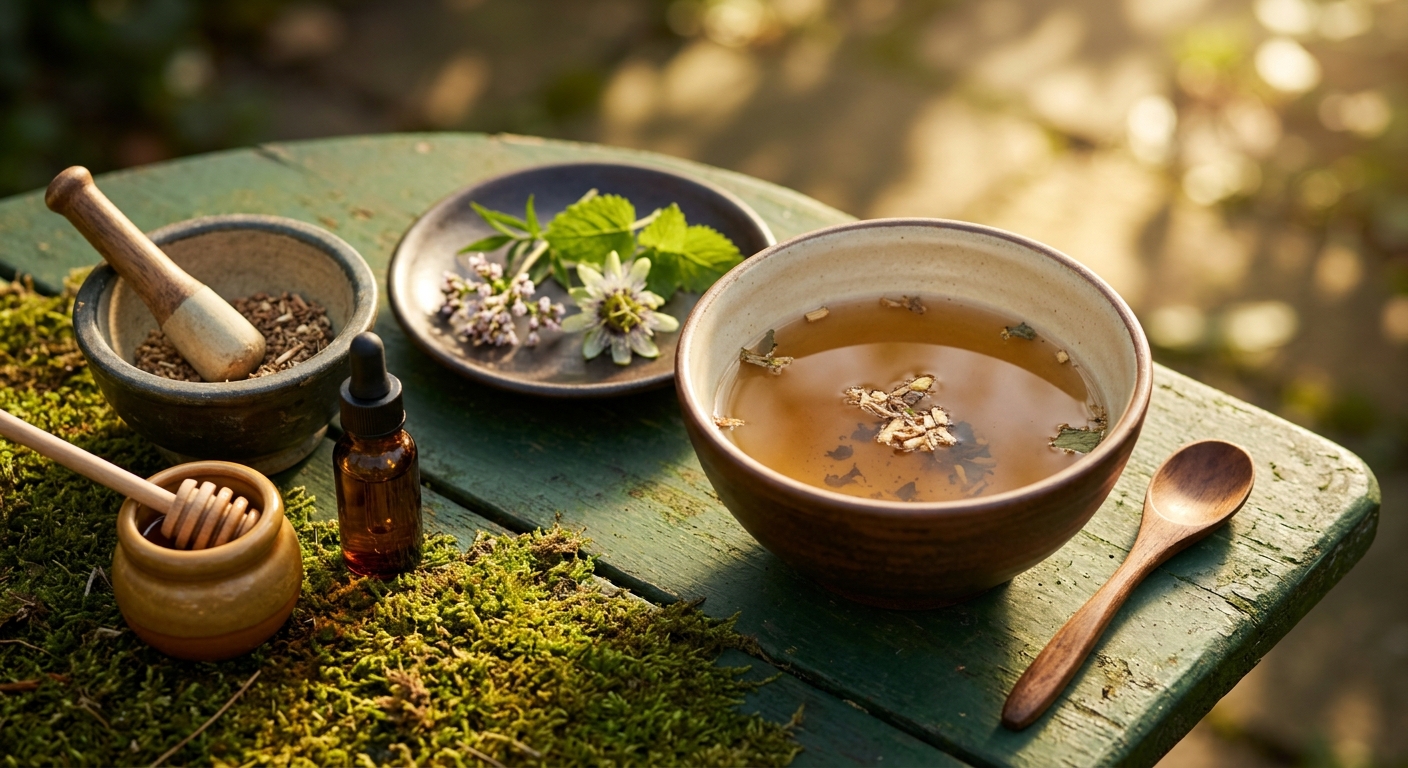
Long before sleep aids lined pharmacy shelves, herbalists across Europe, Asia, and the Americas turned to the plant world to ease the transition from wakefulness into sleep. Valerian root, with its long history in Greek and Roman medicine, was prescribed by Hippocrates and later Galen for its calming properties. Passionflower, native to the Americas, was adopted by European settlers who witnessed Indigenous peoples using it to treat restlessness and nervous tension. Lemon balm, a garden staple in medieval monastery apothecaries, was called the ‘gladdening herb’ by scholars who believed it lifted the spirit and settled the mind before bed. Together, these three herbs form a bedtime blend rooted in centuries of intentional, plant-based sleep care.
What makes this tea more than just a warm drink is the ritual itself. The act of preparing and sipping a cup of herbal tea in the hour before bed signals to your nervous system that the day is ending. Dimming the lights, stepping away from screens, and holding a warm mug in your hands engages the parasympathetic nervous system, the branch responsible for rest and digest. The herbs in this blend amplify that signal with bioactive compounds that gently reduce cortisol activity, enhance GABA receptor sensitivity, and ease the physical tension that often keeps us lying awake with racing thoughts.
The flavor of this blend is earthy, herbaceous, and gently sweet, with the slight muskiness of valerian softened by the citrus-floral lift of lemon balm and the delicate, grassy sweetness of passionflower. It is not a glamorous tea, but it is an honest one, and that honesty is part of its charm. This is a tea that works quietly, the way sleep itself should arrive: gradually, gently, and without fanfare.
2
cups
Ingredients
- 1 tspdried valerian root
- 1 tspdried passionflower herb
- 1 tspdried lemon balm leaves
- 480 mlwater (90°C / 194°F)
- —raw honey to taste (optional)
- —a few drops of lavender extract (optional)
How to Brew
Click on an item below to shop for the recommended items for this recipe on Amazon.
As an Amazon Associate, we earn from qualifying purchases.
- Bring fresh, filtered water to 90°C (194°F). If you do not have a temperature-controlled kettle, bring water to a full boil and allow it to rest uncovered for 2 to 3 minutes before using.
- Combine 1 tsp dried valerian root, 1 tsp dried passionflower, and 1 tsp dried lemon balm in a tea infuser or small muslin bag. Place the infuser in a warmed teapot or directly in your mug.
- Pour the hot water over the herbs and immediately cover the vessel with a lid or small plate. Covering is essential to trap the volatile aromatic compounds, particularly the terpenoids in lemon balm, which carry much of the calming potency.
- Steep for 10 to 15 minutes. The longer end of this range will produce a stronger, more sedating cup. Taste at 10 minutes and continue steeping based on your preference.
- Remove the infuser and sweeten with raw honey if desired. Sip slowly in the 30 to 60 minutes before bed, ideally with the lights dimmed and a book or gentle music nearby.
- Measure 1.5 tsp dried valerian root, 1.5 tsp dried passionflower, and 1.5 tsp dried lemon balm into a clean glass jar. The slightly increased ratio compensates for the slower cold extraction rate.
- Pour 480 ml of room-temperature filtered water over the herbs. Stir gently with a long spoon to ensure all plant material is fully submerged.
- Seal the jar with a lid and allow it to rest at room temperature for 1 hour, then transfer to the refrigerator and steep for an additional 8 to 10 hours, or overnight.
- When ready to use, strain the herbs through a fine-mesh strainer or cheesecloth into a clean container. Press gently on the spent herbs to extract the remaining liquid.
- To serve, pour the cold brew into a small saucepan and warm gently over low heat to approximately 60°C (140°F), stirring in honey if desired. Warming the cold brew releases the aromatic compounds again and prepares the body for sleep more effectively than a cold cup.
- Place 2 tsp dried valerian root in a small saucepan with 600 ml of cold filtered water. Starting with cold water and slowly bringing it to temperature helps draw compounds out of the dense root tissue gradually and thoroughly.
- Bring the water and valerian root to a gentle simmer over medium-low heat, aiming for 85 to 90°C (185 to 194°F). Do not allow the liquid to reach a rolling boil, as excessive heat can break down some of the more volatile calming compounds.
- Once simmering, reduce heat to low and cover the saucepan. Allow the valerian root to simmer gently for 20 to 25 minutes, checking occasionally to ensure the liquid is not evaporating too quickly. Add a small splash of water if needed.
- Remove from heat and add 1.5 tsp dried passionflower and 1.5 tsp dried lemon balm directly to the saucepan. Cover and allow these more delicate herbs to infuse in the residual heat for an additional 8 to 10 minutes. This two-stage method protects the lemon balm and passionflower from over-cooking.
- Strain the decoction through a fine-mesh strainer into your mug, pressing the herbs firmly to extract all liquid. You should have approximately 360 to 400 ml of rich, deeply colored tea. Sweeten with honey and sip mindfully in the 45 minutes before sleep.
Health Benefits
Clinical trials on valerian root have found that regular use can reduce the time it takes to fall asleep, particularly in adults with mild insomnia. The valerenic acid content modulates GABA-A receptors in ways that promote the transition from wakefulness to light sleep without morning grogginess.
Passionflower has been the subject of several randomized trials comparing it to low-dose pharmaceutical anxiolytics. A 2011 study found passionflower extract comparable to oxazepam for generalized anxiety disorder, with fewer side effects and no impairment of job performance.
Lemon balm and valerian used in combination have been studied specifically for sleep quality improvement. A 2014 study in Phytomedicine found that a combined valerian and lemon balm extract significantly improved sleep quality scores in adults with stress-associated sleep disorders.
The rosmarinic acid in lemon balm acts as a natural GABA transaminase inhibitor, effectively increasing GABA availability in the central nervous system. This helps down-regulate the sympathetic nervous system response, reducing the physical symptoms of stress such as elevated heart rate and muscle tension.
Chronic stress disrupts the natural cortisol curve, keeping evening cortisol levels elevated and interfering with melatonin production. Lemon balm has shown adaptogenic-like properties in reducing salivary cortisol responses and may support the body’s natural return to a low-cortisol evening state conducive to sleep.
🧪 Key Bioactive Compounds
The Science Behind Valerian Root
The sedative reputation of this herbal trio is not folklore alone. Valerian root contains valerenic acid, a sesquiterpene compound that acts directly on GABA-A receptors in the brain, the same receptor class targeted by benzodiazepine drugs, but with a gentler, non-addictive mechanism. Research published in the American Journal of Medicine and SLEEP journal has found that valerian supplementation reduces subjective sleep latency and improves self-reported sleep quality, particularly with consistent use over two to four weeks. Unlike pharmaceutical sleep aids, valerian does not appear to suppress REM sleep, the restorative stage associated with memory consolidation and emotional regulation.
Lemon balm contributes its calming effect through a different but complementary pathway. Its high rosmarinic acid content inhibits GABA transaminase, the enzyme responsible for breaking down GABA in the synaptic cleft. The result is effectively a longer duration of GABA activity at the neural synapse, producing a sustained calming effect that lowers the threshold for sleep onset. A double-blind crossover study published in Psychosomatic Medicine demonstrated that lemon balm extract significantly reduced anxiety scores and insomnia symptoms in volunteers subjected to laboratory stress conditions. Its citral compounds also interact with nicotinic and muscarinic acetylcholine receptors, contributing to the reduction in mental chatter that many people experience as they sip this tea.
Passionflower rounds out the neurochemical picture with its flavone glycosides, vitexin and orientin, which have demonstrated affinity for serotonin receptors in addition to GABA pathways. This dual-action quality makes passionflower particularly useful for anxiety-driven insomnia, where psychological worry rather than physical fatigue is the primary barrier to sleep. A randomized controlled trial published in Phytotherapy Research found that passionflower tea improved total sleep time, sleep efficiency, and wake-after-sleep-onset measures in adults with mild sleep irregularities. The synergy between these three herbs means that the blend engages multiple neurological pathways simultaneously, making it more effective in combination than any single herb would be alone.
Brewing Tips
- Drink this tea 30 to 45 minutes before your intended sleep time, not right before you lie down. This allows the compounds to be absorbed and begin working as you complete your wind-down routine.
- Store dried valerian root in an airtight, opaque container away from light and moisture. Valerian’s volatile compounds degrade quickly when exposed to air, and fresh, properly stored root makes a noticeably more effective tea than old or improperly stored herb.
- If you find the earthy, musky flavor of valerian root too strong on its own, increase the lemon balm ratio slightly or add a small amount of dried peppermint. Peppermint does not interfere with the sedative compounds and its natural sweetness and menthol aroma can mask the stronger notes of valerian effectively.