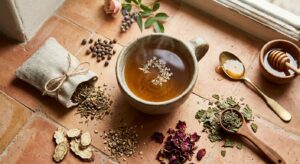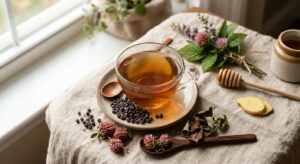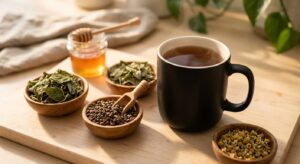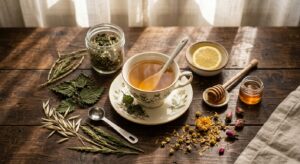
For generations, women across cultures have turned to the plant kingdom for relief from the discomfort of urinary tract issues. From the Indigenous peoples of North America, who used cornsilk as a gentle diuretic and soothing agent, to European herbalists who prescribed uva ursi leaves for bladder complaints as early as the 13th century, the tradition of botanical urinary support runs deep. Marshmallow root, revered in ancient Egyptian and Greek medicine, has long been prized for its ability to coat and calm irritated mucous membranes throughout the urinary system. Together, these three herbs form a time-tested trio that addresses bladder health from multiple angles.
What makes this blend particularly well-suited to women’s bladder health is the complementary nature of each herb’s action. Cornsilk (Zea mays) acts as a mild diuretic and anti-inflammatory, helping to flush the urinary tract while reducing irritation. Uva ursi (Arctostaphylos uva-ursi), also known as bearberry, contains arbutin, a compound that converts to hydroquinone in the urine and exerts a targeted antimicrobial effect. Marshmallow root (Althaea officinalis) contributes mucilaginous polysaccharides that coat the bladder lining, reducing the burning and urgency that so often accompany urinary discomfort. This is not a blend of vague herbal promises; it is a purposeful, evidence-informed formula.
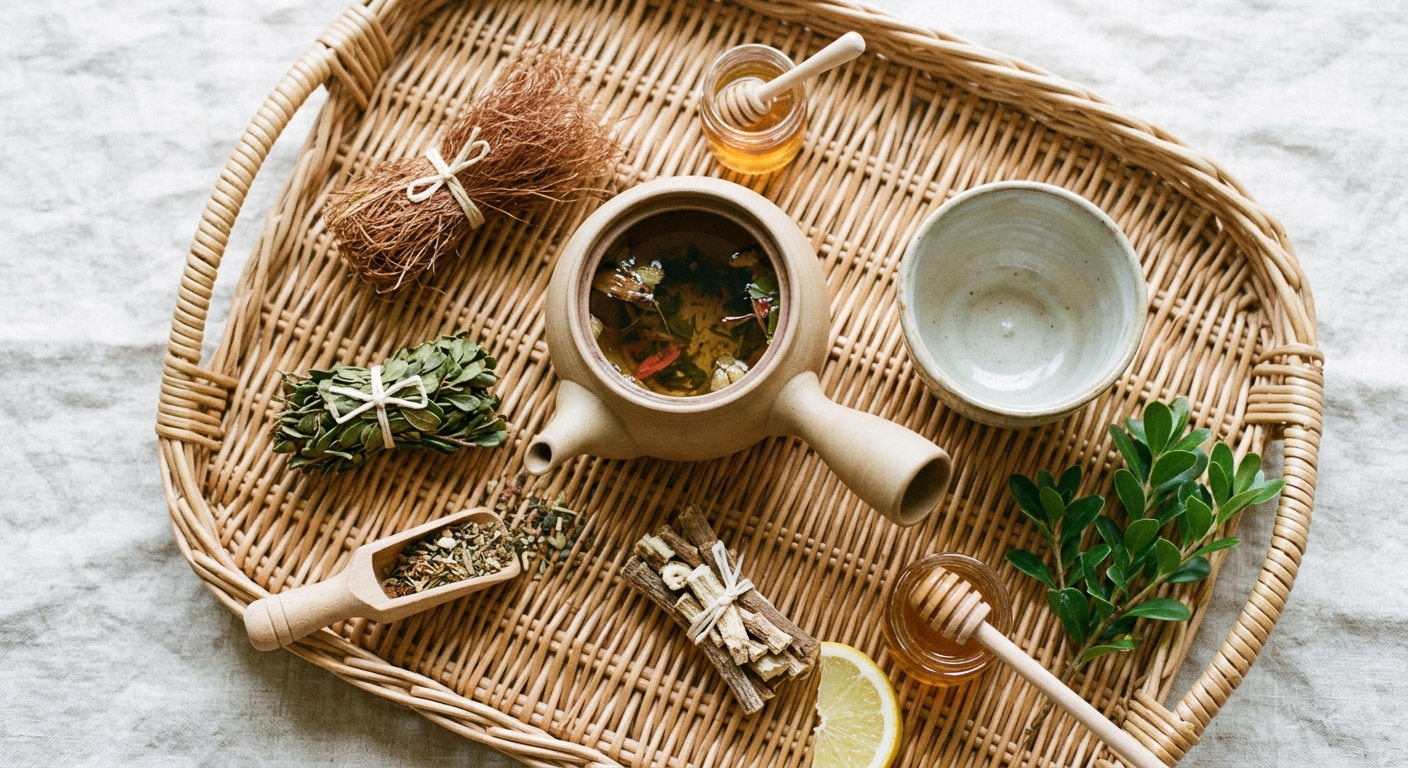
The tea itself is gentle in flavor and surprisingly pleasant to drink. Its pale golden color, mildly earthy sweetness, and slightly silky mouthfeel from the marshmallow root make it a calming ritual as much as a therapeutic one. Whether you are supporting your body through a recurring bout of discomfort, looking to maintain urinary tract health proactively, or simply exploring the rich tradition of women’s herbal medicine, this blend deserves a place in your wellness routine.
2
cups
Ingredients
- 2 tspdried cornsilk (Zea mays)
- 1 tspdried uva ursi leaves (Arctostaphylos uva-ursi)
- 1 tspdried marshmallow root (Althaea officinalis)
- 480 mlwater (90°C / 194°F)
- —raw honey or lemon to taste (optional)
How to Brew
Click on an item below to shop for the recommended items for this recipe on Amazon.
As an Amazon Associate, we earn from qualifying purchases.
- Heat filtered water to 90°C (194°F). If using a standard kettle without temperature control, bring water to a full boil and allow it to rest for 2 to 3 minutes before pouring.
- Measure 2 teaspoons of dried cornsilk, 1 teaspoon of dried uva ursi leaves, and 1 teaspoon of dried marshmallow root per 480 ml of water. Combine the herbs in a tea infuser or directly in a small teapot.
- Pour the hot water over the herbs and cover immediately with a lid or small plate. Covering the vessel traps the volatile aromatic compounds and keeps the temperature stable during steeping.
- Steep for a full 10 to 15 minutes. The longer end of this range extracts more of the marshmallow root’s soothing polysaccharides and is recommended when discomfort is most acute.
- Remove the infuser or strain the tea through a fine mesh strainer into your mug. The liquid should be a clear, pale golden yellow. A slightly silky or viscous texture is normal and indicates good marshmallow root extraction.
- Allow to cool to a comfortable drinking temperature and add raw honey or a squeeze of lemon if desired. Drink slowly and follow with a full glass of plain water to support urinary flushing.
- Combine 2 teaspoons of dried cornsilk, 1 teaspoon of dried uva ursi leaves, and 1.5 teaspoons of dried marshmallow root (slightly more than the hot brew ratio) in a clean glass jar. The extra marshmallow root compensates for the slower cold extraction.
- Add 480 ml of cold, filtered water to the jar. Stir gently to ensure all the dried herbs are fully submerged. Do not use warm or hot water, as the goal is a slow, cool extraction.
- Seal the jar with a lid and place it on your kitchen counter at room temperature for the first 2 hours to initiate extraction, then transfer to the refrigerator.
- Allow the herbs to steep in the refrigerator for a total of 8 to 12 hours. Overnight steeping is ideal for convenience and depth of extraction. The resulting liquid will be noticeably more viscous and deeply soothing than the hot brew version.
- Strain the cold brew through a fine mesh strainer or a piece of cheesecloth into a clean glass, pressing gently on the spent herbs to release the remaining gel-rich liquid from the marshmallow root.
- Serve over ice or chilled. The cold brew version keeps in the refrigerator in a sealed container for up to 48 hours. Drink within this window for best flavor and potency.
- Place 1.5 teaspoons of dried marshmallow root in a small saucepan and add 600 ml of cold, filtered water. Allow the marshmallow root to soak in the cold water for 5 minutes before turning on the heat. This cold-start technique gives the polysaccharides a head start before heat is applied.
- Bring the water and marshmallow root to a gentle simmer over medium-low heat, targeting 85 to 90°C (185 to 194°F). Avoid a rolling boil. Once simmering, reduce heat to low and maintain a steady, gentle simmer for 15 minutes.
- Add the dried cornsilk (2 teaspoons) and uva ursi leaves (1 teaspoon) to the simmering saucepan. Continue to simmer gently for an additional 10 minutes, keeping the lid slightly ajar to prevent excessive evaporation.
- Remove the saucepan from heat, cover fully with a lid, and allow the decoction to rest and cool for 10 minutes. This resting period allows the more delicate volatile compounds in the cornsilk to infuse into the liquid as the temperature drops.
- Strain the decoction through a fine mesh strainer into a heatproof mug or teapot, pressing the herbs gently to extract all the liquid. You should have approximately 400 to 450 ml of finished tea after evaporation.
- Taste before adding any sweetener. The decoction will be richer and slightly more complex than the hot brew. A small amount of raw honey can be added if the flavor is too earthy. Drink in two servings spaced 4 to 6 hours apart for sustained urinary support throughout the day.
Health Benefits
The arbutin in uva ursi is metabolized to hydroquinone in the urinary tract, where it has demonstrated antimicrobial activity against E. coli and other common uropathogens in multiple clinical and in vitro studies. A double-blind trial published in Phytotherapy Research found that uva ursi extract significantly reduced recurrent urinary tract infections compared to placebo over a one-month period.
Marshmallow root’s mucilaginous polysaccharides physically coat and protect the bladder epithelium and urethral lining, reducing the sensation of burning and urgency. This demulcent action is well-supported by traditional use and is consistent with the herb’s confirmed mucoadhesive properties documented in botanical pharmacognosy literature.
Cornsilk has been used as a gentle diuretic in North American and Chinese traditional medicine for centuries. Modern research suggests its flavonoids, including maysin, support increased urine output and kidney filtration, helping to flush the urinary system and reduce the concentration of irritants and potential pathogens in the bladder.
The combination of antimicrobial, anti-adhesion, and anti-inflammatory actions in this blend addresses multiple pathways involved in recurrent urinary tract issues. Ursolic acid in uva ursi has shown capacity to inhibit bacterial adhesion to bladder wall cells, a key step in the initiation of urinary tract infections, making this blend useful as a preventive as well as a symptomatic remedy.
Both cornsilk and uva ursi are rich in flavonoids and polyphenols that neutralize oxidative stress in urinary tract tissues. Chronic low-level inflammation and oxidative damage are associated with bladder overactivity and interstitial cystitis, and regular consumption of antioxidant-rich herbal teas may contribute to long-term tissue health and resilience.
🧪 Key Bioactive Compounds
The Science Behind Cornsilk
The science behind this bladder health blend centers on three distinct but complementary mechanisms. Uva ursi’s key compound, arbutin, is a phenolic glycoside that undergoes enzymatic hydrolysis in the urinary tract to release hydroquinone. At alkaline urinary pH levels, hydroquinone exerts a bacteriostatic and bactericidal effect on common uropathogens, particularly Escherichia coli, which accounts for the majority of urinary tract infections. Research published in the Journal of Ethnopharmacology and Phytotherapy Research has documented the clinical relevance of this mechanism, particularly in reducing recurrence rates of uncomplicated urinary tract infections in women. The additional presence of ursolic acid, a pentacyclic triterpenoid, contributes anti-adhesion properties that may prevent pathogenic bacteria from colonizing the bladder epithelium in the first place.
Marshmallow root’s therapeutic action operates through an entirely different pathway. Its high molecular weight mucilaginous polysaccharides, primarily composed of arabinogalactans, glucuronans, and rhamnogalacturonans, absorb water and swell to form a viscous, gel-like substance upon contact with the mucous membranes of the urinary tract. This physical barrier reduces direct irritation of the urothelium, decreases sensory nerve stimulation responsible for urgency and burning, and creates a temporary protective coating that allows the bladder lining to recover. Laboratory analyses have confirmed that marshmallow root polysaccharides have mucoadhesive properties and anti-inflammatory activity mediated partly through inhibition of complement activation.
Cornsilk contributes a third layer of action through its flavonoid content, particularly maysin and other C-glycosyl flavones unique to Zea mays. These compounds have demonstrated mild diuretic effects in animal models, consistent with the herb’s long traditional use as a urinary flushing agent. Increased urine output helps mechanically remove bacteria and inflammatory mediators from the bladder, reducing the duration and severity of urinary discomfort. Additionally, the antioxidant capacity of cornsilk flavonoids helps to counteract the oxidative stress generated by inflammatory processes in the bladder tissue, supporting faster recovery of the urothelial lining and long-term mucosal integrity.
Brewing Tips
- Store this herb blend in an airtight glass jar away from direct light. Cornsilk loses potency faster than most dried herbs; purchase in small quantities and use within 6 months for best therapeutic effect.
- For the uva ursi component to work optimally, your urine needs to be alkaline. Avoid large doses of vitamin C or cranberry juice while using this blend, as both acidify urine and reduce arbutin activation.
- Drink this tea alongside at least 1.5 to 2 liters of plain water per day. The tea’s diuretic and flushing effects are significantly amplified by adequate hydration, and good urine flow is itself one of the most effective natural defenses against urinary tract infection.