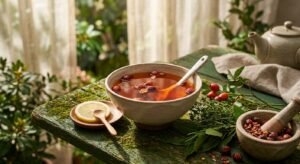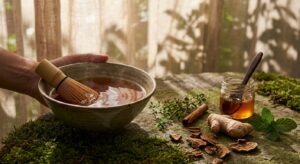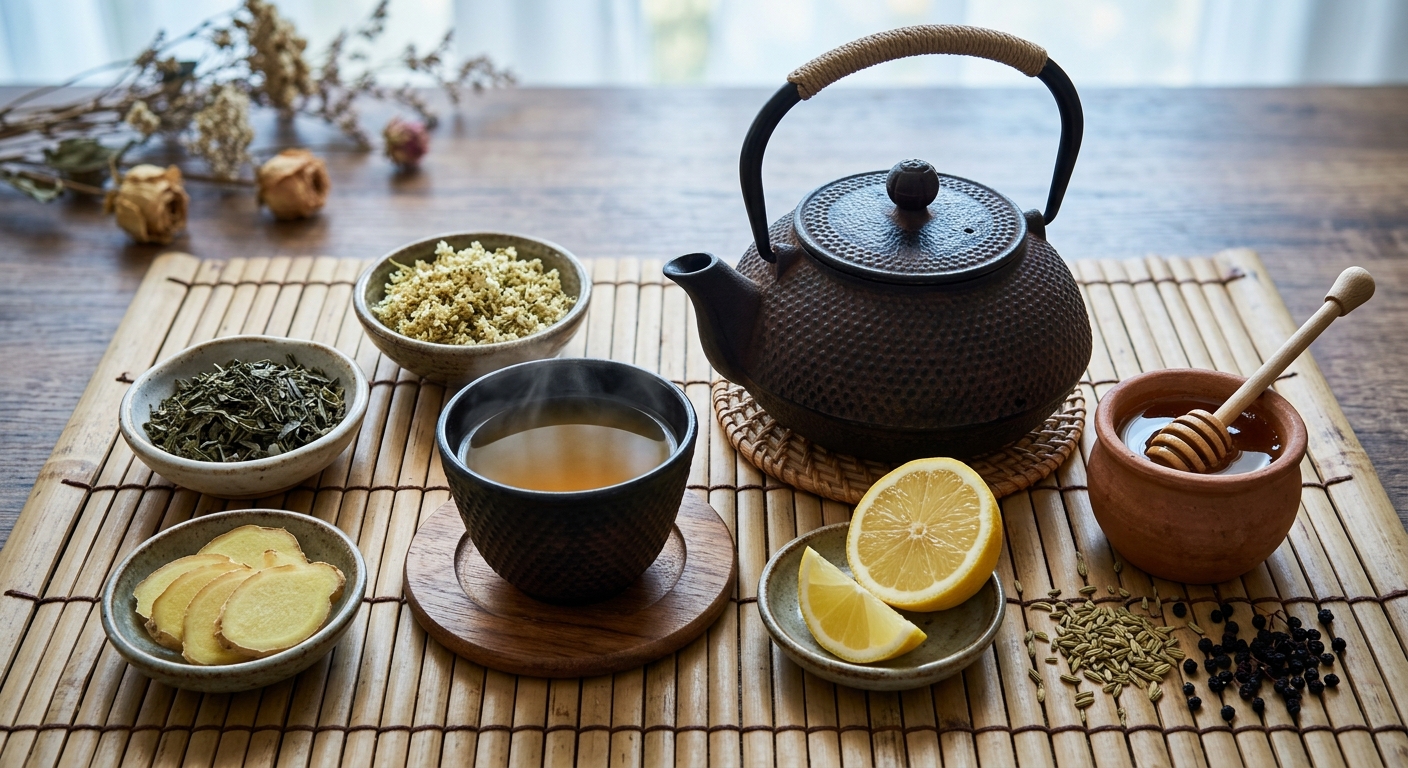
Sinus infections, or sinusitis, have plagued humanity for centuries, and herbalists across cultures developed remarkably similar remedies long before modern medicine could explain why they worked. From European folk healers brewing elderflower tea to Ayurvedic practitioners steaming over ginger-infused water, the use of aromatic, antimicrobial plants to clear the sinuses is one of the most consistent threads in the history of plant medicine. This blend draws from that deep well of traditional knowledge, combining herbs whose benefits are now increasingly supported by modern research.
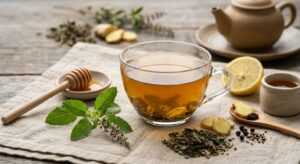
The star of this blend is elderflower (Sambucus nigra), prized since ancient Egypt and medieval Europe for its ability to ease respiratory complaints and stimulate the immune system. Paired with peppermint, whose menthol compounds create an immediate sensation of open airways, and fresh ginger root, a potent anti-inflammatory and antimicrobial agent, this tea addresses the core symptoms of sinus infection: congestion, pressure, inflammation, and immune suppression. A touch of raw honey and lemon rounds out the blend while adding their own antimicrobial properties.
What makes this tea genuinely effective is not one single ingredient but the synergy between them. Each herb contributes unique bioactive compounds that work together to thin mucus secretions, reduce swelling in the nasal passages, fight microbial pathogens, and provide real symptomatic relief. Whether you are in the thick of a sinus infection or feel one coming on, this tea is one of the most comforting and clinically sensible herbal remedies you can make at home.
2
cups
Ingredients
- 2 tspdried elderflowers
- 1 tspdried peppermint leaves
- 4 slicesfresh ginger root (thin-sliced)
- 480 mlwater (95°C / 203°F)
- 1 tbspfresh lemon juice
- —raw honey to taste (optional)
How to Brew
Click on an item below to shop for the recommended items for this recipe on Amazon.
As an Amazon Associate, we earn from qualifying purchases.
- Bring filtered water to approximately 95°C (203°F). Avoid a full rolling boil, which can degrade the delicate aromatic compounds in elderflower and peppermint.
- Place 2 tsp dried elderflowers and 1 tsp dried peppermint leaves into a tea infuser or heatproof strainer set over your mug.
- Add 4 thin slices of fresh ginger root directly into the mug alongside the infuser, or include them in the infuser basket if it is large enough.
- Pour the hot water over the herbs, filling the mug. Immediately cover the top of the mug with a small saucer or lid to trap volatile aromatic oils.
- Steep for 10 to 12 minutes. During this time, lean over the covered mug briefly when you remove the saucer to inhale the steam before the vapors dissipate.
- Remove the infuser and ginger slices. Stir in fresh lemon juice and raw honey if desired. Drink while warm, sipping slowly and inhaling the aroma with each sip.
- Combine 3 tsp dried elderflowers, 1.5 tsp dried peppermint leaves, and 6 slices of fresh ginger root in a clean glass jar. Use a slightly higher herb ratio than hot brew to compensate for the slower cold extraction.
- Pour 480 ml of room-temperature filtered water over the herbs. Do not use hot or warm water at this stage.
- Stir gently to ensure all herbs are fully submerged. Loosely cover the jar with a lid or clean cloth and leave at room temperature for 1 hour to begin extraction.
- Transfer the jar to the refrigerator and allow to steep for a further 8 to 10 hours, or overnight. The cold temperature slows extraction and preserves the delicate floral notes of elderflower.
- Strain the infusion through a fine mesh strainer into a clean bottle or pitcher, pressing the herbs lightly to release all liquid.
- Stir in fresh lemon juice. Serve over a small amount of ice or slightly warmed in a mug. Add honey to taste. Consume within 48 hours and store refrigerated.
- Bring 600 ml of filtered water to a full boil in a medium saucepan. Remove from heat and allow to cool for 2 to 3 minutes until it drops to around 80 to 85°C (176 to 185°F) to reduce the risk of scalding.
- Add 1 tbsp dried peppermint leaves, 1 tbsp dried elderflowers, 4 thick slices of fresh ginger, and optionally 2 to 3 drops of eucalyptus essential oil directly to the hot water in the saucepan.
- Steep uncovered for 5 to 7 minutes to allow the bioactive volatile compounds to fully release into the water and steam above it.
- Place the saucepan on a stable, heat-safe surface at table height. Drape a large towel over your head and the saucepan to create a steam tent, keeping your face approximately 25 to 30 cm above the water surface.
- Close your eyes and breathe slowly and deeply through your nose for 5 to 10 minutes, pausing to breathe through your mouth when needed. Come up for fresh air whenever you feel overheated.
- After inhalation, brew a separate standard hot cup of this blend for drinking to continue the internal benefit. Never consume the steam inhalation brew, as it will be overly concentrated and may contain sediment from extended exposure to heat.
Health Benefits
Menthol from peppermint activates TRPM8 receptors in the nasal mucosa, creating a physiological cooling effect that significantly reduces the subjective sensation of nasal blockage. Combined with the anti-inflammatory action of ginger and elderflower, this helps reduce both the feeling and the physical reality of congestion.
Elderflower extracts have demonstrated antiviral activity against influenza viruses in vitro, while 6-gingerol from ginger has shown inhibitory activity against multiple respiratory bacteria and viruses. Raw honey, added as a finishing ingredient, contributes hydrogen peroxide-based antimicrobial activity that can help address secondary bacterial involvement in sinus infections.
Ginger’s inhibition of COX-2 and prostaglandin E2 synthesis produces a mechanism of anti-inflammatory action comparable in pathway to common NSAIDs, though gentler in effect. Quercetin and rutin from elderflower complement this by stabilizing mast cells and reducing vascular permeability in the inflamed sinus lining.
Several compounds in this blend, particularly the volatile oils in peppermint and the saponins in elderflower, act as mild expectorants that thin mucus secretions and support the cilia-driven clearance of mucus from the sinuses and upper respiratory tract. This helps prevent the stagnant mucus conditions in which bacteria thrive.
Elderflower has a long-documented history of use as an immunomodulator, and modern research suggests its flavonoids can stimulate cytokine production and enhance innate immune signaling. Vitamin C from fresh lemon juice adds antioxidant support and contributes to white blood cell function during active infection.
🧪 Key Bioactive Compounds
The Science Behind Elderflower
The therapeutic action of this sinus tea comes from a carefully complementary group of bioactive molecules, each working through distinct but overlapping mechanisms. Menthol, the cyclic terpene alcohol that gives peppermint its characteristic sensation, is arguably the most immediately noticeable compound in the cup. When menthol contacts the mucous membranes of the nose and throat, it binds to and activates TRPM8 ion channels, which are thermoreceptors normally triggered by cold temperatures. This does not physically cool or open the nasal passages, but it creates such a convincing neurological signal that the brain registers the sensation of open, free-flowing airways. For acute congestion, this effect provides meaningful relief within minutes.
Elderflower contributes a sophisticated anti-inflammatory and antiviral profile built around flavonoids, particularly quercetin and rutin. Quercetin’s ability to inhibit histamine release from mast cells addresses the allergic and immune-mediated component of sinus inflammation, which can persist even after the initial infection has resolved. Rutin’s ability to strengthen capillary walls directly counteracts the vascular permeability that drives the pressure and swelling felt during sinusitis. In parallel, ginger’s 6-gingerol and related shogaols act on the arachidonic acid cascade by inhibiting both cyclooxygenase (COX) and lipoxygenase (LOX) enzymes, reducing the production of prostaglandins and leukotrienes that drive sinus inflammation. This dual-pathway inhibition distinguishes ginger from many pharmaceutical anti-inflammatories that target only COX.
Rosmarinic acid, concentrated in peppermint leaves, adds a further layer of scientific interest. Research published in peer-reviewed journals has demonstrated its ability to inhibit complement activation, which is the part of the immune system responsible for amplifying inflammation in infected tissues. By modulating complement activity, rosmarinic acid may help prevent the immune response from becoming more destructive than the infection itself, a phenomenon that is increasingly recognized as central to the discomfort and tissue damage of sinusitis. Together, these compounds represent a genuinely multi-target pharmacological approach to sinus infection relief, which explains why traditional herbalists repeatedly converged on these same plants across many different cultures and centuries.
Brewing Tips
- Use a covered mug or place a small saucer on top while steeping the hot brew. Up to 40 percent of peppermint’s menthol can volatilize into the air within the first few minutes of contact with hot water, and keeping the cup covered retains these therapeutic vapors in the liquid where they belong.
- Grate rather than slice fresh ginger if you want a more potent, spicier tea with faster extraction. Grated ginger releases significantly more 6-gingerol and volatile oils than sliced ginger, making it the better choice when you want maximum anti-inflammatory and antimicrobial impact.
- Drink this tea as hot as you can comfortably tolerate. Warmth itself plays a therapeutic role in sinusitis by increasing local blood flow to the sinuses, stimulating mucociliary function, and thinning mucus secretions. A tea that is merely warm will be less effective than one consumed at full comfortable heat.
- Brew a double batch and keep the second portion warm in a thermos. Staying consistently hydrated is one of the single most effective things you can do for a sinus infection, and having this tea readily available throughout the day makes it easier to maintain fluid intake when you feel unwell.
- Source high-quality dried elderflowers from a reputable herbal supplier. Elderflower quality degrades significantly with age and poor storage, and old, faded flowers will lack both flavor and therapeutic potency. Flowers should be pale cream to white, fragrant, and free from excessive stems.