Long before catnip became synonymous with feline entertainment, it was a cherished herb in the human medicine cabinet. Nepeta cataria has been cultivated and used medicinally across Europe and Asia for well over two thousand years. Roman herbalists recommended it for nervous ailments, and by the Middle Ages it had found a firm place in English cottage gardens, where it was brewed into tea to ease restless nights, calm colicky infants, and soothe frayed nerves. Early American colonists brought it across the Atlantic precisely because they valued it so highly, and it naturalized so readily that it now grows wild across much of North America.
What makes catnip genuinely fascinating is the contrast between its effect on cats and its effect on humans. The compound nepetalactone triggers an exhilarating, almost euphoric response in felines, yet in people it works in the opposite direction, gently quieting the nervous system and encouraging relaxation. Traditional European herbalists classified it as a nervine, a category of plants that nourish and calm the nerves, and modern phytochemical research has begun to explain why their intuition was sound. The herb belongs to the mint family, Lamiaceae, and it shows, delivering a pleasant, softly minty aroma with earthy, herbaceous undertones that make the tea surprisingly enjoyable to drink.
Catnip tea sits in that sweet spot between a pleasant evening ritual and a functional herbal remedy. It is gentle enough for most adults to drink nightly without concern, yet effective enough that many people notice a real difference in how quickly they settle into sleep. Whether you are exploring traditional plant medicine, looking for a caffeine-free wind-down tea, or simply curious about an herb that has served human wellness for millennia, catnip deserves a place in your herbal pantry.
2
cups
Ingredients
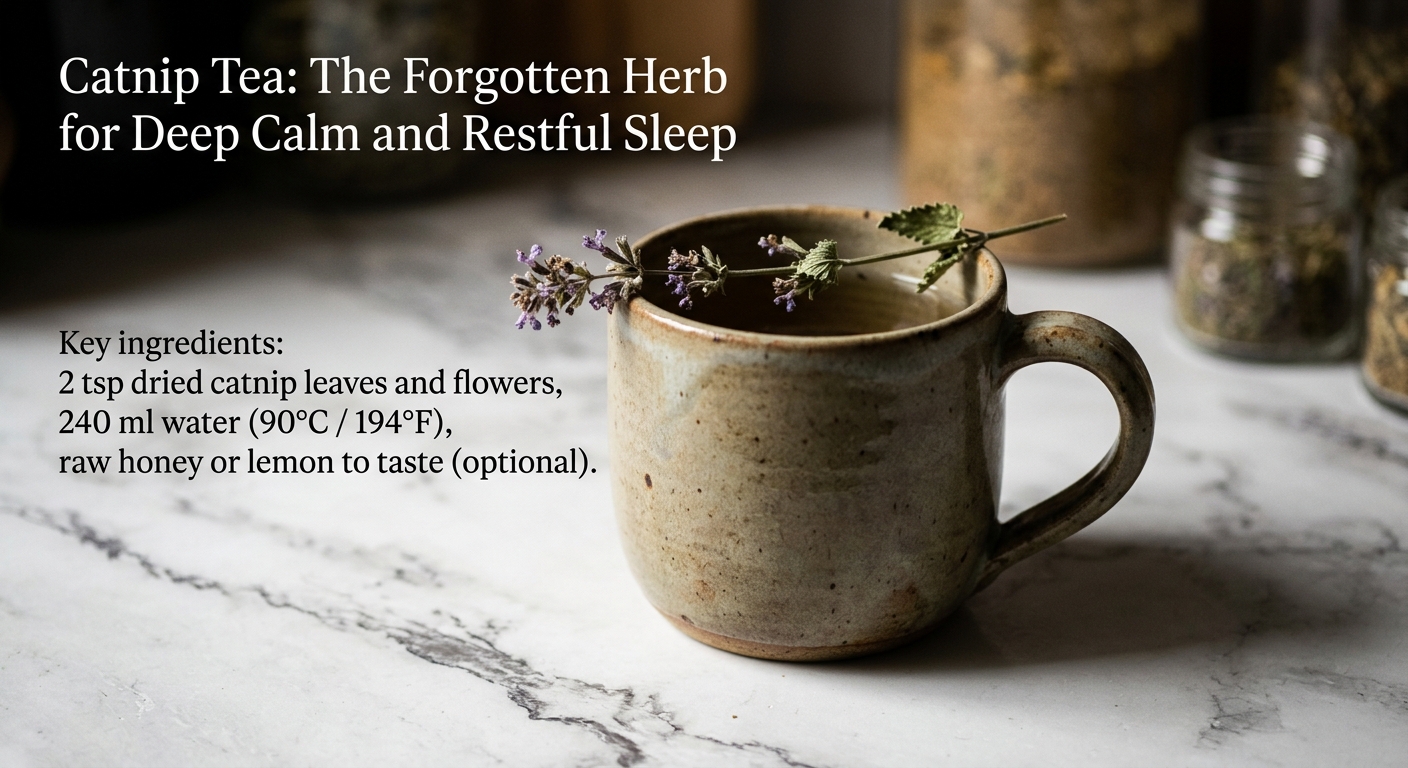
- 2 tspdried catnip leaves and flowers
- 240 mlwater (90°C / 194°F)
- —raw honey or lemon to taste (optional)
How to Brew
Click on an item below to shop for the recommended items for this recipe on Amazon.
As an Amazon Associate, we earn from qualifying purchases.
- Heat fresh, filtered water to 88 to 93°C (190 to 200°F). If you do not have a temperature-controlled kettle, bring water to a full boil and allow it to rest for 90 seconds before pouring.
- Measure 1 heaped teaspoon of dried catnip leaves and flowers per 240 ml cup and place them into a tea infuser or directly into your mug.
- Pour the hot water over the catnip and immediately cover the mug with a small saucer or lid. This is important: nepetalactone and other volatile oils will escape with the steam if the cup is left uncovered, reducing the tea’s potency and aroma.
- Steep for 5 minutes for a lighter, milder cup, or up to 10 minutes for a stronger, more medicinal brew. Be aware that longer steeping increases bitterness slightly.
- Remove the infuser or strain out the plant material and allow the tea to cool for a minute or two before drinking. Add raw honey or a squeeze of lemon if desired. Drink 30 to 45 minutes before bedtime for best results.
- Measure 2 heaped teaspoons of dried catnip leaves and flowers per 480 ml of cold, filtered water. The slightly higher herb-to-water ratio compensates for the less efficient cold extraction.
- Combine the catnip and water in a clean glass jar. Stir gently to ensure all of the plant material is fully submerged, then seal the jar with a lid.
- Leave the jar at room temperature for 1 hour to allow an initial gentle extraction to begin, then transfer it to the refrigerator.
- Refrigerate for 8 to 12 hours, or overnight. The slow cold steep draws out the herb’s calming compounds at a pace that minimizes bitterness and keeps the flavor clean and mild.
- Strain the tea through a fine mesh strainer or cheesecloth into a glass, pressing the herbs gently to extract the last of the liquid. Serve over ice or chilled straight from the refrigerator. Sweeten with a light honey syrup if preferred. Cold brew catnip keeps well refrigerated for up to 48 hours.
- Measure 3 teaspoons of dried catnip leaves and flowers per 720 ml of cold, filtered water and combine them in a large, clear glass jar. The clear glass allows sunlight to pass through and gently warm the water.
- Seal the jar loosely with a lid or cover the top with a clean cloth secured with a rubber band. This keeps dust and insects out while allowing some airflow.
- Place the jar in a sunny spot outdoors or on a bright windowsill for 3 to 5 hours. The ideal window is a warm afternoon when sunlight is consistent. Avoid leaving the jar out for more than 5 hours, as the warmth can eventually encourage bacterial growth in an unsealed infusion.
- Once the tea has reached a pale gold-green color and smells pleasantly herbal and minty, bring the jar inside. Strain the catnip out through a fine mesh strainer and transfer the tea to a fresh jar or pitcher.
- Refrigerate immediately and drink within 24 hours. Serve over ice with a sprig of fresh mint and a drizzle of honey for a calming late-afternoon or pre-bedtime ritual.
Health Benefits
Catnip has been used as a sleep aid in European herbal medicine for centuries. Nepetalactone is thought to produce mild sedation by interacting with neurological receptors, and several animal studies have demonstrated reduced restlessness and increased sleep duration following catnip administration, supporting its traditional reputation as a bedtime herb.
The combination of nepetalactone, rosmarinic acid, and luteolin in catnip appears to support GABAergic activity in the brain, the same pathway targeted by many pharmaceutical anti-anxiety medications, resulting in a gentler sense of calm without sedating side effects at moderate doses.
Catnip is a traditional antispasmodic remedy for digestive complaints including bloating, cramping, gas, and indigestion. Thymol and other volatile compounds relax the smooth muscle of the gastrointestinal tract, making an evening cup particularly useful for those whose stress manifests as digestive tension.
Folk herbalists long prescribed catnip tea for headaches linked to nervous tension and poor sleep. Its antispasmodic and mild anti-inflammatory properties, particularly from ursolic acid and carvacrol, may help relax the muscular tension and vascular constriction associated with stress-induced headaches.
Catnip has a traditional use in European and Native American herbal practice as an emmenagogue and antispasmodic, used to ease menstrual cramping and encourage regularity. Its smooth muscle-relaxing compounds may help reduce the intensity of uterine spasms during menstruation.
🧪 Key Bioactive Compounds
The Science Behind Catnip
The compound that gives catnip its distinctive character is nepetalactone, an iridoid monoterpenoid found primarily in the glandular trichomes of the plant’s leaves and stems. While it is best known for triggering a brief stimulatory response in cats via their vomeronasal organ, its mechanism in humans appears to work quite differently. In people, nepetalactone is thought to interact with neurological receptors in a way that mirrors the activity of mild sedative compounds, though rigorous human clinical trials remain limited. Animal studies have demonstrated measurable increases in sleep time and decreases in anxiety-related behavior following catnip administration, providing a pharmacological basis for the herb’s long folk-medicine reputation.
Equally important is rosmarinic acid, a polyphenolic ester found abundantly in catnip and other members of the mint family. Rosmarinic acid inhibits the enzyme GABA transaminase, which breaks down gamma-aminobutyric acid (GABA) in the brain. By slowing GABA degradation, it effectively prolongs the availability of this inhibitory neurotransmitter, producing anxiolytic effects through the same fundamental pathway as benzodiazepine medications, though far more gently. This mechanism has been demonstrated in peer-reviewed studies and may explain why catnip tea produces a relaxed, unhurried sense of calm rather than drowsiness per se.
The flavonoid luteolin adds another layer of neurological support, with research suggesting it modulates GABA-A receptor activity and provides antioxidant protection in neural tissue. Meanwhile, the monoterpene phenols thymol and carvacrol contribute antispasmodic effects on smooth muscle throughout the body, including the digestive tract and potentially blood vessels, which may account for the herb’s traditional role in treating both digestive cramping and tension headaches. Together, these compounds form an integrated phytochemical profile that explains why catnip has remained a trusted nervine herb across diverse healing traditions for over two thousand years.
Brewing Tips
- Always cover your mug while the catnip steeps. Nepetalactone and other volatile aromatic compounds evaporate quickly with rising steam, and a covered steep retains far more of the herb’s active constituents and fragrance.
- Source your catnip carefully. Look for organically grown, dried catnip specifically sold for human consumption or culinary use, and check that it has a noticeable minty, herbal aroma when rubbed between your fingers. Dull-smelling or grey-green catnip has lost most of its volatile oil content and will produce a weak, ineffective tea.
- Drink catnip tea as part of a consistent evening wind-down routine. Like many nervine herbs, its benefits compound over time when used regularly rather than occasionally. Pairing it with a dimmed-light environment, no screens, and calm activity allows the tea to work with your body’s natural sleep cues rather than fighting against stimulation.