Few plants carry the symbolic and medicinal weight of the lotus. Revered in Hindu, Buddhist, and Taoist traditions as an emblem of purity and enlightenment, Nelumbo nucifera has been cultivated in Asian waterways for over 3,000 years. While its flowers and roots are celebrated in culinary and ritual contexts, it is the seeds that have quietly anchored the plant’s reputation in traditional medicine. From the pharmacopeias of classical Chinese medicine to the Ayurvedic texts of the Indian subcontinent, lotus seeds were prescribed to pacify restlessness, tonify the heart, and anchor what practitioners called a wandering spirit.
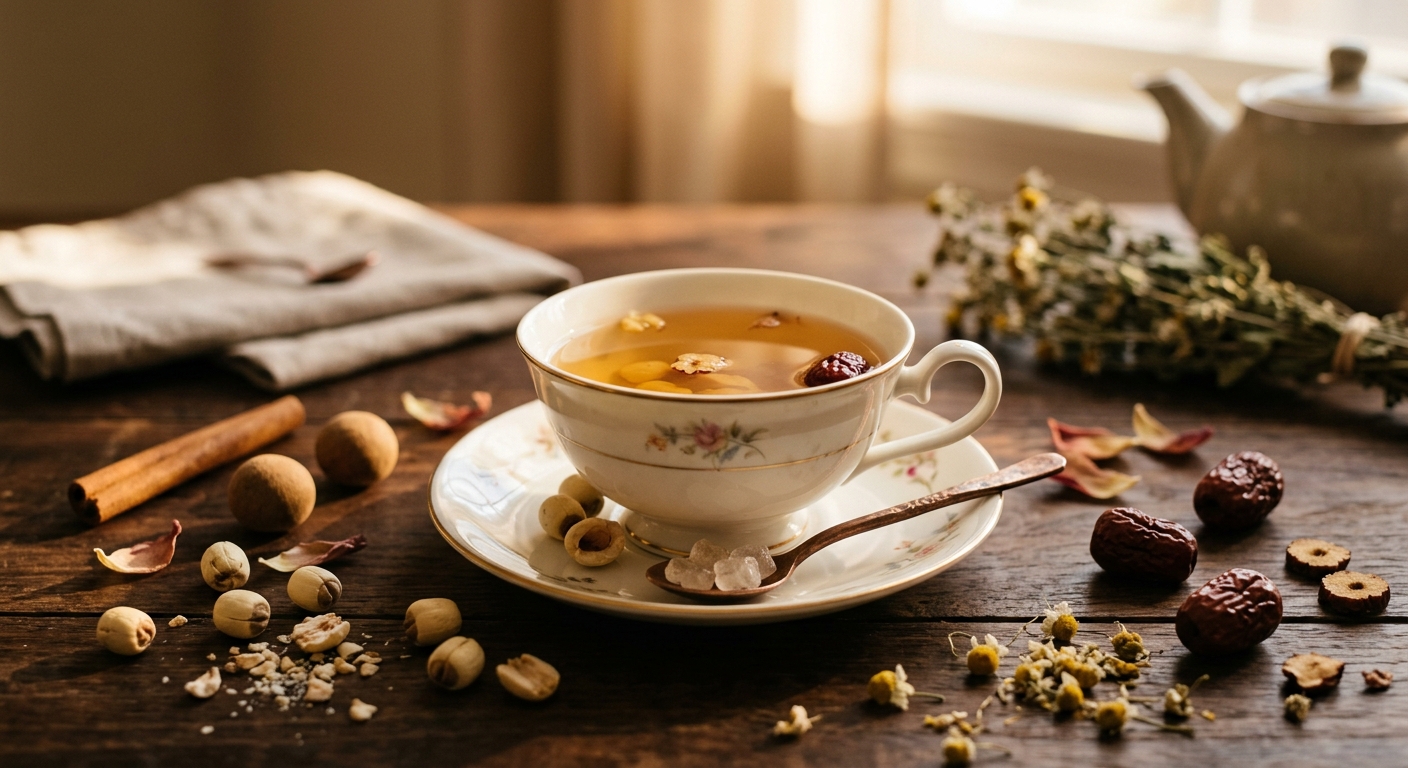
Lotus seed tea, known in Mandarin as lian zi cha, is brewed from the pale, oval seeds harvested from the plant’s distinctive seedpod. In traditional Chinese medicine, the seeds are classified as sweet and astringent in flavor and neutral in temperature, making them one of the more universally well-tolerated medicinal foods. They were regularly combined with longan fruit or red dates in tonic soups, but when brewed solo as a tea they yield a gentle, slightly nutty, floral drink that soothes the nervous system without the sedating heaviness of stronger sleep herbs. Vietnamese and Japanese traditions similarly incorporated lotus seeds into calming evening rituals, often pairing them with green tea or chrysanthemum.
Modern research has begun to illuminate the biochemical basis for these long-observed effects. The seeds contain a range of alkaloids, including nuciferine and neferine, that interact with neurotransmitter systems associated with anxiety and sleep regulation. Alongside a rich complement of flavonoids and minerals, lotus seeds offer a genuinely compelling case for an evening tea that is both pleasurable to drink and meaningfully supportive of rest. Whether you are new to herbal medicine or a seasoned practitioner, lotus seed tea is one of those rare preparations that bridges ancient wisdom and contemporary science with quiet elegance.
2
cups
Ingredients
- 20 gdried lotus seeds (about 2 tablespoons, lightly crushed)
- 500 mlwater (95°C / 203°F)
- —rock sugar or raw honey to taste (optional)
- —a few dried longan or red dates (optional, for added sweetness and depth)
How to Brew
Click on an item below to shop for the recommended items for this recipe on Amazon.
As an Amazon Associate, we earn from qualifying purchases.
- Rinse 20g of dried lotus seeds under cool running water to remove any surface dust or debris. Pat dry with a clean cloth.
- Using a mortar and pestle or the flat of a heavy knife, gently crack each seed into 2 to 3 pieces. You are not grinding them to a powder, just breaking the hard outer shell to allow water to penetrate the interior.
- Place the crushed seeds in a small saucepan with 500ml of cold water. Bring slowly to a near-boil over medium heat, then reduce the heat to a gentle simmer.
- Simmer uncovered for 15 to 20 minutes, stirring once or twice. The liquid will deepen from clear to a pale ivory or soft gold, and the seeds will soften noticeably.
- Pour the tea through a fine-mesh strainer into two warmed mugs, pressing the spent seeds lightly with a spoon to extract the last of the liquid. Add rock sugar or honey to taste and drink warm, ideally 30 to 60 minutes before bed.
- Rinse 20g of dried lotus seeds thoroughly under cool water. Unlike hot brewing, there is no need to pre-crush them, though a light crack will speed extraction slightly if you prefer.
- Place the seeds in a clean glass jar and add 600ml of filtered room-temperature water. The higher water ratio compensates for the slower cold extraction process.
- Stir gently, then seal the jar and leave it at room temperature for the first 2 hours to allow initial hydration of the seeds.
- Transfer the sealed jar to the refrigerator and leave to cold brew for a further 8 to 10 hours, or overnight. The seeds will plump and soften considerably.
- Strain the tea through a fine-mesh strainer into a clean pitcher or serving glasses filled with ice. Taste before sweetening, as cold brewing naturally draws out more of the seed’s inherent sweetness. Serve over ice and consume within 48 hours.
- Soak 25g of dried lotus seeds in cold water for at least 2 hours beforehand. This pre-soaking softens the dense seed interior and ensures that the long cooking process extracts the maximum concentration of nerolidol, neferine, and other active compounds rather than merely cooking the outer layer.
- Drain the soaked seeds, then transfer them to a ceramic or clay saucepan (avoid reactive metals such as aluminum). Add 700ml of fresh filtered water and bring to a full boil over medium-high heat.
- Once boiling, reduce heat to maintain a steady, active simmer. Add any optional tonic herbs at this point, such as 4 to 5 dried longan fruits or 2 red dates, which complement the calming alkaloids with natural sugars and additional B vitamins.
- Simmer uncovered for 35 to 45 minutes, adding 50 to 100ml of hot water if the liquid reduces below 300ml. The finished decoction should be rich, slightly viscous, and pale amber in color.
- Strain through a fine-mesh strainer into a small bowl or mug, pressing the seeds firmly. Allow to cool to a comfortable drinking temperature, add a small piece of rock sugar if desired, and sip slowly as part of your bedtime wind-down ritual.
Health Benefits
The alkaloids neferine and nerolidol in lotus seeds interact with GABA-A receptors and inhibit excitatory neural pathways, reducing the time it takes to fall asleep and improving sleep continuity. Preclinical studies have shown meaningful increases in total sleep duration following administration of lotus seed extracts.
Nuciferine and neferine together modulate dopaminergic and GABAergic neurotransmission, producing a calming effect on an overactive mind without the sedating heaviness associated with pharmaceutical sleep aids. Traditional Chinese medicine specifically prescribed lotus seeds for what it termed heart-fire agitation, a pattern associated with anxiety, palpitations, and difficulty settling.
Liensinine has been studied for its ability to slow heart rate and reduce blood pressure through calcium channel antagonism, making lotus seed tea particularly suitable for individuals whose sleep disruption is linked to nighttime cardiac arousal or stress-related palpitations.
Lotus seeds are a meaningful source of quercetin and other flavonoids that neutralize free radicals and reduce systemic oxidative stress. Chronic oxidative stress is increasingly linked to poor sleep architecture, so regular consumption of antioxidant-rich herbal teas may support both long-term cellular health and sleep quality.
The mild astringent properties of lotus seeds have long been used in traditional medicine to soothe gastrointestinal irritation, reduce diarrhea, and calm a restless digestive tract. A settled stomach in the evening contributes directly to easier sleep onset and fewer nighttime awakenings.
🧪 Key Bioactive Compounds
The Science Behind Lotus Seed
The sleep-supporting reputation of lotus seeds rests on a group of bisbenzylisoquinoline and aporphine alkaloids that have attracted growing scientific attention over the past two decades. Neferine, one of the most studied compounds, has been shown in multiple in vitro and animal studies to enhance the activity of gamma-aminobutyric acid (GABA), the brain’s primary inhibitory neurotransmitter. By binding to and potentiating GABA-A receptors, neferine effectively reduces the firing rate of excitatory neurons, producing the calm, relaxed mental state that precedes natural sleep. A 2020 study published in Frontiers in Pharmacology found that neferine significantly extended non-REM and REM sleep duration in rodent models without the rebound insomnia associated with benzodiazepine use, suggesting a more physiologically harmonious mechanism of action.
Nuciferine, the other prominent alkaloid, exerts its calming influence primarily through dopamine receptor antagonism. By moderating excessive dopaminergic signaling, nuciferine can reduce states of mental agitation, rumination, and hyperarousal that are among the most common barriers to falling asleep. It also has antispasmodic effects on smooth muscle, which partly explains the herb’s traditional use for digestive restlessness and nighttime cramping. Meanwhile, nerolidol, the sesquiterpene alcohol responsible for part of the lotus seed’s faint floral aroma, independently contributes to sedation. Research has demonstrated that nerolidol increases sleep duration and decreases locomotor activity by interacting with the central nervous system through mechanisms that may involve both GABA modulation and a reduction in corticosterone, the primary stress hormone in rodents, pointing toward a broader anti-stress mechanism.
Beyond the alkaloids, the mineral composition of lotus seeds adds another dimension to their sleep-supporting profile. Lotus seeds are a notable source of magnesium, a mineral that activates GABA receptors throughout the nervous system and has been shown in randomized controlled trials to improve sleep efficiency, sleep time, and early morning awakening in older adults with insomnia. Quercetin, the dominant flavonoid, contributes antioxidant activity that protects neurons from oxidative damage, a process increasingly implicated in disrupted circadian rhythm and poor sleep architecture. Together, these compounds create a synergistic, multi-pathway approach to sleep support that modern pharmacology is only beginning to fully appreciate.
Brewing Tips
- Always use dried lotus seeds from a reputable herbal supplier and check that they have been stored in a cool, dry environment. Fresh or improperly stored seeds can develop mold and will produce an unpleasant, bitter flavor that overwhelms the tea’s natural delicacy.
- If you find the tea too astringent, remove the small green embryo (the plumule) from the center of each seed before brewing. The embryo contains the highest concentration of bitter alkaloids and is traditionally brewed separately as a heart-clearing tonic, but including it in a sleep blend can make the cup uncomfortably bitter for sensitive palates.
- For the most consistent results across all brewing methods, weigh your lotus seeds rather than measuring by volume. The seeds vary significantly in size between harvests and suppliers, and weight is a much more reliable guide to achieving the right concentration.