Long before modern digestive aids lined pharmacy shelves, healers across Scandinavia, Central Europe, and China turned to angelica root as one of their most trusted remedies. Known botanically as Angelica archangelica, this tall, powerfully aromatic plant has been used in folk medicine for over a thousand years. Medieval herbalists called it the “root of the Holy Ghost,” believing it offered protection against plague and poison. Its very name, archangelica, reflects the almost mythic reverence with which early physicians regarded it. Norwegian Sami communities cultivated it as a food and medicine, while Benedictine monks incorporated it into herbal liqueurs still produced today, including Chartreuse and Bénédictine.
What makes angelica root genuinely special is the extraordinary complexity of its chemistry. The root contains volatile oils, bitter compounds, and a suite of furanocoumarins that together create a warming, slightly bitter, and deeply aromatic brew unlike any other herbal tea. That bitterness is precisely the point: bitter compounds stimulate the production of saliva, bile, and digestive enzymes, setting the entire digestive process in motion before a meal has even been swallowed. In Western herbalism, angelica is classified as a bitter tonic and carminative, meaning it simultaneously primes digestion and relieves the gas and cramping that can arise when digestion goes wrong.
The sensory experience of angelica root tea is one of its most memorable features. The cup is earthy and warming, with a woodsy depth reminiscent of celery root, a faint sweetness that blooms mid-palate, and a clean, persistent bitterness on the finish. The aroma is equally distinctive: green, slightly musky, and faintly reminiscent of juniper and fresh hay. For anyone curious about the tradition of bitters and botanical medicine, angelica root tea offers a genuine and deeply satisfying entry point.
2
cups
Ingredients
- 2 tspdried angelica root, coarsely chopped or broken
- 480 mlwater (95°C / 203°F)
- —raw honey or a slice of fresh ginger to taste (optional)
- —thin strip of lemon peel (optional, brightens the bitterness)
How to Brew
Click on an item below to shop for the recommended items for this recipe on Amazon.
As an Amazon Associate, we earn from qualifying purchases.
- Measure 2 teaspoons of dried, coarsely chopped angelica root per 240 ml of water. If your root pieces are large, crush them lightly in a mortar and pestle to open up the fibrous interior before steeping.
- Bring filtered water to a near-boil, ideally 95 to 100°C. Pour it directly over the root in a tea infuser or heatproof vessel. Dense roots need high heat to release their active compounds effectively.
- Cover the cup or pot with a lid or small saucer to trap the volatile aromatic oils that would otherwise escape as steam. Steep for 10 to 15 minutes. The longer end of this range produces a more pronounced bitterness and deeper color.
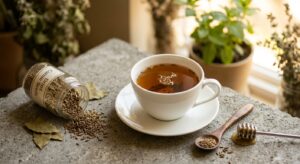
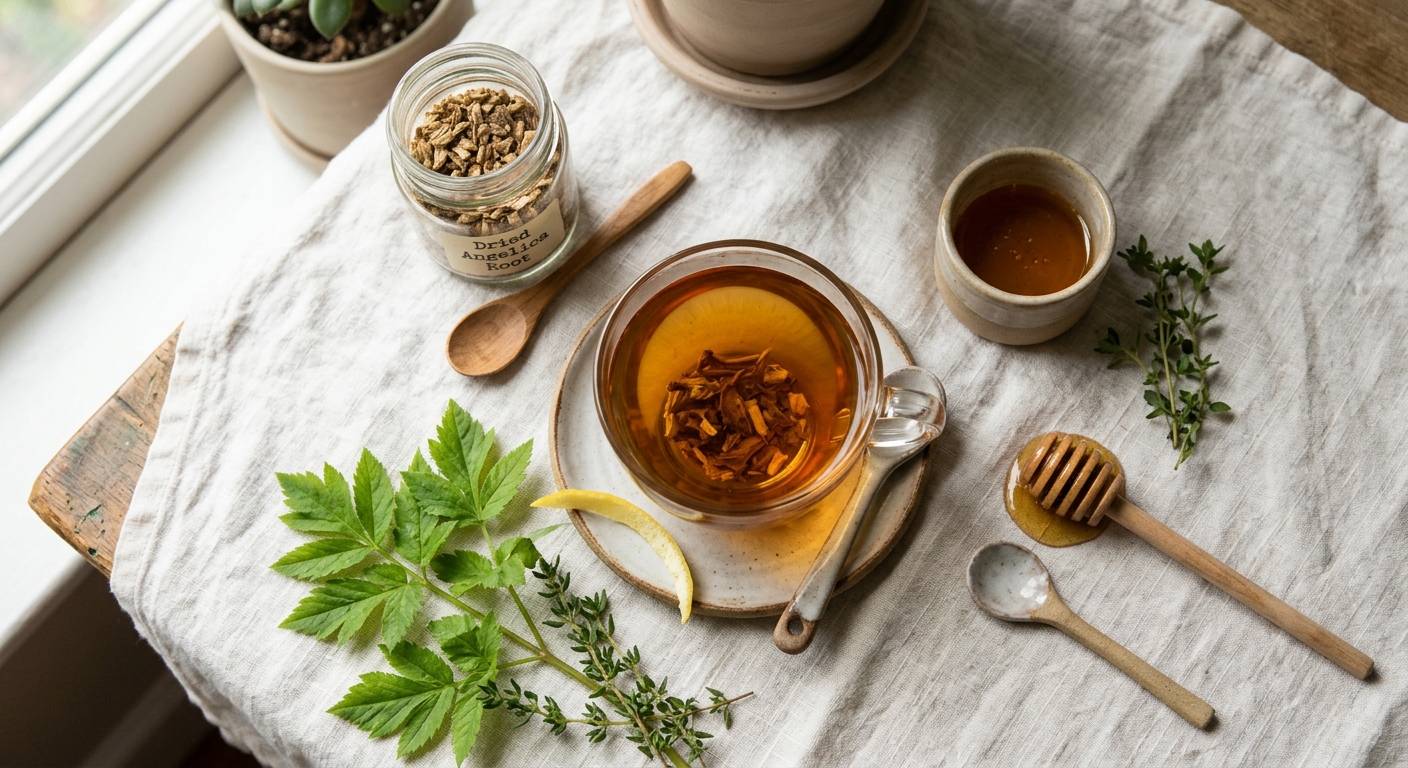
- Remove the infuser or strain through a fine-mesh strainer. Observe the warm amber color and inhale the woodsy, faintly juniper-like aroma before drinking.
- Sip plain to experience the full bitter profile, or stir in a small amount of raw honey. For digestion, drink 15 to 20 minutes before a meal to stimulate digestive secretions.
- Measure 1 tablespoon of dried, coarsely chopped angelica root per 480 ml of cold, filtered water. The higher herb-to-water ratio compensates for the slower, cooler extraction.
- Combine the root and water in a glass jar. Stir gently to ensure all the root pieces are submerged, then seal the jar with a lid.
- Leave the jar at room temperature for 1 hour to allow initial extraction to begin, then transfer it to the refrigerator. Steep for a further 9 to 13 hours, totalling 10 to 14 hours.
- Strain through a fine-mesh strainer or cheesecloth, pressing the roots lightly to extract the last of the liquid. Discard the spent root.
- Serve over ice. The cold-brewed version has a notably softer bitterness, more prominent sweetness, and a cleaner celery-and-green finish. Add a slice of cucumber or a sprig of fresh mint to complement the earthy profile.
- Add 1 tablespoon of dried, coarsely chopped angelica root per 500 ml of cold, filtered water directly to a small saucepan. Starting in cold water allows a gradual, thorough extraction as the temperature rises.
- Place the saucepan over medium heat and bring the water slowly to a gentle simmer. Do not allow it to reach a rolling boil, as excessive heat can degrade delicate volatile compounds. Target 85 to 90°C.
- Once simmering, reduce the heat to low, cover the saucepan partially with a lid to reduce evaporation, and simmer for 20 to 25 minutes. You will notice the liquid darkening and a rich, warm aroma filling the kitchen.
- After simmering, remove from heat and allow the decoction to rest, still covered, for 5 minutes. This resting period allows any remaining volatile oils to settle back into the liquid.
- Strain through a fine-mesh strainer into cups. The finished decoction will be darker and more concentrated than a standard hot brew, with a pronounced bittersweet depth. Dilute with hot water if needed, or sweeten lightly with honey. This method is ideal for therapeutic use and is the approach recommended in traditional European herbalism.
Health Benefits
The bitter compounds in angelica root, including sesquiterpene lactones, activate bitter taste receptors (TAS2Rs) on the tongue and gut lining, triggering the reflexive release of saliva, gastric acid, and bile. This makes angelica a valuable pre-meal bitter tonic for anyone experiencing sluggish or insufficient digestion.
Angelica root is classified as a carminative herb, meaning its volatile oils relax smooth muscle in the intestinal wall and reduce surface tension of gas bubbles, allowing trapped gas to disperse more easily. Traditional European herbalism has used it for this purpose for centuries, and its antispasmodic compounds support this application.
Furanocoumarin compounds, particularly imperatorin, act as antispasmodics by relaxing the smooth muscle tissue of the gastrointestinal tract. This mechanism is consistent with its traditional use for colic, intestinal spasm, and general abdominal discomfort.
As a classic bitter tonic, angelica root has long been prescribed in Western herbal medicine to stimulate appetite in individuals recovering from illness or experiencing poor appetite. The bitterness-induced increase in digestive secretions can generate genuine hunger signals and improve readiness for food.
Several furanocoumarins and other compounds isolated from angelica root have shown inhibitory activity against certain bacteria and fungi in laboratory settings, including some common gut pathogens. While human clinical trials are limited, this supports the traditional use of angelica for gastrointestinal infections and dysbiosis.
🧪 Key Bioactive Compounds
The Science Behind Angelica Root
The digestive activity of angelica root is grounded in two interlocking mechanisms: bitter receptor stimulation and smooth muscle relaxation. The bitter principles in the root, including sesquiterpene lactones such as angelica lactone, activate TAS2R-family taste receptors found not only in the mouth but throughout the gastrointestinal tract. When these receptors are triggered, they initiate a cascade of signalling that increases the secretion of gastric acid, pepsin, bile, and pancreatic enzymes. This prepares the gut to handle an incoming meal with greater efficiency, improving protein digestion, fat emulsification, and overall nutrient absorption. This is the classical mechanism of action of all bitter tonic herbs, and angelica is among the most potent examples in European herbalism.
Simultaneously, angelica’s furanocoumarin compounds, particularly imperatorin and osthole, exert antispasmodic effects on the smooth muscle of the intestinal wall. Research published in phytopharmacology literature has demonstrated that imperatorin inhibits the contraction of smooth muscle in a concentration-dependent manner, consistent with the relief of intestinal cramping and colic that traditional users have observed for centuries. The volatile phthalide compounds, especially Z-ligustilide, add a further layer of smooth muscle relaxation and have also been studied for mild sedative and anti-inflammatory properties in the central and peripheral nervous systems.
The furanocoumarins in angelica root are a pharmacologically important but double-edged group of compounds. On one hand, they contribute antimicrobial, anti-inflammatory, and antispasmodic effects. On the other hand, they are photosensitisers: upon entering the bloodstream, they absorb UV radiation and can generate reactive oxygen species in skin tissue when exposed to sunlight, leading to phototoxic reactions. This is the same class of compounds that makes other Apiaceae plants, such as hogweed and parsnip, capable of causing burns in direct sunlight. In the context of tea consumption, the oral route and the dilution of compounds in a typical cup mean the risk is considerably lower than with topical exposure, but those with fair skin or those drinking concentrated decoctions regularly should still exercise appropriate caution around sun exposure.
Brewing Tips
- Always buy angelica root from a reputable supplier and ensure it is correctly identified as Angelica archangelica or a well-documented medicinal species. Wild-harvested angelica can be confused with toxic Apiaceae relatives, including poison hemlock and water hemlock.
- Store dried angelica root in an airtight glass container away from light and moisture. The aromatic volatile oils that give the root its distinctive scent and medicinal potency degrade quickly when exposed to air and heat, so proper storage is critical for maintaining quality.
- For the best digestive benefit, drink angelica root tea 15 to 20 minutes before your largest meal of the day rather than after eating. Timing the bitter stimulus before food intake maximises the increase in digestive secretions and primes the gut for efficient digestion.