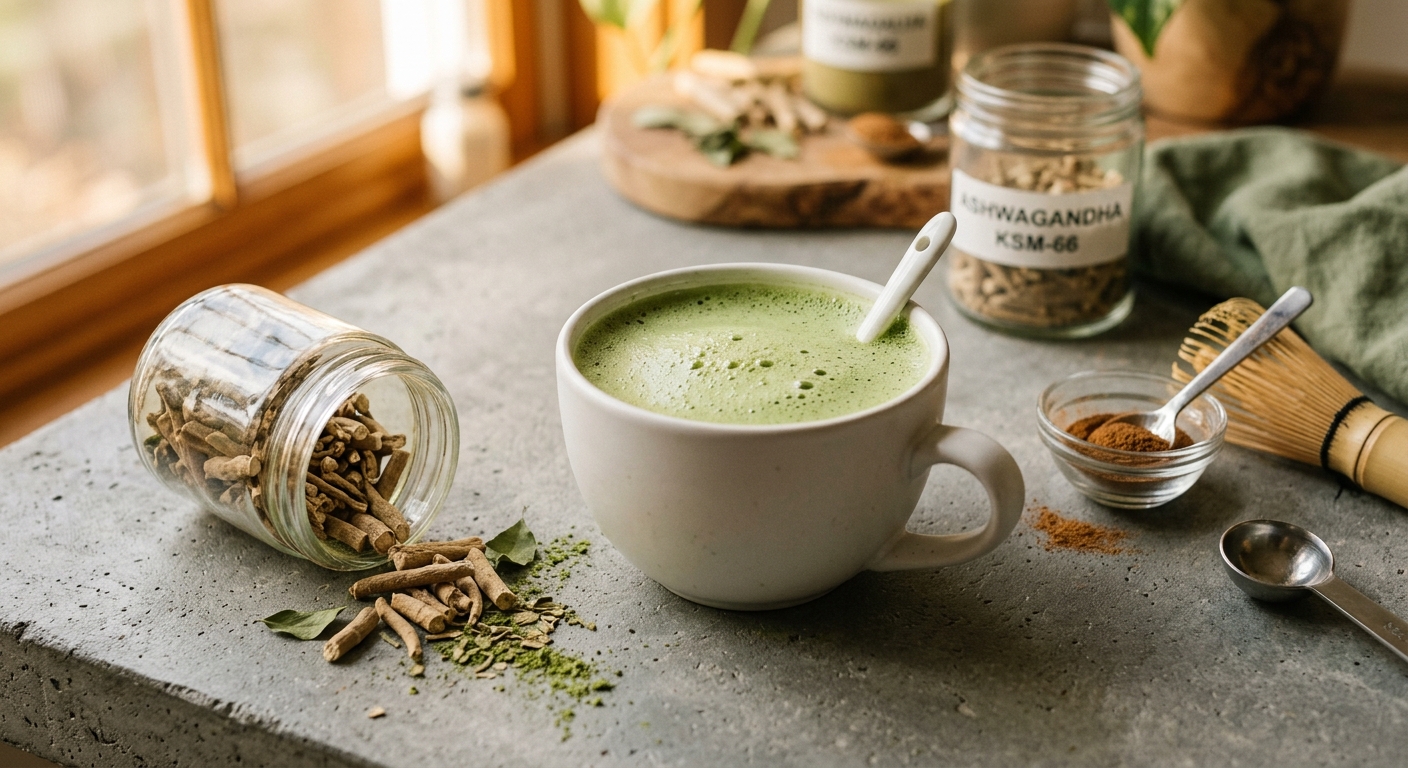
Few herbal pairings feel as intentional as matcha and ashwagandha. Matcha, the finely ground powder of shade-grown Camellia sinensis leaves, has been central to Japanese tea ceremony since the 12th century, when Zen Buddhist monks used it to sustain alert, meditative focus during long hours of practice. Ashwagandha (Withania somnifera), known in Sanskrit as the herb that gives the strength of a horse, has anchored Ayurvedic medicine for over 3,000 years as one of its most revered adaptogens. Bringing these two traditions together in a single cup creates something genuinely greater than the sum of its parts.
What makes this blend so compelling is the interplay between matcha’s clean stimulation and ashwagandha’s grounding adaptogenic action. Matcha provides caffeine alongside a high concentration of L-theanine, an amino acid that promotes calm alertness rather than anxious overstimulation. Ashwagandha works on a deeper hormonal and neurological level, helping the body adapt to stress by moderating cortisol output and supporting the nervous system over time. Together, they create a state that practitioners of both traditions would recognise: focused, present, and resilient.
This blend is particularly well suited to morning rituals, pre-work focus sessions, or any time you need sustained mental output without sacrificing composure. The earthy, umami richness of ceremonial-grade matcha softens the distinctive, slightly bitter root notes of ashwagandha, while a touch of warming spice from cinnamon or ginger can bridge the two flavors beautifully. This is a functional tea with genuine sensory pleasure, and once you find your preferred ratio, it is likely to become a daily ritual.
2
cups
Ingredients
- 2 tspceremonial-grade matcha powder
- 1 tspashwagandha root powder (KSM-66 or equivalent standardised extract)
- 480 mlwater (75°C / 167°F)
- 0.25 tspground cinnamon (optional, improves palatability)
- —raw honey or maple syrup to taste (optional)
- —splash of oat milk or coconut milk (optional, helps emulsify ashwagandha)
How to Brew
Click on an item below to shop for the recommended items for this recipe on Amazon.
As an Amazon Associate, we earn from qualifying purchases.
- Heat your water to 70 to 75°C (158 to 167°F). If using a standard kettle, bring water to a boil and allow it to cool for 8 to 10 minutes, or use a temperature-controlled kettle set precisely.
- Warm your matcha bowl or mug by pouring a small amount of hot water into it, swirling, and discarding. This prevents temperature shock and helps the powder hydrate evenly.
- Sift 1 teaspoon of matcha powder and 0.5 teaspoon of ashwagandha powder per serving through a fine-mesh sieve directly into the warmed bowl. Add ground cinnamon if using. Sifting is essential to prevent clumping and ensure a smooth, lump-free blend.
- Add approximately 30 to 40 ml of the measured warm water to the dry powder mixture. Using a bamboo chasen (matcha whisk) or a small milk frother, mix the powders into a smooth paste, working out any lumps before adding more water.
- Pour in the remaining water gradually while continuing to whisk in a vigorous W or M motion for 20 to 30 seconds until the surface is covered in a fine, stable froth. The ashwagandha powder will integrate fully with proper agitation.
- Taste and adjust sweetness with honey or maple syrup. Add a splash of warm oat or coconut milk if you prefer a creamier texture, which also helps bind the ashwagandha powder and rounds out its earthy bitterness.
- Combine 1 teaspoon of ceremonial-grade matcha powder and 0.5 teaspoon of ashwagandha powder per serving in a clean glass jar. Add cinnamon if using.
- Add a small amount of room-temperature filtered water (about 50 ml per serving) to the powder mixture in the jar. Seal the jar and shake vigorously for 30 to 45 seconds to form a smooth slurry with no dry clumps. This initial agitation step is critical because cold water does not hydrate powders as readily as warm water.
- Add the remaining room-temperature water to bring the total to 240 ml per serving. Stir well with a long spoon, then seal the jar again and shake for another 15 seconds.
- Refrigerate the sealed jar for 8 to 12 hours or overnight. The slow cold extraction draws out matcha’s sweeter amino acid compounds, particularly L-theanine, while keeping bitterness low.
- Before serving, shake or stir again vigorously, as some settling of the ashwagandha powder may occur. Pour over a glass filled with ice. Add oat milk, a drizzle of honey, and a cinnamon stick for a ready-to-drink iced latte experience.
- In a medium bowl or large matcha bowl, sift 4 teaspoons of matcha powder, 2 teaspoons of ashwagandha powder, and 0.5 teaspoon of ground cinnamon together through a fine-mesh sieve. This quantity produces a 4-serving concentrate.
- Heat 240 ml of filtered water to 70 to 75°C (158 to 167°F). Add 60 ml of the hot water to the sifted powder blend and whisk with a bamboo chasen or electric frother for 60 seconds until you have a very thick, glossy paste with no lumps. The concentrate will be much thicker than a standard cup of matcha.
- Gradually incorporate the remaining 180 ml of hot water into the paste while whisking continuously. The final concentrate should be smooth, uniformly green, and approximately four times stronger than a single serving.
- Allow the concentrate to cool to room temperature, then transfer it to a sealed glass jar. Refrigerate for up to 3 days. The ashwagandha powder may settle over time, so always shake or stir the jar thoroughly before each use.
- To serve: spoon or pour approximately 60 ml of concentrate into a mug or glass, then dilute with 180 ml of hot water (70 to 75°C), cold water, or steamed plant-based milk. Sweeten to taste. The concentrate method allows easy daily use with a consistent dose of ashwagandha per serving.
Health Benefits
The caffeine in matcha is released more slowly than in coffee due to the buffering effect of L-theanine and the fiber content of whole-leaf powder. Clinical studies confirm this combination extends focus and energy for 4 to 6 hours without the cortisol-spiking crash associated with coffee.
Ashwagandha’s withanolides act on the hypothalamic-pituitary-adrenal (HPA) axis to normalise cortisol output. A 2019 randomised, double-blind trial published in Medicine demonstrated that 240 mg of standardised ashwagandha extract significantly reduced serum cortisol and self-reported stress and anxiety scores over 60 days.
Both herbs independently demonstrate cognitive benefits that appear to be complementary. Matcha’s L-theanine and caffeine combination improves sustained attention and processing speed, while ashwagandha’s withanosides support synaptic plasticity and have shown memory-enhancing effects in randomised trials involving healthy adults.
Matcha contains up to 137 times more EGCG than standard brewed green tea due to the whole-leaf consumption method. EGCG neutralises reactive oxygen species, reduces markers of systemic inflammation, and has been associated with reduced risk of chronic metabolic diseases in large observational studies.
Ashwagandha is classified as an adaptogen because regular use helps the body maintain homeostasis under physical, emotional, and environmental stressors. Unlike stimulants, the adaptogenic effect builds over 4 to 8 weeks of consistent use, making this blend both an immediate focus tool and a long-term wellness investment.
🧪 Key Bioactive Compounds
The Science Behind Matcha And Ashwagandha
The synergy between matcha and ashwagandha operates across two distinct but complementary physiological systems. Matcha works acutely: its caffeine blocks adenosine receptors in the brain, reducing perceived fatigue and increasing dopamine and norepinephrine activity within 30 to 60 minutes of consumption. Critically, L-theanine, present at high concentrations in shade-grown matcha, simultaneously promotes the production of alpha brain waves and modulates GABA activity, which tempers caffeine-induced anxiety and extends the period of alert calm. This is not simply caffeine plus a calming agent; multiple randomised controlled trials have confirmed that the specific ratio found in matcha produces measurably superior cognitive performance compared to caffeine alone.
Ashwagandha operates on a longer timescale through the adaptogenic modulation of the hypothalamic-pituitary-adrenal (HPA) axis. Its primary actives, the withanolides, are steroidal lactones that bind to glucocorticoid receptors and help normalise cortisol feedback loops that become dysregulated under chronic stress. Elevated cortisol impairs working memory, disrupts sleep architecture, and accelerates neuronal aging. By bringing cortisol back toward baseline, ashwagandha creates the neurological conditions in which matcha’s acute focus-enhancing effects can operate most efficiently. Research has also identified withanosides IV and VI as potential promoters of neurite outgrowth and synaptic density, pointing toward genuine neuroprotective and even cognitive-enhancing mechanisms beyond simple stress reduction.
EGCG, matcha’s abundant catechin, adds a third layer of protection. As a powerful antioxidant, it scavenges reactive oxygen species (ROS) that accumulate during periods of high cognitive demand, protecting mitochondrial function in neurons and supporting the sustained energy metabolism that focus requires. Chlorophyll, responsible for matcha’s vivid green pigment, may support liver detoxification pathways that process the stress hormones ashwagandha is helping to regulate. Taken together, this blend addresses energy, stress, focus, and neurological health through mechanisms that reinforce rather than duplicate one another, making it one of the more scientifically coherent herbal combinations in functional beverage culture.
Brewing Tips
- Always sift matcha and ashwagandha powders together before adding water. Both powders clump aggressively and sifting is the single most effective step for a smooth, lump-free cup regardless of brewing method.
- Use KSM-66 or Sensoril branded ashwagandha extract powders rather than generic root powder when possible. These standardised extracts guarantee a consistent withanolide concentration (typically 5% or higher) and have the largest body of clinical trial data supporting their efficacy and safety.
- If you find the earthy bitterness of ashwagandha challenging when you first start this blend, try combining it with a small amount of warm oat milk and a half teaspoon of raw cacao powder. Cacao masks bitterness effectively and adds its own cognitive benefits via theobromine and phenylethylamine.