Iron deficiency is the most common nutritional deficiency worldwide, and women bear the greatest burden. Monthly blood loss through menstruation, the demands of pregnancy, and the often-overlooked toll of postpartum recovery all deplete iron stores faster than a typical diet can replenish them. For generations, herbalists have reached for iron-rich plants, not as a replacement for medical care, but as a steady, nourishing foundation that works quietly alongside the body’s own rhythms. This blend draws on three of the most respected herbs in the western herbal tradition for exactly this purpose.
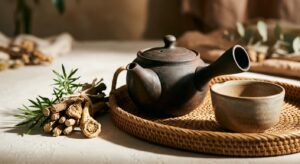
Nettle leaf (Urtica dioica) has been used since ancient Greece and Rome as a blood-building tonic. Medieval European herbalists prized it for fatigue and pallor, conditions we now recognize as hallmarks of iron deficiency anemia. Red raspberry leaf (Rubus idaeus) has long been celebrated as a women’s herb, used across Native American, Chinese, and European traditions to support the uterus and reproductive health through every life stage. Yellow dock root (Rumex crispus), with its deep golden taproot, was used by Eclectic physicians in the 19th century specifically as a gentle iron tonic and liver herb, valued for improving the body’s ability to assimilate minerals from food.
What makes this blend particularly well-designed is the synergy between its ingredients. Nettle and red raspberry leaf contribute meaningful quantities of non-heme iron alongside magnesium, calcium, and vitamin K. Yellow dock root adds its own iron content and also stimulates bile production, supporting the digestive environment that makes iron absorption more efficient. A squeeze of lemon juice or a splash of rose hip tea added at serving provides vitamin C, the single most powerful dietary enhancer of non-heme iron absorption. Together, these herbs create a cup that is both functional and genuinely pleasant to drink.
2
cups
Ingredients
- 2 tspdried nettle leaf
- 1 tspdried red raspberry leaf
- 0.5 tspdried yellow dock root, coarsely ground
- 480 mlwater (100°C / 212°F)
- —fresh lemon juice or vitamin C powder to taste (strongly recommended)
- —raw honey or blackstrap molasses to taste (optional)
How to Brew
Click on an item below to shop for the recommended items for this recipe on Amazon.
As an Amazon Associate, we earn from qualifying purchases.
- Bring fresh, filtered water to a full boil at 100°C (212°F). Mineral content in the water does not interfere with this brew, so filtered tap water is fine.
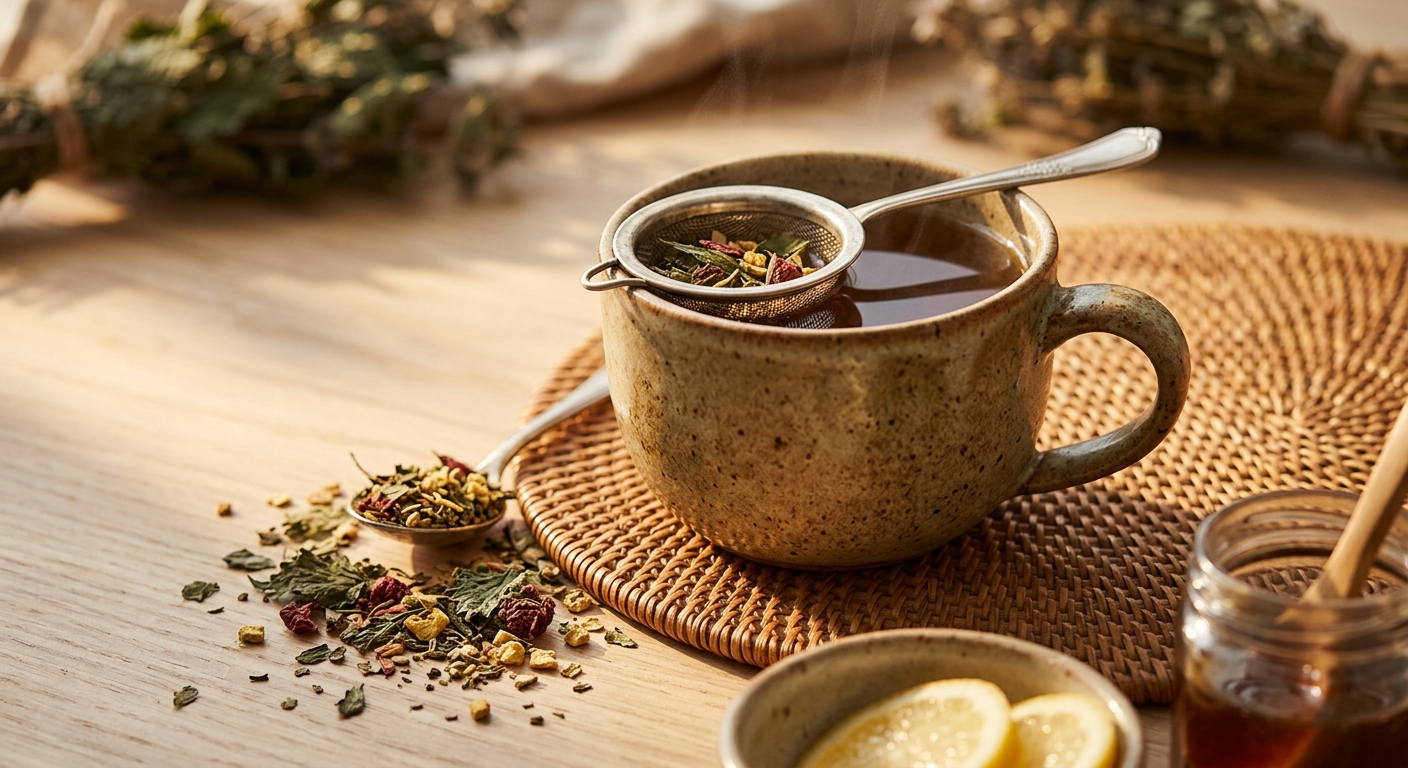
- Combine the dried nettle leaf, red raspberry leaf, and coarsely ground yellow dock root in a tea infuser, muslin bag, or directly in a small teapot. Using a teapot with a built-in strainer is ideal for this blend as the herb particles can be fine.
- Pour the boiling water over the herbs. Place a small saucer or lid over your mug or teapot to trap steam and heat. This preserves volatile plant compounds and keeps the brew at an effective steeping temperature.
- Steep for a minimum of 15 minutes and up to 20 minutes. The brew will deepen significantly in color and flavor during this time. Set a timer and resist the urge to pull the herbs early.
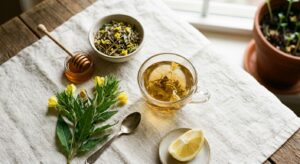
- Remove the infuser or strain the herbs completely. Squeeze in the juice of a quarter lemon or add a pinch of vitamin C powder directly into the cup. This step is not optional for best iron absorption. Stir to combine.
- Sweeten with raw honey or a small spoonful of blackstrap molasses if desired. Blackstrap molasses is itself a meaningful source of iron and adds a rich, bittersweet depth that complements the earthy brew beautifully.
- Measure out the nettle leaf, red raspberry leaf, and yellow dock root directly into a glass jar with a lid. Use room temperature or cold filtered water for this method. Do not use hot water.
- Pour 480 ml of cold, filtered water over the herbs. Stir briefly with a long spoon to ensure all the plant material is submerged and saturated. A few herbs floating is normal.
- Place the lid on the jar and set it at room temperature for the first hour to allow initial extraction to begin, then transfer to the refrigerator.
- Leave to cold brew for 8 to 12 hours, ideally overnight. The color will develop slowly into a deep green-amber. The longer end of the range yields a stronger mineral infusion.
- In the morning, strain the herbs through a fine mesh strainer or cheesecloth, pressing gently on the solids to extract the last of the liquid.
- Pour into a glass over ice or warm gently in a small saucepan over low heat if you prefer a warm morning drink. Add fresh lemon juice generously before serving, as vitamin C remains critical for iron absorption regardless of brewing method. Refrigerate any remaining brew for up to 24 hours.
- Place the coarsely ground yellow dock root into a small stainless steel or enamel saucepan. Add 600 ml of cold, filtered water. Starting in cold water helps draw compounds out from the dense root fibers more gradually and thoroughly.
- Bring the water to a full boil over medium-high heat, then immediately reduce the heat to a gentle simmer at approximately 90 to 95°C (194 to 203°F). The surface should show small, steady bubbles, not a rolling boil.
- Simmer uncovered for 20 to 25 minutes. The liquid will reduce and darken considerably. If it reduces to less than 400 ml, add a small splash of boiling water to compensate.
- Remove the saucepan from heat entirely. Add the dried nettle leaf and red raspberry leaf directly to the hot decoction liquid. Cover the saucepan with a lid and allow these more delicate herbs to infuse off-heat for 10 to 15 minutes. This two-stage approach protects the volatile nutrients and chlorophyll in the leaves from being destroyed by prolonged boiling.
- Strain through a fine mesh strainer into a mug, pressing firmly on all the plant material. The resulting liquid will be darker and more concentrated than the standard hot infusion.
- Add lemon juice generously. This decoction is intentionally strong and slightly bitter from the yellow dock. Sweeten with blackstrap molasses and thin with a small amount of hot water if desired. Drink one cup per day, not exceeding two cups, as the concentrated anthraquinones in yellow dock can have a laxative effect in larger amounts.
Health Benefits
Nettle leaf and yellow dock root are two of the most iron-dense herbs available in western herbalism. While plant-based iron is less bioavailable than heme iron from meat, pairing these herbs with vitamin C from fresh lemon juice substantially closes that gap by converting iron to its absorbable ferrous form.
Red raspberry leaf contains fragarine, an astringent compound that traditional herbalists and some modern clinical practitioners use to tone the uterine lining and reduce excessive menstrual flow, addressing one of the root causes of monthly iron loss in menstruating women.
Yellow dock root’s anthraquinone content stimulates bile production and improves digestive motility, creating a more favorable gut environment for iron and mineral absorption. This makes the herb valuable not only for its own iron content but for improving how the body processes iron from all dietary sources.
Quercetin and other flavonoids in nettle leaf exert meaningful anti-inflammatory activity. Chronic low-grade inflammation can trigger the body to sequester iron away from circulation as a defensive mechanism, and reducing that inflammatory burden may help restore normal iron availability.
Beyond iron, this blend delivers magnesium, calcium, vitamin K, B vitamins, and trace minerals from nettle and raspberry leaf. These cofactors support the broader blood-building process, energy metabolism, and the bone and muscle health that often suffer alongside iron deficiency.
🧪 Key Bioactive Compounds
The Science Behind Nettle Leaf
The science behind this tea centers on the chemistry of non-heme iron and the factors that govern its bioavailability. Plants store iron in ferric form (Fe³⁺), which the human gut absorbs poorly compared to the ferrous form (Fe²⁺) found in animal foods. This is where vitamin C becomes indispensable. Ascorbic acid reduces ferric iron to ferrous iron in the gut lumen and also chelates it, forming a soluble complex that resists the inhibitory effects of phytates and tannins. Studies consistently show that consuming vitamin C alongside non-heme iron can increase its absorption by two to six times, which is why adding lemon juice to this brew is not merely a flavoring suggestion but a functional part of the protocol.
Yellow dock root introduces a secondary mechanism through its anthraquinone glycosides, particularly rumicin. These compounds stimulate the liver to produce more bile, and bile acids play a crucial role in mineral absorption by maintaining the slightly acidic environment of the upper small intestine where iron uptake primarily occurs. Additionally, the bitter compounds in yellow dock stimulate gastric acid production. Adequate stomach acidity is essential for iron solubilization, and many people, particularly older adults, produce insufficient gastric acid to efficiently dissolve dietary iron. In this way, yellow dock acts not merely as an iron source itself but as a digestive enhancer that improves how the body accesses iron from every source consumed alongside it.
Nettle leaf’s chlorophyll content has attracted scientific interest because of its structural near-identity to hemoglobin. Where hemoglobin centers on an iron atom, chlorophyll centers on a magnesium atom, but the surrounding porphyrin ring structure is almost identical. Some researchers have proposed that chlorophyll may serve as a precursor or cofactor in heme synthesis, and while clinical evidence in humans remains limited, the traditional use of deep-green plants as blood tonics across dozens of cultures may reflect an intuitive recognition of this biochemical relationship. Quercetin, another key compound in nettle, has demonstrated in cell studies the ability to modulate hepcidin, the liver hormone that controls iron release from storage. Elevated hepcidin is the primary driver of anemia of chronic inflammation, and its suppression by quercetin-class flavonoids represents a genuinely plausible mechanism by which anti-inflammatory herbs may support iron availability even in the absence of simple dietary deficiency.
Brewing Tips
- Make a large batch using the cold brew method on Sunday night and refrigerate it in a sealed jar, giving you ready-to-drink iron tonic for the entire week. Add fresh lemon juice to each cup as you pour rather than to the whole batch, as vitamin C degrades over time once mixed into the liquid.
- Avoid drinking this tea within one hour of coffee, black tea, or milk. Tannins in coffee and tea bind non-heme iron and significantly reduce its absorption, and calcium competes with iron for the same intestinal transporter. Timing your iron-supportive tea between meals or at least two hours away from these foods maximizes its benefit.
- Grind dried yellow dock root coarsely in a spice grinder before storing your herb blend. Pre-ground root has much more surface area exposed to water, which dramatically improves extraction efficiency in both the hot brew and decoction methods without making the brew unpleasantly bitter if you stay within the recommended steep times.