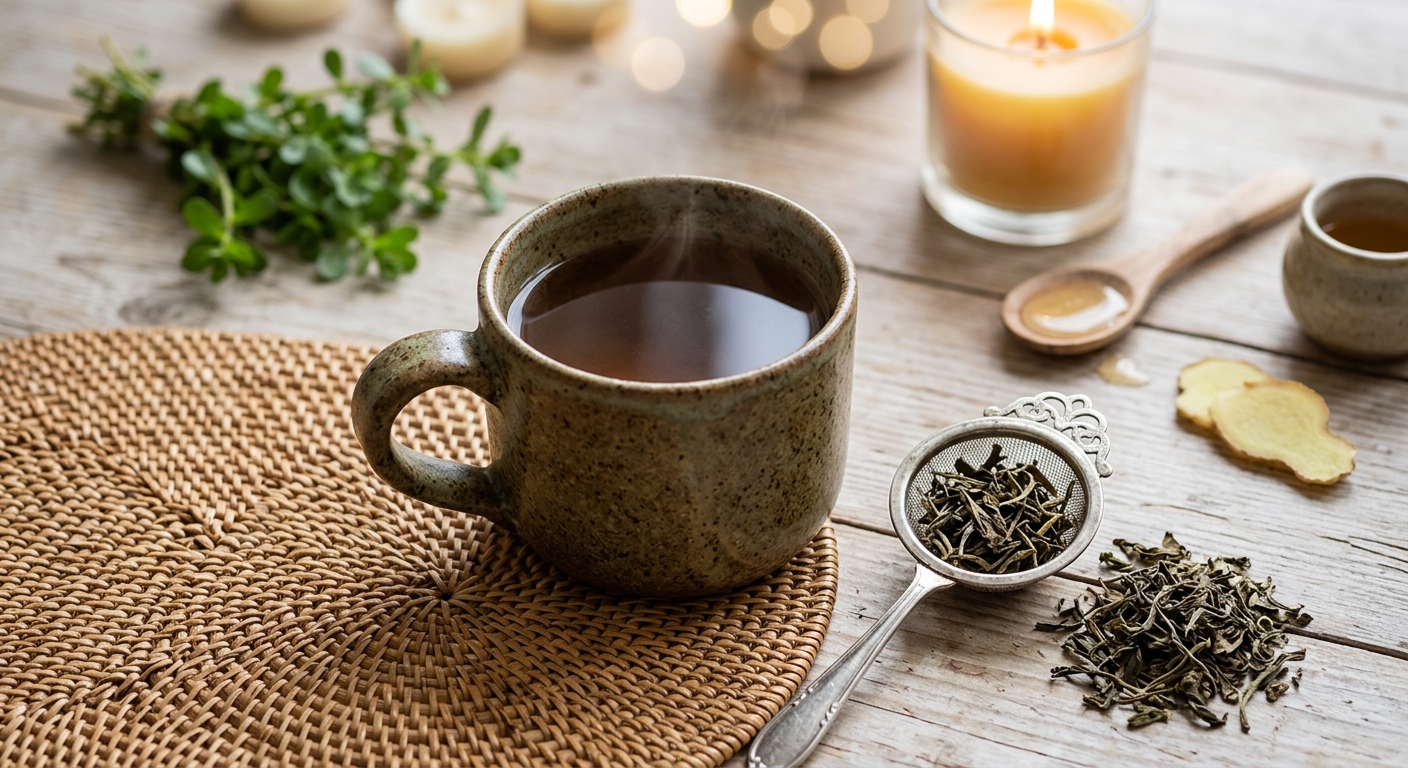
Few herbs carry the weight of history that brahmi does. Bacopa monnieri has been a cornerstone of Ayurvedic medicine for over 3,000 years, referenced in ancient Sanskrit texts including the Charaka Samhita, where it was prescribed as a medhya rasayana, a tonic specifically formulated to enhance intellect and promote longevity. Revered across India, Sri Lanka, and Southeast Asia, brahmi was traditionally consumed by scholars and students seeking to memorize vast passages of sacred text, and by yogis who used it to calm the restless mind before meditation. Its very name is drawn from Brahma, the Hindu god of creation and cosmic consciousness, reflecting the immense spiritual and intellectual significance this small aquatic herb held in ancient cultures.
What makes brahmi genuinely remarkable is its dual action on the brain. Unlike stimulants that sharpen focus at the cost of rest, brahmi works as an adaptogen, helping the nervous system find balance whether it needs calming or clarity. When consumed as a tea in the evening, its calming constituents help reduce the cortisol-driven mental noise that keeps so many people awake. When taken in the morning, it supports sustained cognitive performance without the jitteriness associated with caffeine. This versatility made it a prized daily tonic in Ayurvedic households, prepared as a warm tea, blended into warm milk, or infused into ghee. The tea form offers one of the most accessible and effective ways to benefit from its compounds.
The flavor of brahmi tea is unlike most herbal teas you may have encountered. It carries a distinctly bitter, slightly astringent edge with faint earthy and green undertones, a reflection of its potent alkaloid content. It is not a tea you sip for pleasure alone, though a touch of raw honey or a slice of fresh ginger can transform the experience considerably. What keeps people returning to brahmi tea is not the flavor but the feeling it cultivates: a gentle settling of the mind, a softening of tension around the temples, and over regular use, a noticeable improvement in sleep quality and cognitive resilience.
2
cups
Ingredients
- 2 tspdried brahmi leaves (Bacopa monnieri)
- 480 mlwater (90°C / 194°F)
- —raw honey to taste (optional)
- —fresh ginger slice (optional, to balance bitterness)
How to Brew
Click on an item below to shop for the recommended items for this recipe on Amazon.
As an Amazon Associate, we earn from qualifying purchases.
- Heat filtered water to 88 to 92°C (190 to 198°F). If you do not have a temperature-controlled kettle, bring water to a full boil then allow it to rest uncovered for 2 to 3 minutes before using.
- Place 1 teaspoon of dried brahmi leaves per cup into a tea infuser, strainer basket, or teapot. If using a fresh ginger slice for balance, add it to the infuser alongside the brahmi now.
- Pour the heated water over the brahmi and cover the vessel with a lid or small plate to trap volatile aromatic compounds and retain heat throughout the steep.
- Steep for 5 to 8 minutes. Taste at the 5-minute mark: a lighter steep yields a subtler, more palatable cup, while 8 minutes produces a more potent, noticeably bitter brew with stronger therapeutic action.
- Remove the infuser and stir in raw honey while the tea is still warm, as this helps it dissolve fully and tempers the herbal bitterness. Sip slowly in a calm environment, ideally 30 to 60 minutes before bed for sleep support.
- Measure 2 teaspoons of dried brahmi leaves per 480 ml (2 cups) of cold, filtered water. Because cold water extracts more gently, a slightly higher leaf-to-water ratio than the hot brew is used to ensure adequate bacoside concentration.
- Add the brahmi leaves directly to a glass jar or cold brew pitcher. Do not use a fine infuser at this stage, as a looser arrangement allows the water to circulate freely around the leaves for better cold extraction.
- Pour cold filtered water over the leaves, gently stir once to ensure all the herb is fully submerged, and seal the jar with a lid.
- Allow the jar to sit at room temperature for the first hour to begin extraction, then transfer to the refrigerator and cold steep for a total of 10 to 14 hours, or overnight. A 14-hour steep produces a fuller-bodied result.
- Strain through a fine mesh strainer or cheesecloth into a clean glass, pressing the leaves gently to release the remaining liquid. Serve over ice or chilled, sweetened with honey or a small amount of agave syrup if desired.
- Add 2 teaspoons of dried brahmi leaves and 600 ml of cold filtered water to a small saucepan. Starting with cold water and bringing it up to temperature slowly allows the herb to release its compounds more evenly than adding it to already-hot water.
- Place the saucepan over medium-low heat and bring to a gentle simmer, not a rolling boil. Maintain a steady simmer at approximately 85 to 95°C (185 to 203°F). Visible small bubbles rising slowly are ideal. A vigorous boil will destroy heat-sensitive bacosides and create excessive bitterness.
- Simmer uncovered for 15 to 20 minutes, stirring occasionally. You will notice the liquid reducing and deepening in color to a richer golden-green. The aroma will become more concentrated and earthy as the brew intensifies.
- Remove from heat and allow the decoction to rest for 5 minutes off the heat, which allows any remaining volatile compounds to settle back into the liquid rather than escaping as steam.
- Strain through a fine mesh strainer into a mug. The finished decoction should yield approximately 400 ml of concentrated tea. Add raw honey, a pinch of cardamom, or a small amount of warm oat milk to soften the robust, bitter flavor. Consume within 30 to 45 minutes of preparation for optimal potency.
Health Benefits
Brahmi’s bacosides and flavonoids modulate GABAergic activity and reduce cortisol reactivity, helping quiet the overactive mind that is one of the most common barriers to falling and staying asleep. A randomized double-blind clinical trial published in the Journal of Ethnopharmacology found significant improvements in sleep quality scores among participants taking Bacopa extract over six weeks.
As a well-documented adaptogen, brahmi has been shown in multiple clinical trials to significantly reduce scores on standardized anxiety scales, including the State-Trait Anxiety Inventory. Its mechanism involves down-regulating the body’s stress-response pathways and modulating serotonin reuptake, producing a calm without sedation at typical tea doses.
Bacosides A and B are the primary compounds responsible for brahmi’s cognitive effects, supporting the synthesis of proteins involved in long-term potentiation, the cellular mechanism underlying memory formation. A meta-analysis of nine randomized controlled trials concluded that Bacopa monnieri significantly improved speed of visual information processing, learning rate, and memory consolidation in healthy adults.
Brahmi contains a suite of antioxidant compounds, including bacosides, flavonoids, and betulinic acid, that neutralize reactive oxygen species in neural tissue. This neuroprotective action is thought to support long-term brain health and may be particularly relevant in aging populations.
Preclinical research has shown that Bacopa monnieri can stimulate thyroid hormone synthesis, particularly T4, which plays a role in regulating metabolism, mood stability, and energy levels. While human clinical evidence is still limited, this aligns with its traditional Ayurvedic use as a broad tonic for vitality.
🧪 Key Bioactive Compounds
The Science Behind Brahmi (Bacopa Monnieri)
The therapeutic reputation of brahmi rests primarily on a class of compounds called bacosides, specifically Bacosides A and B, which are complex triterpenoid saponins unique to Bacopa monnieri. These compounds have been shown in multiple in vitro and in vivo studies to enhance the activity of key enzymes involved in neuronal signaling, including tryptophan hydroxylase and serotonin reuptake transporters. By modulating serotonin levels in brain regions associated with mood and wakefulness regulation, bacosides help create the biochemical conditions favorable for both emotional calm and natural sleep onset. Crucially, the bacosides also appear to facilitate the repair and regeneration of damaged neuronal dendrites, the tree-like extensions that form synaptic connections, offering a mechanism by which regular brahmi consumption may improve cognitive function over time rather than providing only an acute effect.
Brahmi’s anxiolytic and sleep-supportive properties are further explained by its flavonoid content, particularly apigenin and luteolin. Apigenin is the same compound responsible for much of chamomile’s calming effect, and it works by binding to benzodiazepine receptor sites on GABA-A receptors in the central nervous system. This binding does not activate the receptor as powerfully as pharmaceutical benzodiazepines, but it produces a measurable reduction in neuronal excitability that translates to reduced feelings of anxiety and an easier transition into sleep. Luteolin complements this action by reducing neuroinflammatory signaling, which is increasingly recognized as a contributor to disrupted sleep architecture and mood dysregulation in people under chronic stress.
From an adaptogenic perspective, brahmi has been shown in human clinical research to reduce serum cortisol levels and attenuate the physiological stress response over a period of weeks rather than hours. This distinguishes it meaningfully from herbs that work acutely as sedatives. A landmark study published in Phytotherapy Research demonstrated that participants taking a standardized Bacopa extract for 12 weeks showed statistically significant reductions in cortisol levels and anxiety scores compared to placebo, with effects becoming more pronounced over time. This cumulative action is a hallmark of true adaptogens and explains why brahmi is traditionally consumed as a daily tonic rather than an occasional sleep aid. Drinking brahmi tea consistently over weeks gradually recalibrates the nervous system’s baseline reactivity to stress, making both sleep and waking life calmer as a result.
Brewing Tips
- Freshness matters significantly with brahmi: dried leaves lose bacoside potency relatively quickly when exposed to light and moisture. Store your dried brahmi in an airtight dark glass jar away from heat, and aim to use it within six months of purchase for the strongest therapeutic effect.
- The bitterness of brahmi is not a flaw but a signal of its alkaloid richness. If the taste is too challenging, do not simply steep it for less time as this reduces the active compound concentration. Instead, add a slice of fresh ginger and a teaspoon of raw honey, or blend the hot brew with a small amount of warm oat milk, which coats the palate and rounds out the bitter edge considerably.
- For sleep support specifically, consistency matters far more than dose intensity. One cup of brahmi tea taken at the same time each evening, ideally as part of a wind-down ritual that also includes dimming lights and reducing screen exposure, will produce noticeably better results over two to four weeks than drinking stronger concentrations irregularly.