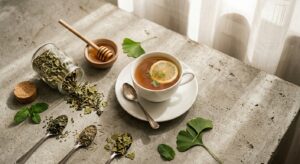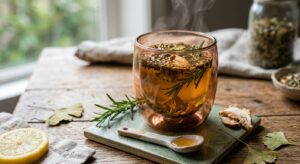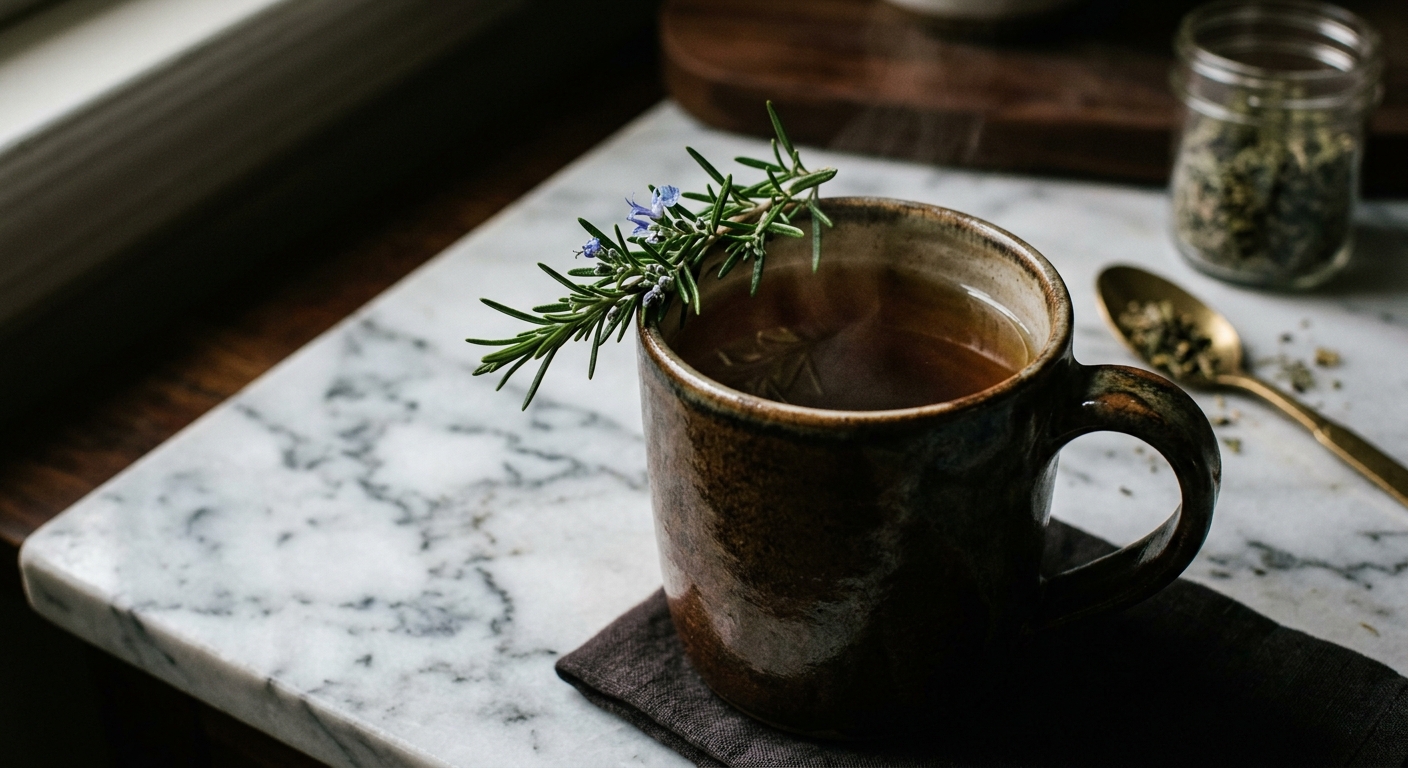
Long before nootropic supplements lined pharmacy shelves, herbalists in ancient Greece, China, and Ayurvedic India were turning to aromatic plants to sharpen the mind. Rosemary was burned in Greek scholars’ study rooms, ginkgo trees were cultivated near Chinese temples for their brain-supportive properties, and peppermint was used throughout the Mediterranean to stimulate alertness before important ceremonies. Together, these three herbs form a synergistic trio that addresses cognitive clarity from multiple angles, each contributing its own distinct mechanism while harmonizing beautifully in the cup.
Rosemary (Salvia rosmarinus) is the cornerstone of this blend. Its sharp, resinous fragrance alone has been shown in aromatherapy studies to improve working memory and processing speed. When brewed as a tea, its volatile compounds and polyphenols enter the bloodstream and begin supporting acetylcholine availability in the brain, a key neurotransmitter involved in learning and attention. Ginkgo biloba, one of the oldest living tree species on Earth, adds its renowned circulatory support, helping deliver oxygen-rich blood to the brain more efficiently. Peppermint rounds out the blend with cooling menthol that triggers alertness and clears the mental fog that so often accompanies fatigue or stress.
This Mental Clarity Tea is not a stimulant in the conventional sense. Unlike coffee or energy drinks, it does not rely on a heavy caffeine hit followed by a crash. Instead, it works with your brain’s natural chemistry, gently upregulating focus, circulation, and neural efficiency. Whether you brew it hot before a morning work session, steep it cold overnight for an afternoon desk drink, or press it into a concentrate to sip before a presentation, this blend is a ritual worth building into your day.
2
cups
Ingredients
- 2 tspdried rosemary leaves
- 1 tspdried ginkgo biloba leaves
- 1 tspdried peppermint leaves
- 480 mlwater (90°C / 194°F)
- —raw honey or lemon to taste (optional)
How to Brew
Click on an item below to shop for the recommended items for this recipe on Amazon.
As an Amazon Associate, we earn from qualifying purchases.
- Bring 480 ml of filtered water to approximately 90 to 95°C (194 to 203°F). If you do not have a temperature-controlled kettle, bring the water to a full boil and allow it to rest for 60 to 90 seconds before using.
- Combine 2 tsp dried rosemary, 1 tsp dried ginkgo biloba leaves, and 1 tsp dried peppermint in a tea infuser or loose-leaf basket. Gently crush the rosemary between your fingers before adding it to help release its aromatic oils.
- Place the infuser into a pre-warmed teapot or mug and pour the hot water over the herbs. Pre-warming your vessel with a splash of hot water and discarding it helps maintain a steady steep temperature.
- Cover the mug or teapot with a lid or small saucer during steeping. This traps the steam and keeps volatile menthol and rosemary compounds from escaping into the air rather than into your cup.
- Steep for 5 to 7 minutes. Start at 5 minutes for a lighter, more minty character. Extend to 7 minutes for a more pronounced rosemary and ginkgo presence.
- Remove the infuser, stir once, and taste before adding honey or a squeeze of lemon. The brightness of lemon pairs particularly well with rosemary and enhances the tea’s clarity-boosting aroma on the first sip.
- Measure out 2.5 tsp dried rosemary, 1.5 tsp dried ginkgo biloba leaves, and 1.5 tsp dried peppermint into a clean glass jar. Slightly increasing the herb quantities compensates for the slower, less aggressive extraction of cold water.
- Pour 480 ml of room-temperature filtered water over the herbs. Do not use warm or hot water, as this will cause the volatile compounds to off-gas during the long steep rather than infuse slowly into the liquid.
- Stir the herbs gently to ensure they are fully saturated, then seal the jar with a lid. Allow the jar to sit at room temperature for the first 30 minutes so the herbs begin releasing their oils, then transfer to the refrigerator.
- Refrigerate for 8 to 12 hours, or overnight. The slower cold extraction draws out a clean, bright rosemary flavor with none of the sharpness that can occur with extended hot steeping.
- When ready, strain the liquid through a fine mesh strainer or a nut milk bag into a serving glass filled with ice. The cold brew is ready to drink immediately and can be stored sealed in the refrigerator for up to 48 hours without flavor degradation.
- In a small saucepan, combine 4 tsp dried rosemary, 2 tsp dried ginkgo biloba leaves, and 2 tsp dried peppermint with 480 ml of filtered water. Using double the herbs relative to the final serving volume creates a potent concentrated extract.
- Heat the water over medium heat until it reaches approximately 95°C (203°F), just below a gentle simmer. Do not allow the water to reach a rolling boil, which can volatilize the aromatic terpenes before they have a chance to infuse.
- Reduce the heat to the lowest setting and steep the herbs, partially covered, for 12 to 15 minutes. Stirring gently every 4 to 5 minutes encourages even extraction from the dried plant material.
- Remove from heat and allow the concentrate to cool for 5 minutes before straining through a fine mesh strainer into a clean glass jar. Press the spent herbs lightly with the back of a spoon to extract the remaining liquid.
- To serve hot, dilute one part concentrate with one part hot water (roughly 60 ml concentrate to 180 ml hot water) and adjust to taste. To serve cold, dilute over ice or top with sparkling water for a refreshing focus-boosting spritzer.
- Seal and store the concentrate in the refrigerator for up to 5 days. Label the jar with the date and shake gently before each use, as some natural settling may occur.
Health Benefits
Rosemary’s rosmarinic acid and 1,8-cineole have both been associated in human studies with improved performance on memory tasks. A 2012 study published in Therapeutic Advances in Psychopharmacology found that even aroma exposure to rosemary compounds measurably increased working memory scores.
Ginkgo biloba’s terpenoid lactones, particularly ginkgolides, have been shown in multiple randomized controlled trials to enhance blood flow to the brain. Better cerebral circulation translates directly to sharper focus, faster processing, and reduced mental fatigue during sustained cognitive effort.
Peppermint’s menthol stimulates the trigeminal nerve and activates sensory receptors that signal alertness in the brain. Research published in the International Journal of Neuroscience found that peppermint aroma and consumption reduced fatigue and improved sustained attention in healthy adults.
All three herbs in this blend are rich in polyphenols and flavonoids that combat oxidative stress in neural tissue. Chronic low-grade oxidative damage is increasingly recognized as a driver of cognitive decline, and regular consumption of antioxidant-rich herbal infusions may help slow this process.
Unlike caffeine, which spikes cortisol and can cause jitteriness, this blend promotes alertness through circulatory support, acetylcholine preservation, and sensory activation. The result is a state of calm, focused attention without the overstimulation or subsequent crash associated with stimulant-based cognitive aids.
🧪 Key Bioactive Compounds
The Science Behind Rosemary
The cognitive benefits of this blend are not based on folklore alone. Rosemary contains 1,8-cineole (also known as eucalyptol) in concentrations high enough to be pharmacologically active when consumed as a tea. This monoterpene readily crosses the blood-brain barrier and has been shown in both in vitro and human studies to inhibit acetylcholinesterase, the enzyme responsible for breaking down acetylcholine after synaptic transmission. By slowing this breakdown, rosemary effectively prolongs the availability of acetylcholine at neuronal synapses, supporting the kind of sustained, high-fidelity communication between neurons that underlies learning, attention, and memory consolidation. A landmark 2016 study in the Journal of Medicinal Food confirmed that plasma 1,8-cineole levels following rosemary consumption correlated positively with cognitive test performance in healthy older adults.
Ginkgo biloba’s mechanism is distinct and complementary. Its unique terpenoid lactones, particularly the ginkgolides and bilobalide, act as antagonists to platelet-activating factor, a lipid mediator involved in blood clotting and inflammatory signaling. By modulating this pathway, ginkgo promotes more efficient microcirculation throughout the brain, ensuring that neurons receive adequate oxygen and glucose even during periods of high cognitive demand. The flavonoid glycosides in ginkgo, including quercetin and kaempferol derivatives, add a layer of antioxidant protection that guards against the oxidative stress that accumulates during intense mental effort. Meta-analyses published in journals including Human Psychopharmacology have found statistically significant improvements in attention, memory, and mental processing speed in adults who consumed standardized ginkgo extracts over 4 to 12 week periods.
Peppermint’s contribution is both neurological and sensory. Menthol activates TRPM8 receptors, a class of thermosensitive ion channels expressed in trigeminal nerve fibers. This activation sends a cascade of alerting signals to the brain that reduce the perceived effort of cognitive tasks and lower the sensation of fatigue. Beyond menthol, peppermint also contains rosmarinic acid (shared with rosemary), which reinforces the acetylcholinesterase-inhibiting activity of the blend. Research from Northumbria University found that participants who consumed peppermint tea performed significantly better on tests of long-term memory, working memory, and alertness compared to those who consumed chamomile tea or hot water. The synergy between these three herbs creates a multi-pathway approach to cognitive support that no single herb could achieve alone.
Brewing Tips
- Source whole dried rosemary leaves rather than ground rosemary powder for this tea. Whole leaves infuse more evenly, release volatile oils more gradually, and are far easier to strain without leaving a gritty residue in your cup.
- If you are new to ginkgo biloba tea, start with half the recommended amount and assess your tolerance over 3 to 5 days before increasing to the full quantity. Ginkgo is potent and some individuals experience mild headaches or digestive discomfort when introducing it too quickly.
- Brew this tea in the morning or early afternoon for best results. The alertness-promoting compounds in rosemary and peppermint, combined with the circulatory stimulation from ginkgo, can interfere with falling asleep if consumed within 4 to 5 hours of bedtime.