Few plants carry as much concentrated vitality as wheatgrass. Harvested at the peak of its nutritional density, typically seven to ten days after germination when the shoots reach roughly 15 to 20 centimeters tall, wheatgrass has been revered in both ancient and modern wellness traditions as one of nature’s most complete green foods. The Egyptians considered young wheat shoots sacred, believing they promoted vitality and longevity. In the 1930s, agricultural chemist Charles Schnabel popularized wheatgrass in the West after observing that chickens fed dying grass rapidly recovered their health when given fresh young wheat shoots. His research sparked a century of growing interest in wheatgrass as a therapeutic food.
Wheatgrass tea brings this potent green superfood into a gentle, sippable form that is easier on the digestive system than raw wheatgrass juice. Brewing the dried or fresh grass in warm or cool water draws out water-soluble vitamins such as C and several B vitamins, along with chlorophyll, amino acids, and a broad spectrum of minerals. Unlike the sharp intensity of a wheatgrass shot, the tea offers a milder, earthy, slightly sweet flavor that can be enjoyed throughout the day without overwhelming the palate. It is one of the few herbal teas that functions more like a liquid multivitamin than a simple botanical brew.
In the realm of energy and focus, wheatgrass tea stands apart from stimulant herbs like green tea or ginseng. Rather than triggering a caffeine-driven spike, its energy-supporting qualities come from nutritional completeness: B vitamins that support mitochondrial function, iron that carries oxygen to the brain, and chlorophyll that may support healthy red blood cell production. The result is a steady, grounded alertness that practitioners of holistic nutrition have described as feeling nourished from the inside out, making it a compelling morning ritual for those seeking clean, sustainable energy.
2
cups
Ingredients
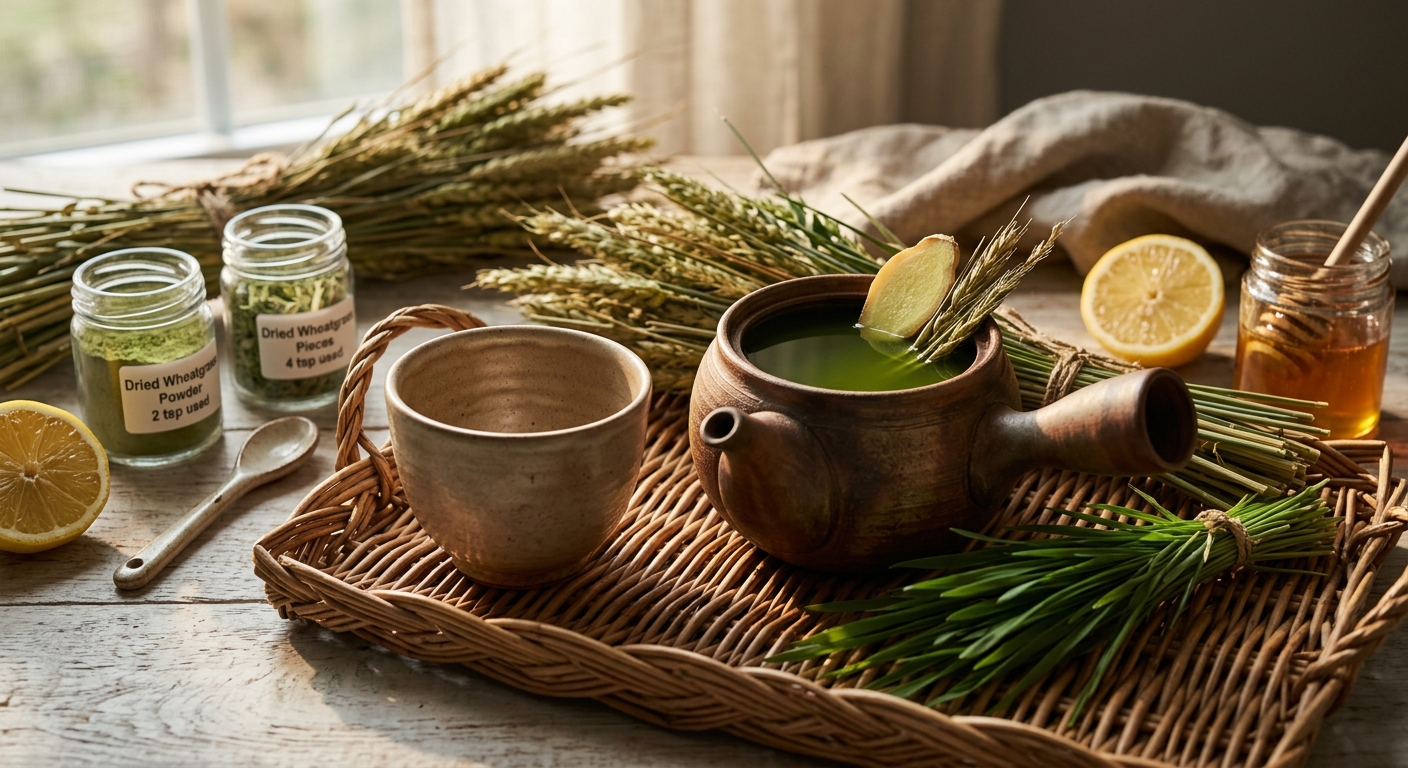
- 2 tspdried wheatgrass powder or 4 tsp dried wheatgrass pieces
- 480 mlwater (70 to 75°C / 158 to 167°F)
- —fresh lemon juice to taste (optional, brightens flavor and aids iron absorption)
- —raw honey or agave syrup to taste (optional)
- —fresh ginger slice (optional, rounds out the grassy notes)
How to Brew
Click on an item below to shop for the recommended items for this recipe on Amazon.
As an Amazon Associate, we earn from qualifying purchases.
- Heat filtered water to 70 to 75°C (158 to 167°F). If you do not have a temperature-controlled kettle, bring water to a full boil then let it rest uncovered for 8 to 10 minutes before using.
- Measure 1 teaspoon of dried wheatgrass powder (or 2 teaspoons of dried wheatgrass pieces) per 240 ml of water and add it directly to a fine-mesh infuser, tea filter bag, or a heatproof pitcher if you plan to strain it afterward.
- Pour the measured warm water slowly and evenly over the wheatgrass in your mug or steeping vessel. This gentle pour ensures full, even saturation of the plant material rather than clumping the powder.
- Steep for 5 to 8 minutes with the mug covered using a small saucer or lid. Covering the mug traps aromatic volatile compounds and slows heat loss, maintaining optimal extraction temperature throughout the steep.
- Remove the infuser or pour through a fine-mesh strainer into your cup. If using powder and you prefer a cleaner cup, strain through a double layer of cheesecloth or a paper coffee filter.
- Squeeze in a small amount of fresh lemon juice if desired, stir gently, and sip while warm. Add honey or agave for a touch of sweetness to balance the vegetal notes.
- Measure 1.5 teaspoons of dried wheatgrass powder or 3 teaspoons of dried wheatgrass pieces per 240 ml of cold, filtered water. Cold brewing extracts more slowly, so a slightly higher ratio compensates for the reduced extraction efficiency.
- Combine the wheatgrass and cold water in a clean glass jar with a tight-fitting lid. Stir or shake vigorously for 20 to 30 seconds to fully hydrate the powder and disperse the plant material evenly throughout the water.
- Seal the jar and leave it at room temperature for 30 minutes to allow initial hydration and the first stage of cold extraction to begin, then transfer it to the refrigerator.
- Cold brew for a minimum of 6 hours, though 8 to 10 hours overnight will produce a fuller-bodied, more nuanced flavor. Do not exceed 12 hours as the brew can develop an overly strong, grassy bitterness.
- When ready to serve, strain the cold brew through a fine-mesh strainer or cheesecloth into a glass filled with ice. Cold brew wheatgrass tea does not require sweetener for most palates, but a slice of cucumber or a sprig of fresh mint makes an elegant, refreshing garnish.
- Heat 240 ml of filtered water to 65 to 70°C (149 to 158°F). The slightly lower temperature used for longer extraction protects heat-sensitive nutrients during the extended steep while still drawing out a high concentration of water-soluble compounds.
- Add 3 tablespoons of dried wheatgrass powder or 4 tablespoons of dried wheatgrass pieces to a heatproof glass measuring cup or a French press. This triple-strength ratio will create a potent concentrate meant to be diluted before drinking.
- Pour the warm water over the wheatgrass and stir thoroughly to ensure complete dispersion of the powder. Cover the vessel tightly with a plate or the French press lid (plunger raised) to prevent heat and volatile aroma loss.
- Steep for 12 to 15 minutes, stirring once at the halfway mark to redistribute the plant material and encourage even extraction.
- Press the French press plunger slowly to the bottom, or strain the concentrate through a fine-mesh strainer lined with cheesecloth into a clean glass storage jar. Press the spent plant material firmly against the strainer to extract every drop of liquid.
- Allow the concentrate to cool to room temperature before sealing the jar and refrigerating. To serve, dilute 60 ml of concentrate with 180 ml of warm water, cold water, or sparkling water. Add lemon juice, ginger, or honey as desired.
Health Benefits
Wheatgrass tea provides B vitamins (B1, B2, B3, and B6) that are essential cofactors in mitochondrial ATP production, alongside bioavailable iron that supports oxygen delivery to tissues. This combination promotes steady energy at the cellular level rather than the spike-and-crash cycle associated with caffeine.
The antioxidant compounds in wheatgrass, particularly apigenin and superoxide dismutase, combat oxidative stress in brain tissue, which is a known contributor to brain fog and declining cognitive performance. Regular consumption of antioxidant-rich foods has been associated with improved working memory and attention in observational studies.
Chlorophyll has been shown in several studies to bind to and facilitate the excretion of environmental toxins and carcinogens in the digestive tract. A 2015 clinical study published in the journal Food and Chemical Toxicology found that chlorophyllin (a derivative of chlorophyll) significantly reduced aflatoxin biomarkers, suggesting meaningful detoxification support.
Wheatgrass contains a broad spectrum of antioxidant compounds including flavonoids, vitamin C, and vitamin E, alongside anti-inflammatory enzymes such as SOD. A 2014 study in the Journal of Clinical Oncology noted that wheatgrass supplementation reduced oxidative markers in patients undergoing chemotherapy, supporting its role as a systemic anti-inflammatory agent.
The natural enzymes in wheatgrass tea, including amylase, lipase, and protease, assist in breaking down macronutrients in the digestive tract. Its alkalizing mineral content may also help balance stomach acidity, and clinical research on patients with ulcerative colitis has shown wheatgrass juice to significantly reduce rectal bleeding and disease activity scores.
🧪 Key Bioactive Compounds
The Science Behind Wheatgrass
The energizing properties of wheatgrass tea are rooted in a remarkably dense nutritional matrix rather than any single dramatic compound. Central to its energy-supporting effects are the B vitamins, particularly thiamine (B1), riboflavin (B2), niacin (B3), and pyridoxine (B6), which serve as essential enzymatic cofactors in the mitochondrial Krebs cycle and electron transport chain. Without adequate B vitamins, the cellular machinery that converts glucose and fatty acids into adenosine triphosphate (ATP) operates below its potential. For individuals with marginal B vitamin status, a daily cup of wheatgrass tea may meaningfully support the body’s baseline energy production capacity in a way that no stimulant herb can replicate.
Chlorophyll, the compound responsible for wheatgrass tea’s distinctive jade color, has attracted significant scientific interest for its structural resemblance to human hemoglobin. Both molecules share a porphyrin ring structure; in hemoglobin, the central atom is iron, while in chlorophyll it is magnesium. Some researchers have theorized that chlorophyll may support hemoglobin synthesis by providing a biochemical scaffold, though this mechanism remains under active investigation. What is more firmly established is chlorophyll’s potent antioxidant activity and its ability to form molecular complexes with ingested carcinogens and mutagens in the gut, facilitating their excretion before they can be absorbed into systemic circulation. This detoxification pathway, supported by studies using chlorophyllin in human subjects, may indirectly reduce the oxidative burden on the liver and other organs, freeing metabolic resources that support clearer thinking and more consistent energy.
Superoxide dismutase (SOD) and the P4D1 enzyme complex found in young wheatgrass shoots represent some of its most pharmacologically interesting constituents. SOD is one of the body’s primary endogenous antioxidant defenses, catalyzing the conversion of the damaging superoxide radical into less reactive hydrogen peroxide, which is then neutralized by catalase and glutathione peroxidase. Oxidative stress in neural tissue is increasingly linked to conditions ranging from everyday brain fog and mental fatigue to longer-term neurodegenerative changes. By contributing exogenous antioxidant enzyme activity, wheatgrass tea may help reduce the oxidative load on brain cells, supporting the kind of sustained, clear-headed focus that distinguishes nutritional energy support from stimulant-based alertness.
Brewing Tips
- Always use water below 80°C when brewing wheatgrass tea. Temperatures above this threshold rapidly degrade chlorophyll, vitamin C, and delicate enzymes, producing a dull brownish-green brew with a harsh, cooked-spinach flavor instead of a vibrant, fresh-tasting cup.
- If you find the grassy flavor too intense when starting out, begin with half a teaspoon of dried wheatgrass powder per cup and gradually increase to the full dose over one to two weeks. Your palate and digestive system will both adapt, and the flavor will become increasingly pleasant with familiarity.
- For the most nutritionally potent cup, look for wheatgrass powder that is freeze-dried rather than air-dried or spray-dried. Freeze-drying preserves a significantly higher percentage of heat-sensitive enzymes, vitamins, and chlorophyll compared to heat-based drying methods, and you will notice the difference in both the color and the flavor of the finished tea.