Few herbs carry as much historical weight as wormwood. Known botanically as Artemisia absinthium, this silvery, aromatic perennial has been used medicinally for over 3,500 years, appearing in ancient Egyptian papyri, Greek and Roman texts, and the writings of medieval herbalists like Hildegard von Bingen. Its very name connects it to Artemis, the Greek goddess associated with healing and the wild, and its reputation as a powerful remedy for digestive complaints, intestinal parasites, and fevers has persisted across nearly every culture that encountered it. Most famously, it became the defining botanical ingredient in absinthe, the notorious green liqueur that captivated European artists and writers in the 19th century.
In traditional European herbalism, wormwood was considered one of the supreme bitter tonics, prescribed to stimulate appetite, promote bile production, and expel intestinal worms, hence its common name. Ayurvedic and traditional Chinese medicine also documented related Artemisia species for similar purposes, underscoring how broadly this genus of plants was recognized for its potency. The bitterness of wormwood, one of the most intense of any culinary or medicinal herb, is not a flaw but its central virtue. Bitters work by triggering receptors on the tongue and throughout the gastrointestinal tract, setting off a cascade of digestive secretions that prepare the body to process food efficiently.
Today, wormwood tea occupies a respected niche in herbal and integrative medicine, valued for its ability to address sluggish digestion, bloating, and gut dysbiosis. It is an herb that demands respect: the dose is small, the steeping time is short, and the flavor is intensely bitter and herbaceous. When prepared correctly, a cup of wormwood tea is not a leisurely sipping experience so much as a precise medicinal act, one that connects the drinker to a lineage of healers stretching back thousands of years.
2
cups
Ingredients
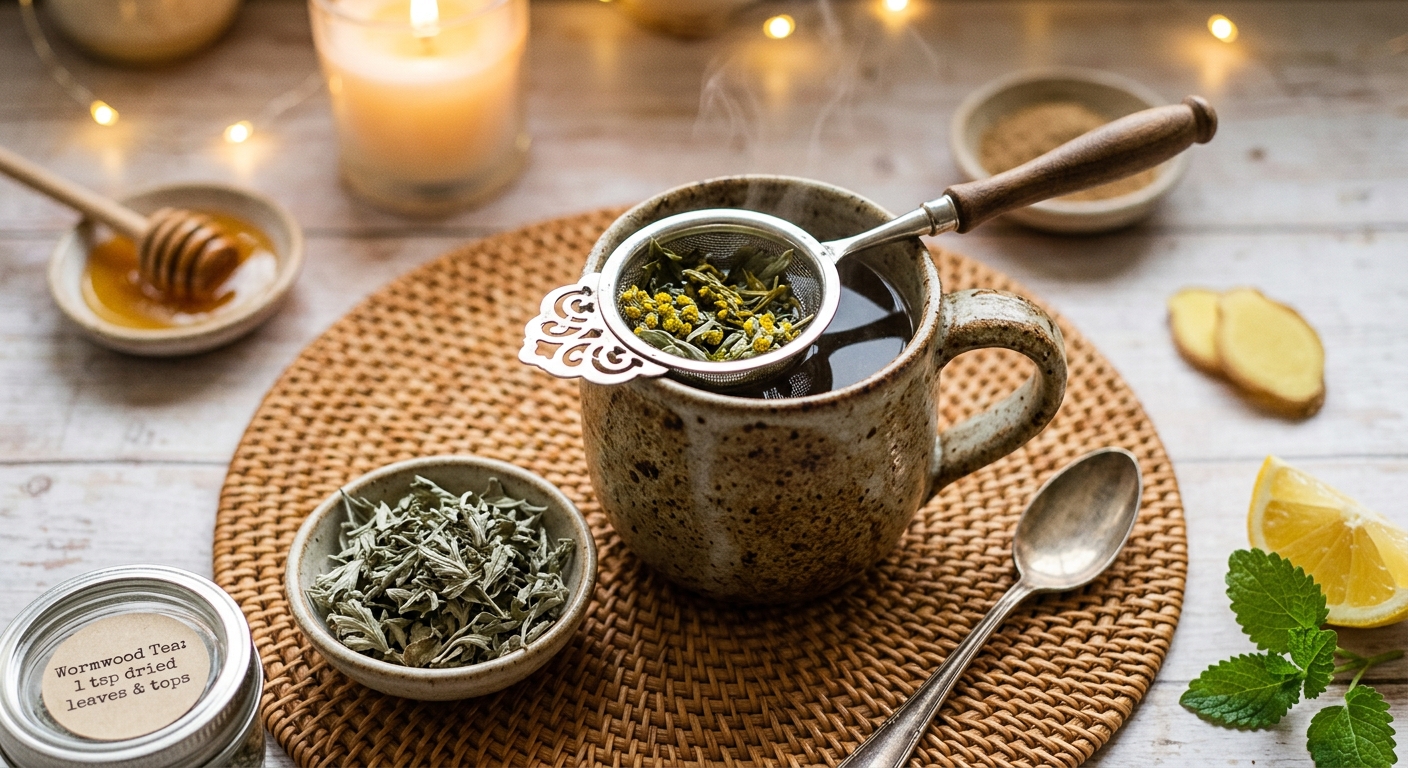
- 1 tspdried wormwood leaves and flowering tops
- 240 mlwater (85°C / 185°F)
- —raw honey or a slice of fresh ginger to soften bitterness (optional)
- —fresh lemon juice to taste (optional)
How to Brew
Click on an item below to shop for the recommended items for this recipe on Amazon.
As an Amazon Associate, we earn from qualifying purchases.
- Heat filtered water to 85°C (185°F). If you do not have a temperature-controlled kettle, bring water to a full boil and allow it to rest uncovered for 2 to 3 minutes before using.
- Measure 1 teaspoon of dried wormwood leaves and flowering tops per cup and place them in a tea infuser or directly into your mug. Use no more than 1 teaspoon per 240 ml serving; wormwood is potent and a small dose is both sufficient and safer.
- Pour the hot water over the herb and cover the mug with a small plate or lid. Covering the steep traps the volatile aromatic compounds that contribute to wormwood’s therapeutic action, preventing them from escaping with the steam.
- Steep for exactly 3 to 5 minutes, using a timer. Taste at 3 minutes; if you are new to wormwood or sensitive to bitterness, remove the infuser at this point.
- Remove the infuser or strain out the herb completely. Do not leave wormwood in contact with the water after steeping, as continued extraction makes the tea unpalatable and unnecessarily concentrated.
- Drink in small sips before a meal to stimulate appetite and digestive secretions, or 20 to 30 minutes after eating to ease bloating and indigestion. Add a small amount of raw honey or a squeeze of lemon if needed to make the bitterness more approachable.
- Measure 1 teaspoon of dried wormwood per 240 ml of filtered water and add both to a clean glass jar with a lid. Cold brewing does not require heat, so a sealed glass jar or pitcher works well.
- Stir gently to ensure the herb is fully submerged. If the herb floats, place a small piece of parchment paper over the surface to keep it in contact with the water.
- Seal the jar and leave it at room temperature for 1 hour, then transfer to the refrigerator. Refrigerating slows extraction and prevents any risk of microbial growth during the long steep.
- Allow the herb to steep in the refrigerator for 6 to 8 hours or overnight. Do not exceed 8 hours, as even cold extraction will eventually over-concentrate the bitter sesquiterpene lactones.
- Strain the liquid through a fine mesh strainer or cheesecloth into a clean container, pressing gently on the herb to release the last of the liquid. Discard the spent herb.
- Serve cold over ice or at room temperature. The cold brew can be stored in a sealed glass jar in the refrigerator for up to 48 hours. Take in small doses of 60 to 120 ml before meals as a digestive tonic.
- Combine the following dried herbs in a small bowl: 1/2 teaspoon wormwood leaves, 1/2 teaspoon dried chamomile flowers, and 1/2 teaspoon fennel seeds per cup. Lightly crush the fennel seeds with the back of a spoon to release their volatile oils before adding them to the blend.
- Place the blended herbs into a tea infuser or teapot. Heat filtered water to 85°C (185°F), using a thermometer or temperature-controlled kettle to avoid overheating the more delicate chamomile and wormwood volatiles.
- Pour 240 ml of hot water over the herb blend and cover the vessel immediately. The chamomile and fennel complement the wormwood bitterness by contributing sweetness, mild anise warmth, and antispasmodic compounds.
- Steep for 4 to 5 minutes. The combination allows a slightly longer steep than wormwood alone because the chamomile and fennel dilute and balance the bitter sesquiterpene extraction.
- Strain the blend thoroughly into a warmed mug. Taste before adding any sweetener. The fennel and chamomile naturally soften the bitterness considerably, and many people find this version pleasant without any additions.
- Drink 20 to 30 minutes before a main meal to prime the digestive system, or sip slowly after eating to relieve fullness and gas. This blend is particularly well suited for those new to wormwood who want a gentler introduction to its bitter medicinal character.
Health Benefits
Wormwood’s intensely bitter sesquiterpene lactones, particularly absinthin, activate bitter taste receptors (T2Rs) on the tongue and throughout the gut lining, triggering a reflex release of bile from the gallbladder and digestive enzymes from the pancreas. This makes it especially valuable for those with sluggish fat digestion, bloating after meals, or low stomach acid.
By promoting bile flow and stimulating gastric motility, wormwood tea helps the digestive tract process food more efficiently, reducing the fermentation and gas accumulation that cause bloating. Several European clinical trials examining preparations containing wormwood alongside other bitter herbs have demonstrated measurable improvement in functional dyspepsia symptoms.
The sesquiterpene lactones and thymol-related compounds in wormwood have demonstrated antimicrobial and antiparasitic activity in laboratory and clinical research, including against Helicobacter pylori and intestinal protozoa such as Blastocystis hominis. A small randomized pilot study published in the Journal of Helminthology found wormwood comparable to a pharmaceutical antiparasitic for certain intestinal worm species.
Preliminary clinical research, including a small randomized controlled trial in patients with Crohn’s disease, found that wormwood supplementation was associated with significant reductions in disease activity scores and inflammatory markers including TNF-alpha. Researchers attributed this partly to artabsin and other sesquiterpene lactones inhibiting pro-inflammatory signaling pathways in the gut mucosa.
Wormwood has been classified as a choleretic herb, meaning it increases the production of bile by liver cells, and a cholagogue, meaning it promotes bile release into the small intestine. This dual action supports fat emulsification, assists in the elimination of metabolic waste via bile, and may help reduce the risk of bile stasis and associated discomfort.
🧪 Key Bioactive Compounds
The Science Behind Wormwood
The medicinal power of wormwood rests primarily on its exceptionally high concentration of sesquiterpene lactones, most notably absinthin and artabsin, which are among the most potent natural bitter compounds ever identified. When these molecules contact bitter taste receptors (T2Rs) on the tongue and in the gastrointestinal epithelium, they initiate a neurochemical signaling cascade that increases vagal nerve activity, stimulates gastrin secretion from the stomach, triggers bile release from the gallbladder, and promotes the secretion of digestive enzymes from the pancreas. This coordinated response primes the entire digestive system before food even arrives, explaining why wormwood taken 20 to 30 minutes before a meal produces such marked improvements in digestion and appetite in people with sluggish or hypofunctional digestive systems.
Thujone, the compound most associated with wormwood’s controversial history and the reported psychoactive effects of absinthe, is a monoterpene ketone that acts as a GABA-A receptor antagonist and, in high doses, a glutamate receptor agonist, which accounts for its convulsant and neurotoxic potential. However, the concentration of thujone in properly brewed wormwood tea is extremely low, well beneath the thresholds associated with neurological effects. Modern gas chromatography analysis of wormwood tea prepared at temperatures below 90°C with short steep times consistently shows thujone levels that are pharmacologically insignificant. The historical absinthe-related toxicity was far more likely attributable to the very high alcohol content of the spirit and adulterants added during production than to thujone itself.
Recent scientific interest has focused on wormwood’s anti-inflammatory mechanisms. Research published in peer-reviewed gastroenterology journals has shown that artabsin and related sesquiterpene lactones inhibit the NF-kB signaling pathway, one of the primary molecular switches governing pro-inflammatory cytokine production in the gut mucosa. This mechanism provides a plausible biological explanation for the results seen in clinical trials examining wormwood’s effect on inflammatory bowel conditions. Additionally, in vitro and animal studies have documented antimicrobial activity against several gastrointestinal pathogens, with minimum inhibitory concentrations that suggest clinically meaningful effects, particularly when wormwood is used as part of a broader herbal antimicrobial protocol under professional guidance.
Brewing Tips
- Always use dried wormwood herb from a reputable supplier who can confirm the plant species as Artemisia absinthium. Several related Artemisia species exist, and quality and thujone content can vary significantly between them.
- Keep your steep time between 3 and 5 minutes and your water temperature at or below 85°C. Higher temperatures and longer steeps extract more thujone and produce a tea that is both harsher and less safe for regular consumption.
- If the bitterness of plain wormwood tea is overwhelming, blend it with equal parts fennel seed and chamomile rather than simply adding more sweetener. This addresses the bitterness through flavor complexity rather than masking it, and the added herbs provide complementary digestive benefits.