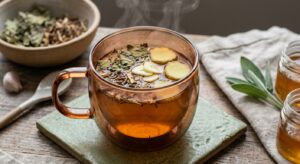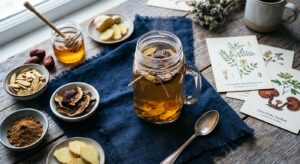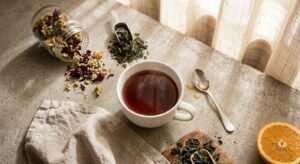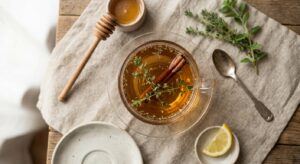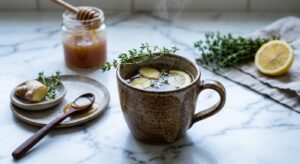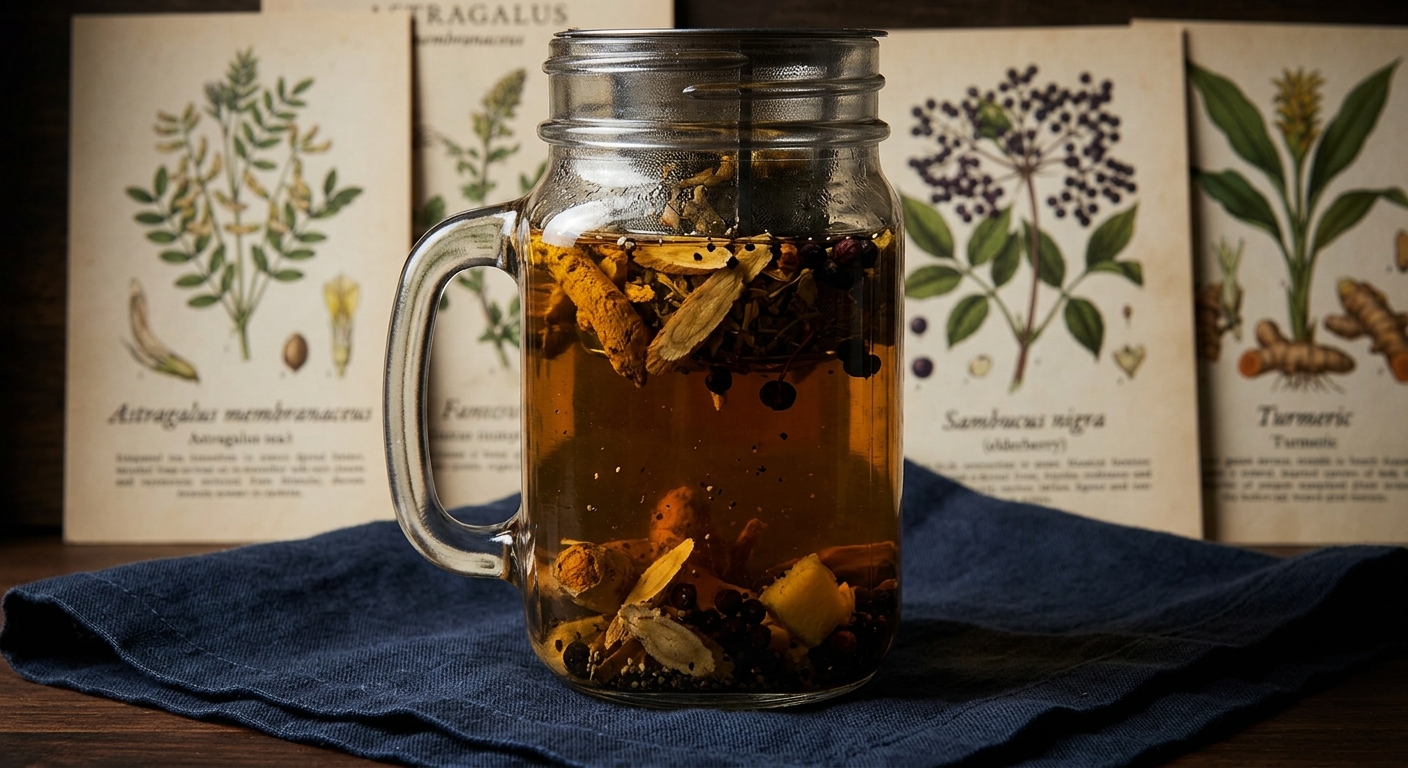
Cytokine balance sits at the heart of true immune health. Cytokines are the chemical messengers your immune system uses to coordinate its response to threats, and when they fall out of balance, the result can be either chronic inflammation or an underactive defense. For centuries, traditional medicine systems from Ayurveda to Traditional Chinese Medicine have used specific botanicals to support this delicate equilibrium, long before the word “cytokine” existed in any pharmacopoeia. This tea blend draws from that deep well of plant wisdom, combining roots, berries, and bark that have been used for immune support across cultures and continents.
Turmeric, the golden root at the center of this blend, has been brewed into teas and golden milks across South Asia for more than four thousand years. Astragalus root, known in Chinese medicine as Huang Qi or the “yellow leader,” has been prescribed as a foundational immune tonic for over two millennia. Elderberry brings European folk medicine into the cup, with a tradition of use stretching back to Hippocrates, who called the elder tree his “medicine chest.” Together, these herbs create a synergistic blend that addresses immune regulation from multiple botanical angles.
What makes this blend particularly compelling is not just the sum of its parts, but how each herb complements the others. Turmeric’s curcuminoids modulate inflammatory cytokines like TNF-alpha and IL-6, astragalus polysaccharides prime and regulate immune cell activity, and elderberry anthocyanins provide antioxidant support while influencing cytokine production during viral challenges. The result is a tea that tastes warming, slightly earthy, and subtly sweet, and that supports your immune system in working smarter, not harder.
2
cups
Ingredients
- 1 tspdried turmeric root (or 1/2 tsp turmeric powder)
- 1 tspdried astragalus root slices
- 1 tbspdried elderberries
- 1 tspdried ginger root
- 0.25 tspfreshly ground black pepper
- 480 mlwater (95°C / 203°F)
- —raw honey or maple syrup to taste (optional)
- —squeeze of fresh lemon juice (optional)
How to Brew
Click on an item below to shop for the recommended items for this recipe on Amazon.
As an Amazon Associate, we earn from qualifying purchases.
- Place the astragalus root slices, dried elderberries, and freshly ground black pepper into a small saucepan. Pour 480 ml of cold, filtered water over the herbs.
- Bring the mixture to a gentle simmer over medium heat. Once simmering, reduce heat to low and cook uncovered for 10 minutes, stirring occasionally. The liquid should deepen to a rich burgundy-amber color.
- Remove the saucepan from heat. Add the dried turmeric root (or turmeric powder) and dried ginger root directly to the hot liquid. Cover with a lid to trap volatile oils and steep for an additional 5 minutes.
- Pour the liquid through a fine mesh strainer or cheesecloth into two pre-warmed mugs, pressing the spent herbs gently to extract the last of the liquid.
- Add raw honey and a squeeze of fresh lemon juice if desired. Stir well and serve immediately while the tea is warm and aromatic.
- Increase the herb ratio slightly for cold extraction: use 1.5 tsp dried astragalus root slices, 1.5 tbsp dried elderberries, 1 tsp dried ginger root, and 1 tsp dried turmeric root or powder. Add black pepper and place all herbs into a clean glass jar.
- Pour 600 ml of cold, filtered water over the herbs. Stir briefly to ensure all herbs are fully submerged, then secure the lid tightly on the jar.
- Leave the jar at room temperature for 2 hours to initiate extraction, then transfer to the refrigerator. Allow the tea to steep for an additional 8 to 12 hours, ideally overnight.
- The following morning, strain the tea through a fine mesh strainer lined with cheesecloth into a pitcher or directly into glasses. Discard the spent herbs.
- Serve over a generous amount of ice. Stir in honey or maple syrup and a squeeze of lemon to brighten the flavor. The finished tea should be a beautiful deep amber-ruby color with a smooth, lightly spiced taste.
- Double the full herb recipe and combine the astragalus root slices, dried elderberries, dried ginger root, and black pepper in a medium saucepan. Add 700 ml of cold, filtered water, which will reduce during simmering to approximately 480 ml of concentrate.
- Bring the mixture to a gentle boil, then immediately reduce to a low simmer. Simmer uncovered for 20 to 25 minutes, watching the level carefully. The liquid should reduce by roughly one-third and become deeply concentrated in color and flavor.
- Remove from heat and add the doubled turmeric root or powder. Cover and steep off-heat for 8 minutes to allow the volatile turmeric and ginger compounds to infuse fully without further heat degradation.
- Strain the concentrate through a fine mesh strainer lined with cheesecloth into a sterilized glass jar or bottle. Press the herbs firmly to extract every drop of liquid.
- Allow the concentrate to cool to room temperature before sealing and refrigerating. Label with the date. To serve, combine equal parts concentrate and your chosen liquid (hot water, warm oat milk, or cold sparkling water), sweeten to taste, and enjoy.
Health Benefits
Curcumin and elderberry anthocyanins independently suppress the NF-kB pathway and directly reduce secretion of IL-6, TNF-alpha, and IL-1beta. Multiple clinical studies show curcumin supplementation measurably lowers circulating inflammatory markers in healthy adults.
Astragalus polysaccharides have been shown in randomized trials to increase natural killer cell cytotoxicity and stimulate T-lymphocyte proliferation, providing upstream immune priming that improves both the speed and precision of immune responses.
A 2016 randomized controlled trial published in Nutrients found that elderberry supplementation reduced cold duration by an average of four days compared to placebo, with effects attributed to anthocyanin-driven cytokine modulation and direct antiviral activity.
Chronic oxidative stress impairs immune cell function, and this blend addresses that directly. Curcumin, elderberry anthocyanins, and gingerols are all potent free radical scavengers that protect lymphocytes and macrophages from oxidative damage during active immune responses.
Ginger’s anti-inflammatory gingerols combined with elderberry’s flavonoids help reduce inflammation in respiratory mucosal tissue, supporting the integrity of the body’s first-line physical barriers against pathogens.
🧪 Key Bioactive Compounds
The Science Behind Turmeric, Astragalus, And Elderberry
The science behind Cytokine Balance Tea centers on a network of bioactive compounds that modulate immune signaling rather than simply stimulating or suppressing it. Curcumin, the primary polyphenol in turmeric, has been extensively studied for its ability to inhibit nuclear factor kappa B (NF-kB), a transcription factor that acts as a master regulator of inflammatory gene expression. When NF-kB is overactivated, cells produce a cascade of pro-inflammatory cytokines including TNF-alpha, IL-1beta, and IL-6. Curcumin interrupts this cascade at multiple points, effectively turning down the volume on excessive inflammation without completely silencing the immune response. Critically, piperine from black pepper inhibits glucuronidation of curcumin in the liver and intestinal wall, dramatically increasing its bioavailability and ensuring that meaningful concentrations reach systemic circulation.
Elderberry’s immune effects are mediated primarily through its anthocyanin content, particularly cyanidin-3-glucoside and cyanidin-3-sambubioside. These compounds have demonstrated in vitro activity against influenza virus by binding to and blocking the viral envelope proteins hemagglutinin and neuraminidase, inhibiting the virus’s ability to enter and replicate within host cells. Beyond direct antiviral effects, elderberry anthocyanins have been shown to stimulate production of beneficial cytokines including IL-1beta, IL-6, IL-8, and TNF-alpha in healthy immune contexts, supporting a robust initial response while the curcumin and astragalus components help regulate that response to prevent it from becoming excessive or prolonged.
Astragalus root contributes a class of compounds called astragalus polysaccharides (APS), which interact with toll-like receptors on macrophages and dendritic cells, triggering innate immune activation and enhancing antigen presentation to T cells. This upstream priming effect helps the adaptive immune system mount a more rapid and precise response to novel pathogens. Additionally, cycloastragenol, a saponin derived from astragaloside IV in astragalus, has been studied for its ability to activate telomerase in immune cells, potentially extending the replicative lifespan of T lymphocytes and supporting sustained immune competence. Together, these mechanisms explain why this blend has historically been valued as a deeply restorative immune tonic rather than a simple symptomatic remedy.
Brewing Tips
- Always pair turmeric with black pepper in this blend. The piperine in black pepper increases curcumin bioavailability by up to 2000%, transforming what would otherwise be a poorly absorbed compound into one that meaningfully reaches your bloodstream.
- For astragalus root, look for whole sliced root pieces rather than powder when possible. The slices are easier to strain out cleanly and they release polysaccharides more gradually during simmering, producing a smoother, less astringent cup.
- Drink this tea consistently over several weeks rather than expecting acute results from a single cup. Astragalus in particular is classified as an adaptogenic tonic in Traditional Chinese Medicine, meaning its immune-modulating benefits build cumulatively with regular use over time.