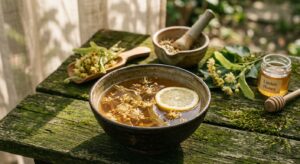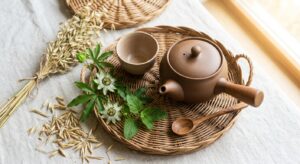
Long before it became the golden emblem blazoned across California’s state flag, the California poppy was a living pharmacy for the Indigenous peoples of the Pacific Coast. Tribes including the Cahuilla, Costanoan, and Luiseno prepared the roots and aerial parts of Eschscholzia californica as a gentle sedative, a remedy for toothaches, and a treatment for colic in children. Spanish missionaries documented the plant’s use as early as the 1700s, and by the late 19th century, Eclectic physicians had incorporated it into formal herbal practice as a non-addictive nervine, distinguishing it clearly from its distant relative the opium poppy (Papaver somniferum), with which it shares only superficial visual similarities and none of the narcotic chemistry.
What makes California poppy so compelling as a sleep and relaxation herb is its unusual gentleness. It works not by forcing sedation but by calming the nervous system at a cellular level, easing the anxious mental chatter that so often keeps people staring at the ceiling. The tea carries a mild, slightly earthy flavor with faint herbal bitterness and a subtle floral sweetness, making it genuinely pleasant to drink as part of a wind-down ritual. Unlike valerian, it leaves no pungent odor in its wake, and unlike passionflower, its flavor needs little disguising. It is an herb that rewards patience and consistency, working most noticeably over several evenings of use.
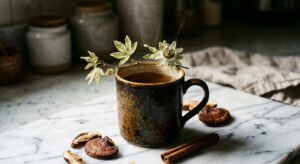
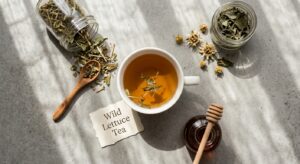
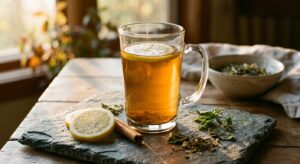
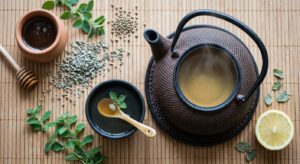
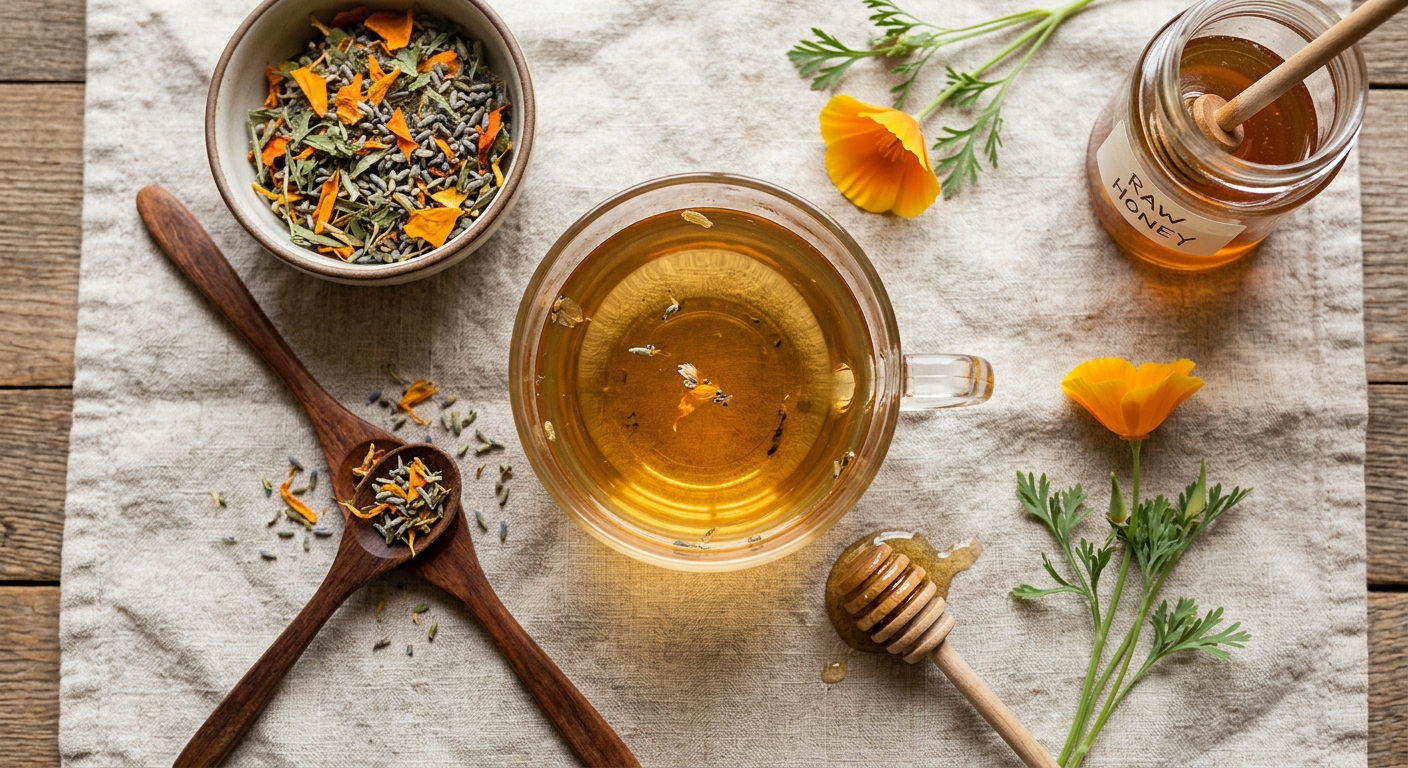
Today, California poppy is legally harvested and sold throughout the United States and is cultivated across Europe and Australia as both a medicinal herb and a beloved garden annual. Its vivid orange, red, and yellow blossoms open with the morning sun and fold closed by evening, a behavior that herbalists have long found poetically appropriate for an herb that helps human bodies do the same. When brewed as a tea from dried aerial parts, including stems, leaves, and flowers, and occasionally roots, it produces a pale amber to golden cup that is as calming to observe as it is to drink.
2
cups
Ingredients
- 2 tspdried California poppy aerial parts (stems, leaves, flowers)
- 240 mlwater (90°C / 194°F)
- —raw honey or agave nectar to taste (optional)
- —a pinch of dried lavender (optional, for added relaxation)
How to Brew
Click on an item below to shop for the recommended items for this recipe on Amazon.
As an Amazon Associate, we earn from qualifying purchases.
- Heat filtered water to 88 to 92°C (190 to 198°F). Avoid a full rolling boil, as temperatures above 95°C can degrade delicate flavonoids. If you do not have a temperature-controlled kettle, bring water to a boil and allow it to rest for 2 minutes before pouring.
- Measure 1 heaped teaspoon of dried California poppy aerial parts per 240 ml of water. Place the herb into a tea infuser, stainless steel strainer, or directly into a heatproof mug if you prefer to strain after steeping.
- Pour the hot water slowly over the herb, ensuring all plant material is fully submerged. Place a small saucer or lid over the mug to trap volatile aromatic compounds and prevent steam loss during steeping.
- Steep for a full 10 to 15 minutes. The longer end of this range is recommended for sleep support. You will notice the liquor deepen from pale straw to a warm golden amber as the infusion progresses.
- Remove the infuser or strain the tea through a fine mesh strainer into your cup. Gently press the spent herb with the back of a spoon to extract the remaining liquid.
- Sweeten lightly with raw honey or agave nectar if desired. Drink 30 to 45 minutes before bedtime, in a quiet, dimly lit setting to complement the herb’s calming effects.
- Measure 2.5 teaspoons of dried California poppy aerial parts per 480 ml of cold, filtered water. Because cold water extracts more slowly and less aggressively than hot water, a slightly higher herb-to-water ratio compensates for the reduced extraction efficiency.
- Combine the herb and water in a clean glass jar. Stir gently with a long spoon to ensure all plant material is fully saturated and submerged. Do not seal the jar airtight; instead, cover loosely with a cloth secured with a rubber band to allow the herb to breathe.
- Allow the jar to sit at room temperature for 1 hour to begin the infusion, then transfer to the refrigerator. Steep overnight for a total of 8 to 12 hours. The slow, cold extraction preserves delicate aromatic compounds that heat would dissipate.
- When ready, strain the infusion through a fine mesh strainer or cheesecloth into a clean pitcher or individual glasses, pressing gently on the herb to recover all liquid. The resulting tea will be paler than the hot brew, with a cleaner, more delicate flavor.
- Serve over a small amount of ice or enjoy chilled straight from the refrigerator. Sweeten with a light drizzle of honey stirred in warm water first so it dissolves easily, or add a splash of apple juice for a gentle natural sweetness that complements the herb’s earthy notes.
- Obtain 1.5 teaspoons of dried, chopped California poppy root per 300 ml of cold filtered water. Because roots are dense and fibrous, they require active heat to break down cell walls and release their bioactive compounds, unlike the delicate aerial parts that suit gentle infusion.
- Place the dried root pieces and cold water together into a small stainless steel or enameled saucepan. Starting the root in cold water, rather than adding it to already-hot water, encourages a more thorough and gradual extraction of deep-seated compounds as the temperature rises.
- Bring the water slowly to a gentle simmer over medium-low heat, which should take approximately 5 to 8 minutes. Do not rush this step with high heat. Once you see small bubbles breaking the surface consistently, reduce the heat to maintain a gentle simmer without a rolling boil.
- Simmer uncovered for 20 to 25 minutes. You will notice the liquid reduce slightly and deepen in color to a rich amber or light copper tone. Stir occasionally and add a small splash of water if the liquid reduces by more than one quarter.
- Remove from heat, cover the saucepan with a lid, and allow the decoction to rest for a further 10 minutes. This resting phase allows residual heat to continue extracting compounds and lets any fine root particles settle to the bottom.
- Pour through a fine mesh strainer or cheesecloth into a warmed ceramic mug, pressing the root material firmly to extract all remaining liquid. Allow to cool to a comfortable drinking temperature before consuming. Because of its greater potency, start with a half-cup serving and assess your body’s response before drinking a full cup.
Health Benefits
California poppy’s isoquinoline alkaloids, particularly californidine and eschscholtzine, modulate GABA-A receptor activity and influence serotonin metabolism, helping the nervous system transition from wakefulness to sleep. A 2004 randomized controlled trial published in Phytomedicine found that a combination of California poppy and valerian root significantly improved sleep quality and reduced nighttime waking compared to placebo, with California poppy contributing meaningfully to the outcome.
The alkaloid fraction of Eschscholzia californica has demonstrated anxiolytic activity in multiple animal studies, with mechanisms involving both GABA receptor potentiation and inhibition of enzymatic catecholamine breakdown. Human clinical research, while limited, supports its traditional use as a nervine for generalized anxiety and stress-related restlessness, making it a useful botanical for those who experience anxious overthinking as a barrier to sleep.
Allocryptopine, one of the plant’s primary alkaloids, exhibits antispasmodic properties by relaxing smooth and skeletal muscle tissue. This makes California poppy particularly helpful for individuals who experience nighttime leg restlessness, mild muscle cramping, or the physical manifestation of stress as bodily tension, all of which can significantly impair the ability to fall and stay asleep.
Protopine’s interaction with dopamine and serotonin reuptake mechanisms, combined with luteolin’s activity at benzodiazepine receptor sites, gives California poppy a gentle mood-balancing quality distinct from its sedative effects. This makes the tea useful not only at bedtime but also during stressful periods in the day when clarity and calm are needed without drowsiness.
Rutin and luteolin, both present in the aerial parts of California poppy, are well-studied antioxidant flavonoids that reduce oxidative stress and suppress inflammatory cytokine production. Chronic low-grade inflammation is increasingly linked to disrupted sleep architecture and mood dysregulation, so this anti-inflammatory dimension of the plant adds a meaningful layer to its role as a sleep and relaxation herb.
🧪 Key Bioactive Compounds
The Science Behind California Poppy
California poppy’s reputation as a gentle sedative is rooted in a rich alkaloid chemistry concentrated primarily in its roots but present throughout its aerial parts. The plant belongs to the Papaveraceae family and produces a distinctive group of isoquinoline alkaloids, including californidine, eschscholtzine, protopine, and allocryptopine, that act on the central nervous system through several complementary pathways. The most well-characterized mechanism involves potentiation of gamma-aminobutyric acid (GABA) signaling at GABA-A receptors. GABA is the brain’s primary inhibitory neurotransmitter, and compounds that enhance its activity produce anxiolytic and sedative effects by reducing neuronal excitability. Californidine in particular has been shown in in vitro studies to bind to GABA-A receptor subunits and increase the receptor’s affinity for its natural ligand, producing effects qualitatively similar to benzodiazepine drugs but with a far lower affinity and therefore a much gentler, non-dependency-forming action.
A second important mechanism involves the inhibition of enzymes responsible for breaking down monoamine neurotransmitters. Eschscholtzine has been studied for its ability to inhibit monoamine oxidase (MAO) enzymes and reduce the synaptic reuptake of serotonin and dopamine. Because serotonin is a precursor to melatonin, the sleep-regulating hormone produced by the pineal gland in response to darkness, compounds that preserve serotonin availability may support the natural melatonin production cycle and improve the timing and depth of sleep onset. Protopine contributes to this picture by additionally interacting with histamine H1 receptors. Histamine is a major wakefulness-promoting neurotransmitter, and its blockade by antihistamine drugs is the mechanism behind the drowsiness caused by many over-the-counter sleep aids. Protopine’s partial antagonism of H1 receptors may contribute meaningfully to California poppy’s sleep-promoting effect without the next-day grogginess associated with pharmaceutical antihistamines.
Beyond the alkaloids, California poppy contains a significant flavonoid fraction including rutin, luteolin, and quercetin derivatives. These polyphenolic compounds are not merely antioxidant bystanders; luteolin in particular has been identified as a ligand at benzodiazepine binding sites on the GABA-A receptor complex, adding another layer of GABAergic modulation to the plant’s overall pharmacology. Research published in peer-reviewed journals including Phytomedicine and the Journal of Ethnopharmacology has supported the use of Eschscholzia californica extracts for sleep and anxiety in both preclinical models and limited human trials. While large-scale randomized controlled trials in humans remain sparse, the mechanistic evidence is robust and consistent with centuries of traditional use, placing California poppy among the better-understood and more credibly supported botanical sedatives available to the modern herbal practitioner.
Brewing Tips
- For the most potent hot brew, cover your mug during steeping with a small saucer or lid. California poppy’s aromatic volatile compounds and some of its lighter alkaloids can escape with steam, and trapping them inside the cup ensures they end up in your body rather than in the air.
- If you find the taste too bitter, blend dried California poppy with a small amount of dried spearmint or chamomile. Both herbs complement its flavor, soften the bitterness, and add their own gentle calming properties without overwhelming the primary herb.
- Purchase whole or coarsely cut dried herb rather than finely powdered material. Fine powder can over-extract bitter compounds quickly and makes straining difficult. Whole flowers and leaf pieces give you better control over extraction intensity and a cleaner final cup.