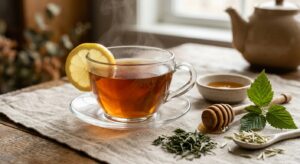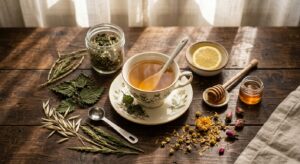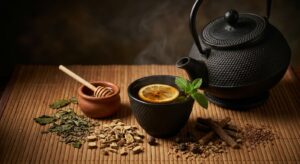
Polycystic ovary syndrome affects an estimated 8 to 13 percent of women of reproductive age, making it one of the most common hormonal disorders worldwide. Characterized by elevated androgens, irregular cycles, insulin resistance, and chronic low-grade inflammation, PCOS is a complex condition that rarely responds to a single solution. For centuries, women in traditional Ayurvedic, Chinese, and Mediterranean herbal medicine have reached for specific plants to ease hormonal imbalance, regulate cycles, and support metabolic health. This tea brings three of those time-honored herbs together into a single, beautifully flavored cup.
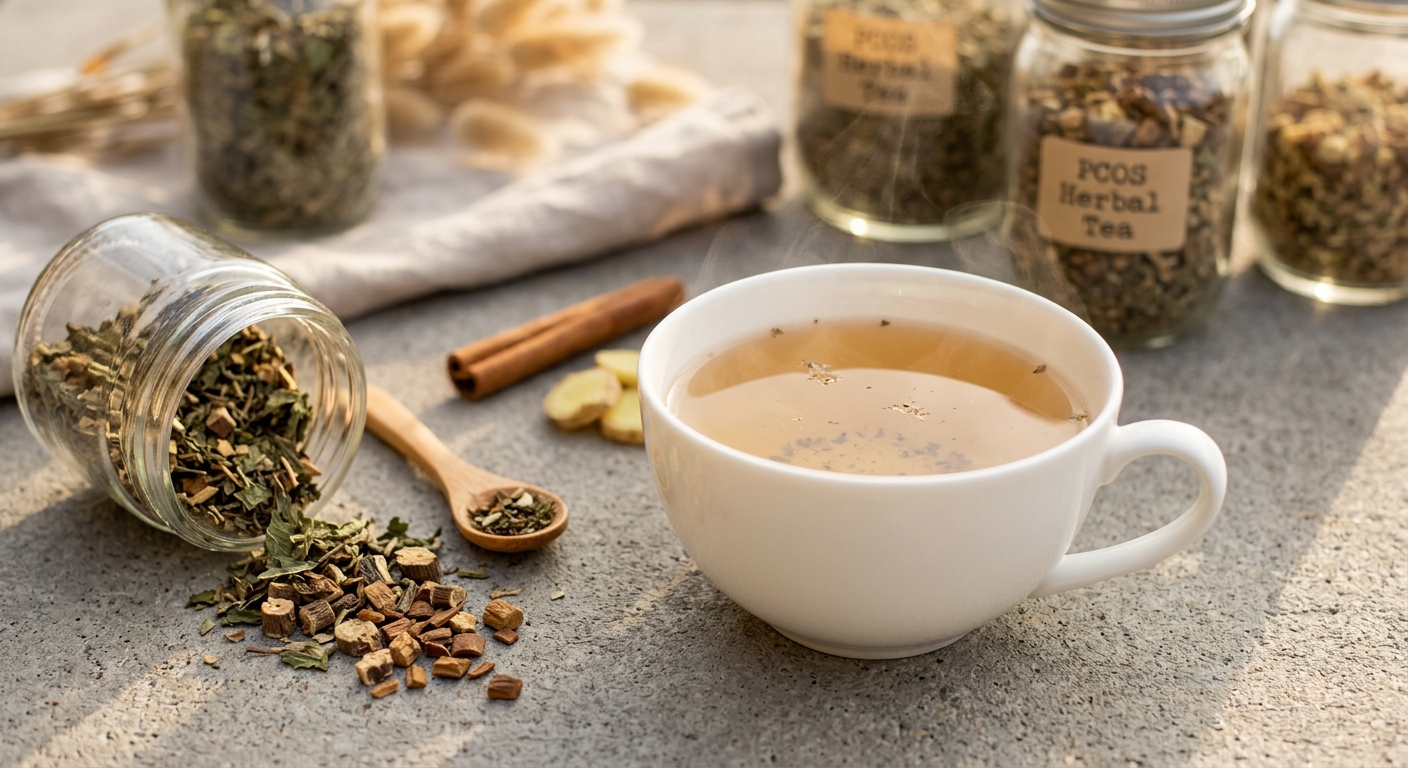
Spearmint is the star of this blend. Unlike its more pungent cousin peppermint, spearmint carries a gentle, slightly sweet coolness that pairs gracefully with warming spices. Modern research has turned genuine scientific attention toward spearmint’s anti-androgenic activity, with two clinical trials demonstrating meaningful reductions in free testosterone levels in women with PCOS who drank spearmint tea twice daily. Licorice root contributes a deep, naturally sweet undertone while supporting adrenal function and further moderating androgen pathways. Ceylon cinnamon rounds out the blend with its warm, delicate spice, lending well-documented support for insulin sensitivity, which is central to managing PCOS symptoms long term.
This is a tea you can drink with real intention. The flavor is inviting rather than medicinal, striking a balance between cool mint, earthy sweetness, and soft spice. Whether you are newly diagnosed and exploring herbal support, or simply looking for a daily ritual that works with your body rather than against it, this blend offers both nourishment and a moment of calm in a condition that can feel anything but calm.
2
cups
Ingredients
- 2 tspdried spearmint leaves
- 1 tspdried licorice root pieces
- 1 tspCeylon cinnamon chips or one small cinnamon stick
- 480 mlwater (95°C / 203°F)
- —a few slices of fresh ginger (optional, for warmth)
- —raw honey to taste (optional)
How to Brew
Click on an item below to shop for the recommended items for this recipe on Amazon.
As an Amazon Associate, we earn from qualifying purchases.
- Bring filtered water to 95°C (203°F). If using a standard kettle, bring to a full boil then allow to rest for 30 seconds before pouring.
- Add the dried spearmint leaves, licorice root pieces, and cinnamon chips together into a tea infuser or loose-leaf strainer placed inside your mug or teapot.
- Pour the hot water directly over the herbs. The cinnamon and licorice root both benefit from the heat to release their volatile oils and glycyrrhizin compounds, while spearmint is hardy enough to withstand this temperature without turning bitter.
- Cover the mug or teapot with a lid or small plate to trap the aromatic essential oils inside. Steep for 10 to 12 minutes.
- Remove the infuser and press gently with a spoon to release any remaining liquid from the herbs.
- Taste before adding honey, as licorice root provides natural sweetness. Drink warm, ideally twice daily, once in the morning and once in the early evening for best hormonal support.
- Measure out 2 teaspoons of dried spearmint leaves, 1 teaspoon of licorice root pieces, and 1 teaspoon of cinnamon chips. For cold brewing, increase the spearmint slightly to 2.5 teaspoons to compensate for slower extraction.
- Place all the herbs loosely into a clean glass jar or cold brew pitcher. Do not use an infuser here, as direct contact with the water produces fuller extraction at cold temperatures.
- Pour 480 ml of cold filtered water over the herbs and stir gently to ensure all the plant material is submerged.
- Cover the jar with a lid or beeswax wrap and leave it at room temperature for 1 hour to begin the initial extraction, then transfer to the refrigerator.
- Steep in the refrigerator for 10 to 12 hours, or overnight. The long cold steep draws out spearmint’s anti-androgenic rosmarinic acid and cinnamon’s cinnamaldehyde compounds at a gentler pace.
- Strain through a fine mesh strainer or cheesecloth into a glass, pressing the herbs lightly. Serve over ice. The cold brew keeps in the refrigerator for up to 48 hours, making it ideal for preparing a two-day supply at once.
- Add 600 ml of cold filtered water to a small stainless steel or ceramic saucepan. Place the licorice root pieces and cinnamon chips directly into the cold water before heating. Starting in cold water allows the woody material to warm and expand gradually, improving extraction.
- Bring the water to a gentle simmer over medium heat, then reduce to low. Simmer uncovered for 20 minutes, stirring occasionally. The liquid will reduce by roughly 20 percent and deepen in color to a rich amber-brown.
- Remove the pan from heat and add the dried spearmint leaves directly to the hot decoction. Spearmint is a delicate aerial herb and should never be boiled, as heat destroys its volatile oils. Adding it off-heat preserves its flavor and active compounds.
- Cover the saucepan with a lid and allow the spearmint to infuse in the residual heat for 5 minutes.
- Strain the decoction through a fine mesh strainer into mugs, pressing the herbs firmly to extract every drop of the concentrated liquid.
- The decoction produces a rich, intensely sweet and spiced tea. Dilute with an additional 120 ml of hot water per cup if the flavor is too concentrated, and sip slowly. Suitable for no more than one cup per day due to the elevated glycyrrhizin content from licorice root.
Health Benefits
Two randomized controlled trials published in Phytotherapy Research found that women with PCOS who drank spearmint tea twice daily for 30 days showed significant reductions in free and total testosterone levels. Rosmarinic acid appears to be the primary mechanism, inhibiting the enzyme that converts androgens to their more potent active forms.
Ceylon cinnamon has been studied in multiple clinical trials for its effect on fasting blood glucose and insulin resistance. Cinnamaldehyde activates insulin receptor signaling pathways, while condensed tannins in the bark slow intestinal glucose absorption, both of which are particularly relevant for the 70 percent of PCOS patients who have insulin resistance.
Licorice root’s glycyrrhizin inhibits 11-beta-hydroxysteroid dehydrogenase, an enzyme involved in cortisol metabolism. This action can help modulate elevated cortisol patterns common in PCOS and reduce adrenal androgen production, which accounts for a significant portion of androgen excess in many women with the condition.
PCOS is increasingly recognized as an inflammatory condition, with elevated inflammatory markers correlating with symptom severity. All three herbs in this blend contain anti-inflammatory polyphenols: rosmarinic acid from spearmint, liquiritin from licorice, and proanthocyanidins from cinnamon together provide a multi-target approach to reducing the low-grade chronic inflammation that perpetuates hormonal dysregulation.
By addressing the three interconnected drivers of cycle irregularity in PCOS, namely androgen excess, insulin resistance, and inflammation, this blend may support more regular ovulation over time. Preliminary evidence and traditional clinical use suggest that consistent use over 60 to 90 days is needed before cycle effects become apparent.
🧪 Key Bioactive Compounds
The Science Behind Spearmint
The scientific case for this PCOS blend centers on its multi-target approach to a multi-system condition. Spearmint’s most studied bioactive compound, rosmarinic acid, acts as a natural anti-androgen by inhibiting 5-alpha reductase and 17-beta-hydroxysteroid dehydrogenase, the enzymes responsible for converting weaker androgens into their more potent, bioactive forms like dihydrotestosterone. A landmark 2010 randomized controlled trial by Grant found that women with PCOS who consumed spearmint tea twice daily for 30 days had significantly lower luteinizing hormone and free testosterone compared to the chamomile control group. A longer 2007 pilot study by Akdogan similarly found reduced free and total testosterone after just five days of twice-daily spearmint tea consumption, suggesting the effect is both real and relatively rapid.
Licorice root’s glycyrrhizin and its metabolite glycyrrhetinic acid exert hormonal effects through several pathways. Most notably, glycyrrhetinic acid inhibits 17-beta-hydroxysteroid dehydrogenase in the gonads and adrenal glands, reducing the synthesis of both androgens and estrogens from their precursors. It also inhibits 11-beta-HSD1, an enzyme that reactivates cortisone into cortisol in peripheral tissues. In PCOS, chronically elevated cortisol drives adrenal androgen production, making this cortisol-modulating effect clinically meaningful. Research published in Steroids by Armanini et al. found that licorice root reduced serum testosterone in healthy women, supporting its historical use in hormonal regulation. Liquiritin, another key licorice flavonoid, independently reduces inflammatory cytokine expression by suppressing the NF-kB pathway, addressing the inflammatory component of PCOS.
Ceylon cinnamon’s role in PCOS management is primarily metabolic. Cinnamaldehyde and A-type proanthocyanidins work through complementary mechanisms: cinnamaldehyde activates the insulin receptor substrate pathway, effectively mimicking insulin signaling and increasing GLUT4 transporter activity in skeletal muscle cells, while condensed tannins slow alpha-glucosidase activity in the small intestine, reducing the rate of glucose absorption. A 2007 study by Wang et al. demonstrated that cinnamon extract improved insulin sensitivity in women with PCOS after eight weeks. Given that insulin resistance is both a driver and a consequence of androgen excess in PCOS, cinnamon’s metabolic support makes it an important complement to spearmint’s direct hormonal action. Together, these three herbs address androgen excess, insulin resistance, and inflammation through distinct but synergistic biochemical pathways.
Brewing Tips
- Use Ceylon cinnamon (Cinnamomum verum) rather than common Cassia cinnamon (Cinnamomum cassia). Ceylon is lighter in color, has a more delicate flavor, and contains significantly lower coumarin levels, making it safer for daily use.
- For the most consistent hormonal support, drink this tea twice daily, once in the morning with breakfast and once in the late afternoon or early evening. Clinical studies on spearmint used a twice-daily protocol over 30 days, so regularity matters more than occasional large quantities.
- Source whole licorice root pieces or chips rather than licorice root powder, as the powder can be difficult to strain fully and may deliver an inconsistently high glycyrrhizin dose. Whole pieces allow for more controlled infusion.