Long before antacids and digestive supplements lined pharmacy shelves, healers across the world turned to the plant kingdom for relief from sluggish digestion, bloating, and stomach cramps. Ginger root has been prescribed in Ayurvedic medicine for over 5,000 years as a digestive stimulant and carminative, while fennel seeds were chewed after meals in ancient Rome and Egypt to settle the stomach and freshen breath. Dandelion root, often dismissed as a garden weed, holds a storied place in European folk medicine as a bitter tonic that primes the liver and gallbladder to release the bile and enzymes needed for efficient digestion.
What makes this blend so effective is the complementary nature of each herb. Ginger warms the gut, speeds gastric emptying, and stimulates the production of digestive enzymes including lipase and amylase. Fennel’s volatile oils, particularly anethole, relax smooth muscle in the intestinal tract and relieve trapped gas. Dandelion root acts as a prebiotic, feeding beneficial gut bacteria while its bitter compounds, known as sesquiterpene lactones, trigger the release of bile and digestive juices before your meal even arrives. Together they form a well-rounded, evidence-supported trio for anyone who struggles with indigestion, post-meal heaviness, or irregular digestion.
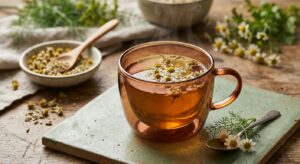
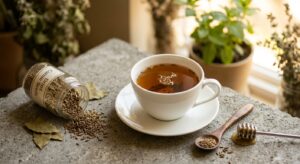
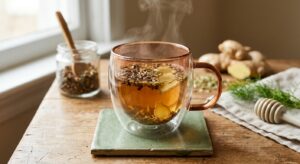
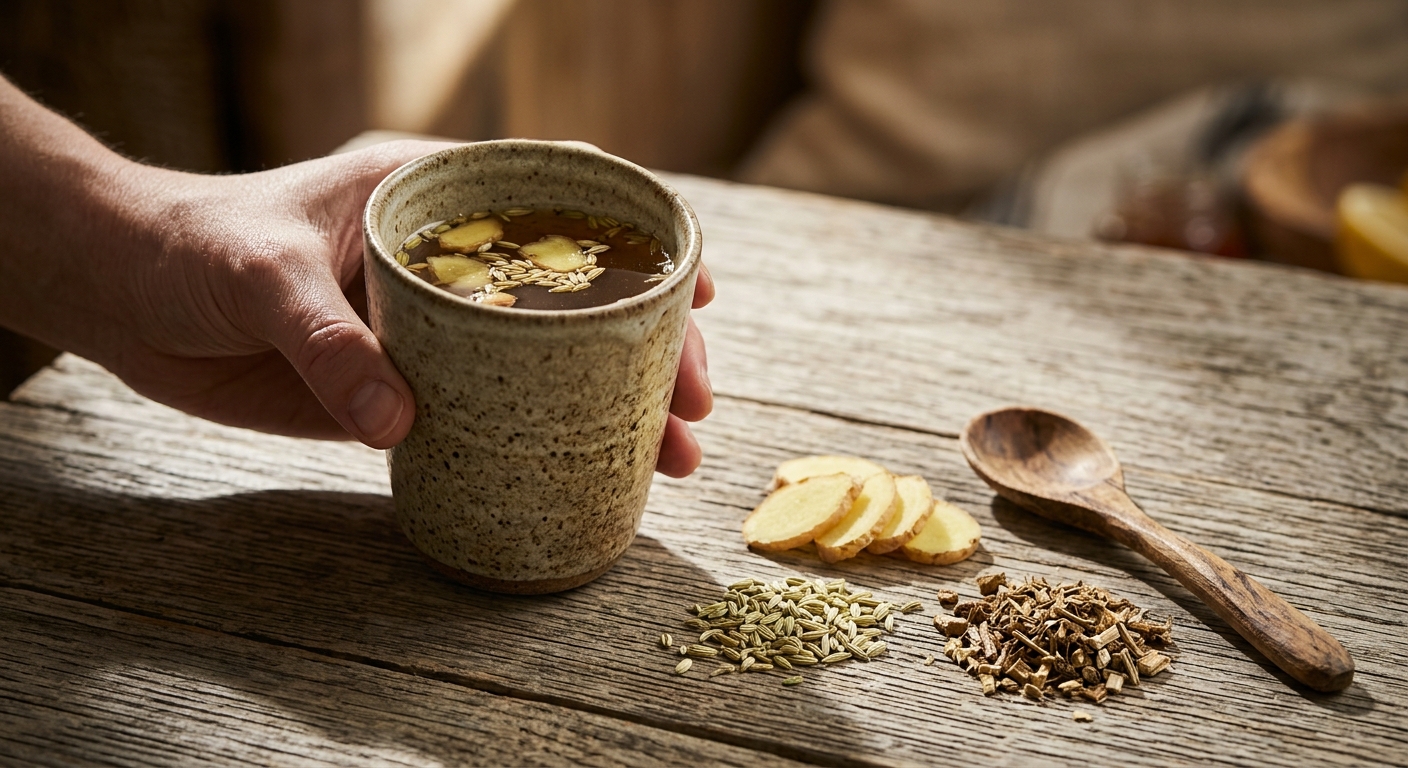
The resulting tea is deeply aromatic and layered in flavor: warming and faintly spicy from the ginger, sweet and slightly anise-like from the fennel, and pleasantly bitter and earthy from the dandelion root. It is a tea that tastes like it is doing something, and the research suggests it genuinely is. Whether you brew it hot before a heavy meal, steep it cold overnight for a gentle morning tonic, or concentrate it into a digestive shot, this blend is one of the most practical additions to any herbal wellness routine.
2
cups
Ingredients
- 1 tspfresh ginger root, thinly sliced (or 0.5 tsp dried ginger)
- 1 tspfennel seeds, lightly crushed
- 1 tspdried dandelion root, chopped
- 480 mlwater (for hot brew: 95 to 100°C / 203 to 212°F)
- —raw honey or a squeeze of lemon to taste (optional)
How to Brew
Click on an item below to shop for the recommended items for this recipe on Amazon.
As an Amazon Associate, we earn from qualifying purchases.
- Add 480 ml of cold water to a small saucepan along with the sliced ginger root and chopped dandelion root. Bring to a gentle simmer over medium heat.
- Once simmering, add the lightly crushed fennel seeds. Reduce the heat to low and allow the blend to simmer uncovered for 10 to 15 minutes. The liquid will reduce slightly and deepen in color to a rich amber-gold.
- Remove the saucepan from the heat and allow the brew to rest for 2 minutes. This short rest allows the volatile aromatic compounds in the fennel to settle back into the liquid rather than escaping as steam.
- Pour the decoction through a fine mesh strainer into two mugs, pressing the plant material lightly with the back of a spoon to extract the last of the infused liquid.
- Add raw honey or a squeeze of fresh lemon to taste. Drink 15 to 20 minutes before a meal to prime the digestive system, or sip slowly after eating to ease post-meal heaviness.
- Add the ginger slices, lightly crushed fennel seeds, and chopped dandelion root directly to a clean glass jar. For cold brew, increase the herb quantities by 50 percent (use 1.5 tsp of each) to compensate for the lower extraction temperature.
- Pour 480 ml of cold filtered water over the herbs. Stir briefly to ensure all plant material is submerged. Place a loose lid or a piece of cloth secured with a rubber band over the jar and leave at room temperature for 1 hour.
- Transfer the jar to the refrigerator and allow the blend to steep for 9 to 11 hours, or overnight. The slow, cold extraction draws out polyphenols, bitter glycosides, and gentle aromatic compounds without releasing harsh heat-activated constituents.
- In the morning, strain the cold brew through a fine mesh strainer or cheesecloth into a serving glass filled with ice. Press the herbs firmly to capture every last drop.
- Taste the cold brew before adding anything, as the overnight fennel cold infusion is naturally sweet and pleasantly complex. Add a few slices of fresh cucumber or a thin round of lemon if desired. Drink on an empty stomach for a gentle morning gut primer.
- Triple the herb quantities: use 3 tsp sliced ginger, 3 tsp crushed fennel seeds, and 3 tsp chopped dandelion root. Add them to a small saucepan with 480 ml of cold water.
- Bring the mixture to a gentle boil over medium-high heat, then reduce immediately to a low simmer. Allow the blend to simmer uncovered for 25 to 30 minutes, stirring occasionally, until the liquid has reduced to approximately 200 to 240 ml. The concentrate should be a deep amber-brown and smell intensely of ginger and fennel.
- Remove from heat and allow to cool for 5 minutes before straining through a fine mesh strainer into a small measuring jug or bowl. Press firmly on the herbs to extract all of the concentrate.
- Pour the strained concentrate into a small glass bottle or jar. Allow to cool completely before sealing and refrigerating. The concentrate will keep for up to 5 days.
- To use: pour 30 to 60 ml of the concentrate into a small shot glass and drink straight 15 minutes before a heavy meal, or dilute with 150 ml of warm water for a gentler pre-meal drink. Add a few drops of fresh lemon juice to brighten the flavor and boost the bile-stimulating effect.
Health Benefits
Ginger’s gingerols and shogaols have been shown in multiple studies to stimulate the secretion of digestive enzymes from the pancreas, including lipase, amylase, and proteases. A 2012 study published in the European Journal of Pharmacology found that ginger enhanced pancreatic lipase activity and significantly improved the breakdown of dietary fats.
Fennel seed is one of the most well-studied carminative herbs. The volatile oils anethole and fenchone relax smooth muscle contractions in the intestinal tract, allowing trapped gas to pass more easily. A randomized clinical trial published in the Journal of Pediatric Gastroenterology and Nutrition found fennel-based preparations significantly more effective than placebo in reducing colic and intestinal gas.
Dandelion root’s bitter sesquiterpene lactones stimulate the liver to produce more bile while encouraging the gallbladder to contract and release it into the small intestine. Bile is essential for emulsifying dietary fats and activating fat-digesting enzymes. This cholagogue effect helps explain why dandelion root has been used as a digestive tonic in European herbal medicine for centuries.
Dandelion root is a rich source of inulin, a prebiotic fructooligosaccharide that resists digestion in the upper GI tract and reaches the colon intact where it feeds beneficial bacteria. A study in Evidence-Based Complementary and Alternative Medicine found that dandelion root inulin significantly increased populations of Bifidobacterium and Lactobacillus, two bacterial genera strongly associated with digestive health and immune function.
Ginger is one of the most extensively studied herbs for nausea relief. A meta-analysis of 12 randomized trials published in the British Journal of Anesthesia concluded that ginger was significantly more effective than placebo in reducing nausea from multiple causes including post-operative nausea, morning sickness, and chemotherapy-induced nausea. The mechanism involves 5-HT3 receptor antagonism, the same pathway targeted by pharmaceutical anti-nausea medications.
🧪 Key Bioactive Compounds
The Science Behind Ginger Root
The science behind this digestive blend is rooted in two complementary mechanisms: enzyme stimulation and motility enhancement. Ginger’s most bioactive phenolic compounds, the gingerols present in fresh root and the more potent shogaols formed during drying, interact directly with the enteric nervous system, the network of neurons lining the gut. These compounds stimulate the release of gastrin, a hormone that signals the stomach to increase secretion of gastric acid and pepsin. At the same time, they enhance the activity of pancreatic enzymes including lipase, protease, and amylase, which are responsible for breaking down fats, proteins, and carbohydrates respectively. A 2015 study in the World Journal of Gastroenterology confirmed that ginger supplementation significantly accelerated gastric emptying in patients with functional dyspepsia, a condition characterized by chronic indigestion with no structural cause.
Fennel’s mechanism is quite different and complements ginger’s stimulating action. The volatile oil anethole, which makes up approximately 80 percent of fennel seed’s essential oil content, has a well-documented antispasmodic effect on the smooth muscle of the gastrointestinal tract. When gas becomes trapped in pockets of the intestine due to fermentation of undigested food, the intestinal wall tightens around it in a spasmodic response that causes the characteristic pain of bloating. Anethole interrupts this cycle by blocking calcium ion channels in smooth muscle cells, allowing the intestinal wall to relax and the gas to move freely through the digestive tract. This is the same fundamental mechanism behind several pharmaceutical antispasmodic drugs, though anethole acts more gently and without the associated side effects.
Dandelion root’s contribution operates largely at the level of the liver and the gut microbiome. The bitter sesquiterpene lactones taraxacin and taraxacerin activate bitter taste receptors (TAS2Rs) on the tongue and, crucially, on cells throughout the gastrointestinal tract. This activation triggers a cascade response that includes increased bile acid synthesis in the liver, contraction of the gallbladder, and enhanced secretion of digestive enzymes from the pancreas. Bile acids are essential for fat digestion and also regulate gut motility and the composition of the gut microbiome. Separately, dandelion root’s high inulin content (up to 40 percent of the dry weight of autumn-harvested root) feeds prebiotic bacteria in the colon, particularly Bifidobacterium and Lactobacillus, which produce short-chain fatty acids including butyrate. Butyrate is the primary fuel source for colonocytes, the cells lining the colon, and maintaining robust colonocyte health is foundational to a strong gut barrier and reduced intestinal inflammation.
Brewing Tips
- Use fresh ginger root whenever possible for the hot brew and concentrate, as fresh ginger contains higher concentrations of gingerols, which are more effective for nausea and gastric motility than the shogaols dominant in dried ginger. Reserve dried ginger for cold brew when you want a milder, less sharp flavor.
- Lightly crush the fennel seeds in a mortar and pestle just before brewing rather than using pre-ground fennel. Crushing opens the seed’s volatile oil glands and releases anethole and fenchone at the moment of brewing, giving you significantly more aromatic compound extraction than whole or pre-ground seeds.
- Harvest timing matters for dandelion root potency. Roots harvested in autumn contain the highest concentration of inulin and bitter compounds because the plant pulls energy back into its root before winter. Look for suppliers who specify autumn harvest on the label for the most effective digestive support.
- Drink the hot brew or concentrate 15 to 20 minutes before your main meal of the day for maximum enzyme-priming benefit, rather than after eating. The bitter compounds in dandelion root and the warmth of ginger are most effective when consumed in a fasted or semi-fasted state when they can trigger the cephalic phase digestive response.
- If the bitterness of the dandelion root is too intense at first, begin with half the recommended amount and gradually increase over one to two weeks. Bitterness tolerance develops quickly and the digestive system will adapt, eventually making the blend taste pleasantly complex rather than harsh.