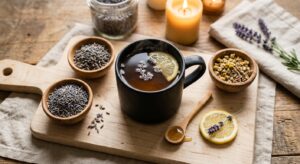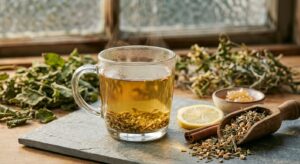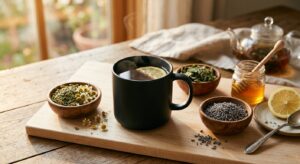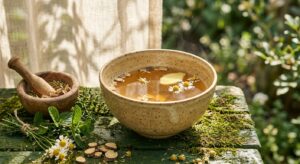
Siberian ginseng, known botanically as Eleutherococcus senticosus, is a woody shrub native to the forests of northeastern Asia, including Siberia, northern China, Korea, and Japan. Despite sharing a common name with true ginseng (Panax ginseng), it belongs to an entirely different genus and offers its own distinct chemistry and personality. Traditional Chinese Medicine has employed this root for over two thousand years, valuing it as a tonic for qi, or vital energy, and as a remedy for promoting longevity, sharpening the mind, and fortifying the body against fatigue and illness. Siberian fishermen, hunters, and laborers reportedly brewed it into strong decoctions to survive the brutal winters of the Russian Far East.
It was Soviet researchers in the mid-twentieth century who brought Siberian ginseng to international prominence. Pharmacologist Nikolai Lazarev and his colleague Israel Brekhman coined the term adaptogen specifically to describe plants like this one, defining it as a substance that helps the organism adapt to environmental stress without disrupting normal physiological functions. Soviet Olympic athletes, military personnel, and cosmonauts were reportedly given Eleuthero extracts to enhance performance and resilience under extreme conditions. This history gave the herb a reputation that transcended folk medicine and entered the world of sports nutrition and integrative health.
As a tea, Siberian ginseng root delivers a grounding, earthy experience that is quite different from the floral or fruity profiles of more familiar herbal teas. The brew is robust and slightly woody, with a gentle underlying warmth that seems to mirror its traditional role as a tonic for cold climates and demanding lives. Whether you are navigating a high-pressure work week, recovering from illness, or simply looking to support your long-term resilience, a daily cup of Eleuthero tea offers a time-honored and increasingly well-studied approach to stress management.
2
cups
Ingredients
- 2 tbspdried Siberian ginseng root (cut and sifted)
- 500 mlwater (for decoction or hot brew)
- —raw honey or licorice root to taste (optional)
- —cinnamon stick (optional, for warmth and flavor balance)
How to Brew
Click on an item below to shop for the recommended items for this recipe on Amazon.
As an Amazon Associate, we earn from qualifying purchases.
- Measure 1 tablespoon of dried, cut Siberian ginseng root per 250 ml of water. For two servings, use 2 tablespoons in 500 ml of water.
- Bring filtered water to 90 to 95°C (194 to 203°F). Avoid a full rolling boil if possible, as prolonged boiling can degrade some heat-sensitive compounds. If using a standard kettle, allow it to rest for 1 to 2 minutes after boiling.
- Place the root pieces into a tea infuser with fine mesh, a muslin bag, or directly into a small teapot. Pour the hot water over the root and cover the vessel immediately to trap volatile aromatic compounds.
- Steep for 15 to 20 minutes. The longer end of the range will produce a more potent, slightly more bitter cup. Begin tasting at the 15-minute mark.
- Strain thoroughly into a mug. The brew should be a warm amber to reddish-brown color. Add raw honey, a cinnamon stick, or a small slice of fresh ginger to round out the earthy bitterness if desired.
- Drink one to two cups daily, ideally in the morning or early afternoon. Avoid drinking in the evening, as the gentle energizing effect may interfere with sleep for sensitive individuals.
- Combine 2 tablespoons of dried Siberian ginseng root with 600 ml of cold, filtered water in a small stainless steel or ceramic saucepan. Starting in cold water allows the root to begin releasing compounds gradually as the temperature rises.
- Place the saucepan over medium heat and bring the water slowly to a gentle simmer, not a full boil. Adjust the heat to maintain a steady, low simmer with small bubbles rising intermittently.
- Simmer uncovered for 25 to 35 minutes. The liquid will reduce by approximately 100 ml, concentrating the brew. Watch the liquid level and add a small splash of hot water if it reduces too quickly.
- Remove from heat and allow the decoction to rest, covered, for an additional 5 minutes. This resting period lets the root continue releasing compounds as the temperature gradually falls.
- Strain through a fine-mesh sieve or cheesecloth into a heatproof cup or jar. Press the spent root pieces gently with the back of a spoon to extract remaining liquid.
- Serve as is, or dilute slightly with hot water if the flavor is too intense. Sweeten with raw honey or a small piece of licorice root, which also complements the adaptogenic profile. The spent root can be re-simmered a second time for a lighter follow-up batch.
- Add 2 tablespoons of dried, cut Siberian ginseng root to a clean glass jar. Because cold water extracts more slowly, a slightly higher root-to-water ratio than the hot brew is recommended to achieve adequate strength.
- Pour 500 ml of cold, filtered water over the root. Stir briefly to ensure the root pieces are fully submerged. Do not use hot water at any stage, as this converts the method into a hybrid brew.
- Cover the jar with a lid or cheesecloth secured with a rubber band to keep out contaminants while allowing slight airflow if using cloth. Leave the jar at room temperature for the first 2 hours, then transfer to the refrigerator.
- Allow to cold brew in the refrigerator for a total of 12 to 18 hours. The longer the steep, the deeper the flavor and the greater the extraction of polysaccharides and eleutherosides. Taste at the 12-hour mark and continue steeping if desired.
- Strain through a fine-mesh strainer into a clean jar or pitcher. The cold brew will appear lighter in color than the hot brew, ranging from pale amber to a warm golden-brown.
- Serve over ice or chilled. Cold brew Eleuthero pairs beautifully with a slice of orange, a few fresh mint leaves, or a small pour of unsweetened hibiscus cold brew for a tart, rosy tonic. Store refrigerated for up to 3 days.
Health Benefits
Siberian ginseng’s eleutherosides, particularly Eleutheroside B and E, help regulate the HPA axis and sympathoadrenal system, reducing the intensity of the stress response and helping the body return to homeostasis more quickly. Multiple clinical trials have confirmed reduced fatigue and improved stress tolerance in adults taking standardized Eleuthero extracts over four to eight weeks.
Unlike caffeine, which stimulates the central nervous system directly, Eleuthero supports energy by improving mitochondrial efficiency and glucose metabolism, resulting in steadier, non-jittery alertness. Research published in the journal Phytotherapy Research found that Eleuthero supplementation improved endurance performance and reduced perceived exertion in athletes.
The Eleutheran polysaccharides found in the root activate innate immune cells including macrophages and natural killer cells, building immune resilience rather than simply stimulating an acute response. A German clinical study found that standardized Eleuthero extract significantly reduced the frequency and severity of common respiratory infections in healthy adults.
Eleutheroside E has demonstrated neuroprotective properties in preclinical studies, and several human trials suggest that regular Eleuthero use supports working memory, concentration, and cognitive performance under stress, making it particularly relevant for mental fatigue and burnout.
Traditional use in Russian medicine centered heavily on Eleuthero as a recovery tonic for laborers, athletes, and convalescents. Modern research supports this, with studies showing that Eleuthero extract reduces markers of oxidative stress after intense physical activity and shortens recovery time, likely due to a combination of antioxidant activity and HPA axis modulation.
🧪 Key Bioactive Compounds
The Science Behind Siberian Ginseng (Eleutherococcus Senticosus)
The adaptogenic activity of Siberian ginseng is primarily attributed to a group of compounds called eleutherosides, a diverse family of glycosides that includes phenylpropanoids, lignans, and coumarins. Eleutheroside B (syringin) and Eleutheroside E (syringa resinol diglucoside) are the most studied and are used as chemical markers to standardize commercial extracts. These compounds appear to act on the hypothalamic-pituitary-adrenal (HPA) axis, the central stress response system of the body, by modulating the release of stress hormones including cortisol and adrenaline. Rather than blocking the stress response entirely, they help calibrate it, reducing excessive cortisol output while preserving the body’s ability to respond appropriately to genuine threats. This regulatory, rather than suppressive, mechanism is what distinguishes true adaptogens from sedatives or stimulants.
The immune-modulating effects of Eleuthero are linked to a separate class of compounds, the Eleutheran polysaccharides, which have been shown in vitro and in animal models to activate macrophages, increase natural killer cell cytotoxicity, and upregulate the production of key immune signaling molecules including interleukin-1 and interferon. These polysaccharides are best extracted through prolonged simmering in water, which is one reason the traditional decoction method is considered the most complete form of preparation. Chlorogenic acid, also present in meaningful quantities, contributes a significant antioxidant load that helps counteract oxidative stress, a key driver of immune suppression and cellular aging under chronic stress conditions.
Emerging research has begun to explore the neuroprotective potential of Eleutheroside E, which in animal studies has shown the ability to inhibit neuroinflammation, reduce amyloid-beta aggregation relevant to Alzheimer’s pathology, and support neurogenesis in the hippocampus. While human trials specifically targeting cognition remain limited, these findings are consistent with the traditional use of Eleuthero as a brain tonic and suggest that the herb may have a meaningful role in supporting long-term cognitive resilience. Ongoing research at institutions in China, Germany, and South Korea continues to expand the evidence base, with particular interest in Eleuthero’s effects on chronic fatigue syndrome, immune-oncology support, and metabolic stress adaptation.
Brewing Tips
- Always use cut-and-sifted dried root rather than powdered root for brewing. Powder can be difficult to strain fully and may produce an overly muddy, intensely bitter cup. Whole sliced root gives you more control over extraction.
- Store dried Siberian ginseng root in an airtight glass container away from light and moisture. Properly stored, dried root retains its potency for up to two years. Discard root that smells musty or has lost its characteristic earthy, slightly spiced aroma.
- For maximum adaptogenic benefit, consistency matters more than dose. A moderate daily cup taken regularly over four to eight weeks will yield more noticeable results than occasional large doses. Consider setting a morning ritual around the brewing process to support habit formation.