Long before modern pharmacology catalogued their bioactive compounds, mushrooms were revered across Chinese, Japanese, Tibetan, and Siberian healing traditions as potent allies for vitality and longevity. Reishi was called the “Mushroom of Immortality” in classical Chinese medicine, appearing in texts dating back over 2,000 years. Lion’s mane was prized by Buddhist monks for sharpening meditation and mental focus, while chaga was brewed by Siberian healers as a warming tonic against the harshest winters. Cordyceps, harvested from high-altitude Tibetan plateaus, was reserved for royalty to restore energy and stamina, and turkey tail has been prepared as a medicinal decoction in East Asian folk medicine for centuries. Bringing all five together in a single blend is a relatively modern innovation, born from the functional mushroom movement that gained momentum in the early 2000s, and it represents one of the most comprehensive adaptogenic teas you can brew at home.
What makes this blend so compelling as a stress and anxiety remedy is the combined spectrum of adaptogenic activity. Each mushroom contributes something distinct: reishi calms the nervous system and modulates the stress response, lion’s mane supports neurogenesis and cognitive clarity, chaga delivers dense antioxidant protection against oxidative stress, cordyceps restores energy without the jitteriness of caffeine, and turkey tail nourishes the gut microbiome, which plays a surprisingly direct role in mood regulation through the gut-brain axis. No single mushroom delivers all of these effects simultaneously, which is precisely why blends have become so popular among wellness practitioners and herbalists alike.
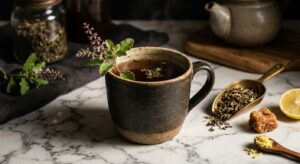
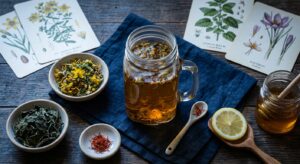
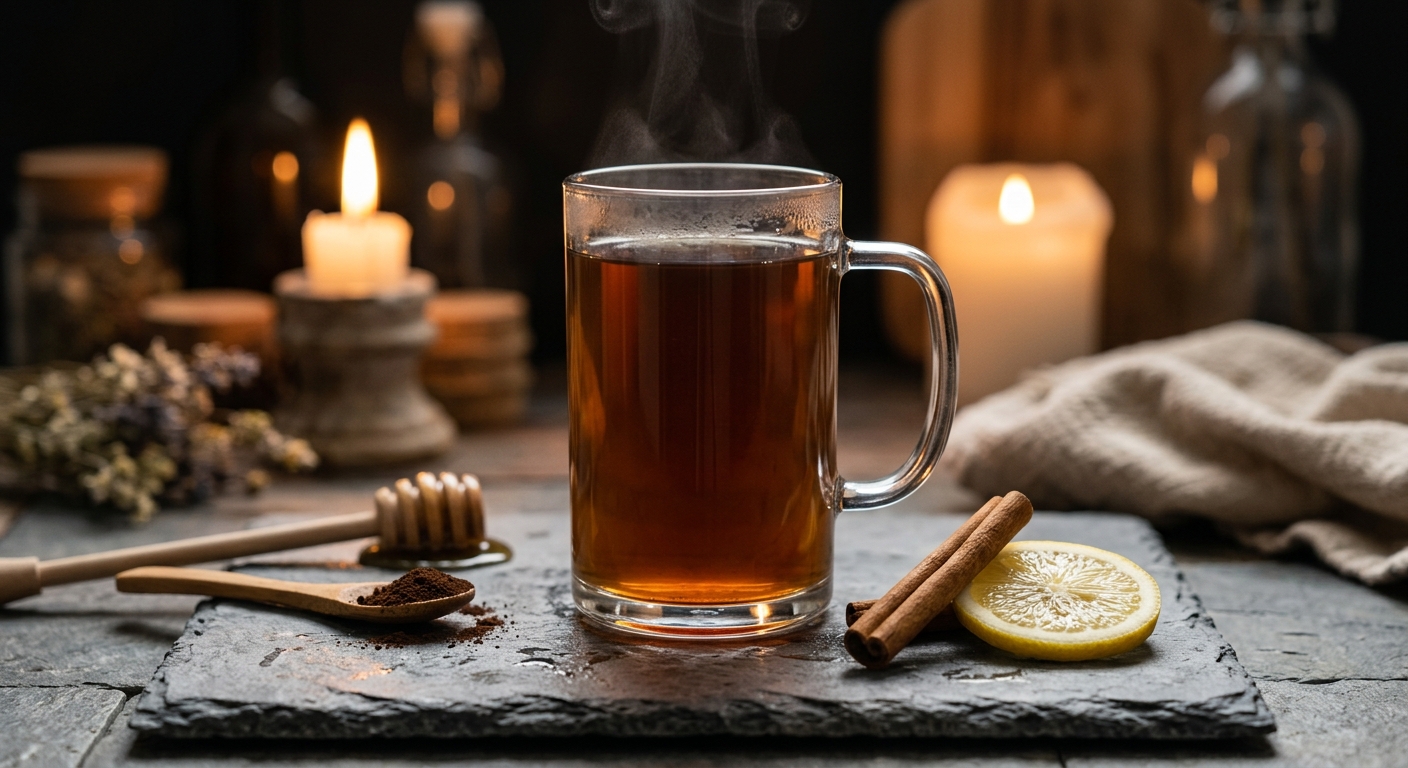
Sensory-wise, five mushroom blend tea is an experience worth savoring. It brews into a rich, dark amber to deep brown liquor with an earthy, forest-floor aroma layered with faint woodsy and umami notes. The flavor is robust but not harsh, grounding rather than stimulating, and deeply satisfying in the way that a well-made bone broth is satisfying. Because medicinal mushrooms are not soluble the way dried herbs are, the best extraction requires attention to temperature and time, and the preparation method you choose will meaningfully affect which compounds you draw into your cup.
2
cups
Ingredients
- 2 tspfive mushroom blend powder (or 4 grams whole dried blend)
- 480 mlwater (90 to 95°C / 194 to 203°F)
- —raw honey or maple syrup to taste (optional)
- —splash of oat milk or coconut milk (optional, softens bitterness)
- —pinch of cinnamon (optional, complements the earthiness)
How to Brew
Click on an item below to shop for the recommended items for this recipe on Amazon.
As an Amazon Associate, we earn from qualifying purchases.
- Heat 480 ml of water to 90 to 95°C (194 to 203°F). If using a standard kettle without temperature control, bring water to a full boil and allow it to rest for 60 to 90 seconds before proceeding.
- Add 2 teaspoons of five mushroom blend powder directly to a small saucepan or a large heatproof mug. If using whole dried mushroom pieces rather than powder, place them in a fine mesh strainer set inside your mug.
- Pour the hot water over the mushroom blend and stir thoroughly for 30 to 45 seconds if using powder, ensuring no dry clumps remain on the surface. This initial agitation dramatically improves compound extraction.
- Cover the mug or saucepan with a lid or small plate to trap volatile aromatic compounds and maintain temperature. Steep for 15 to 20 minutes, stirring once halfway through.
- Strain the liquid if using whole pieces, or pour directly into serving mugs if you used powder. Add honey, a splash of plant milk, or a pinch of cinnamon to taste.
- Sip slowly over 10 to 15 minutes. The full adaptogenic effect is cumulative with daily consumption, so consistency matters more than any single perfect cup.
- Measure 3 teaspoons of five mushroom blend powder (50 percent more than the hot brew ratio) into a clean glass jar with a tight-fitting lid. The increased ratio compensates for the slower cold-water extraction.
- Add 480 ml of cool, filtered room-temperature water to the jar. Stir or shake vigorously for 60 seconds until the powder is fully dispersed. There should be no visible dry clumps floating on the surface.
- Seal the jar and leave it at room temperature for 1 to 2 hours to begin the initial extraction, then transfer to the refrigerator.
- Allow the blend to steep in the refrigerator for a total of 12 to 18 hours (overnight is ideal). The longer end of the range produces a noticeably richer, more complex flavor.
- When ready to serve, shake the jar well, then pour through a fine mesh strainer or nut milk bag into a glass filled with ice. The cold brew will be noticeably smoother and less bitter than the hot version.
- Sweeten lightly with maple syrup or a drop of vanilla extract if desired. Cold brew mushroom tea keeps refrigerated for up to 48 hours, so you can batch-brew ahead.
- Combine 2 to 3 teaspoons of five mushroom blend powder (or 6 to 8 grams of whole dried mushroom pieces) with 600 ml of cold filtered water in a small saucepan. Starting in cold water and gradually heating improves polysaccharide extraction compared to adding the mushrooms to already-hot water.
- Place the saucepan over medium heat and bring the water slowly up to a gentle simmer. Do not allow the water to reach a rolling boil, as sustained high temperatures can degrade heat-sensitive beta-glucans and produce a harsh, overly bitter flavor.
- Once a gentle simmer is reached (small bubbles rising steadily but not vigorously), reduce the heat to low and cover the saucepan partially. Allow the mushrooms to decoct at a gentle simmer for 25 to 40 minutes, checking every 10 minutes and adding a small splash of water if the volume reduces significantly.
- Remove the saucepan from heat and allow it to rest, covered, for 5 minutes. This resting period allows residual heat to continue extracting compounds without the risk of scorching.
- Pour the decoction through a fine mesh strainer into serving mugs, pressing any solids gently with the back of a spoon to extract maximum liquid. Discard the spent mushroom material.
- The resulting decoction will be notably darker and more concentrated than a standard hot brew. Dilute with a small amount of hot water if the flavor is too intense, and add honey, ginger, or cinnamon to round out the earthy bitterness. One cup of this decoction is roughly equivalent in potency to two cups of standard hot brew.
Health Benefits
Reishi’s ganoderic acids and cordyceps’ cordycepin work synergistically to modulate cortisol secretion and regulate the hypothalamic-pituitary-adrenal (HPA) axis. Regular consumption has been associated with lower perceived stress and improved stress resilience in several small human trials.
Lion’s mane is the only known food source of hericenones and erinacines, compounds that cross the blood-brain barrier and stimulate NGF production. A 2009 double-blind, placebo-controlled trial published in Phytotherapy Research found that lion’s mane supplementation significantly improved cognitive scores in adults over 50 compared to placebo.
Reishi has a well-established history as a sleep-supportive herb in traditional Chinese medicine, and modern research supports this use. Its triterpenes appear to increase non-REM sleep duration by modulating GABAergic pathways, offering a caffeine-free alternative to pharmaceutical sleep aids.
The beta-glucans shared across all five mushrooms in the blend are recognized immunomodulators that prime innate immune defenses without overstimulating them, an important distinction for individuals whose immune systems are already dysregulated by chronic stress.
Turkey tail’s PSK and PSP compounds act as prebiotics, selectively feeding beneficial gut bacteria. Emerging research in psychobiotics suggests that a healthy gut microbiome directly influences serotonin synthesis, anxiety levels, and emotional regulation, making gut support a meaningful indirect pathway to stress relief.
🧪 Key Bioactive Compounds
The Science Behind Five Mushroom Blend (Reishi, Lion’S Mane, Chaga, Cordyceps, Turkey Tail)
The adaptogenic activity of five mushroom blend tea stems from a remarkable convergence of bioactive compound classes, each targeting a different node in the body’s stress response network. At the top of the hierarchy sits the hypothalamic-pituitary-adrenal (HPA) axis, the hormonal cascade that governs how the body perceives and responds to stress. Reishi’s ganoderic acids, a family of lanostane-type triterpenes, have been shown in animal studies to reduce corticosterone and cortisol secretion by modulating adrenal receptor sensitivity. Meanwhile, cordycepin from cordyceps improves mitochondrial efficiency and ATP synthesis, meaning the body produces more cellular energy with less metabolic strain, reducing the physiological cost of the stress response at the cellular level.
Lion’s mane contributes perhaps the most scientifically striking compounds in the blend. Hericenones, found in the fruiting body, and erinacines, found in the mycelium, are the only naturally occurring small molecules known to stimulate Nerve Growth Factor (NGF) synthesis in the brain. NGF is a neuropeptide essential for the survival, maintenance, and regeneration of neurons in the hippocampus and prefrontal cortex, two brain regions that are directly impaired by chronic stress. The discovery of these compounds earned significant attention in neuroscience research, and while most studies remain at the preclinical stage, a 2023 randomized controlled trial published in the Journal of Neurological Surgery found improvements in working memory and stress-related mood disturbances in participants who consumed lion’s mane extract over 12 weeks.
Chaga and turkey tail complete the blend’s pharmacological profile by addressing the oxidative stress and gut dysbiosis that accompany chronic anxiety. Chaga is one of the highest known dietary sources of superoxide dismutase (SOD), an endogenous antioxidant enzyme that neutralizes the superoxide radicals generated during prolonged cortisol elevation. Turkey tail’s PSK and PSP polysaccharides act as selective prebiotics in the gut, enriching populations of Lactobacillus and Bifidobacterium species that produce short-chain fatty acids and precursors to serotonin and GABA. Given that approximately 90 percent of the body’s serotonin is produced in the gut, this microbiome-level support represents a genuine mechanistic pathway through which turkey tail may contribute to reduced anxiety and improved emotional regulation over time.
Brewing Tips
- Consistency is essential with medicinal mushroom teas. Most of the research showing measurable benefits in humans used daily supplementation for a minimum of four to eight weeks, so treat this as a daily ritual rather than an occasional remedy.
- If you find the earthy bitterness challenging, start with half the recommended powder dose and gradually increase over two weeks. Your palate adapts quickly, and many people come to find the flavor deeply comforting.
- Source your five mushroom blend from suppliers who provide a Certificate of Analysis (COA) confirming beta-glucan content and testing for heavy metals and pesticides. Mushrooms are hyperaccumulators that readily absorb contaminants from their growing substrate, so quality sourcing is especially important in this category.