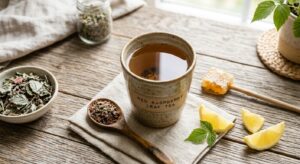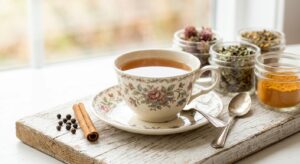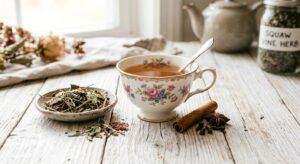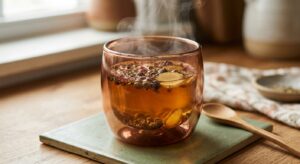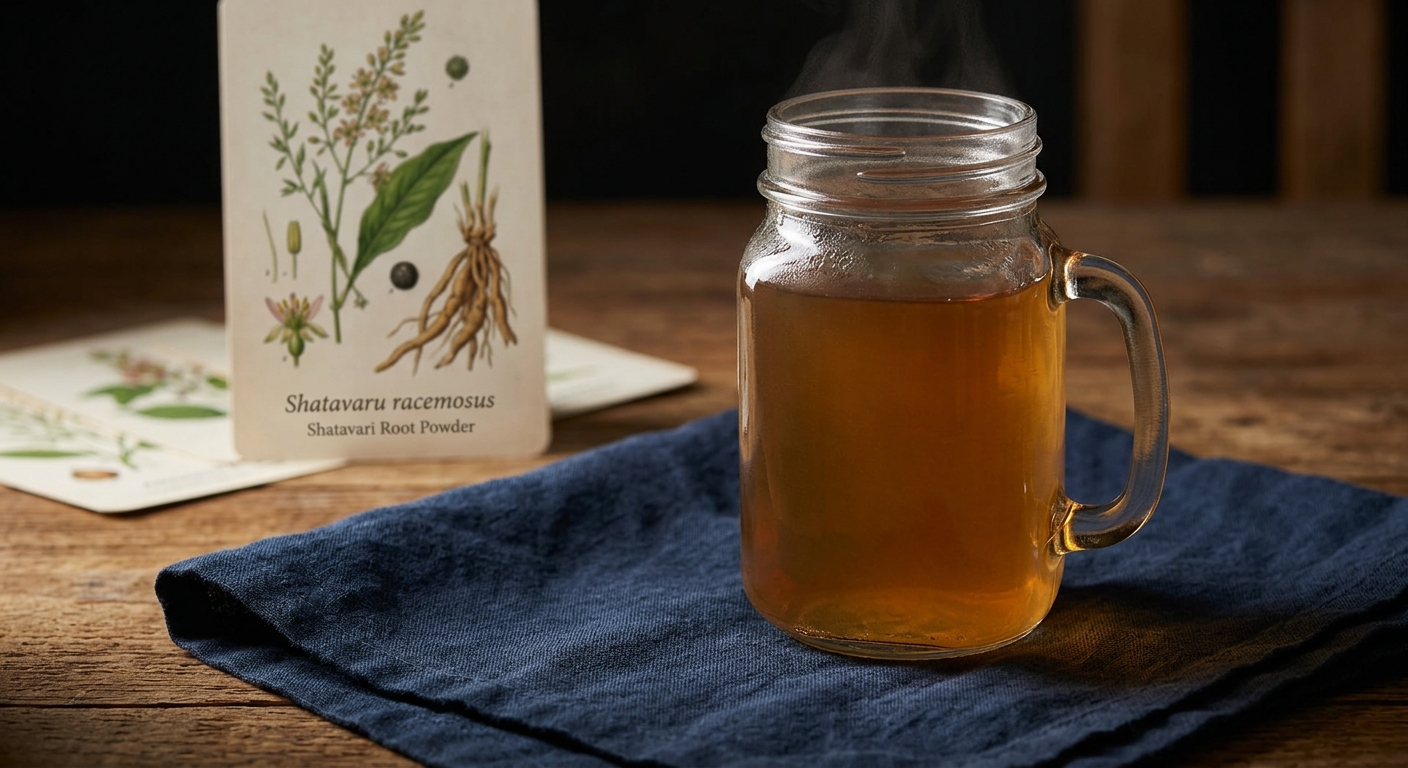
In Sanskrit, Shatavari translates to “she who possesses a hundred husbands” – a poetic reference to the extraordinary vitality and reproductive strength this climbing root herb was believed to bestow upon women. Asparagus racemosus has been a cornerstone of Ayurvedic medicine for over 3,000 years, classified as a rasayana, meaning a rejuvenating tonic that promotes longevity, tissue nourishment, and deep resilience. Ancient texts including the Charaka Samhita describe Shatavari as the foremost herb for women, useful at every stage of life from adolescence through menopause.
Native to the Himalayan foothills, Sri Lanka, and India, Shatavari is a thorny, climbing plant whose tuberous roots contain the bulk of its medicinal compounds. These roots are dried and powdered in classical Ayurvedic preparations, but they can also be simmered as a decoction or steeped as a warming tea to draw out their gentle, nourishing properties. The flavor is mild and subtly sweet with a starchy, slightly earthy depth, making it one of the more palatable medicinal roots to brew at home.
Modern science has begun to validate what Ayurvedic practitioners have known for millennia. Research into Shatavari’s active constituents, particularly its steroidal saponins called shatavarins, has revealed meaningful effects on estrogen modulation, lactation support, stress response, and digestive comfort. Whether you are navigating irregular cycles, the postpartum period, perimenopause, or simply seeking a grounding daily tonic, Shatavari tea offers a gentle and deeply nourishing way to support your body’s natural rhythms.
2
cups
Ingredients
- 2 tspdried shatavari root powder or sliced dried root
- 480 mlwater (95 to 100°C / 203 to 212°F)
- 1 tspraw honey or jaggery (optional)
- —a small pinch of cardamom or cinnamon (optional, for flavor)
How to Brew
Click on an item below to shop for the recommended items for this recipe on Amazon.
As an Amazon Associate, we earn from qualifying purchases.
- Measure 1 teaspoon of dried shatavari root powder or 2 to 3 slices of dried shatavari root per cup (240 ml) into a small saucepan.
- Add cold water to the saucepan – use approximately 300 ml per serving to account for evaporation during simmering.
- Place the saucepan over medium heat and bring the water to a gentle simmer, not a rolling boil. Once simmering, reduce the heat to low.
- Allow the root to simmer uncovered for 15 to 20 minutes, stirring occasionally. The liquid will reduce slightly and deepen to a soft golden-beige color.
- Remove from heat and allow to rest for 2 minutes. Strain through a fine mesh strainer or cheesecloth into your mug, pressing the root material gently to extract remaining liquid.
- Stir in raw honey, jaggery, or a pinch of cardamom to taste. Drink warm, ideally in the morning or before bed as part of a daily tonic ritual.
- Add 2 teaspoons of shatavari root powder per 480 ml of filtered water to a clean glass jar. Stir vigorously to combine the powder and water, breaking up any clumps.
- Cover the jar loosely with a cloth or lid and allow to sit at room temperature for 1 hour to begin extraction, then transfer to the refrigerator.
- Let the jar steep in the refrigerator for 10 to 12 hours, or overnight. The powder will settle to the bottom – this is expected.
- Before straining, give the jar a gentle swirl to re-suspend the settled material. Pour through a fine mesh strainer lined with cheesecloth into a pitcher or directly into glasses, pressing firmly to extract the full liquid.
- Serve over ice if desired. Sweeten lightly with a small amount of honey or maple syrup stirred directly into the cold liquid. Consume within 48 hours and store refrigerated.
- Combine 1 teaspoon of shatavari root powder with 240 ml of full-fat milk (or unsweetened oat milk) and 120 ml of water per serving in a small saucepan.
- Whisk gently to blend the powder into the milk before applying heat, preventing clumping on the base of the pan.
- Warm over low to medium-low heat, stirring frequently. Do not allow the milk to boil vigorously, as this can scorch the bottom and degrade some compounds. Maintain a gentle simmer at around 85 to 90°C.
- Simmer for 20 to 25 minutes, stirring every few minutes, until the liquid reduces by roughly one-third and takes on a creamy ivory color with a faint golden hue.
- Remove from heat. Add a pinch of cardamom, a small scraping of fresh nutmeg, or a quarter teaspoon of ashwagandha powder if you wish to deepen the tonic effect.
- Strain through a fine mesh strainer into a mug, pressing any residue through the mesh. Sweeten with raw honey or jaggery to taste. Drink warm before bed for its most restorative effect on the nervous system and reproductive tissues.
Health Benefits
Shatavari’s steroidal saponins interact with estrogen receptors and may help regulate estrogen levels naturally, making it useful for reducing symptoms of PMS, irregular cycles, and estrogen fluctuation. A 2018 clinical trial published in the Journal of Ethnopharmacology found measurable improvements in menstrual regularity and symptom severity among women taking standardized Shatavari extract.
Shatavari is one of the most well-researched galactagogues in botanical medicine, with multiple clinical studies demonstrating its ability to increase breast milk production by stimulating prolactin and corticoids. It is considered among the safest herbal lactation supports and has been used by nursing mothers in India for centuries.
The phytoestrogenic and adaptogenic properties of Shatavari make it particularly supportive during perimenopause, when estrogen levels fluctuate significantly. Studies suggest it may reduce hot flashes, night sweats, vaginal dryness, and mood instability by providing gentle estrogenic activity and supporting adrenal function.
Classified as both a rasayana and an adaptogen, Shatavari has been shown to modulate the hypothalamic-pituitary-adrenal (HPA) axis, reducing cortisol output under chronic stress conditions. This matters greatly for women’s hormonal health, as elevated cortisol suppresses progesterone production and disrupts the entire hormonal cascade.
The mucilaginous polysaccharides in Shatavari coat and protect the lining of the stomach and intestines, making it beneficial for conditions such as gastritis, acid reflux, and irritable bowel syndrome. Its anti-inflammatory flavonoids further reduce gut inflammation, supporting healthy digestion and nutrient absorption.
🧪 Key Bioactive Compounds
The Science Behind Shatavari
The primary bioactive constituents responsible for Shatavari’s hormone-modulating effects are a family of steroidal saponins known collectively as shatavarins, with Shatavarin I and IV being the most studied. These glycosides interact with estrogen receptors in a selective, tissue-specific manner, meaning they can exert mild estrogenic effects in tissues that are estrogen-deficient (such as during menopause) while simultaneously opposing estrogen excess in tissues where levels are too high. This bidirectional, balancing activity is characteristic of true adaptogens and explains why Shatavari is used therapeutically across such a wide range of hormonal conditions, from PMS to postmenopause.
Shatavari also exerts meaningful effects on the stress-response axis. Animal and early human studies have demonstrated that its compounds reduce circulating cortisol and modulate the hypothalamic-pituitary-adrenal (HPA) axis response to chronic stress. This is clinically significant for women because cortisol competes with progesterone for receptor binding and actively suppresses the luteinizing hormone (LH) surge needed for ovulation. By buffering the cortisol response, Shatavari may indirectly support more regular ovulation and healthier progesterone production in the luteal phase. A 2019 randomized controlled trial found measurable reductions in perceived stress and morning cortisol levels in participants taking standardized Shatavari extract for 60 days.
The herb’s mucilaginous polysaccharides contribute a distinct but equally important dimension to its therapeutic profile. These large carbohydrate molecules form a protective, gel-like coating over mucous membranes when hydrated, soothing irritated tissue throughout the gastrointestinal and reproductive tracts. This demulcent action makes Shatavari tea particularly valuable for women experiencing dryness-related symptoms, whether in the gut, the vaginal tissue, or the respiratory mucosa, all of which are affected by declining estrogen. The anti-inflammatory flavonoids quercetin and rutin work synergistically with these polysaccharides to reduce prostaglandin-driven inflammation, offering further relief from menstrual cramping and pelvic discomfort.
Brewing Tips
- Use root powder rather than capsule-grade powder when brewing: food-grade Shatavari powder is coarser and strains more cleanly than the ultra-fine pharmaceutical powders, which can pass through even fine mesh strainers.
- Consistency is everything with adaptogenic herbs. Shatavari’s hormonal and stress-response benefits build gradually over 4 to 8 weeks of daily use, so integrate it into a morning or bedtime ritual rather than using it sporadically.
- To balance Shatavari’s mild bitterness and enhance its creamy, starchy notes, add a small amount of ghee or coconut oil to the hot brew. Ayurveda recommends fat as an anupana (carrier) for Shatavari, as its saponins are fat-soluble and absorb more effectively in the presence of lipids.