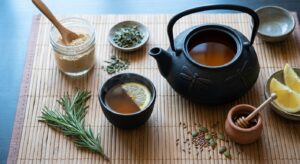
Long before biochemists mapped the Krebs cycle or identified adenosine triphosphate as the body’s energy currency, traditional healers in China, India, and the Himalayas were prescribing the very same plants now studied for their effects on mitochondrial function. Cordyceps mushroom was reserved for Tibetan royalty to combat altitude fatigue. Ashwagandha appeared in Ayurvedic texts over 3,000 years ago as a Rasayana, a class of tonics meant to restore vitality and extend life. Green tea became a cornerstone of East Asian monastic culture precisely because monks needed sustained, calm alertness for hours of meditation. This blend draws those traditions together into a single, purposeful cup.
What makes this tea genuinely different from a standard energy drink or even a strong cup of coffee is its mechanism of action. Rather than flooding your nervous system with stimulants that borrow energy from tomorrow, the herbs in this blend work at a cellular level, supporting the mitochondria, the microscopic organelles inside every cell that convert oxygen and nutrients into usable energy. The result is a lift that feels clean, grounded, and lasting, more like a deep breath than a jolt.
The flavor experience reflects that balance beautifully. A vegetal, slightly grassy base from the green tea is warmed by the earthy depth of cordyceps and grounded further by ashwagandha’s distinctive nutty, slightly bitter undertone. A touch of lemon and raw honey round everything out into a tea that tastes as nourishing as it is invigorating. This is a morning ritual worth building your day around.
2
cups
Ingredients
- 2 tsploose-leaf green tea (sencha or dragonwell)
- 1 tspcordyceps mushroom powder or finely ground dried cordyceps
- 1 tspashwagandha root powder
- 0.5 tspdried lemon peel or lemon zest
- 480 mlwater (80°C / 176°F for hot brew)
- —raw honey or maple syrup to taste (optional)
- —pinch of black pepper (enhances ashwagandha absorption – optional)
How to Brew
Click on an item below to shop for the recommended items for this recipe on Amazon.
As an Amazon Associate, we earn from qualifying purchases.
- Heat 480 ml of filtered water to 80°C (176°F). If you do not have a temperature-controlled kettle, bring water to a full boil then let it rest uncovered for 5 to 6 minutes before using.
- Warm your teapot or mug by swirling a small splash of hot water around inside, then discard it. This prevents the brewing water from losing temperature on contact with a cold vessel.
- Add the green tea leaves to a fine-mesh infuser or teapot. In a small bowl, combine the cordyceps powder and ashwagandha powder, then add them directly to the teapot or a French press rather than the infuser, since powders pass through most mesh strainers.
- Add the dried lemon peel alongside the green tea in the infuser. Pour the 80°C water evenly over all the ingredients.
- Steep for 5 minutes for a lighter, sweeter cup or up to 7 minutes for a deeper, more earthy brew. Do not exceed 8 minutes, as the green tea will turn astringent.
- Strain carefully through a fine-mesh strainer or cheesecloth to catch the mushroom and root powders. Stir in a pinch of black pepper and raw honey if using, and serve immediately.
- Measure the green tea leaves, cordyceps powder, ashwagandha powder, and dried lemon peel into a large glass jar. Use 1.5 times the standard dry ingredient amounts (so 3 tsp green tea, 1.5 tsp cordyceps, 1.5 tsp ashwagandha) to compensate for the slower cold extraction.
- Pour 480 ml of cold, filtered water into the jar. Stir the mixture gently for 30 seconds to ensure the powders are fully dispersed and not clumping at the bottom.
- Seal the jar with a lid and let it sit at room temperature for 1 hour to begin extraction, then transfer to the refrigerator.
- Cold steep for a total of 10 to 14 hours (overnight works perfectly). The longer end of the range yields a stronger, more complex flavor and a higher concentration of bioactive compounds.
- When ready, strain the entire contents slowly through a double layer of cheesecloth set over a fine-mesh strainer, squeezing gently to capture all liquid from the powders.
- Serve over ice in tall glasses. Sweeten with honey or maple syrup stirred in before straining, since cold liquid does not dissolve sweeteners easily. This blend keeps refrigerated for up to 48 hours.
- Double all dry ingredient amounts (4 tsp green tea, 2 tsp cordyceps powder, 2 tsp ashwagandha powder, 1 tsp dried lemon peel) and brew into 480 ml of water at 80°C rather than the standard 960 ml. This creates a 2x concentrate.
- Use a French press or a large teapot with a built-in strainer. Add all dry ingredients directly into the vessel, pour the heated water over evenly, and press or place the lid on without plunging.
- Steep for 8 to 10 minutes. The slightly extended time and doubled herb ratio together create a robust, concentrated extraction. The tea will taste very intense on its own – this is expected.
- Press or strain the concentrate through a fine-mesh strainer lined with cheesecloth into a clean glass jar or pitcher. Press the spent herbs gently to extract all liquid.
- Allow the concentrate to cool to room temperature, then seal and refrigerate. It keeps well for up to 5 days.
- To serve, mix one part concentrate with one part hot water for a traditional hot cup, or pour one part concentrate over a full glass of ice and top with cold water or coconut water for a refreshing iced version. Add honey and black pepper to each serving individually.
Health Benefits
Cordycepin activates AMPK, a cellular enzyme that signals the body to produce more mitochondria and improve the efficiency of existing ones. Ashwagandha’s withanolides simultaneously protect mitochondrial membranes from oxidative stress, creating a compound effect on cellular energy capacity.
Multiple randomized controlled trials on Cordyceps sinensis extract have demonstrated significant improvements in VO2 max, time to exhaustion, and post-exercise lactate clearance. Ashwagandha has been shown in studies to increase muscle strength and reduce exercise-related muscle damage markers.
The caffeine and L-theanine combination in green tea is among the most well-researched nootropic pairings in the literature. L-theanine modulates the stimulant effect of caffeine by promoting alpha brain wave activity, resulting in sharper attention and faster reaction times without the anxiety or energy crash typical of caffeine alone.
Ashwagandha is classified as an adaptogen, a compound that helps normalize physiological stress responses. A 2012 double-blind study published in the Indian Journal of Psychological Medicine found that 300 mg of ashwagandha root extract daily reduced serum cortisol by 27.9% compared to placebo, directly reducing the hormonal drain on cellular energy resources.
EGCG from green tea is one of the most studied antioxidants in human nutrition. It scavenges reactive oxygen species that accumulate in high-energy tissues like muscle and brain cells, protecting the mitochondrial membranes where ATP production occurs and reducing the oxidative cost of sustained mental and physical effort.
🧪 Key Bioactive Compounds
The Science Behind Cordyceps Mushroom
At the core of this blend’s energy-supporting reputation is cordycepin, a naturally occurring adenosine analogue produced by Cordyceps militaris and Cordyceps sinensis. Because its molecular structure so closely resembles adenosine, cordycepin is taken up by cellular receptors and can activate AMP-activated protein kinase, commonly abbreviated AMPK. AMPK functions as a master metabolic switch inside cells: when activated, it triggers a cascade of processes that includes mitochondrial biogenesis (the creation of new mitochondria), improved fatty acid oxidation, and enhanced glucose uptake. This is not a stimulant effect in the conventional sense. Rather than forcing your adrenal glands to flood your system with adrenaline, cordycepin helps the cells themselves become better at producing the energy they need.
Ashwagandha’s primary bioactives, the withanolides, operate through complementary pathways. Chronic psychological stress elevates cortisol, which in turn promotes mitochondrial dysfunction by increasing oxidative stress inside cells and disrupting the electron transport chain, the final step of ATP synthesis. Withanolides have demonstrated the ability to reduce serum cortisol, suppress the NF-kB inflammatory signaling pathway, and directly scavenge reactive oxygen species that degrade mitochondrial membranes. Clinical trials have also documented ashwagandha’s effect on creatine kinase levels and maximal oxygen consumption, markers of actual physical energy capacity rather than just subjective feelings of alertness. One specific withanolide, Withaferin A, has shown particular promise in protecting neurons from stress-induced mitochondrial apoptosis.
Green tea’s contribution operates on yet another axis. The well-documented synergy between caffeine and L-theanine is backed by functional MRI research showing that the combination produces sustained increases in alpha and beta brain wave activity, the frequencies associated with relaxed focus and active problem-solving. EGCG, the dominant catechin in green tea, adds a layer of mitochondrial protection by neutralizing the reactive oxygen species generated as a byproduct of high metabolic activity. Research published in the journal Mitochondrion has confirmed that EGCG can upregulate the expression of genes involved in mitochondrial fusion, a process critical to maintaining healthy mitochondrial networks in brain and muscle cells. Together, these three herbs form a genuinely multi-mechanistic approach to cellular energy, one that supports production, protects infrastructure, and optimizes the nervous system environment in which that energy is experienced.
Brewing Tips
- Use a French press instead of a standard infuser for this blend. The powdered ashwagandha and cordyceps will clog fine-mesh infusers and require a cheesecloth straining step regardless, so the French press makes the process more practical and efficient.
- Add the black pepper consistently, not just occasionally. Piperine, the active compound in black pepper, has been shown to increase the bioavailability of withanolides from ashwagandha by inhibiting their metabolic breakdown in the gut and liver, a mechanism similar to its well-known enhancement of curcumin absorption.
- Drink this tea earlier in the day, ideally before 1 PM. Even though the energy it provides feels smooth and non-jittery, the combined caffeine from green tea and the adrenal-supporting effects of ashwagandha can subtly elevate alertness and delay sleep onset if consumed in the afternoon or evening.