Long before synthetic sedatives existed, herbalists across Europe, North America, and Asia turned to a class of plants called nervines to support a frazzled nervous system. The word nervine comes from the Latin nervus, meaning sinew or nerve, and these plants were prized precisely because they worked gently, nourishing rather than numbing. A nervine tonic tea does not knock you out; it coaxes your body back toward its natural state of calm, the way a slow exhale releases the tension from a clenched jaw. This tradition lives on in apothecaries, homesteads, and herbal practices around the world.
This particular blend draws on three of the most celebrated nervine herbs in Western herbalism. Passionflower (Passiflora incarnata), native to the southeastern United States and revered by Indigenous communities for generations, brings a mild sedative quality and a distinctive earthy sweetness. Skullcap (Scutellaria lateriflora), a member of the mint family, was a staple of Eclectic physicians in the 19th century and is still considered one of the finest herbs for nervous exhaustion and anxiety. Lemon balm (Melissa officinalis), cultivated in European monastery gardens since the Middle Ages, contributes a bright citrus note and a calm, uplifting quality that prevents the blend from feeling heavy or sedating during the daytime.
Together these three herbs create a tea that is more than the sum of its parts. They are synergistic, each targeting slightly different pathways in the nervous system while sharing a common goal: restoring a sense of spaciousness and ease. Whether you sip it warm before bed, cold-brewed over ice on a stressful afternoon, or as a slow-steeped sun tea on a quiet day, this nervine tonic blend offers a gentle, plant-based anchor in a world that rarely slows down.
2
cups
Ingredients
- 2 tspdried passionflower (aerial parts)
- 1.5 tspdried skullcap leaf
- 1.5 tspdried lemon balm leaf
- 480 mlwater (90°C / 194°F)
- —raw honey or a few drops of liquid stevia to taste (optional)
- —thin slice of fresh lemon (optional, for serving)
How to Brew
Click on an item below to shop for the recommended items for this recipe on Amazon.
As an Amazon Associate, we earn from qualifying purchases.
- Combine the dried passionflower, skullcap, and lemon balm in a tea infuser, muslin bag, or directly in a small teapot. Using 1 tsp of each herb per cup is the baseline; increase passionflower slightly if you are brewing for sleep rather than daytime calm.
- Heat filtered water to 90°C (194°F). Avoid a full rolling boil, as temperatures above 95°C can degrade the volatile aromatic compounds in lemon balm that contribute to its calming effect. An electric kettle with temperature control is ideal.
- Pour the hot water over the herbs, then immediately cover the vessel with a lid or a small plate. This trapping of steam prevents the volatile oils from escaping into the air, preserving the full aromatic and therapeutic profile of the blend.
- Steep for 10 to 15 minutes. For daytime use, 10 minutes produces a lighter, more uplifting cup. For evening or pre-sleep use, allow the full 15 minutes for a deeper, more sedative infusion.
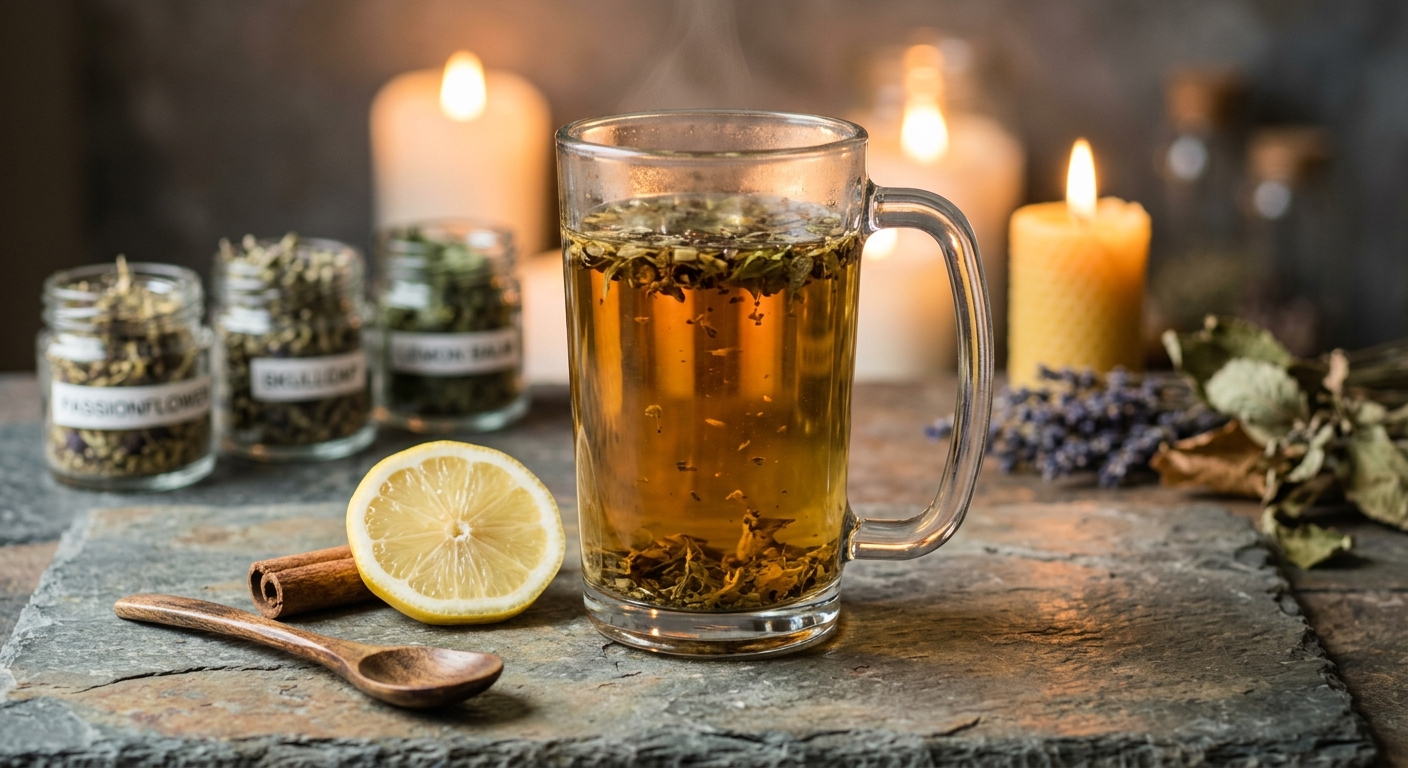
- Strain thoroughly into your mug, pressing the herbs gently to extract remaining liquid. Add honey if desired and a slice of lemon to brighten the earthy notes. Sip slowly and deliberately, ideally away from screens, allowing the ritual itself to signal rest to your nervous system.
- Measure out a double-strength amount of herbs: use 4 tsp dried passionflower, 3 tsp dried skullcap, and 3 tsp dried lemon balm for every 480 ml of water. The increased ratio compensates for the slower, less efficient cold extraction process.
- Place the herbs loosely in a clean glass jar. Pour room temperature or cool filtered water (not iced) over the herbs, ensuring all plant material is fully submerged. Stir gently with a long spoon to saturate the herbs.
- Seal the jar with a lid and leave it at room temperature for 1 hour to allow initial extraction to begin, then transfer to the refrigerator. Cold brew overnight for a minimum of 8 hours, or up to 12 hours for a fuller infusion. Do not exceed 14 hours or the flavor can become overly grassy.
- When ready, strain the cold brew through a fine mesh strainer or cheesecloth into a pitcher or directly into glasses filled with ice. Press the herbs firmly to recover all the liquid.
- Serve over ice with a sprig of fresh mint or a ribbon of lemon peel for aroma. Cold brew nervine tea keeps refrigerated in a sealed container for up to 48 hours.
- Add the standard herb amounts (2 tsp passionflower, 1.5 tsp skullcap, 1.5 tsp lemon balm per 480 ml) directly into a clean, clear glass jar. Clear glass allows sunlight to penetrate and drive the slow infusion. Avoid plastic containers, which can leach compounds when warmed.
- Fill the jar with room temperature filtered water and seal it tightly with a lid. Give it a gentle swirl to ensure the herbs are evenly distributed and none are clumped together.
- Place the jar in a sunny outdoor spot or a south-facing windowsill where it will receive at least 3 to 4 hours of direct sunlight. Check the color at the 3-hour mark: the water should be a warm, soft gold-green. If you prefer a stronger infusion, allow another hour.
- Bring the jar inside and let it cool at room temperature for 15 to 20 minutes before straining through a fine mesh strainer into a fresh jar or glass. Discard the spent herbs.
- Serve the sun tea at room temperature for a warming mid-afternoon ritual, or refrigerate for up to 24 hours and serve lightly chilled. Add a small drizzle of raw honey and a few fresh lemon balm leaves as a garnish for a beautiful, aromatic presentation.
Health Benefits
The combined GABAergic action of vitexin from passionflower and rosmarinic acid from lemon balm has been shown in multiple small clinical trials to reduce sleep onset latency and improve sleep quality scores. A 2011 double-blind crossover study found passionflower tea significantly improved subjective sleep quality compared to placebo in healthy adults.
Both passionflower and skullcap have demonstrated anxiolytic activity in human trials. A randomized controlled trial published in Phytotherapy Research found passionflower comparable to oxazepam for generalized anxiety disorder with fewer side effects, while skullcap’s baicalin and scutellarein reduce neurological excitability without impairing daytime function.
Lemon balm has a well-documented antispasmodic effect on smooth muscle in the gastrointestinal tract, making this blend useful for the stomach upset, cramping, and nausea that frequently accompany chronic stress and anxiety. Studies in irritable bowel syndrome patients show lemon balm significantly reduces bloating and abdominal discomfort.
At moderate doses, lemon balm has been shown to enhance mood and cognitive performance under stress conditions without causing drowsiness, making the daytime version of this blend useful for focused, calm work. Research from Northumbria University found that lemon balm extract improved memory and reduced mental fatigue in healthy volunteers.
Baicalin from skullcap and rosmarinic acid from lemon balm are both potent antioxidants that have demonstrated neuroprotective effects in cell and animal studies, reducing oxidative stress markers in neural tissue and potentially supporting long-term brain health with regular consumption.
🧪 Key Bioactive Compounds
The Science Behind Passionflower, Skullcap, And Lemon Balm
The calming action of this nervine tonic blend centers primarily on the brain’s GABAergic system, the same inhibitory pathway targeted by pharmaceutical anxiolytics and sleep medications, though through considerably gentler mechanisms. Gamma-aminobutyric acid (GABA) is the central nervous system’s primary inhibitory neurotransmitter, responsible for quieting neural activity, reducing anxiety, and facilitating sleep. Several compounds in this blend modulate GABA activity through distinct but complementary pathways. Vitexin and chrysin from passionflower bind directly to GABA-A receptor sites, mimicking GABA’s quieting signal. Rosmarinic acid from lemon balm takes a different route, inhibiting the enzyme GABA transaminase, which is responsible for breaking down GABA in the synaptic cleft, effectively preserving higher concentrations of naturally produced GABA in the brain. Baicalin and scutellarein from skullcap appear to modulate GABA receptor sensitivity, reducing overall neurological excitability without producing the dependence risks associated with pharmaceutical GABA-receptor agonists.
Beyond the GABAergic system, lemon balm’s monoterpene aldehydes, particularly citral and citronellal, interact with muscarinic acetylcholine receptors in a way that produces mood-brightening and mildly anxiolytic effects independent of GABA. This dual mechanism is part of why lemon balm can be calming without being heavily sedating, and why it functions well both in evening sleep preparations and in daytime stress-relief contexts. Research published in Psychosomatic Medicine and the Journal of Psychopharmacology has confirmed lemon balm’s ability to reduce cortisol response to psychological stress and improve self-rated calmness and alertness simultaneously, a combination that pure sedatives cannot offer.
Skullcap adds an additional layer of neuroprotection that is often overlooked in discussions of its calming properties. Baicalin has been shown in preclinical studies to promote hippocampal neurogenesis, the growth of new neurons in the brain’s memory and stress-regulation center, and to reduce neuroinflammation markers such as interleukin-6 and tumor necrosis factor-alpha. Chronic stress is known to suppress neurogenesis and elevate neuroinflammation, making skullcap’s contribution to this blend particularly meaningful for those using it over time as an adaptogenic nervous system tonic rather than just an acute calming remedy. The synergy of these three herbs represents a sophisticated, multi-targeted approach to nervous system support that modern pharmacology is only beginning to fully appreciate.
Brewing Tips
- Source passionflower and skullcap from certified organic suppliers and look for Latin species names on the label. Skullcap in particular is frequently adulterated, and only true Scutellaria lateriflora carries the nervine benefits described here.
- Always cover your brew while steeping. Lemon balm’s volatile oils, which are responsible for much of its aroma and a significant portion of its calming effect, evaporate quickly in open steam. A plate, lid, or even a folded cloth over your mug makes a measurable difference in the final cup.
- Adjust the ratio based on your goal: for daytime focus and stress relief, increase the lemon balm and reduce the passionflower. For deeper sleep support, increase the passionflower and steep for the full 15 minutes. Keeping the herbs separate in labeled jars lets you customize each brew to your needs.