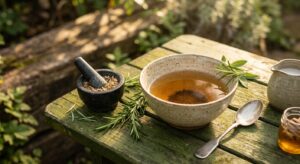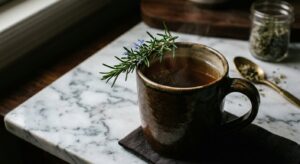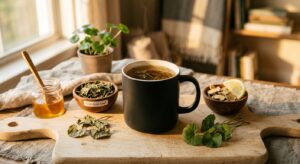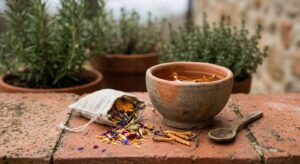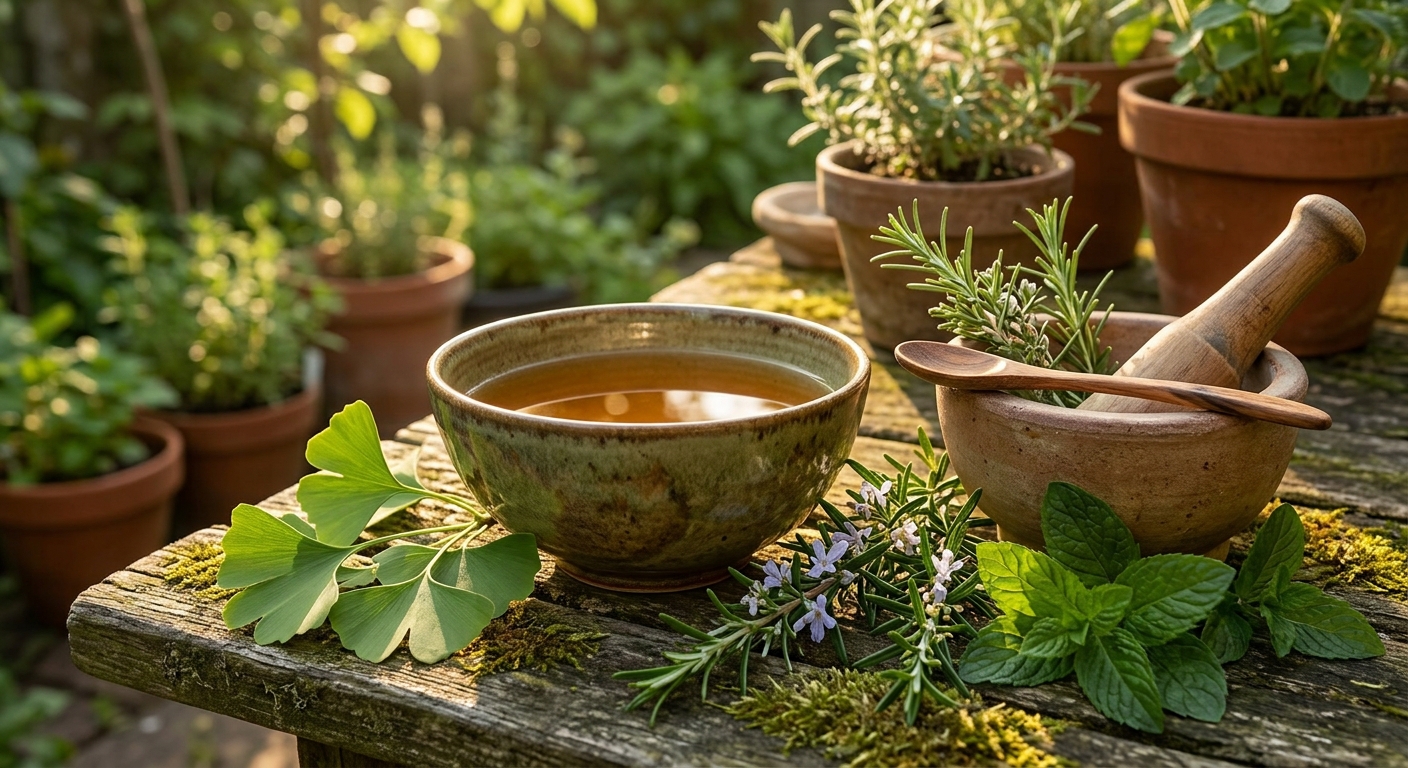
Long before the age of energy drinks and nootropic supplements, scholars and healers reached for the plant kingdom when they needed a sharper mind. Ginkgo biloba, one of the oldest living tree species on Earth with a lineage stretching back 270 million years, was prescribed in Traditional Chinese Medicine to support memory and clear mental fog. Rosemary, the aromatic Mediterranean shrub, was worn as garlands by ancient Greek students during examinations, a practice rooted in the belief that its scent alone could strengthen recall. Peppermint, crisp and clarifying, has been valued from ancient Egypt to Victorian England as a remedy for mental sluggishness and fatigue. Together, these three herbs form one of the most historically grounded focus blends in the herbal tradition.
What makes this combination so compelling is not just tradition but synergy. Ginkgo biloba works at the circulatory level, improving blood flow to the brain and delivering the oxygen and glucose neurons need to fire efficiently. Rosemary brings a suite of antioxidant compounds that protect brain cells from oxidative stress while boosting the availability of acetylcholine, the neurotransmitter most closely associated with learning and memory. Peppermint tops the blend with its menthol-driven alertness signal, stimulating the trigeminal nerve and sharpening sensory attention in a way that is almost immediate. Sip this tea before a study session, a creative project, or any task that demands your full cognitive presence.
This is not a high-caffeine stimulant tea. It works through a gentler, more sustainable mechanism, supporting the brain’s own chemistry rather than flooding the nervous system with a jolt followed by a crash. The flavor is bright, slightly resinous, and refreshingly cool, a tea that feels as clarifying to drink as it is to smell. Whether you are preparing for an exam, working through a complex problem, or simply trying to find your flow on a slow afternoon, this blend offers a grounded, plant-based path to mental clarity.
2
cups
Ingredients
- 1 tspdried ginkgo biloba leaves
- 1 tspdried rosemary leaves
- 1 tspdried peppermint leaves
- 480 mlwater (90°C / 194°F)
- —raw honey or a slice of lemon to taste (optional)
How to Brew
Click on an item below to shop for the recommended items for this recipe on Amazon.
As an Amazon Associate, we earn from qualifying purchases.
- Heat 480 ml of filtered water to 90 to 95°C. If using a standard kettle, bring to a full boil and let it rest for 60 to 90 seconds before pouring.
- Combine 1 teaspoon each of dried ginkgo biloba leaves, dried rosemary, and dried peppermint in a tea infuser or teapot strainer. Lightly crush the rosemary between your fingers to release its volatile oils before adding it to the blend.
- Place the infuser in your mug or teapot and pour the hot water directly over the herbs, making sure all the plant material is submerged.
- Cover the mug with a small saucer or lid to trap the aromatic steam, which carries volatile menthol and rosemary compounds that would otherwise escape. Steep for 5 to 7 minutes.
- Remove the infuser and squeeze gently to extract the last of the infusion. Add a small drizzle of raw honey or a squeeze of lemon if desired. Drink while hot, before a focused work or study session.
- Measure 1.5 teaspoons each of dried ginkgo biloba, dried rosemary, and dried peppermint into a clean glass jar. The slightly higher ratio compared to hot brew compensates for the slower cold extraction.
- Pour 480 ml of cold, filtered water over the herbs. Stir briefly to ensure all the plant material is fully wetted and submerged.
- Cover the jar with a lid or a piece of cheesecloth secured with a rubber band. Let the jar sit at room temperature for the first hour to allow initial extraction, then transfer to the refrigerator.
- Steep in the refrigerator for 8 to 12 hours, or overnight. The longer end of the range produces a more pronounced ginkgo and rosemary character, while 8 hours gives a lighter, more peppermint-forward cup.
- Strain the liquid through a fine mesh strainer or cheesecloth into a glass. Serve over ice and add honey syrup or a thin lemon round if desired. Consume within 24 hours for peak freshness and potency.
- Heat 240 ml of filtered water to 88 to 90°C. Using a slightly lower temperature than the hot brew method allows for the extended steep time without extracting excessive bitterness from the ginkgo leaves.
- Add 2 teaspoons each of dried ginkgo biloba, dried rosemary, and dried peppermint to a small teapot or heatproof jar. This double ratio is intentional, as the concentrate will be diluted before drinking.
- Pour the hot water over the herbs, cover tightly to preserve volatile aromatics, and steep for 12 to 15 minutes. Stir once halfway through the steep.
- Strain the concentrate through a fine mesh strainer into a small glass jar or heatproof pitcher, pressing the herbs firmly to extract all liquid. You should have approximately 200 ml of rich, dark concentrate.
- To serve, add 80 to 100 ml of concentrate to a mug and top up with 140 to 160 ml of hot or cold water depending on your preference. Sweeten lightly if desired. Store remaining concentrate in a sealed jar in the refrigerator for up to 48 hours.
Health Benefits
Multiple randomized controlled trials have found that standardized ginkgo biloba extract improves working memory speed and accuracy in healthy adults. The mechanism involves increased cerebral blood flow and antioxidant protection of hippocampal neurons.
Rosemary’s 1,8-cineole content has been linked to improved cognitive performance in both inhalation and ingestion studies. A 2012 study published in Therapeutic Advances in Psychopharmacology found that blood plasma levels of 1,8-cineole correlated directly with speed and accuracy on cognitive tasks.
Peppermint has been shown in research from Northumbria University to reduce mental fatigue and increase alertness during sustained cognitive effort. Its menthol compounds stimulate the reticular activating system, helping maintain arousal during long work sessions.
Ginkgo’s flavonoid glycosides and quercetin, combined with rosmarinic acid from rosemary, create a multi-pathway antioxidant action that protects neuronal cell membranes from oxidative damage associated with aging and chronic stress.
Research suggests that the combined aromatic compounds in this blend, particularly peppermint and rosemary, can reduce cortisol-related tension and improve mood scores during demanding mental tasks, creating a calmer, more effective focus state.
🧪 Key Bioactive Compounds
The Science Behind Ginkgo Biloba
The cognitive benefits of this blend operate through three complementary mechanisms, making it a genuinely multi-pathway focus formula. Ginkgo biloba’s terpene lactones, particularly ginkgolides A and B, are among the most studied plant compounds in neurological research. Their primary action is vasodilatory: they relax smooth muscle in cerebral blood vessels and inhibit platelet-activating factor, a compound that causes blood to thicken and vessels to constrict. The result is measurably improved microcirculation in the brain, meaning more oxygen and glucose reach neurons during periods of high cognitive demand. A 2002 meta-analysis published in Human Psychopharmacology reviewing 33 double-blind placebo-controlled trials concluded that ginkgo extract produced consistent improvements in attention, processing speed, and working memory in both healthy adults and those with age-related cognitive decline.
Rosemary contributes to the blend through a completely different but equally compelling pathway. Its dominant active compound, 1,8-cineole (also known as eucalyptol), is a potent acetylcholinesterase inhibitor. Acetylcholinesterase is the enzyme that breaks down acetylcholine in synaptic gaps after neurotransmission. By slowing this breakdown, rosemary effectively prolongs the signal of acetylcholine, the neurotransmitter most critical to encoding new memories and sustaining attention. This is the same general mechanism targeted by several pharmaceutical drugs used in Alzheimer’s treatment, though rosemary operates at a far gentler, sub-clinical level. The rosmarinic acid in rosemary and peppermint adds further neuroprotection by scavenging reactive oxygen species that accumulate during intense mental effort.
Peppermint’s contribution is the most immediately felt. Menthol binds to TRPM8 cold-sensing receptors in the nasal mucosa and oral cavity, sending a rapid alerting signal through the trigeminal nerve to the brainstem’s reticular activating system, the neural network responsible for regulating arousal, wakefulness, and attention gating. This explains why simply inhaling a freshly brewed cup of peppermint tea can produce a near-instant sensation of mental clarity. Research from Northumbria University found that participants who consumed peppermint tea before cognitive testing showed significantly improved long-term memory, working memory, and alertness compared to control groups. When these three herbs are combined, the result is a blend that enhances cerebral blood flow, protects neurotransmitter availability, and triggers the brain’s own alertness pathways simultaneously.
Brewing Tips
- Crush or lightly bruise the dried rosemary leaves before adding them to the infuser. This ruptures the oil glands and releases significantly more 1,8-cineole into your cup.
- Use filtered or spring water if possible. The mineral content of tap water, particularly high chlorine levels, can blunt the delicate aromatic profile of this blend and interfere with flavonoid extraction.
- Brew this tea 20 to 30 minutes before you need to focus rather than right at the start of your session. Ginkgo’s circulatory effects and rosemary’s enzyme-inhibiting action take a short time to build in the body.
- Store dried herbs in separate airtight containers away from light and heat. Pre-blending them can cause the volatile oils of peppermint and rosemary to migrate into the more porous ginkgo leaves, leading to uneven potency over time.