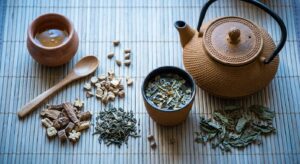
Long before the age of energy drinks and synthetic supplements, traditional herbalists turned to the fields and hedgerows for their most potent tonics. Nettles (Urtica dioica), oat straw (Avena sativa), and alfalfa (Medicago sativa) have been harvested for centuries across Europe, Asia, and the Americas as foundational nourishing herbs. Unlike fast-acting stimulants, these plants work by genuinely replenishing the micronutrients your nervous system depends on, including B1 (thiamine), B2 (riboflavin), B3 (niacin), B5 (pantothenic acid), B6 (pyridoxine), and even trace amounts of B9 (folate). When brewed together, they create a cup that feeds the body at a cellular level.
Nettle has been prized since ancient Greek and Roman times as a strengthening tonic for fatigue and debility. Oat straw, the green vegetative part of the oat plant harvested before the grain matures, was a cornerstone of European nerve tonics used to restore mental stamina in scholars and convalescents alike. Alfalfa, whose Arabic name al-fisfisa means ‘father of all foods,’ was cultivated in Persia over 6,000 years ago specifically for its extraordinary density of vitamins and minerals. Together, these three herbs form one of the most nutritionally complete herbal blends available to the home herbalist.
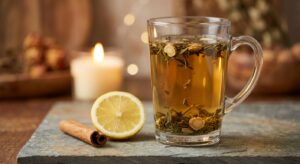
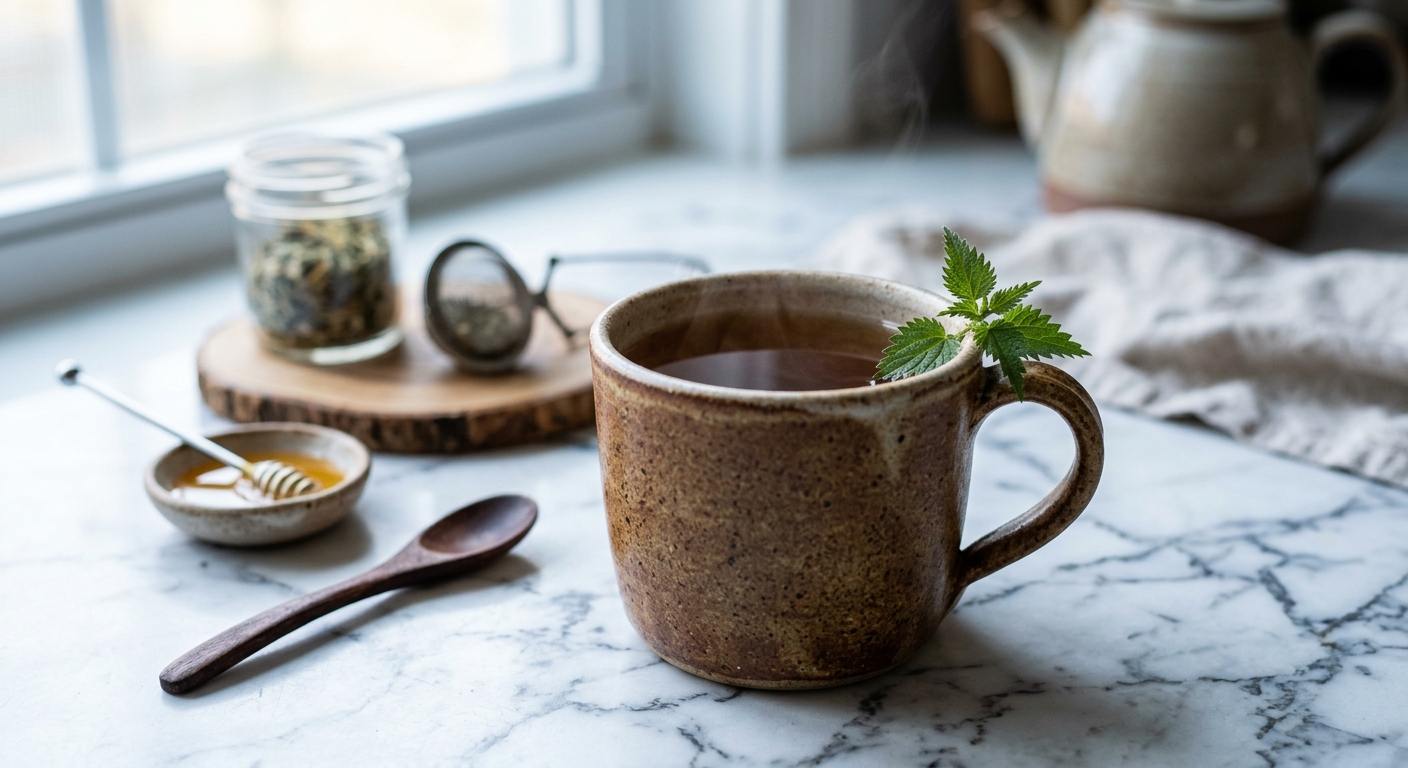
What makes this blend especially compelling is its adaptability. The infusion can be brewed hot for a warming morning ritual, cold-brewed overnight for a smooth and concentrated mineral tonic, or prepared as a long-steep nourishing infusion in the tradition of herbalist Susun Weed, which extracts the maximum vitamin and mineral content from the plant material. The flavor is pleasingly green and grassy with a mild earthy sweetness, and it pairs beautifully with lemon and a touch of raw honey for those who prefer a brighter cup.
2
cups
Ingredients
- 2 tspdried nettle leaf
- 2 tspdried oat straw
- 1 tspdried alfalfa leaf
- 480 mlwater (95°C / 203°F)
- —raw honey or lemon slice to taste (optional)
How to Brew
Click on an item below to shop for the recommended items for this recipe on Amazon.
As an Amazon Associate, we earn from qualifying purchases.
- Bring filtered water to 95°C (203°F). If you do not have a temperature-controlled kettle, bring water to a full boil and let it rest for 60 seconds before pouring.
- Combine the dried nettle leaf, oat straw, and alfalfa in a roomy tea infuser, strainer basket, or French press. Using 1 tablespoon of herb blend total per 240 ml of water is a good starting ratio, so use 2 tablespoons for a two-cup brew.
- Pour the hot water directly over the herbs, ensuring all plant material is submerged. Place a small saucer or lid over your mug or teapot to trap volatile compounds and prevent heat loss.
- Steep for a minimum of 10 minutes and up to 15 minutes. The color should deepen to a rich forest green. Avoid steeping beyond 20 minutes as the flavor can become overly astringent.
- Remove the infuser and press or squeeze the herbs gently to extract the last of the mineral-rich liquid. Add a squeeze of lemon or a teaspoon of raw honey if desired, and drink while warm.
- Measure 3 tablespoons of the herb blend (nettle, oat straw, and alfalfa in a 2:2:1 ratio) into a clean glass jar. Use filtered water at room temperature, not hot water.
- Pour 480 ml of room-temperature filtered water over the herbs. Stir gently with a spoon to ensure all the plant material is fully saturated and submerged.
- Seal the jar with a lid or cover tightly with a piece of cloth secured with a rubber band. Leave at room temperature for 1 hour to begin the initial extraction, then transfer to the refrigerator.
- Allow the herbs to cold-steep in the refrigerator for a total of 8 to 12 hours. Overnight is ideal. The color will be a deep, translucent green, noticeably cleaner-looking than a hot brew.
- Strain the liquid through a fine mesh strainer or cheesecloth, pressing the herbs firmly to extract all liquid. Serve over ice or enjoy chilled straight from the jar. The cold brew keeps refrigerated for up to 48 hours.
- Measure 28 grams (approximately 1 ounce or 4 to 6 tablespoons) of the dried herb blend into a wide-mouth glass jar that can withstand heat. For a nourishing infusion, nettle is the dominant herb, so use a ratio of 3:2:1 for nettle, oat straw, and alfalfa respectively.
- Bring 1 liter of fresh filtered water to a full rolling boil at 100°C (212°F). The higher temperature and greater quantity of water compared to a standard hot brew is essential to this method, as it ruptures more plant cell walls and drives deeper mineral extraction.
- Pour the boiling water into the jar over the herbs, filling it to the brim. Immediately cap the jar tightly with a metal lid. The sealed environment creates slight pressure and prevents the escape of aromatic and volatile compounds during the long steep.
- Wrap the jar in a thick towel to slow heat loss and maintain a warm steep environment for the first 1 to 2 hours. Then leave the jar, still sealed, at room temperature for a total steep time of 4 to 8 hours. Four hours yields a pleasant, moderately strong infusion. Eight hours produces a deeply concentrated, intensely mineral-rich tonic.
- Strain thoroughly through a fine mesh strainer or cheesecloth, pressing or squeezing the spent herbs firmly. The resulting liquid will be very dark green and dense. Drink 1 to 2 cups per day. Refrigerate the remainder and consume within 36 hours, as the high nutrient density makes it prone to spoilage.
Health Benefits
The B vitamins in this blend act as cofactors in the mitochondrial reactions that convert food into ATP, the body’s energy currency. Unlike caffeine, this energy support addresses an underlying nutritional foundation rather than forcing adrenal stimulation.
B6 and folate are both required for the synthesis of key neurotransmitters including dopamine and serotonin. Regular consumption of B-vitamin-rich herbs like nettle has been associated in observational studies with reduced mental fatigue and improved mood stability.
Oat straw contains avenanthramides and a range of B vitamins that have traditionally been used to treat nervous exhaustion and anxiety. Modern research on Avena sativa extracts shows improvements in cognitive performance and stress resilience in adults over 40.
Nettle and alfalfa are among the most mineral-dense plants available as food herbs, offering meaningful amounts of calcium, magnesium, iron, and potassium. These minerals work synergistically with B vitamins for optimal nerve conduction and metabolic energy.
Quercetin in nettle has been demonstrated in multiple in vitro and animal studies to inhibit pro-inflammatory pathways, including NF-kB activation. Chronic low-grade inflammation is increasingly recognized as a contributor to fatigue and impaired cognitive function.
🧪 Key Bioactive Compounds
The Science Behind Nettle
The energy-supporting properties of this herbal blend are rooted in fundamental biochemistry. B vitamins are coenzymes, meaning they are required helpers in the enzymatic reactions that convert the macronutrients from food into adenosine triphosphate (ATP), the molecule that powers virtually every cell in the human body. Thiamine (B1) is indispensable in pyruvate dehydrogenase, the enzyme that links glycolysis to the citric acid cycle. Riboflavin (B2) is the direct precursor to FAD and FMN, coenzymes embedded in the mitochondrial electron transport chain. Without adequate B vitamins, these metabolic pathways slow down, manifesting as the persistent fatigue, mental fog, and low motivation that many people experience without understanding the root cause.
Oat straw adds a distinct neurological dimension through its avenanthramides, polyphenolic alkaloids unique to Avena sativa. These compounds stimulate nitric oxide synthase activity in endothelial cells, increasing the production of nitric oxide and thereby dilating blood vessels including those supplying the brain. A double-blind, placebo-controlled study published in Nutrients (Mcleay et al., 2021) found that Avena sativa extract significantly improved attention, processing speed, and executive function in healthy adults aged 40 to 65, effects attributed largely to enhanced cerebral blood flow and the neuroprotective properties of its polyphenol content. Nettle’s quercetin content adds further cognitive protection by suppressing microglial activation and reducing neuroinflammatory signaling through the NF-kB pathway, a mechanism increasingly studied in the context of brain fog and age-related cognitive decline.
The decision to use a long-steep nourishing infusion rather than a short hot brew is not merely traditional preference. Research on aqueous herbal extraction demonstrates that water-soluble vitamins like folate, B5, and B6 require both adequate temperature and extended contact time to fully migrate out of dense plant cell walls into solution. A 10-minute hot brew may extract 30 to 50 percent of the available B vitamin content, while a 4 to 8 hour nourishing infusion using boiling-temperature water can extract upwards of 70 to 80 percent, making the preparation method a genuinely meaningful variable in the nutritional outcome of your cup. Cold brewing, while gentler on folate in particular (which degrades more rapidly at sustained high temperatures), offers a middle path with excellent palatability and good vitamin retention for regular daily use.
Brewing Tips
- Source organic dried nettle, oat straw, and alfalfa from a reputable bulk herb supplier and store them in sealed glass jars away from direct light. Freshness matters more than most people realize for B-vitamin content, as these water-soluble vitamins degrade over time in dried plant material.
- Drink this tea consistently over several weeks rather than expecting immediate results. B-vitamin nutritional support works cumulatively by replenishing depleted stores, and most people notice a meaningful difference in sustained energy and mental clarity after 2 to 4 weeks of daily use.
- If the grassy, earthy flavor is too intense on first tasting, blend in a teaspoon of dried peppermint or a few slices of fresh ginger before steeping. These additions complement the mineral profile of the base herbs and make the flavor significantly more approachable without diminishing the nutritional content.