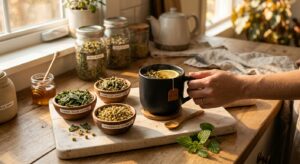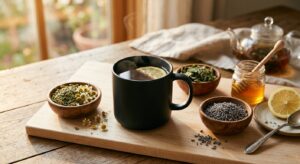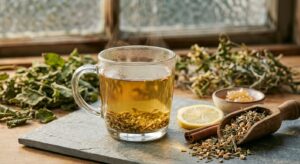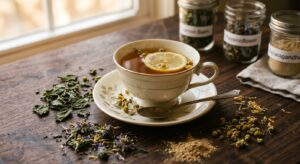
Long before pharmaceutical anxiolytics filled medicine cabinets, herbalists turned to the plant kingdom for relief from frayed nerves and a racing mind. Nervine herbs, a botanical category defined by their affinity for the nervous system, have been used across traditions from Ayurveda to European folk medicine for centuries. Lemon balm, native to the Mediterranean, was prescribed by the ancient Greeks for melancholy and nervous heart palpitations. Passionflower, revered by Indigenous peoples of the Americas, was later embraced by European colonists who recognized its extraordinary calming power. Skullcap, a native North American herb, became a cornerstone of Eclectic medicine in the 19th century, prized for its ability to calm nervous excitability without dulling the mind.
What unites these three herbs is their shared ability to modulate the nervous system through distinct but complementary mechanisms. Together, they form a synergistic blend where each herb amplifies the effects of the others, producing a cup that is calmer than any single herb could achieve alone. This approach to blending, sometimes called a nervine formula, is a foundational principle in Western herbal medicine: combine herbs that address different facets of the same condition for a more complete and balanced result. The resulting tea works on anxiety from multiple angles, quieting overthinking, relaxing physical tension, and gently encouraging the body toward rest.
Beyond its therapeutic value, this blend is a genuine sensory pleasure. The bright, citrusy lift of lemon balm softens the faintly earthy bitterness of skullcap, while passionflower contributes a delicate, grassy sweetness that rounds the whole cup beautifully. Brewed with care, this is a tea you will reach for at the end of a demanding day, during a mid-afternoon slump, or on any occasion when your nervous system needs a little tending.
2
cups
Ingredients
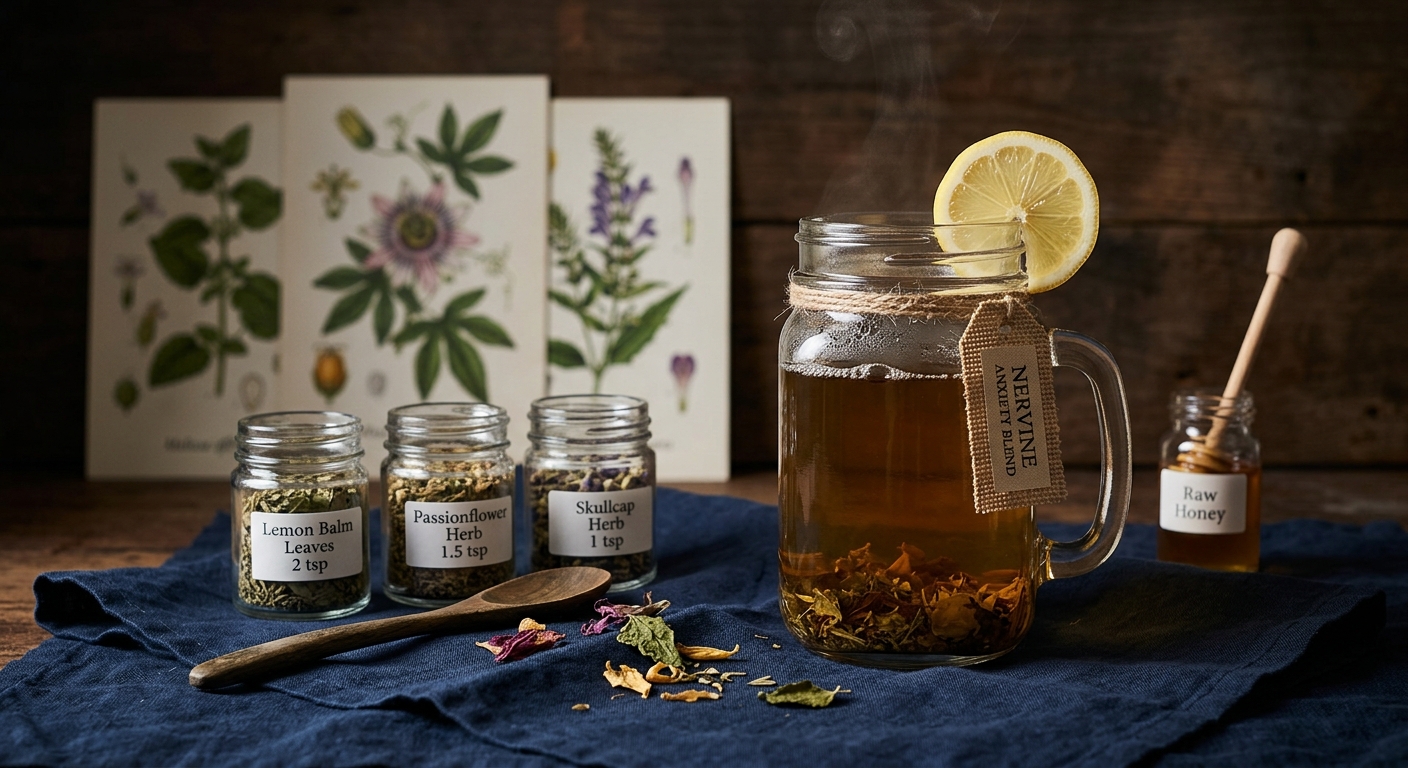
- 2 tspdried lemon balm leaves
- 1.5 tspdried passionflower herb (aerial parts)
- 1 tspdried skullcap herb
- 480 mlwater (90°C / 194°F)
- —raw honey or agave syrup to taste (optional)
- —a thin slice of fresh lemon to serve (optional)
How to Brew
Click on an item below to shop for the recommended items for this recipe on Amazon.
As an Amazon Associate, we earn from qualifying purchases.
- Heat fresh, filtered water to 90 to 95°C (194 to 203°F). If using a standard kettle, bring water to a full boil then allow it to rest for 2 minutes before pouring.
- Measure 2 teaspoons of dried lemon balm, 1.5 teaspoons of dried passionflower, and 1 teaspoon of dried skullcap into a tea infuser or teapot. This ratio is per 240 ml (one cup), so double for two servings.
- Place the infuser in your mug or set your teapot lid aside, then pour the heated water over the herbs. Cover the mug or teapot with a small plate or lid immediately to trap the volatile aromatic compounds that would otherwise escape with the steam.
- Steep for 7 to 10 minutes. A longer steep will extract more of the bitter nervine alkaloids from skullcap and passionflower for a more potent cup. Start at 7 minutes for a gentler brew.
- Remove the infuser and press gently to release any remaining liquid. Sweeten lightly with raw honey if desired, add a slice of fresh lemon, and drink slowly while the tea is warm.
- Increase herb quantities slightly compared to hot brew: use 2.5 teaspoons of dried lemon balm, 2 teaspoons of dried passionflower, and 1.5 teaspoons of dried skullcap per 480 ml (2 cups) of cold, filtered water. The cold extraction is less efficient, so the extra herb compensates.
- Combine the dried herbs and cold water in a clean glass jar. Stir gently to ensure the herbs are fully submerged. Loosely cover the jar with a lid or a small cloth secured with a rubber band.
- Allow the jar to steep at room temperature for 1 hour, then transfer it to the refrigerator and steep for an additional 7 to 11 hours. Total steeping time should be 8 to 12 hours. Overnight is ideal.
- Strain the infusion through a fine mesh sieve or muslin cloth into a clean pitcher or directly into glasses filled with ice. Press the spent herbs firmly to extract all liquid.
- Taste before sweetening. Cold-brewed nervine tea is naturally smooth and may need less sweetener than hot brew. Serve over ice with a sprig of fresh lemon balm if available.
- Combine a double-strength herb ratio in a small saucepan: use 4 teaspoons of dried lemon balm, 3 teaspoons of dried passionflower, and 2 teaspoons of dried skullcap for every 480 ml (2 cups) of filtered water.
- Heat water to 90°C (194°F) and pour over the herbs in the saucepan off the heat. Cover the saucepan with a tight-fitting lid to prevent volatile oil loss during the long steep.
- Steep covered for 20 to 25 minutes, stirring once halfway through. The resulting liquid will be noticeably darker and more robust than a standard cup, with a pronounced herbal aroma.
- Strain the concentrate through a fine mesh sieve, pressing the herbs firmly. Pour into a clean glass jar and allow to cool before sealing and refrigerating.
- To serve, dilute the concentrate 1:1 with hot water for a traditional calming tea, or warm it with an equal part of oat milk or almond milk and a touch of honey for a soothing nervine latte. A standard serving is 120 ml of concentrate diluted to 240 ml total.
Health Benefits
Multiple clinical studies on lemon balm and passionflower extracts demonstrate significant reductions in self-reported anxiety scores. A 2004 double-blind crossover trial published in Psychosomatic Medicine found lemon balm reduced anxiety by 18 percent and improved mood at a single dose.
Passionflower has been shown in clinical trials to improve subjective sleep quality comparably to low-dose oxazepam in adults with generalized anxiety disorder. Skullcap complements this by reducing nervous restlessness that delays sleep onset without causing morning grogginess.
Skullcap has a long tradition of use for nervous muscular tension, including headaches originating from stress and neck tension. Its flavonoids act on GABA-A receptors in both the brain and peripheral nervous system, helping to release physically held stress patterns.
Lemon balm has been shown in studies to improve calmness and memory performance simultaneously, a rare quality among nervines. Its rosmarinic acid modulates GABA while also inhibiting acetylcholinesterase, preserving mental clarity alongside its calming action.
Both lemon balm and passionflower have demonstrated antispasmodic activity in the gastrointestinal tract. Lemon balm in particular has evidence for reducing nervous stomach cramping and indigestion, making this blend useful for those who experience anxiety physically in the gut.
🧪 Key Bioactive Compounds
The Science Behind Lemon Balm, Passionflower, And Skullcap
The calming power of this nervine blend lies primarily in its multi-pathway engagement with GABAergic neurotransmission. GABA (gamma-aminobutyric acid) is the brain’s principal inhibitory neurotransmitter, responsible for reducing neuronal excitability and producing feelings of calm. Most pharmaceutical anxiolytics work by enhancing GABA activity, but they typically do so by targeting a single receptor subtype with high potency, which is why they carry risks of dependency. The flavonoids in this blend, particularly chrysin and orientin from passionflower and scutellarein and baicalin from skullcap, act as partial agonists at GABA-A and benzodiazepine receptor sites. This partial agonism produces a gentler, more modulatory effect that calms without overwhelming the system or creating the rebound anxiety associated with pharmaceutical agents.
Lemon balm contributes to the blend through a complementary but distinct mechanism. Its primary active compound, rosmarinic acid, inhibits the enzyme GABA transaminase, which is responsible for breaking down GABA in the synapse. By slowing this breakdown, lemon balm effectively increases the duration and availability of GABA without directly stimulating receptors, producing a synergistic amplification of the passionflower and skullcap activity. Additionally, lemon balm’s volatile compounds, including citral and eugenol, exert mild inhibitory effects on the central nervous system through olfactory and systemic pathways, which is why the act of simply inhaling a freshly brewed cup can begin to lower tension before the first sip is taken.
Beyond GABA, skullcap’s baicalin has been shown to reduce neuroinflammation and oxidative stress in neural tissue, two factors increasingly recognized as contributors to chronic anxiety states. Passionflower’s glycosyl flavonoids have also demonstrated activity on dopaminergic pathways, addressing the reward and motivation disruptions that often accompany prolonged anxiety. Together, these compounds provide a genuinely multi-target approach to nervous system support, working on GABA availability, receptor sensitivity, neurotransmitter balance, and neural oxidative stress in a single, elegantly simple cup of tea.
Brewing Tips
- Source skullcap only from suppliers who test for botanical identity, as adulteration with germander is a known industry problem. Reputable suppliers will provide certificates of analysis confirming species as Scutellaria lateriflora.
- Always cover your mug while steeping this blend. Lemon balm’s therapeutic volatile oils evaporate readily with steam, and even a brief covered steep significantly preserves the citrusy aroma compounds responsible for a portion of its calming action.
- For maximum therapeutic benefit, drink this tea consistently in the early evening rather than only in moments of acute anxiety. Nervine herbs work best as a regular tonic that gently retrains nervous system baseline over time, rather than as an occasional rescue remedy.