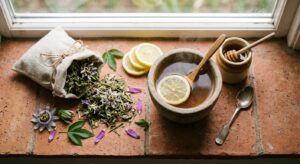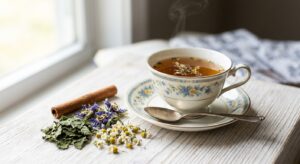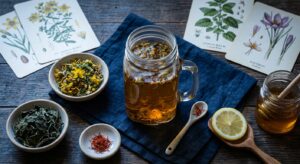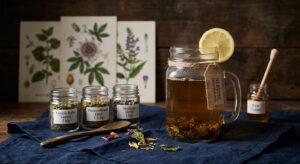
Few herbal pairings feel as purposefully designed for modern life as passionflower and ashwagandha. Passionflower (Passiflora incarnata) has been used by Indigenous peoples of the southeastern United States for centuries, valued as a gentle sedative and remedy for restlessness. Spanish explorers encountered it in the 16th century and named it after the Passion of Christ, captivated by the intricate geometry of its blooms. Its use spread quickly through European herbal traditions, where it became a staple remedy for nervous exhaustion and insomnia.
Ashwagandha (Withania somnifera), also known as Indian ginseng or winter cherry, has an even older history rooted in Ayurvedic medicine, where it has been prescribed for over 3,000 years as a rasayana, a rejuvenating tonic meant to strengthen the body and calm the mind. Its Sanskrit name translates roughly to “smell of the horse,” referring both to its earthy root aroma and the vitality it was believed to confer. Where passionflower acts quickly to ease acute anxiety and promote sleep, ashwagandha works more gradually, helping the body adapt to chronic stress over time.
Brewed together, these two herbs create a tea that operates on two timescales at once: immediate calming comfort in the cup and longer-term resilience with consistent use. The flavor is earthy, slightly bitter, and gently floral, with a warmth that feels almost medicinal in the most welcoming sense. Whether you are winding down after a demanding day or looking for a ritual that supports your nervous system every morning, this blend deserves a place in your herbal rotation.
2
cups
Ingredients
- 2 tspdried passionflower herb (leaf and stem)
- 1 tspashwagandha root powder or dried sliced root
- 480 mlwater (90 to 95°C / 194 to 203°F)
- —raw honey or maple syrup to taste (optional)
- —a pinch of cinnamon (optional, to soften bitterness)
How to Brew
Click on an item below to shop for the recommended items for this recipe on Amazon.
As an Amazon Associate, we earn from qualifying purchases.
- Bring filtered water to 90 to 95°C (194 to 203°F). Avoid a full rolling boil, as excessive heat can degrade the delicate flavonoids in passionflower.
- Place 2 teaspoons of dried passionflower herb and 1 teaspoon of ashwagandha root (powder or sliced) into a tea infuser or directly into a heatproof teapot.
- Pour the hot water over the herbs and cover the vessel with a lid or small plate. Covering is important: it traps volatile aromatic compounds that would otherwise escape with the steam.
- Steep for 10 to 15 minutes. For a lighter, more floral cup with less bitterness, aim for 10 minutes. For a more potent, deeply earthy brew, extend to 15 minutes.
- Strain thoroughly, especially if using powdered ashwagandha. If powder was used, give the tea a final whisk or stir just before drinking.
- Sweeten with raw honey or a pinch of cinnamon if desired. Drink warm, ideally 30 to 60 minutes before bed or during an afternoon wind-down.
- Measure out 2.5 teaspoons of dried passionflower herb and 1.5 teaspoons of ashwagandha root per 480 ml of cold, filtered water. Slightly higher ratios compensate for the slower cold extraction.
- Combine the herbs and cold water in a glass jar. Do not use boiling water at any point; cold brewing specifically avoids heat to yield a gentler, lower-bitterness extraction.
- Stir the mixture briefly to ensure all the herb material is fully submerged and saturated. Place the lid on the jar.
- Allow the jar to sit at room temperature for 1 hour, then transfer to the refrigerator. Steep for a total of 8 to 12 hours. Overnight is ideal for convenience and consistent results.
- In the morning, strain the cold brew through a fine mesh strainer or cheesecloth. If you used powdered ashwagandha, strain twice or use a paper coffee filter to remove sediment.
- Serve over ice or chilled straight. Add a slice of fresh ginger or a splash of oat milk to complement the earthy sweetness. Consume within 48 hours and keep refrigerated.
- Place 1.5 teaspoons of dried sliced ashwagandha root (not powder) per cup into a small saucepan. Add 540 ml of cold, filtered water to account for evaporation during simmering.
- Bring the water and ashwagandha to a gentle simmer over medium-low heat. Do not allow a vigorous rolling boil. Maintain a low, steady simmer for 15 to 20 minutes, stirring occasionally.
- After the decoction phase is complete, remove the saucepan from the heat entirely. Allow the liquid to cool for 2 minutes so it drops below 95°C (203°F).
- Add 2 teaspoons of dried passionflower herb to the saucepan and cover immediately. Allow the passionflower to infuse off the heat for 5 minutes. This two-phase approach protects the delicate flavonoids in passionflower from prolonged high heat.
- Strain the blend through a fine mesh strainer into your mug, pressing gently on the herbs to extract all the liquid.
- Taste before sweetening. The decoction will be more robust and noticeably earthier than a standard steep. A teaspoon of honey and a pinch of cardamom complement the flavor beautifully. Consume warm as an evening tonic.
Health Benefits
Passionflower’s flavonoids, particularly vitexin and isovitexin, bind to GABA-A receptors in the central nervous system, producing calming effects comparable in some studies to low-dose benzodiazepines but without sedative dependency. A randomized controlled trial published in Phytotherapy Research found passionflower extract as effective as oxazepam for generalized anxiety disorder with fewer side effects.
Ashwagandha is one of the most clinically studied adaptogens for stress. A double-blind, placebo-controlled trial in the Journal of the American Nutraceutical Association found that participants taking ashwagandha root extract reported significantly lower perceived stress scores and had measurably reduced serum cortisol levels compared to placebo after 60 days of use.
Both herbs independently contribute to improved sleep quality. Passionflower increases total sleep time and reduces nocturnal waking, while ashwagandha’s withanolides have been shown in clinical research to improve sleep onset latency and overall sleep efficiency, particularly in adults with insomnia associated with stress.
Chronic stress impairs memory and concentration partly through elevated cortisol damaging hippocampal neurons. Ashwagandha’s withanolides have demonstrated neuroprotective effects in preclinical models, and human trials show improvements in reaction time, attention, and memory in stressed adults taking ashwagandha supplementation consistently over 8 weeks.
Used together over time, this blend may support the long-term health of the autonomic nervous system. Passionflower addresses immediate nervous tension while ashwagandha works at the HPA-axis level to reduce the physiological burden of chronic stress, creating a complementary short-term and long-term approach to nervous system care.
🧪 Key Bioactive Compounds
The Science Behind Passionflower
The calming action of passionflower tea is primarily attributed to its flavone C-glycosides, particularly vitexin, isovitexin, and orientin. These compounds interact with gamma-aminobutyric acid (GABA) receptors in the brain, specifically the GABA-A receptor subtype. GABA is the central nervous system’s primary inhibitory neurotransmitter, and its activation reduces neuronal excitability throughout the brain. This is the same receptor targeted by benzodiazepine drugs, though passionflower’s interaction is far milder and does not carry the same risk of tolerance or dependency. Multiple studies, including a notable randomized clinical trial, have confirmed that passionflower preparations produce measurable anxiolytic effects in humans, making it one of the few herbs in this category with direct clinical support.
Ashwagandha’s therapeutic action is more systemic. Its primary bioactives, the withanolides, are steroidal lactones that interact with the hypothalamic-pituitary-adrenal (HPA) axis, the cascade of hormonal signaling that governs the body’s stress response. By modulating cortisol secretion and reducing the sensitivity of stress receptors, ashwagandha helps recalibrate how the body responds to stressors over time. A landmark study published in Medicine found that participants taking 240 mg of ashwagandha root extract daily for 60 days showed a 23 percent reduction in morning cortisol and significant reductions in self-reported stress, anxiety, and sleep disturbance compared to placebo. Withanolide A and withaferin A have also been shown to promote neurogenesis in the hippocampus, a brain region critical for memory, mood regulation, and stress resilience that is particularly vulnerable to damage from chronic cortisol exposure.
When combined, passionflower and ashwagandha create a complementary pharmacological profile. Passionflower provides rapid GABAergic calming within the timeframe of a single cup, making it effective for situational anxiety and evening relaxation. Ashwagandha operates on a slower, systemic axis, with most clinical studies showing peak benefits after four to eight weeks of consistent daily use. Together, they address both the immediate experience of anxiety and the physiological roots of chronic stress, making this blend particularly well suited to people dealing with ongoing high-stress periods rather than isolated acute anxiety episodes.
Brewing Tips
- If you find the earthy bitterness of ashwagandha too pronounced, try using ashwagandha root slices instead of powder. Slices extract more slowly and gently, yielding a subtler flavor while still delivering meaningful amounts of withanolides.
- Consistency matters more with this blend than with most herbal teas. Ashwagandha’s adaptogenic effects build over several weeks of daily use, so treat this tea as a daily ritual rather than an occasional remedy for best results.
- Store your dried herb blend in a sealed glass jar away from direct light and heat. Passionflower’s delicate flavonoids degrade faster than most herbs when exposed to light and air, so proper storage preserves both potency and flavor.