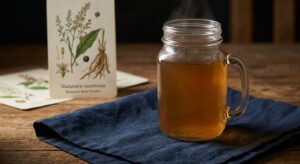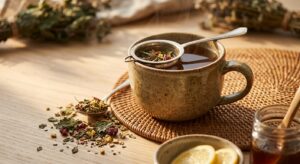
Motherwort has been tucked into gardens and medicine chests for well over two thousand years. Its Latin name, Leonurus cardiaca, tells the story: leonurus means ‘lion’s tail,’ a nod to the plant’s tall, tufted flower spikes, while cardiaca points to its long reputation as a heart herb. Greek physicians used it for anxious, fluttering hearts, and European herbalists such as Nicholas Culpeper in the 17th century praised it for ‘gladdening the heart’ and easing the troubles of the mind.
The common name hints at its other great tradition. Motherwort was prized as a women’s herb, traditionally used to support postpartum recovery, soothe menstrual tension, and steady the nerves during perimenopause and menopause. Chinese medicine knows a close relative, Leonurus japonicus (yi mu cao), whose name translates as ‘benefit the mother.’ Across cultures, this plant has been reached for at the times in a woman’s life when calm and steadiness are most needed.
Be warned that motherwort is not a dessert tea. Its flavor is distinctly bitter, grassy, and a little musky, which is exactly why herbalists often serve it in small amounts or blend it with softer herbs. Once you make peace with the bitterness, it becomes a grounding evening ritual: a small, warm cup that signals the day is done and invites the shoulders to drop.
2
cups
Ingredients
- 2 tspdried motherwort leaf and flowering tops
- 480 mlfreshly boiled water (95°C / 203°F)
- 1 tspdried lemon balm (optional, to soften the bitterness)
- —raw honey to taste (optional)
- —a thin slice of fresh lemon (optional)
How to Brew
Click on an item below to shop for the recommended items for this recipe on Amazon.
As an Amazon Associate, we earn from qualifying purchases.
- Bring fresh water to a full boil, then let it rest for about 30 seconds so it settles near 95°C. Motherwort’s leaves and flowering tops are delicate enough that a violent boil is unnecessary.
- Measure 2 teaspoons of dried motherwort into a tea infuser or directly into a warmed teapot. Add 1 teaspoon of dried lemon balm now if you want a gentler, more rounded cup.
- Pour 480 ml of hot water over the herbs, then cover immediately with a saucer or lid to trap the steam and aromatic oils.
- Steep for 10 to 15 minutes. Start tasting at 10 minutes, since longer steeping extracts more of the bitter compounds, which some people prefer and others find too sharp.
- Strain into two mugs, pressing the herbs lightly against the strainer to release the last of the liquid.
- Sweeten with a little raw honey or add a lemon slice if desired. Sip slowly, ideally 30 to 60 minutes before bed.
- Add 3 tablespoons of dried motherwort to a clean 1-liter glass jar. Cold extraction is weaker, so the herb ratio is higher than in the hot brew.
- Pour 1 liter of cool filtered water over the herbs and stir gently with a long spoon to wet all the leaves.
- Seal the jar and let it sit on the counter for 30 minutes, then move it to the refrigerator.
- Steep in the fridge for 8 to 10 hours, or overnight. Give the jar a gentle swirl once or twice if you pass it.
- Strain through a fine mesh sieve lined with a piece of muslin to catch the fine plant particles, then pour into a clean bottle.
- Serve over ice with a squeeze of lemon or a sprig of fresh mint. Drink within 48 hours and keep refrigerated.
- Place 1 tablespoon of dried motherwort and 1 teaspoon of dried chamomile flowers into a heatproof glass jar or teapot. The chamomile softens the bitter edge and adds its own relaxing quality.
- Heat 500 ml of water to just below boiling, around 90°C, and pour it over the herbs.
- Cover tightly with a lid and wrap the jar in a clean kitchen towel to hold the heat as it slowly cools.
- Let the infusion stand for 30 to 45 minutes. The long, gentle extraction draws out more of the plant’s minerals and bitter principles than a short steep.
- Strain thoroughly through a fine mesh sieve into a clean jar, discarding the spent herbs.
- Pour about 120 to 150 ml into a small cup and reheat gently if you like it warm. Sip slowly over the evening and refrigerate the remainder for the next day.
Health Benefits
Motherwort is classed as a nervine in Western herbal tradition, used to soothe a racing mind before sleep. Small clinical and animal studies suggest mild anxiolytic and sedative activity, though high-quality human trials are limited.
Traditionally used for stress-related heart flutters and palpitations, motherwort’s alkaloids have shown cardioprotective and mild blood pressure-lowering effects in preliminary research. It is a supportive herb, not a replacement for medical evaluation of heart symptoms.
Herbalists have long used motherwort for cramping, irregular cycles, and the anxiety and hot flashes that can accompany perimenopause. Leonurine’s uterine-relaxing action offers a plausible mechanism, although human research is still modest.
The act of steeping and sipping a warm, bitter tea itself encourages slowing down. Bitter flavors also stimulate gentle digestive activity, which may help the body shift into a rest-and-digest state.
Flavonoids such as rutin and phenolic compounds in motherwort help neutralize free radicals in laboratory studies, contributing to its general reputation as a protective herb.
🧪 Key Bioactive Compounds
The Science Behind Motherwort
Motherwort’s reputation rests on a handful of intriguing alkaloids and diterpenes. Leonurine, the most studied of these, has shown cardioprotective, antioxidant, and uterine-relaxing activity in laboratory and animal research. Stachydrine, another alkaloid present in the plant, has been explored for its role in supporting circulation and reducing inflammation. Together these compounds help explain why motherwort has been linked, for centuries, to both heart and reproductive health.
The calming effect on the nervous system is thought to arise from a combination of constituents rather than a single active molecule. Preliminary studies have found mild sedative and anxiolytic effects from Leonurus cardiaca extracts, and the bitter principles in the leaf may influence the gut-brain axis, which is closely tied to stress response. Flavonoids such as rutin add antioxidant protection, while tannins contribute the astringent quality that herbalists associate with tonifying tissues.
It is important to be honest about the limits of the evidence. Most research on motherwort is preclinical or based on small human trials, and much of what we know comes from traditional use documented over many centuries. That tradition is a valuable guide, but it works best alongside realistic expectations: motherwort is a gentle supportive herb that works gradually, with regular use, rather than a fast-acting sedative.
Brewing Tips
- Start with a weaker cup using 1 teaspoon of herb, then work up to 2 teaspoons as your palate adjusts to the bitterness.
- Buy motherwort from a reputable supplier and check that the label says ‘leaf and flowering tops,’ since these aerial parts hold the most active compounds.
- Store dried motherwort in an airtight, opaque jar away from light and heat, and use it within about a year for the best flavor and potency.
- Drink the tea consistently in the evening for a week or two to notice its cumulative calming effect, rather than expecting an instant result.
- If the taste is too strong, try the cold brew method or blend with lemon balm, chamomile, or a little fresh mint.