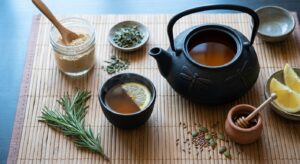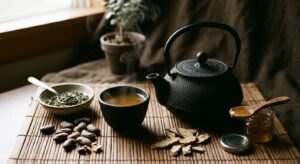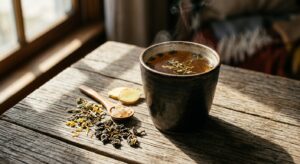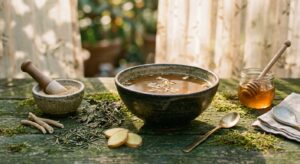
Deep in the cloud forests of the Ecuadorian Amazon, the Kichwa people have been rising before dawn for centuries to brew a shared pot of guayusa (pronounced gwhy-YOO-sah). This ritual, called wayusa upina, is a communal gathering where elders share stories, interpret dreams, and prepare for the day ahead, all centered around a steaming vessel of this remarkable leaf. Guayusa (Ilex guayusa) is a caffeinated holly tree that thrives in the Amazonian understory, and it holds a uniquely honored place in Kichwa spiritual and daily life. Shamans have traditionally drunk it before night hunts to sharpen their senses, and new hunters are introduced to it as part of their rites of passage.
What makes guayusa botanically extraordinary is its relationship to yerba mate, another caffeinated holly from the same genus. While yerba mate has conquered much of South America as a cultural institution, guayusa has remained relatively contained to its Amazonian homeland, cultivated almost exclusively in Ecuador. Unlike its cousin, guayusa contains exceptionally high levels of caffeine alongside theobromine, the gentle stimulant also found in cacao. This combination produces a layered, mellow energy lift that coffee drinkers often describe as smoother and more sustained, without the sharp spike and inevitable crash. Guayusa also contains an unusually complete amino acid profile for a leaf, including L-theanine, which is widely studied for promoting calm focus.
Beyond its biochemistry, guayusa has a sensory personality that sets it apart from other caffeinated botanicals. The brewed leaf yields a beautifully clear, amber-tinted liquor with a naturally sweet, grassy flavor and almost no bitterness, even when steeped for extended periods. This forgiving nature makes it approachable for tea novices and deeply satisfying for experienced tea drinkers looking for something genuinely different. Modern conservation efforts, led partly by indigenous cooperatives and ethical tea companies, have helped guayusa reach international markets while preserving both the rainforest habitat and the cultural traditions surrounding this ancient plant.
2
cups
Ingredients
- 2 tspdried guayusa leaves
- 480 mlwater (85 to 90°C / 185 to 194°F)
- —raw honey or agave to taste (optional)
- —slice of lemon or lime (optional)
How to Brew
Click on an item below to shop for the recommended items for this recipe on Amazon.
As an Amazon Associate, we earn from qualifying purchases.
- Heat filtered water in an electric kettle to 85 to 90°C (185 to 194°F). If you do not have a temperature-controlled kettle, bring water to a full boil and allow it to rest uncovered for 2 to 3 minutes before using.
- Measure 1 teaspoon of dried guayusa leaves per 240 ml of water and place them into a tea infuser or basket. For a bolder, more energizing brew, increase to 1.5 teaspoons per cup.
- Place the infuser into your mug or teapot and pour the heated water slowly over the leaves to ensure even saturation.
- Steep for 5 to 7 minutes. Because guayusa contains virtually no tannins, it will not become astringent or bitter with longer steeping, so adjust to your preferred strength freely.
- Remove the infuser and taste. Add raw honey, agave, or a squeeze of lemon if desired. The natural sweetness of guayusa means many drinkers enjoy it entirely plain.
- Optionally, the same leaves can be re-steeped one to two more times with an additional 1 to 2 minutes added to each successive steep, releasing slightly different flavor notes each time.
- Measure 3 teaspoons of dried guayusa leaves per 480 ml of cold, filtered water. Cold brewing requires a higher leaf-to-water ratio than hot brewing because the low temperature extracts compounds more slowly.
- Place the guayusa leaves directly into a glass jar or cold brew pitcher. No heat is needed at any stage of this method.
- Pour the cold filtered water over the leaves, making sure all the leaves are fully submerged. Stir gently to ensure even contact between leaf and water.
- Seal the jar or pitcher with a lid and place it in the refrigerator. Allow the guayusa to steep undisturbed for 8 to 12 hours. Overnight steeping works beautifully and yields a well-rounded, naturally sweet concentrate.
- After steeping, strain the liquid through a fine mesh strainer or cheesecloth into a clean jar or pitcher, pressing gently on the leaves to extract the last of the liquid.
- Serve chilled over ice in tall glasses. Cold-brewed guayusa pairs exceptionally well with a sprig of fresh mint or a wedge of lime. Store any remaining cold brew in the refrigerator and consume within 3 days for best flavor.
- Measure 4 teaspoons of dried guayusa leaves per 240 ml of water. This is roughly double the standard ratio, which creates a concentrated extraction designed to be diluted before drinking.
- Heat filtered water to 90 to 95°C (194 to 203°F) in an electric kettle. The slightly higher temperature compared to standard hot brew helps extract more soluble compounds efficiently from the higher volume of leaves.
- Place the guayusa leaves in a heatproof glass jar or teapot fitted with an infuser and pour the hot water over them. Steep for 10 to 15 minutes. The extended steep time at a higher ratio builds depth and body without bitterness, thanks to guayusa’s low tannin content.
- Strain the concentrate through a fine mesh strainer into a clean heatproof glass jar and allow it to cool to room temperature before sealing. Label the jar with the date.
- Store the concentrate in the refrigerator for up to one week. To serve, dilute one part concentrate with one to two parts cold water, sparkling water, or plant-based milk over ice. Add sweetener only after diluting, as the concentrate can taste quite intense on its own.
- For a guayusa latte, combine 60 ml of concentrate with 180 ml of frothed oat milk or almond milk and a drizzle of honey for a smooth, energizing morning drink.
Health Benefits
The combination of high caffeine, theobromine, and L-theanine in guayusa creates a uniquely smooth stimulant effect. Theobromine extends and softens the caffeine curve while L-theanine tempers anxiety, resulting in focused alertness that typically lasts longer than coffee without the crash or heart-racing side effects.
L-theanine and caffeine together have been studied extensively and shown in clinical trials to improve attention, working memory, and reaction time more effectively than either compound alone. Guayusa delivers both in a single cup, making it a genuine cognitive support tool.
Guayusa leaves are rich in polyphenols including chlorogenic acids and catechins, which combat oxidative stress linked to aging, inflammation, and chronic disease. Studies on Ilex species have found antioxidant activity comparable to or exceeding that of green tea.
Chlorogenic acids found abundantly in guayusa have been shown in multiple studies to inhibit the enzyme alpha-glucosidase, slowing carbohydrate digestion and reducing post-meal blood glucose spikes, which may benefit people managing metabolic health.
Traditional Kichwa use of guayusa includes its role as a digestive tonic and mild appetite regulator before long hunts or physical work. Modern herbalists note that its polyphenol content may help soothe mild digestive inflammation and promote a balanced appetite response.
🧪 Key Bioactive Compounds
The Science Behind Guayusa
The stimulant profile of guayusa is unlike any other caffeinated plant because of the specific ratio and combination of its active compounds. Caffeine, the primary alkaloid, works by competitively binding to adenosine receptors in the brain, preventing the buildup of the signal that triggers drowsiness. A standard 8-ounce cup of guayusa delivers roughly 66 to 90 mg of caffeine, placing it above most teas but slightly below a standard espresso shot. What distinguishes guayusa from coffee is the simultaneous presence of theobromine, a structurally similar but pharmacologically distinct alkaloid. Theobromine has a longer half-life in the body than caffeine and produces a softer, more peripheral stimulation, acting more on the cardiovascular system than the central nervous system, which contributes to the characteristic absence of jitteriness that guayusa drinkers report.
L-theanine, an amino acid found primarily in Camellia sinensis teas and in guayusa, plays a crucial role in shaping the cognitive experience of this plant. Multiple peer-reviewed studies, including a widely cited 2008 paper published in Biological Psychology, have demonstrated that the combination of caffeine and L-theanine produces statistically significant improvements in attention, cognitive accuracy, and mood compared to placebo, and produces fewer negative side effects than caffeine alone. L-theanine promotes alpha brainwave activity, the neural state associated with relaxed alertness, effectively modulating the sharper edges of caffeine stimulation into a cleaner, more productive focus. The natural co-occurrence of these two compounds in a single leaf is one of guayusa’s most compelling scientific attributes.
Guayusa is also a meaningful source of chlorogenic acids, a family of polyphenols that have been studied extensively for their role in metabolic health. Research published in journals including the Journal of Agricultural and Food Chemistry has confirmed that chlorogenic acids inhibit alpha-glucosidase and alpha-amylase enzymes in the digestive tract, slowing the breakdown and absorption of sugars and starches. This mechanism can reduce post-meal blood glucose peaks, which is particularly relevant for sustained, stable energy throughout the morning. The leaf’s catechin content adds an antioxidant dimension, with some analyses of Ilex guayusa leaf extracts showing free-radical scavenging activity comparable to green tea, supporting cardiovascular and cellular health over long-term consumption.
Brewing Tips
- Do not discard your guayusa leaves after the first steep. The leaves hold up remarkably well for two or three re-steeps, with each successive infusion revealing slightly different notes, often becoming softer and more floral as the bolder compounds are extracted first.
- If you are transitioning away from coffee, try replacing your morning cup with hot-brewed guayusa for one week. The caffeine content is sufficient to prevent withdrawal headaches while the L-theanine and theobromine combination tends to eliminate the anxiety and digestive upset that coffee can trigger in sensitive individuals.
- Store dried guayusa leaves in an airtight container away from light, heat, and moisture. Properly stored leaves will maintain their flavor and potency for up to 18 months. Avoid storing near spices or strongly aromatic foods, as the leaf can absorb ambient odors.