Black cohosh (Actaea racemosa, formerly Cimicifuga racemosa) is a tall woodland perennial native to eastern North America, recognizable by its feathery wands of creamy white flowers that rise above the forest floor in early summer. Long before it reached pharmacy shelves, it was a cornerstone of Indigenous medicine. The Cherokee, Algonquian, and other nations used the root and rhizome for a wide range of purposes, including gynecological complaints, joint pain, and fevers. Early European settlers adopted the plant, and by the 19th century it was a staple of Eclectic medicine, often prescribed to women for menstrual and menopausal troubles.
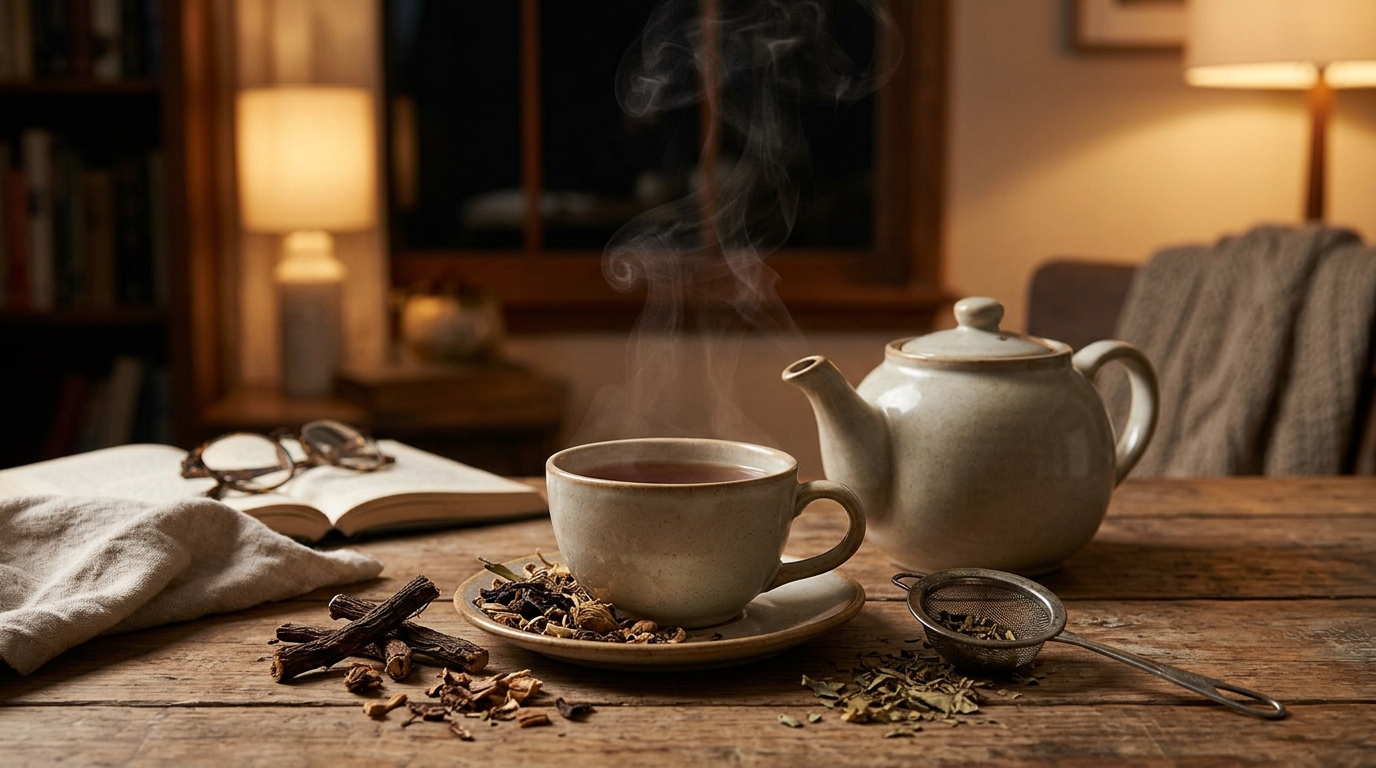
The tea has a deep, mysterious character. The dried root is dark, dense, and gnarled, and it brews into a liquid that tastes as ancient as it looks: bitter, earthy, and slightly acrid, with a faint sweetness lingering underneath. It is not a tea for casual sipping, and that is part of its charm. Many women make it a deliberate evening ritual, a small act of care at the end of the day when night sweats and wakefulness tend to be most disruptive.
Today, black cohosh remains one of the most widely studied herbs for menopausal symptoms, especially hot flashes. Research results are mixed, which makes it important to approach the herb with realistic expectations and a respect for its limits. This guide covers three ways to brew it, what the science says, and who should be cautious.
2
cups
Ingredients
- 2 tspdried black cohosh root, cut and sifted
- 480 mlfiltered water
- —raw honey to taste (optional)
- —a strip of orange peel or a cinnamon stick to soften the bitterness (optional)
How to Brew
Click on an item below to shop for the recommended items for this recipe on Amazon.
As an Amazon Associate, we earn from qualifying purchases.
- Measure 2 teaspoons of dried, cut black cohosh root into a teapot or a heatproof mug with a lid.
- Bring fresh filtered water to a full boil, then let it rest for about 30 seconds so it sits just off the boil.
- Pour 240 ml of the hot water over the root, cover immediately, and steep for 15 to 20 minutes. The longer end gives a stronger, more bitter cup.
- Strain through a fine mesh strainer to remove all root fragments, which can taste gritty and overly bitter if left in.
- Stir in a small spoonful of honey or add a strip of orange peel if you want to take the edge off the bitterness, and sip slowly about an hour before bed.
- Add 2 teaspoons of dried black cohosh root to a small saucepan with 300 ml of cold filtered water. Starting with cold water draws out the root’s compounds more evenly.
- Heat the pot slowly over medium-low heat until small bubbles appear and the water is steaming, but not at a rolling boil.
- Reduce the heat to low, partially cover, and simmer gently for 15 minutes. The liquid will reduce slightly and darken to a rich brown.
- Remove from heat, cover fully, and let the decoction rest for 10 minutes to deepen the flavor.
- Strain through a fine mesh sieve into a mug, pressing gently on the root, and add honey, cinnamon, or a slice of orange to taste.
- Combine 2 teaspoons of dried black cohosh root with 480 ml of cold filtered water in a clean glass jar.
- Stir briefly, seal the jar, and place it in the refrigerator. Do not leave it at room temperature, as root infusions can spoil.
- Steep for 10 to 12 hours, giving the jar a gentle shake once or twice if you remember.
- Strain through a fine mesh strainer or a coffee filter to remove all root particles.
- Serve over ice, or let it sit out for a few minutes to take the chill off. Drink within 24 hours and keep refrigerated.
Health Benefits
Black cohosh is most often studied for vasomotor symptoms of menopause. Some clinical trials show modest reductions in hot flash frequency and severity, though results across studies are inconsistent and the effect appears smaller than that of hormone therapy.
Evidence suggests black cohosh acts on serotonergic pathways rather than directly on estrogen receptors, which may help explain reports of improved mood and reduced irritability. Research here is preliminary.
By reducing the night sweats and temperature swings that fragment sleep, black cohosh may indirectly help women rest more soundly. The calming evening ritual of sipping a warm tea can also support wind-down habits.
Historically, black cohosh was used for cramping, joint stiffness, and rheumatic aches. These uses rest mainly on traditional practice and limited laboratory findings on its anti-inflammatory compounds.
🧪 Key Bioactive Compounds
The Science Behind Black Cohosh
Black cohosh’s reputation rests largely on its triterpene glycosides, such as actein and 23-epi-26-deoxyactein, along with a family of phenolic acids including fukinolic and cimicifugic acids. Early researchers assumed the herb worked like a plant estrogen, but this idea has largely fallen out of favor. Studies have found that black cohosh does not bind strongly to estrogen receptors and does not reliably raise estrogen levels in the body, which helps explain why it is not considered a hormone replacement.
Current thinking points instead toward the central nervous system. Laboratory work suggests that compounds in black cohosh may interact with serotonin receptors and other neurotransmitter systems involved in the brain’s thermoregulatory center, the region that becomes unstable during menopause and triggers hot flashes. This mechanism would account for the observed effects on both temperature symptoms and mood, though the exact pathways are still being mapped.
Clinical evidence remains mixed. Several randomized trials and reviews report modest benefit for hot flashes, while others find no meaningful difference from placebo. Differences in preparation, dose, and the specific extracts used make comparison difficult, and most trials use standardized extracts rather than home-brewed tea. It is reasonable to view black cohosh as a possible option worth discussing with a healthcare provider rather than a guaranteed remedy.
Brewing Tips
- Buy cut and sifted root from a reputable supplier that identifies the species as Actaea racemosa, since adulteration with related Asian species has been documented.
- Give it time: studies of black cohosh typically run for several weeks, so judge its effect over a month rather than a single cup.
- Drink it about an hour before bed, and keep a journal of your sleep and hot flash patterns to see whether it is actually helping you.
- Store dried root in an airtight, opaque container away from heat and light to preserve its potency for up to a year.