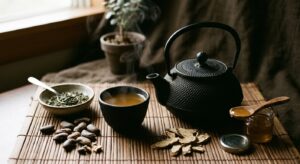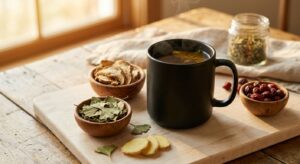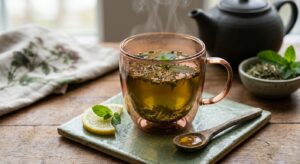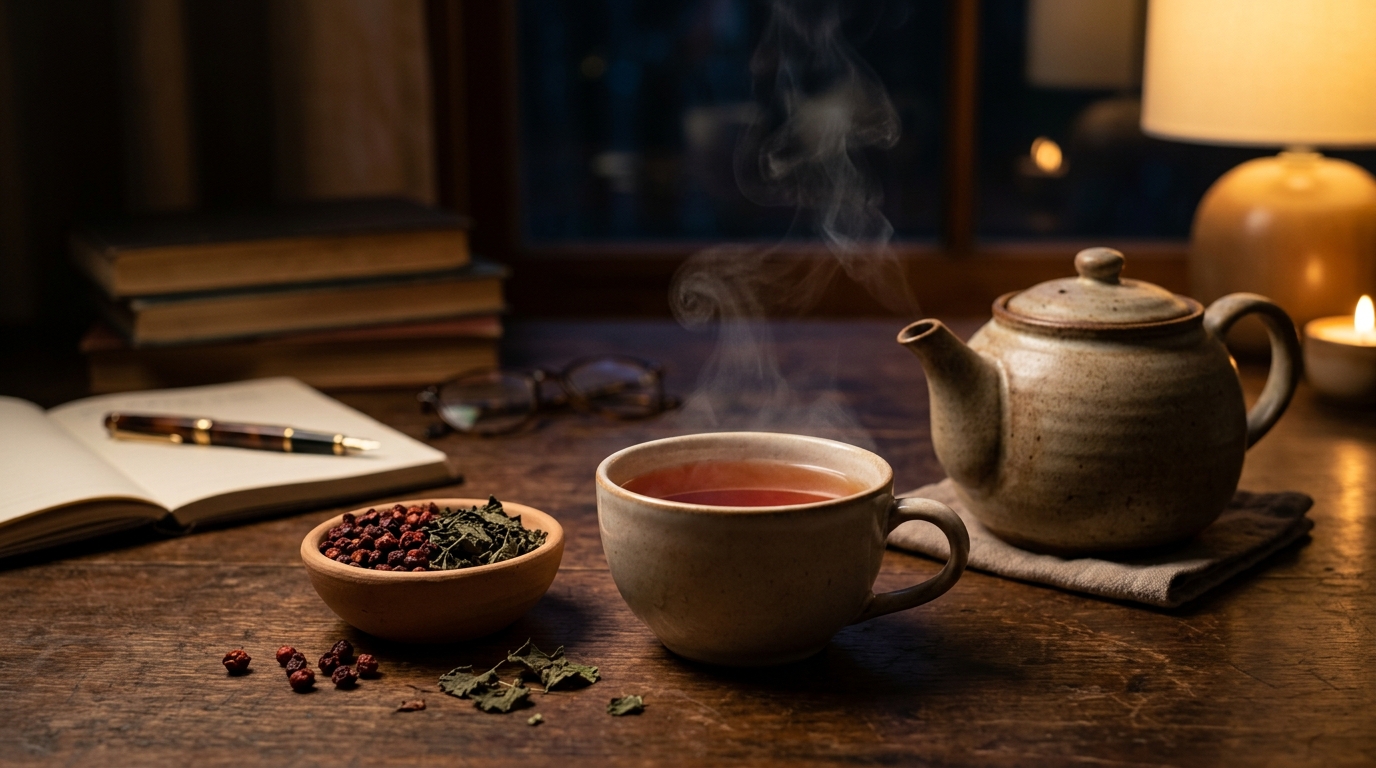
Schisandra chinensis, known in Mandarin as wu wei zi or “five-flavor fruit,” has been prized in Chinese medicine for over two thousand years. Its small crimson berries are said to carry all five flavors at once: sour, sweet, salty, bitter, and pungent. Hunters in the Russian Far East reportedly chewed the berries to sharpen their night vision and stave off fatigue during long tracking trips, and Soviet researchers in the mid-twentieth century studied schisandra extensively as an adaptogen, a substance thought to help the body resist stress.
Gotu kola (Centella asiatica) comes from a different tradition but a similar reputation. In Ayurveda it is called brahmi or mandukaparni and is considered a medhya rasayana, a rejuvenating tonic for the mind. Legend holds that Sri Lankan elephants, famed for their long memories, feast on its leaves, and the herb has long been taken by students and meditators to support concentration and a settled nervous system. Its mild, grassy leaves are also a staple in Southeast Asian cooking and drinks.
Brewed together, the two herbs make a remarkably balanced evening tea. Schisandra brings a bright, tart, ruby-colored base with a gentle, steady lift, while gotu kola adds a soft green, slightly bitter calm. The result suits night owls who need to stay mentally sharp after dark without reaching for coffee, and without wrecking the sleep that follows.
2
cups
Ingredients
- 2 tspdried schisandra berries
- 2 tspdried gotu kola leaf
- 480 mlwater (95°C / 203°F)
- —raw honey or maple syrup to taste (optional)
- —1 thin slice of fresh lemon or a few dried rose petals (optional)
How to Brew
Click on an item below to shop for the recommended items for this recipe on Amazon.
As an Amazon Associate, we earn from qualifying purchases.
- Measure the schisandra berries into a mortar or onto a cutting board and gently crush them with the back of a spoon until they just crack open. Do not grind them to a powder.
- Bring fresh water to a near boil, then let it rest for about 30 seconds so it sits near 95°C (203°F).
- Place the crushed schisandra and the gotu kola leaf into a teapot or large infuser basket and pour the hot water over the herbs.
- Cover the pot or mug with a saucer to trap the volatile aromatics and steep for 10 to 12 minutes. The longer steep draws out the berries’ tart, fruity character and balances the gotu kola.
- Strain into two mugs. Taste before sweetening, since the natural sourness softens beautifully with a small spoonful of honey or maple syrup.
- Sip slowly while you work. A second infusion of the same berries is possible with a slightly longer steep.
- Lightly crush the schisandra berries so they split open, then combine them with the gotu kola leaf in a glass jar.
- Pour 480 ml of cool filtered water over the herbs, stir once to submerge everything, and seal the jar.
- Let the jar sit on the counter for 30 minutes, then move it to the refrigerator and steep for 8 to 12 hours, or overnight.
- Strain through a fine mesh sieve or a coffee filter to remove all plant material, pressing the berries gently to release the last of the liquid.
- Serve over ice or straight from the jar. The cold tea will taste noticeably smoother and fruitier than the hot version. Keep refrigerated and drink within 48 hours.
- Lightly crush the schisandra berries and place them in a small saucepan with 500 ml of cold water.
- Bring the water to a gentle boil, then reduce the heat to low so it simmers softly. Cover with a lid and simmer for 15 minutes.
- Turn off the heat, add the gotu kola leaf directly to the hot liquid, cover again, and let everything steep for 5 minutes. Adding the leaf last keeps its gentle green flavor from turning bitter.
- Strain through a fine mesh sieve into a pitcher or mugs, pressing the berries lightly.
- Sweeten if desired. This stronger tea can also be diluted with a splash of hot water or chilled and served over ice as a concentrate.
Health Benefits
Schisandra has been shown in small human and animal studies to improve attention, reaction time, and mental performance under fatigue, while gotu kola is traditionally used to sharpen concentration. Evidence is promising but still modest.
Schisandra is classified as an adaptogen, and research suggests it may modulate stress-response pathways and reduce perceived fatigue. Gotu kola adds a calming, anxiolytic quality in preliminary studies.
The lignans and polyphenols in schisandra and the triterpenoids in gotu kola help neutralize free radicals, which supports overall cellular health during long, demanding days.
Schisandra lignans have a well-documented history of use for liver support in East Asia, and some clinical work shows they may help normalize liver enzymes, though more research is needed.
Gotu kola’s triterpenoids have been studied for improving microcirculation and vein health, which may contribute to a sense of alertness and well-being.
🧪 Key Bioactive Compounds
The Science Behind Schisandra
The standout compounds in schisandra are dibenzocyclooctadiene lignans such as schisandrin and gomisin A. These molecules concentrate in the berry and are the focus of most research on the plant. Studies suggest they influence liver detoxification enzymes and help cells resist oxidative stress, which may explain schisandra’s long reputation as a tonic that supports stamina and recovery. Its classification as an adaptogen reflects observations that it helps normalize the body’s stress response rather than simply stimulating it.
Gotu kola contributes a different class of compounds: pentacyclic triterpenoid saponins, chiefly asiaticoside and madecassoside. Laboratory and early clinical studies point to neuroprotective, anti-inflammatory, and mild anxiety-reducing effects, as well as improved circulation. Some trials in older adults and in people under stress report modest gains in memory and mood, though study sizes are small and results are mixed.
Combining the two is based largely on traditional logic rather than direct clinical trials of the pair. Schisandra offers a gentle, sustained lift and stress resilience, while gotu kola adds calm and circulatory support. Neither herb contains caffeine, which makes this blend attractive for evening focus: it supports alertness through stress adaptation rather than direct central nervous system stimulation, so it is less likely to interfere with falling asleep afterward.
Brewing Tips
- Always crush schisandra berries lightly before brewing. Whole berries release their flavor and lignans far more slowly.
- Keep gotu kola out of long, vigorous boils, since extended high heat can make it taste harshly bitter. Steep it or add it at the end of a decoction.
- Brew a larger batch of cold brew in the afternoon so a smooth, ready-made focus drink is waiting when your evening work begins.
- Drink this tea earlier in the evening rather than right at bedtime if you are sensitive, and see how your body responds before making it a nightly habit.
- Store dried schisandra and gotu kola in airtight, dark containers away from heat and light to protect their delicate compounds.