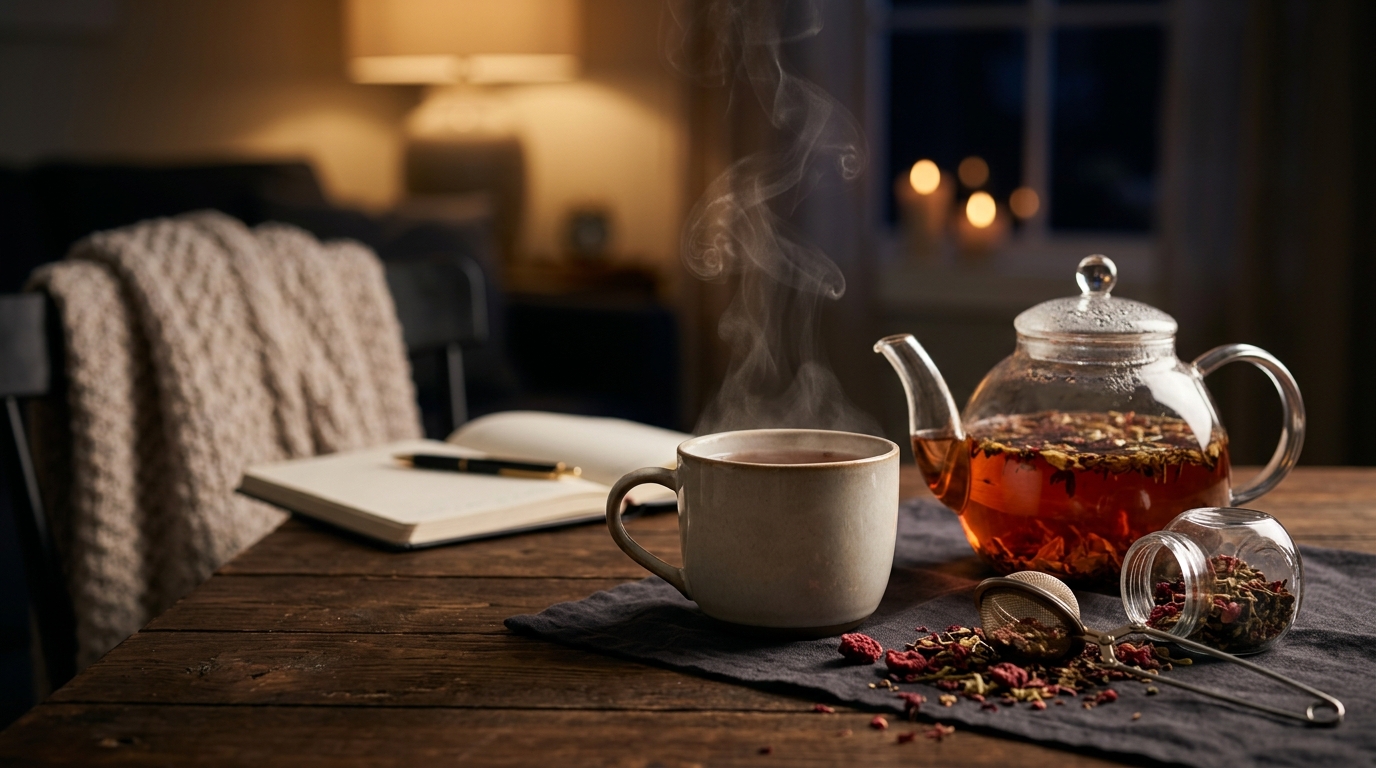
Long before it became a staple of modern herbal shelves, red raspberry leaf was a fixture in the kitchens and medicine cabinets of European village herbalists and midwives. The plant, Rubus idaeus, grows wild in hedgerows and woodland edges across Europe, North America, and Asia, and while the ruby berries were eaten fresh, the leaves were quietly gathered, dried, and brewed. Medieval herbals recommended the leaf for women’s complaints, and by the 18th and 19th centuries it was firmly established as the classic “woman’s herb,” offered to those preparing for childbirth, recovering afterward, or simply managing monthly cycles.
What makes red raspberry leaf special is its quiet, nourishing character. Unlike bold stimulating herbs, it works as a tonic: a gentle, repeated presence meant to be drunk over weeks and months rather than for a dramatic one-time effect. Herbalists describe it as a uterine tonic, valued for its astringent tannins and its generous supply of minerals including calcium, magnesium, potassium, and iron. This is why it so naturally suits a nightly ritual. A warm cup at the end of the day signals the body to slow down while delivering a soft, steady dose of plant nourishment.
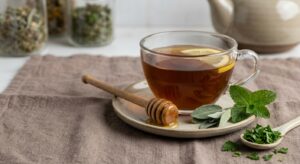
In the cup, the tea is wonderfully approachable. It tastes much like a mellow black tea without the caffeine, with a faintly sweet, grassy, slightly tannic finish and a whisper of berry in the aroma. It pairs easily with honey, lemon, or other gentle herbs, making it an easy habit to build. Whether you are drawn to it for menstrual comfort, general hormonal wellness, or simply the comfort of a quiet evening ritual, red raspberry leaf offers one of the most time-honored and approachable cups in the herbal tradition.
2
cups
Ingredients
- 2 tbspdried red raspberry leaf (cut and sifted)
- 480 mlwater (95°C / 203°F)
- —raw honey to taste (optional)
- —a squeeze of fresh lemon (optional)
How to Brew
Click on an item below to shop for the recommended items for this recipe on Amazon.
As an Amazon Associate, we earn from qualifying purchases.
- Bring fresh, filtered water to a boil, then let it rest for about 30 seconds so it settles near 95°C (203°F).
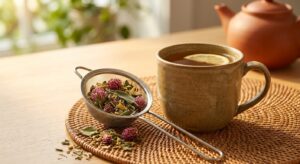
- Measure 2 tablespoons of dried red raspberry leaf into a teapot or large mug fitted with a fine mesh infuser. Leaves are bulky and light, so use a generous measure rather than a level teaspoon.
- Pour the hot water over the leaves, then immediately cover the pot or mug with a saucer or lid to trap the steam and aromatics.
- Steep for 10 to 15 minutes. Red raspberry leaf is a hardy leaf and benefits from a long infusion, which draws out its minerals and gives a fuller, rounder flavor.
- Strain, pressing the leaves gently against the infuser to release the last of the liquid. Stir in honey or lemon if desired.
- Sip slowly about an hour before bed, ideally in a dimly lit, quiet space to turn the cup into a genuine wind-down ritual.
- Add 3 tablespoons of dried red raspberry leaf to a clean 1-liter glass jar. The ratio is slightly higher than hot brew because cold water extracts more slowly.
- Pour in 1 liter of cool, filtered water and stir once to wet all of the leaves.
- Seal the jar and refrigerate for 8 to 12 hours, or overnight. There is no need to heat anything.
- Strain the tea through a fine mesh sieve or a nut milk bag into a clean pitcher, discarding the spent leaves.
- Taste and sweeten lightly if you wish. Serve over ice with a lemon wheel or a few fresh raspberries.
- Store in the refrigerator and drink within 48 hours for the best flavor and freshness.
- Place 1 ounce (about 30 g, roughly a large handful) of dried red raspberry leaf into a 1-liter glass jar.
- Pour boiling water over the leaves until the jar is full, leaving a little room at the top.
- Screw on the lid tightly and let the jar sit on the counter for 4 to 8 hours, or overnight, until the liquid is very dark and strong.
- Strain thoroughly through a fine sieve, pressing the leaves to extract all the liquid. The resulting concentrate will be much darker and more astringent than a standard cup.
- To serve, dilute roughly 1 part concentrate with 1 to 2 parts hot water for a warm evening cup, or with cold water and ice for a refreshing drink.
- Keep the concentrate refrigerated in a sealed jar and use within 2 to 3 days.
Health Benefits
Herbalists have long used red raspberry leaf to tone the uterus, and its tannins and alkaloids are thought to influence smooth muscle tension. Human evidence is limited and mixed, so it is best viewed as a supportive traditional tonic rather than a proven treatment.
Many women report that regular use eases cramping and heavy-feeling periods, likely through the combined effects of its astringent tannins and mineral content. Clinical research is sparse, so experiences vary from person to person.
A long-steeped infusion provides small but meaningful amounts of magnesium, calcium, potassium, and iron, along with polyphenols such as quercetin and ellagitannins that act as antioxidants.
The leaf’s tannins give it mild astringent properties traditionally used to calm loose stools and irritated digestive tissue. This is a long-standing folk use supported mainly by traditional practice.
Though not a sedative herb, the caffeine-free, warming nature of the tea makes it an ideal vehicle for a consistent wind-down routine, which itself supports relaxation and better sleep habits.
🧪 Key Bioactive Compounds
The Science Behind Red Raspberry Leaf
The reputation of red raspberry leaf rests on a combination of its tannins, flavonoids, and mineral content. The leaf is especially rich in ellagitannins such as sanguiin H-6 and lambertianin C, which are responsible for its astringent mouthfeel and show antioxidant and anti-inflammatory activity in laboratory studies. Flavonoids including quercetin and kaempferol add to this antioxidant profile, helping to neutralize reactive molecules that contribute to cellular stress.
The idea that red raspberry leaf tones the uterus comes largely from traditional use and a small body of animal and in vitro research. Early studies on isolated uterine tissue suggested that extracts could both stimulate and relax smooth muscle depending on the preparation, and an alkaloid called fragarine has often been credited with this effect, although it has not been well characterized. Human trials are limited. A small number of studies on late-pregnancy use have reported no serious safety concerns and possible modest effects on labor duration, but the evidence is not strong enough to draw firm conclusions.
Where the leaf shines most reliably is as a nourishing infusion. A strong, long-steeped cup delivers small amounts of magnesium, calcium, potassium, and iron, which support normal muscle and nerve function. While no single cup will replace a balanced diet, the cumulative effect of a daily mineral-rich tea, combined with the calming ritual of preparing and sipping it, is a sensible and low-risk way to support overall women’s wellness.
Brewing Tips
- Be patient and consistent. Red raspberry leaf is a tonic herb, so most people notice its effects after several weeks of regular use rather than after a single cup.
- Always steep it covered and for at least 10 minutes. A short steep produces a thin, flavorless tea that misses most of the minerals.
- Buy organic, cut-and-sifted leaf that is green to olive in color and smells fresh and grassy. Dull brown, dusty leaf is likely old and past its prime.
- Store dried leaf in an airtight jar away from light and heat, and use it within a year for the best flavor and potency.
- If the tea tastes too astringent for you, add a slice of lemon, a little honey, or blend it with mint, rose, or lemon balm.