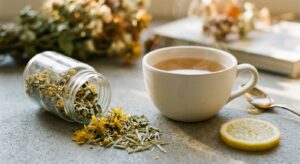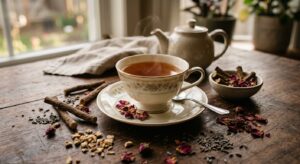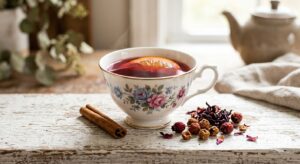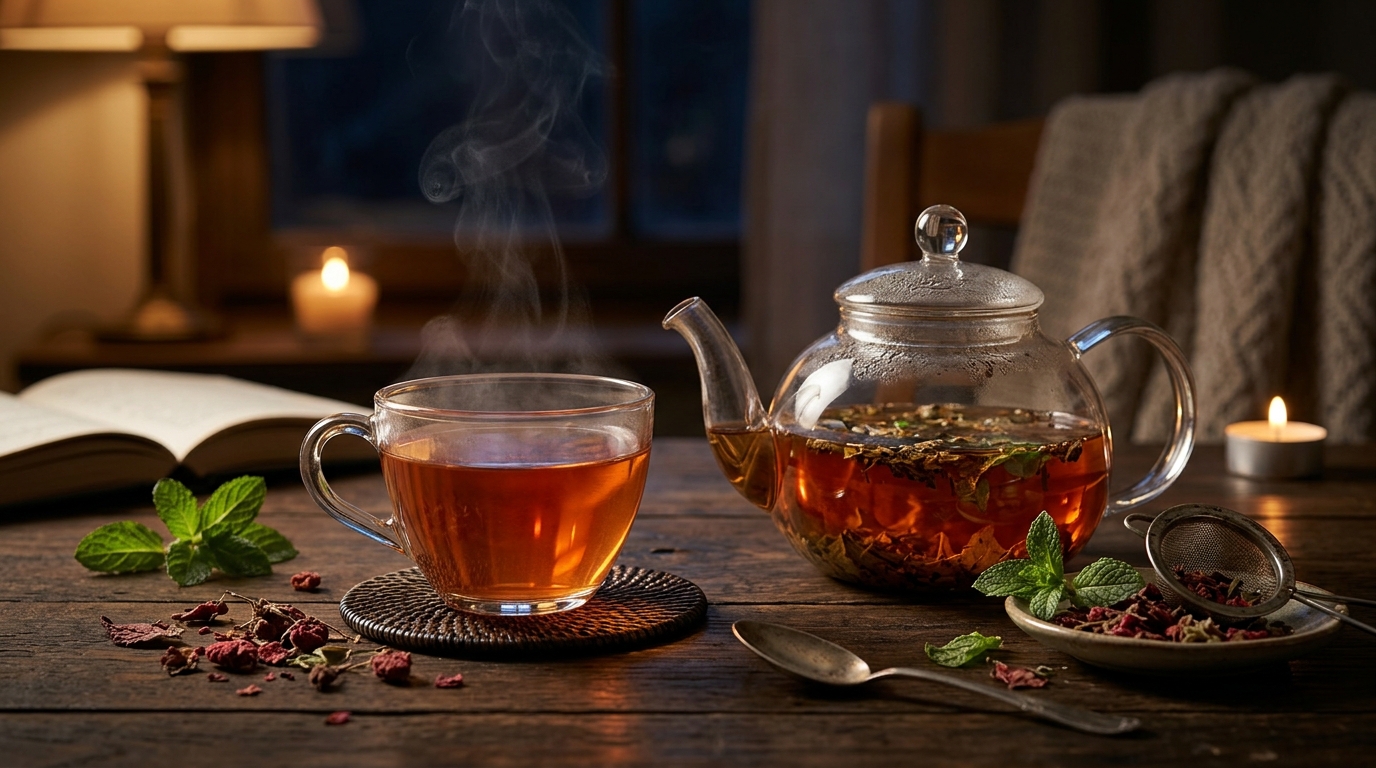
Red raspberry leaf (Rubus idaeus) has been brewed by women for generations. Herbalists in Europe and North America long prized it as a uterine tonic, offering it to women preparing for childbirth, easing monthly cramps, and supporting recovery after delivery. Folk names like ‘woman’s herb’ reflect just how deeply this humble leaf is woven into traditional women’s wellness. Despite coming from the same plant that gives us sweet summer berries, the leaf is a completely different experience: mild, slightly tannic, and reminiscent of a gentle black tea without the caffeine.
Peppermint (Mentha x piperita) brings a very different personality to the cup. Cultivated since ancient Egypt and Greece, it was used to calm upset stomachs, ease tension, and freshen the breath. Its cooling menthol and bright aroma lift the earthy, grassy character of raspberry leaf, turning a purely functional tonic into something you actually look forward to at the end of the day.
Together, the two herbs make a balanced evening blend. Raspberry leaf offers a nourishing, mineral-rich base traditionally associated with pelvic and uterine support, while peppermint soothes the digestive tract and relaxes tight muscles. Sipped nightly, this tea becomes a small ritual of care: warm, fragrant, and caffeine-free, and a gentle way to wind down.
2
cups
Ingredients
- 2 tbspdried red raspberry leaf
- 1 tbspdried peppermint leaf
- 480 mlwater (95°C / 203°F)
- —raw honey or maple syrup to taste (optional)
- —thin lemon slice (optional)
How to Brew
Click on an item below to shop for the recommended items for this recipe on Amazon.
As an Amazon Associate, we earn from qualifying purchases.
- Measure 2 tablespoons of dried red raspberry leaf and 1 tablespoon of dried peppermint into a teapot or large infuser basket. Give the leaves a gentle crush between your fingers to release their aromatics.
- Bring fresh water to a boil, then let it rest for about 30 seconds so it sits near 95°C (203°F).
- Pour the hot water over the herbs, making sure all the leaves are submerged. Cover the pot or mug with a saucer or lid to hold in the volatile oils.
- Steep for 10 to 15 minutes. Longer steeping extracts more of the tannins and minerals from the raspberry leaf, giving a stronger, more tonic cup. Ten minutes is balanced; fifteen is robust.
- Strain the leaves, divide between two mugs, and stir in honey or a thin slice of lemon if desired. Sip slowly about an hour before bed.
- Add 3 tablespoons of dried red raspberry leaf and 1.5 tablespoons of dried peppermint to a clean glass jar. This ratio is slightly higher than the hot brew because cold water extracts more slowly.
- Pour 1 liter of cold, filtered water over the herbs and stir gently with a long spoon to wet all of the leaves.
- Seal the jar and refrigerate for 8 to 12 hours, or overnight. There is no need to shake or stir during steeping.
- Strain the tea through a fine mesh sieve or a cloth-lined strainer into a clean pitcher, pressing lightly on the leaves to release any remaining liquid.
- Serve over ice with a slice of lemon or a sprig of fresh mint. Store any leftovers in the refrigerator for up to 2 days.
- Place 1 ounce (about 28 g, roughly a loosely packed cup) of dried red raspberry leaf and a small handful of dried peppermint into a 1-liter heat-safe glass jar.
- Bring water to a full rolling boil and pour it over the herbs, filling the jar to within a couple of centimeters of the top.
- Immediately screw on the lid and let the jar stand at room temperature. Allow it to steep for at least 4 hours, or overnight for a very dark, concentrated infusion.
- Strain the infusion through a fine sieve, squeezing the spent leaves to capture every drop. The liquid should be deep reddish-brown and noticeably stronger than a standard cup.
- Pour a cup (about 240 ml) and enjoy it warm or at room temperature. Refrigerate the remainder and finish it within 24 hours, since mineral-rich infusions spoil quickly.
Health Benefits
Raspberry leaf has a long traditional use for menstrual cramps, and its tannins and mineral content may help calm uterine muscle tension. Human clinical evidence is limited, so it is best viewed as a gentle supportive herb rather than a treatment.
Herbalists have long used raspberry leaf as a uterine tonic, and small studies suggest it may influence smooth muscle activity in the pelvic region. It is often discussed in the context of late pregnancy, but this should only be done under professional guidance.
Menthol in peppermint relaxes the smooth muscle of the gut and is well supported by clinical research for easing cramping, gas, and symptoms of irritable bowel syndrome. This is especially welcome for the bloating many women experience around their cycle.
As a long-steeped infusion, raspberry leaf delivers useful amounts of calcium, magnesium, potassium, and trace iron. It is a pleasant caffeine-free way to add minerals to an evening routine.
The warm ritual, the calming aroma of peppermint, and the absence of caffeine make this a soothing way to unwind. While not a sedative herb, it supports a sense of calm that helps prepare the body for rest.
🧪 Key Bioactive Compounds
The Science Behind Red Raspberry Leaf
The reputation of red raspberry leaf rests largely on its chemistry. The leaf is rich in ellagitannins, particularly sanguiin H-6 and lambertianin C, which give the tea its dry, astringent quality and contribute antioxidant activity. It also contains flavonoids such as quercetin and kaempferol glycosides, along with a small alkaloid called fragarine, which early animal studies suggested may relax or tone smooth muscle. Laboratory research has shown that raspberry leaf extracts can influence uterine and intestinal muscle contractions, though the picture is complex and the extracts can both stimulate and relax tissue depending on concentration and context.
Human evidence is more modest. A few small studies and observational reports have examined raspberry leaf in the context of late pregnancy and labor, with mixed or inconclusive findings, and there is little rigorous clinical research on its effects for period pain specifically. For this reason, it is most honestly described as a traditional nourishing herb with promising but still emerging evidence, valued as much for its mineral content and ritual comfort as for any single measured effect.
Peppermint, by contrast, has a stronger research base. Menthol acts on calcium channels in smooth muscle cells, producing an antispasmodic effect that has been demonstrated in clinical trials of peppermint oil for irritable bowel syndrome. In tea form the dose is far lower, but the aroma and mild muscle-relaxing effect still make it a useful companion to raspberry leaf. Together, the two herbs create a synergy of tonic and soother: one nourishing and toning, the other cooling and calming.
Brewing Tips
- Cover your mug or teapot while steeping so the menthol and aromatic oils in the peppermint stay in your cup instead of drifting off as steam.
- Raspberry leaf rewards a long steep. If your tea tastes thin, extend the time to 15 minutes rather than adding more herb.
- Buy organic, vibrant green-brown leaves that smell fresh and slightly hay-like. Pale, dusty, or odorless leaf is likely old and will make a flat cup.
- Store dried herbs in airtight glass jars away from light and heat, and use within 12 months for the best flavor and potency.
- Make a double batch of the strong infusion in the evening and refrigerate half for a chilled glass the next afternoon.