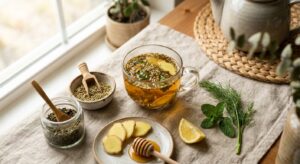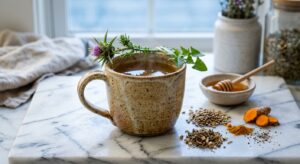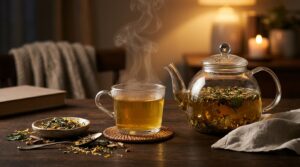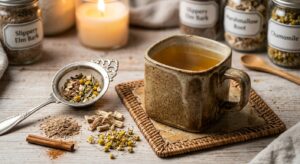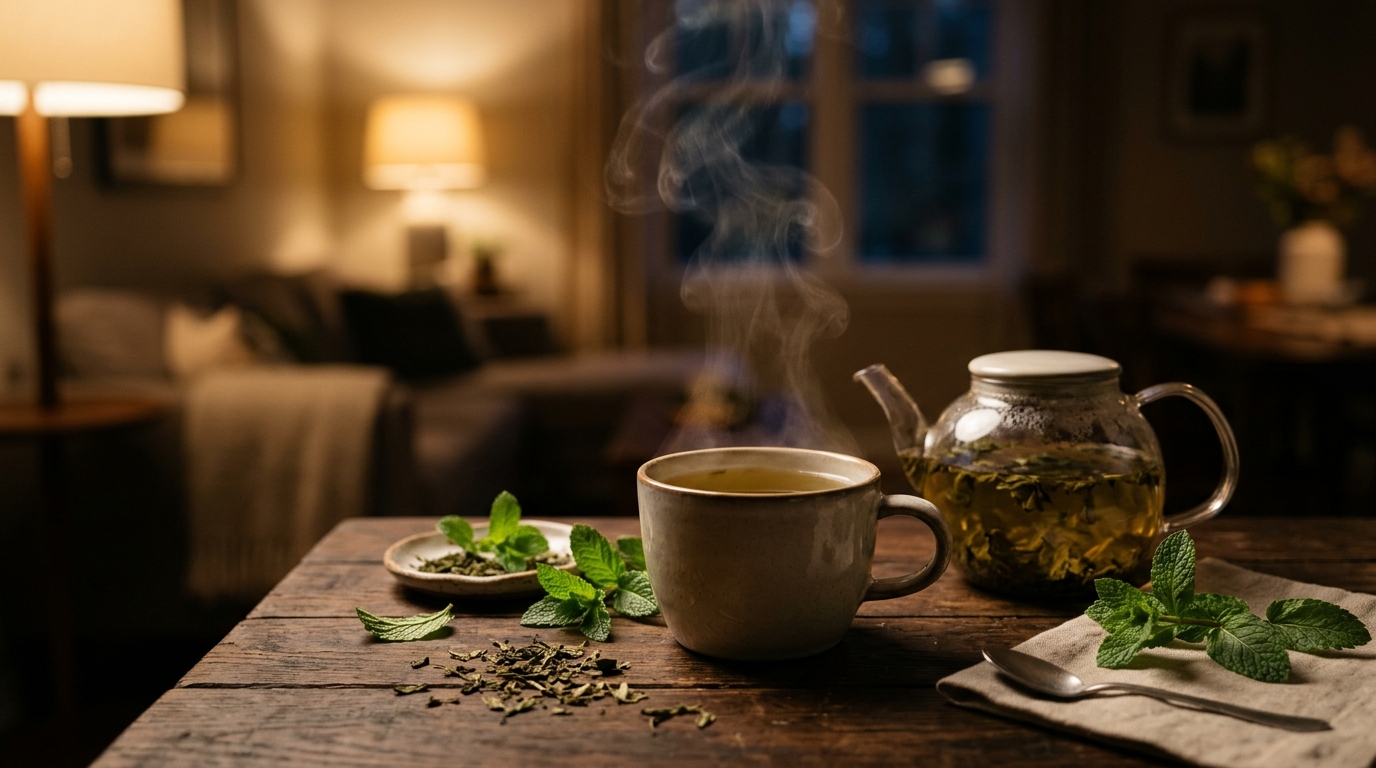
Few herbs have earned their place at the dinner table quite like peppermint. Ancient Egyptians placed dried leaves in tombs, and the Greeks and Romans wove it into crowns and scattered it across banquet halls, partly for its fragrance and partly because they noticed how a few leaves chewed or steeped after a feast made the body feel settled. Peppermint itself is a natural hybrid of watermint and spearmint, first formally described in England in the late 17th century, and it quickly became a cornerstone of European apothecary practice.
The tradition of a minty digestif lives on across many cultures. Moroccan households pour sweet mint tea after meals as a gesture of hospitality, while in Europe, peppermint infusions are still the first thing offered to someone who has overindulged. The logic is sound: the leaves are rich in volatile oils, especially menthol, that act directly on the smooth muscle of the digestive tract, helping it relax when it is tight, crampy, or overworked.
What makes peppermint so special as an evening ritual is the way it works on two levels at once. Physically, it soothes the gut. Sensorially, the cool, bright aroma signals the end of the meal and the start of a slower, quieter part of the night. Making the tea becomes a small ceremony: the kettle, the fragrant steam, the first sip that feels like a deep breath. It is caffeine-free, calorie-free, and gentle enough to drink most evenings.
2
cups
Ingredients
- 2 tspdried peppermint leaves (or 1 tbsp fresh leaves, lightly bruised)
- 480 mlwater (95°C / 203°F)
- —a slice of fresh lemon (optional)
- —raw honey to taste (optional)
How to Brew
Click on an item below to shop for the recommended items for this recipe on Amazon.
As an Amazon Associate, we earn from qualifying purchases.
- Measure 1 teaspoon of dried peppermint leaves per 240 ml cup. If you are using fresh leaves, use about 1.5 teaspoons per cup and gently roll them between your palms to release their oils.
- Heat fresh, filtered water until it just comes to a boil, then let it rest for about 30 seconds so it settles near 95°C (203°F). Fully boiling water can drive off some of the delicate volatile oils.
- Place the leaves in a teapot or infuser and pour the hot water over them. Cover the vessel immediately with a lid or saucer. This is the most important step, because it traps the aromatic menthol vapors that would otherwise escape with the steam.
- Steep for 5 to 7 minutes. Five minutes gives a lighter, sweeter cup; seven minutes gives a stronger, more medicinal one.
- Remove the infuser or strain out the leaves, then sip slowly while the tea is still warm. Add a lemon slice or a little honey if you like, but try the first few sips plain to appreciate the cooling character.
- Combine 2 tablespoons of dried peppermint leaves with 1 liter of cold, filtered water in a glass jar or pitcher. The ratio is higher than hot brew because cold water extracts more slowly.
- Stir gently for a few seconds to wet all the leaves, then cover the jar with a lid.
- Place the jar in the refrigerator and let it steep for 8 to 10 hours, or overnight. Avoid leaving it beyond 12 hours, as the flavor can turn grassy and flat.
- Strain the tea through a fine mesh strainer or a nut milk bag to remove all leaf particles.
- Serve over ice or straight from the fridge in a chilled glass. Store any extra in a sealed container for up to 3 days.
- Fill a heatproof pitcher or large measuring jug with 240 ml of water heated to 95°C (203°F) and add 2 tablespoons of dried peppermint leaves, which is double the usual hot-brew strength to compensate for dilution by ice.
- Cover tightly and steep for 4 minutes. This shorter time keeps the tea bright and prevents the bitterness that can come from over-steeping at a stronger ratio.
- Strain the hot concentrate immediately into a second pitcher, pressing lightly on the leaves to extract the last of the oils.
- Fill two tall glasses with ice and pour the hot concentrate directly over it. The rapid cooling preserves aroma and prevents cloudiness.
- Top up with a splash of cold water if needed, garnish with a fresh mint sprig and a thin lemon wheel, and serve right away.
Health Benefits
Menthol relaxes the smooth muscle of the gastrointestinal tract, which allows trapped gas to pass more easily. Peppermint’s carminative reputation is supported by both centuries of traditional use and clinical research.
The antispasmodic action of menthol helps reduce intestinal cramps, and peppermint oil has been studied with promising results for symptoms of irritable bowel syndrome. Tea is gentler and less concentrated than oil, but offers a mild version of the same effect.
Peppermint may stimulate bile flow, which helps the body break down dietary fats. This is one reason it feels especially welcome after a heavy or fatty dinner.
The aroma and cooling action of peppermint have a calming effect on queasiness, and aromatherapy studies suggest the scent alone can ease mild nausea.
Peppermint is naturally caffeine-free, and the ritual of sipping a warm, fragrant cup encourages a slower pace at the end of the day, which supports the body’s shift toward rest.
🧪 Key Bioactive Compounds
The Science Behind Peppermint
The digestive reputation of peppermint rests largely on its essential oil, which makes up roughly 1 to 3 percent of the dried leaf and is dominated by menthol and menthone. Menthol acts as a calcium channel blocker in the smooth muscle cells lining the gut. By limiting the flow of calcium into these cells, it reduces their ability to contract forcefully, which is why peppermint is considered antispasmodic. This mechanism has been demonstrated in laboratory studies and forms the basis for the use of enteric-coated peppermint oil in treating irritable bowel syndrome.
Brewed tea delivers a gentler dose than concentrated oil, since only a portion of the volatile compounds make it into the cup. That is exactly why covering the cup during steeping matters: menthol is highly volatile and escapes readily with the steam. Capturing it under a lid means more of the active aromatic fraction ends up in your drink rather than floating away.
Beyond the essential oil, peppermint leaf is rich in water-soluble polyphenols, particularly rosmarinic acid, luteolin, and eriocitrin. These compounds contribute antioxidant and anti-inflammatory activity and are extracted readily in hot water. Together, the volatile oils and the polyphenols give peppermint tea a layered effect: the oils work quickly on muscle tension and gas, while the polyphenols offer subtler, longer-term support. While more human research on tea specifically would be welcome, the combination of traditional use and mechanistic evidence makes a strong case for its place in an evening routine.
Brewing Tips
- Always cover your cup or teapot while steeping to keep the volatile menthol from escaping with the steam.
- Buy whole or coarsely cut dried leaves rather than fine powder in bags, since larger pieces retain more essential oil and taste fresher.
- Gently bruise fresh mint leaves before brewing by clapping them between your hands or rolling them, which ruptures the oil glands and boosts flavor.
- Wait about 20 to 30 minutes after finishing dinner before drinking the tea so it can work as the body begins digesting.
- Store dried peppermint in an airtight, opaque container away from heat and light, and use it within a year for the best aroma.