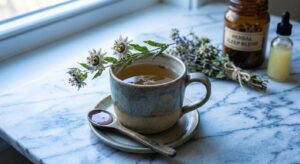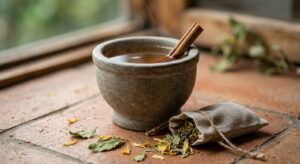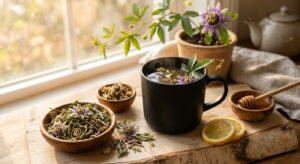
Mimosa bark, sometimes sold as he huan pi in Chinese herbalism, comes from Albizia julibrissin, the feathery, pink-flowered Persian silk tree. In Traditional Chinese Medicine the bark is known as the ‘collective happiness bark’ and the flowers (he huan hua) as the ‘collective happiness flower’. Both have been used for centuries to settle the Shen, the spirit, and to relieve the heaviness that follows grief, worry, and emotional strain. The tree folds its leaves at dusk, a daily rhythm that herbalists have long linked with its calming, evening-oriented character.
Many modern readers meet this herb through Ayurveda-inspired evening rituals, where bitter, grounding barks are simmered into warm brews to mark the transition from busy day to quiet night. It is worth being honest here: Albizia julibrissin is a staple of Chinese materia medica rather than a classical Ayurvedic herb, and its mood-lifting reputation comes primarily from the TCM tradition. The Ayurvedic framing is a contemporary blend of practice, where the slow simmering, the quiet cup, and the intention of unwinding echo Ayurvedic evening routines. A related species, Albizia lebbeck (shirisha), is the one with genuine Ayurvedic roots, used there for allergic and respiratory conditions.
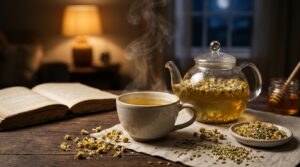
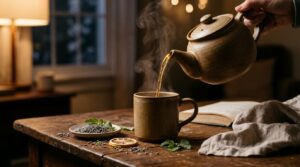
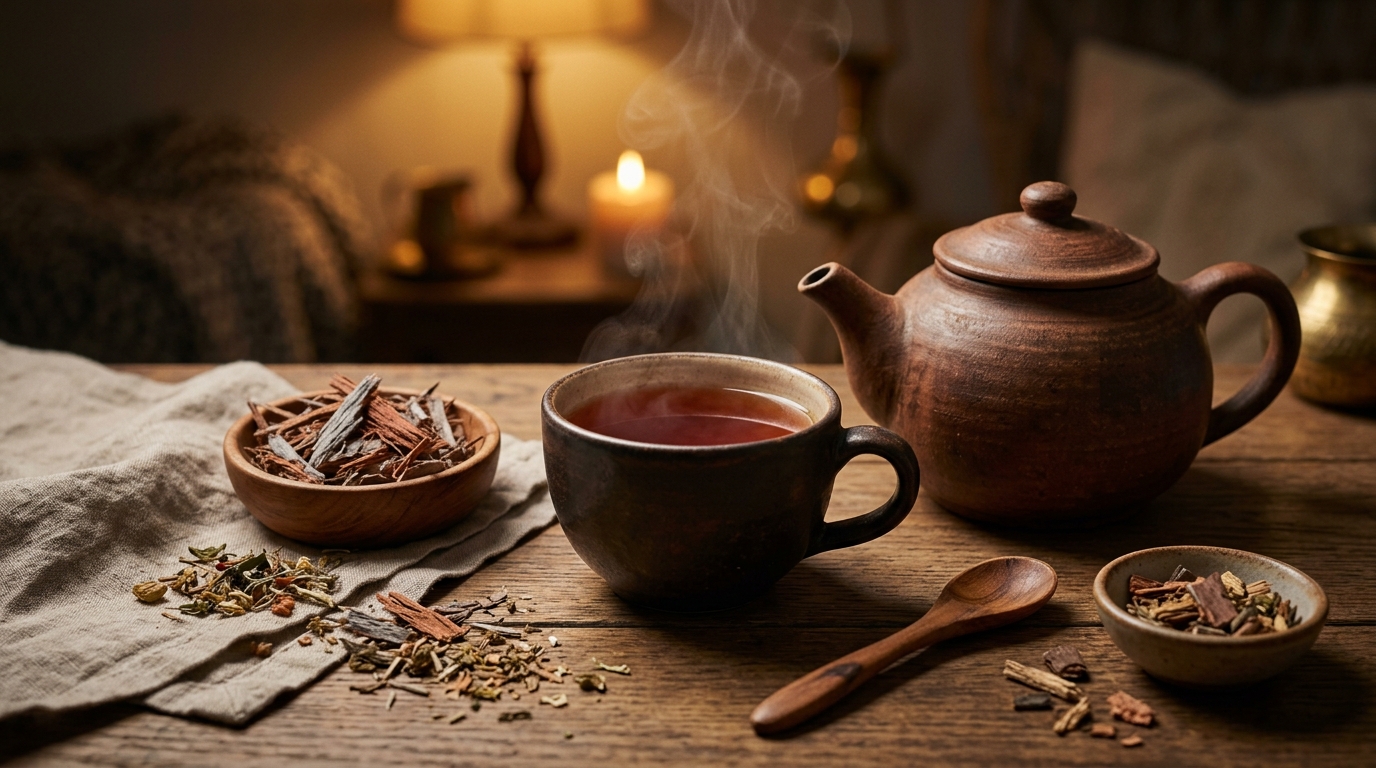
In the cup, mimosa bark offers a mellow, woody, faintly bitter flavor with a subtle sweetness that lingers. It is not a dramatic tea. Its charm lies in the ritual: a patient simmer, a warm mug held in both hands, and a slow sip as the evening settles. Many people pair it with a pinch of cinnamon or a spoonful of honey to round out its gentle bitterness.
2
cups
Ingredients
- 2 tbspdried mimosa bark (he huan pi), broken into small pieces
- 500 mlfiltered water
- —1 small cinnamon stick (optional)
- —raw honey or maple syrup to taste (optional)
How to Brew
Click on an item below to shop for the recommended items for this recipe on Amazon.
As an Amazon Associate, we earn from qualifying purchases.
- Rinse the dried bark pieces briefly under cool running water to remove any dust, then add them to a small saucepan with 500 ml of filtered water.
- If using a cinnamon stick, add it now. Bring the water to a boil over medium-high heat, then immediately reduce to the lowest simmer.
- Cover the pot with a lid, leaving a small gap for steam to escape, and simmer gently for 15 to 20 minutes. The water should reduce slightly and turn a pale amber.
- Remove the pot from the heat and let it rest, covered, for 5 minutes so the flavors settle and mellow.
- Strain through a fine mesh sieve into two mugs, pressing lightly on the bark to release the last of the liquid.
- Sweeten with a little honey if you like, and sip slowly about an hour before bed.
- Lightly crush 2 tablespoons of dried mimosa bark with the back of a spoon or a mortar and pestle to expose more surface area.
- Place the crushed bark in a clean glass jar and pour over 500 ml of cool filtered water. Stir once to submerge the pieces.
- Seal the jar and leave it on the counter for 1 hour, then transfer it to the refrigerator.
- Let it steep in the fridge for 10 to 12 hours, shaking the jar gently once or twice if you remember.
- Strain through a fine mesh sieve or a coffee filter into a clean glass or bottle, discarding the bark.
- Serve over ice or at cool room temperature, and drink within 48 hours. Add a thin slice of orange or a drizzle of honey if desired.
- Add 4 tablespoons of dried mimosa bark to a heavy-bottomed pot with 750 ml of filtered water, which is a higher bark-to-water ratio than the standard hot brew.
- Bring to a boil, then reduce to the lowest possible heat so the surface barely trembles.
- Simmer uncovered for 40 to 45 minutes, until the liquid has reduced by about one third and turned a deep amber.
- Strain through a fine sieve into a clean glass jar, pressing the bark gently to extract every drop of liquid.
- Cool to room temperature, seal, and refrigerate for up to 4 days.
- To serve, pour about 100 ml of concentrate into a mug and top with 200 ml of freshly boiled water. Stir in honey or a pinch of cinnamon to taste.
Health Benefits
Traditionally used in Chinese medicine to ease low mood and emotional constraint. Animal studies on julibrosides and flavonoids suggest antidepressant-like effects, though human clinical trials remain limited.
Compounds such as quercitrin have shown anxiolytic activity in preclinical models, which aligns with the bark’s long use for calming a worried mind.
As part of a wind-down ritual, the bark’s gentle sedative qualities and the calming act of brewing may help prepare the body for sleep. Evidence is primarily traditional and preclinical.
The bark is rich in flavonoids and saponins with measurable antioxidant activity, which may help counter oxidative stress linked to chronic tension.
In TCM, mimosa bark is a classic remedy for the heaviness that follows grief and prolonged worry, and it is often used during periods of emotional stress.
🧪 Key Bioactive Compounds
The Science Behind Mimosa Bark
The mood-supportive reputation of mimosa bark rests largely on two families of compounds: triterpenoid saponins (notably the julibrosides) and flavonoids (such as quercitrin, quercetin, and isoquercitrin). In rodent studies, extracts of Albizia julibrissin bark and its isolated flavonoids have shown anxiolytic and antidepressant-like effects, with some research suggesting an influence on serotonergic and GABAergic signaling pathways, the same neurochemical systems targeted by many calming and mood-regulating therapies.
Quercitrin in particular has been studied for its ability to reduce anxiety-like behavior in animal models, and the flavonoids as a group contribute antioxidant and anti-inflammatory activity that may protect neural tissue from stress-related damage. Julibrosides have also drawn interest for their potential neuroprotective and mood-modulating properties, although much of this work is still at the laboratory stage.
It is important to be clear about the limits of the evidence. Most data come from animal and in vitro studies, and well-controlled human trials on mimosa bark tea are scarce. The strongest support for its use remains its centuries-long place in traditional Chinese medicine. This makes it a promising, time-honored herb for evening calm, but not a proven treatment for any mood or sleep disorder.
Brewing Tips
- Always simmer rather than steep: the bark is hard and woody, and a quick infusion will taste thin and weak.
- Break or lightly crush the bark pieces before brewing to improve extraction, especially for cold brew.
- Drink your cup about an hour before bed and pair it with dim lighting and a screen-free routine to make the most of the ritual.
- Buy dried bark from a trusted supplier that identifies it as Albizia julibrissin (he huan pi) to be sure of what you are brewing.
- Start with a weaker cup the first few evenings to see how your body responds before moving to a stronger decoction.