Black cohosh (Actaea racemosa, formerly Cimicifuga racemosa) is a tall, feathery perennial that grows in the shaded hardwood forests of eastern North America. Its tall spires of creamy white flowers earned it the folk names bugbane and black snakeroot, while the dark, knotted rhizome beneath the soil is the part used in herbal medicine. Long before European settlers arrived, Indigenous peoples including the Cherokee, Iroquois, and Algonquin used the root for women’s health concerns, rheumatic aches, and during and after childbirth.
By the nineteenth century, black cohosh had entered American Eclectic medicine and was sold as a tonic for what were then called female complaints. In Germany, a standardized extract has been used for decades to ease menopausal symptoms, and the plant is now one of the most studied herbs in women’s midlife health. Today it is best known for helping with hot flashes, night sweats, and the restless sleep that often follows them.
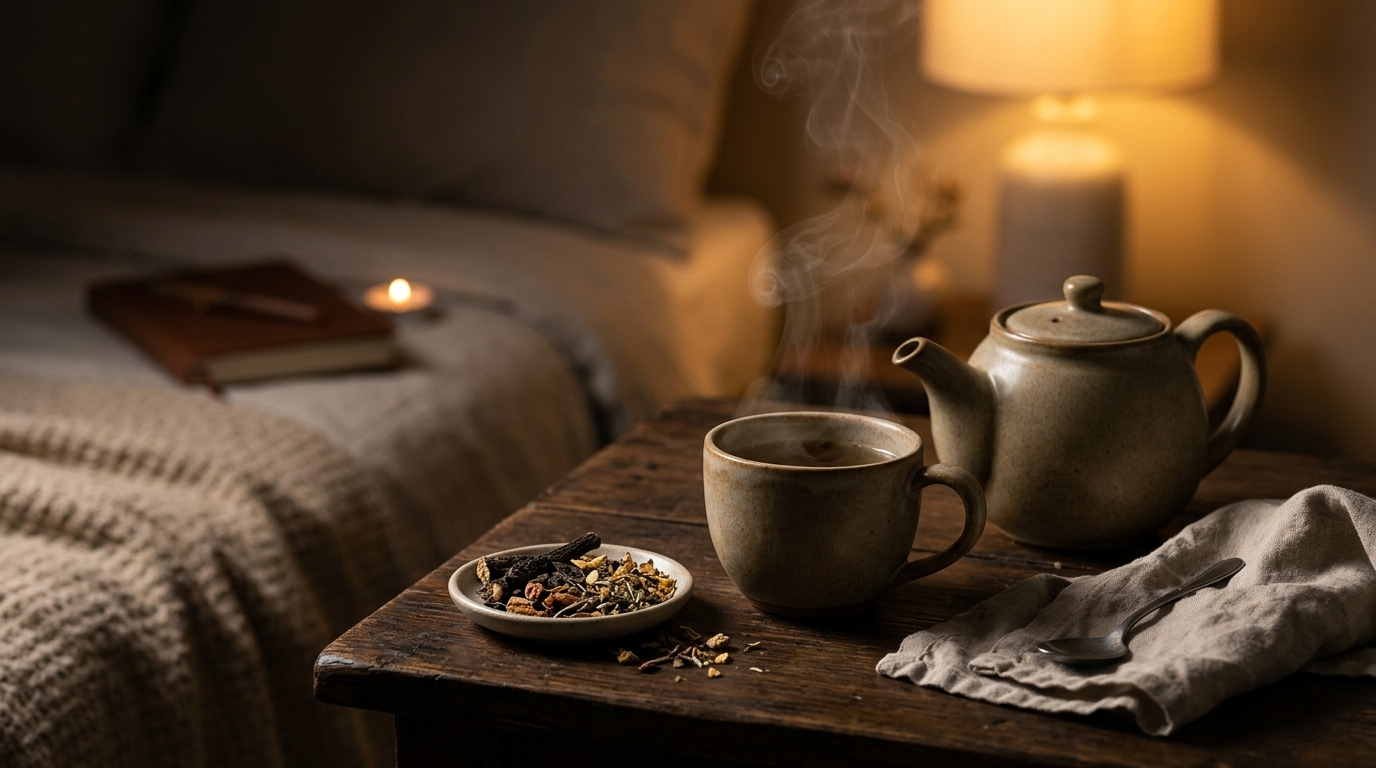
An evening cup is a sensible way to work with this herb. Sipped slowly in the hour before bed, black cohosh tea becomes both a targeted botanical and a calming ritual, a signal to the body that the day is ending. The flavor is deep, bittersweet, and woody, so it pairs best with gentle companions that soften its edges without distracting from its purpose.
2
cups
Ingredients
- 2 tspdried black cohosh root, cut and sifted
- 480 mlfiltered water
- 1 tspdried lemon balm leaf (optional, to soften the bitterness)
- 1 slicefresh ginger (optional, for warmth)
- —raw honey or a splash of oat milk to taste (optional)
How to Brew
Click on an item below to shop for the recommended items for this recipe on Amazon.
As an Amazon Associate, we earn from qualifying purchases.
- Measure 2 teaspoons of cut and sifted dried black cohosh root into a teapot or a large mug fitted with a fine mesh infuser. If using lemon balm or ginger, add them now.
- Bring filtered water to a full boil, then let it rest for about 30 seconds so it sits just off the boil. Roots and rhizomes tolerate hotter water than delicate leaves.
- Pour 240 ml of the hot water over the herbs, enough to submerge them fully. Cover immediately with a lid or saucer to trap the aromatic vapors.
- Steep for 10 to 15 minutes. A longer steep gives a darker, more bitter cup, so start at 10 minutes and adjust to your taste.
- Strain thoroughly, pressing the herbs gently against the strainer to extract the last of the liquid. Sweeten lightly if desired.
- Drink warm, slowly, about 45 to 60 minutes before bed, in a dim and quiet space.
- Add 3 teaspoons of dried black cohosh root and 1 teaspoon of dried lemon balm to a clean glass jar. This is a slightly stronger ratio than the hot brew.
- Pour 500 ml of cool filtered water over the herbs and stir once to wet everything evenly.
- Seal the jar and let it sit on the counter for 30 minutes, then move it to the refrigerator.
- Steep in the refrigerator for 8 to 10 hours, ideally overnight, giving the jar a gentle shake once or twice if you pass by.
- Strain through a fine mesh sieve or a layer of muslin into a clean bottle or glass.
- Serve chilled over a few ice cubes in the early evening, or pour a portion and warm it gently on the stove without boiling. Finish within 48 hours.
- Combine 2 teaspoons of dried black cohosh root with 480 ml of cold filtered water in a small stainless steel or enamel saucepan. Starting with cold water helps draw compounds out gradually.
- Add a thin slice of fresh ginger if you like warmth, and bring the pot slowly to a gentle boil over medium heat.
- Reduce the heat to low and cover. Simmer for 15 minutes, keeping the surface barely bubbling, until the liquid reduces by roughly a quarter.
- Remove from the heat, stir in 1 teaspoon of dried lemon balm if using, replace the lid, and let the decoction rest for 10 minutes.
- Strain through a fine mesh strainer into a warmed mug, pressing the herbs lightly to release the remaining liquid.
- Sip slowly while warm. Any leftover decoction can be refrigerated for up to 24 hours and gently reheated.
Health Benefits
Several clinical trials and meta-analyses suggest black cohosh can reduce the frequency and severity of vasomotor symptoms in some women, likely through serotonergic and thermoregulatory pathways rather than direct estrogen activity. Results are mixed across studies, so individual response varies.
By reducing nighttime temperature spikes and waking episodes, black cohosh may indirectly improve sleep quality in menopausal women. The evening tea ritual itself also encourages a calming wind-down.
Some studies report modest improvements in mood, anxiety, and irritability during the menopausal transition, possibly via effects on serotonin signaling.
Traditionally used for muscle and joint aches, black cohosh contains phenolic acids with demonstrated anti-inflammatory activity in laboratory research, though human evidence for this use is limited.
Because current evidence suggests black cohosh does not act as a classic estrogen, many women explore it as a plant-based approach to symptom relief, ideally in consultation with a healthcare provider.
🧪 Key Bioactive Compounds
The Science Behind Black Cohosh
Black cohosh has been the subject of decades of research, and its mechanism is more nuanced than early assumptions suggested. For years it was described as a phytoestrogen, but modern studies indicate it does not bind strongly to estrogen receptors or meaningfully stimulate estrogen-responsive tissue. Instead, researchers now believe its triterpene glycosides and phenolic acids act on the central nervous system, particularly through serotonin, dopamine, and opioid receptor pathways involved in the brain’s temperature-regulating center in the hypothalamus.
This hypothalamic action is key to understanding why black cohosh may help with night sweats. During menopause, falling estrogen narrows the body’s thermoneutral zone, so small rises in core temperature trigger an exaggerated cooling response: flushing, sweating, and waking. By influencing neurotransmitter signaling in this region, black cohosh may help widen that comfort zone and soften the response.
Clinical evidence is encouraging but not uniform. Some randomized trials and reviews show meaningful reductions in hot flash frequency and severity, while others find results similar to placebo. Differences in extract standardization, dosage, and study design likely explain much of this variation. It is also worth noting that most trials use concentrated, standardized extracts rather than tea, so a home infusion delivers a milder and less predictable dose. Tea is best viewed as a gentle supportive ritual rather than a precise, clinical-strength treatment.
Brewing Tips
- Choose a reputable supplier and look for cut and sifted root labeled with the botanical name Actaea racemosa (or Cimicifuga racemosa) to ensure you are getting the correct species.
- Drink your cup 45 to 60 minutes before bed so the warmth and ritual help you wind down, and keep a small glass of cool water nearby for the night.
- Track your symptoms in a simple journal for two to four weeks, noting night sweats and sleep quality, so you can tell whether the tea is genuinely helping.
- Store dried root in an airtight glass jar away from light and heat, and replace it after about a year, as potency fades over time.
- Be patient: most people need several weeks of consistent use to notice any change, and the herb is not a quick fix.