Long before it became the enemy of tidy lawns, the dandelion was a respected medicinal plant. Its name comes from the French dent de lion, or lion’s tooth, a nod to the jagged leaves. Arab physicians of the 10th and 11th centuries wrote about it, Welsh herbalists recorded it in the Myddfai texts, and European folk medicine treasured it as a spring tonic. In nearly every tradition, the root was the part reached for when digestion, appetite, or the liver needed attention.
The root is where the plant stores its bitter principles, and bitterness is the point. Traditional herbalists have long understood that bitter tastes awaken the digestive system. On the tongue, they prompt the body to release saliva, gastric juices, and bile, preparing the gut for the work of breaking down food. A cup after dinner follows the old European custom of the digestif, a bitter drink taken at the end of a meal to settle the stomach.
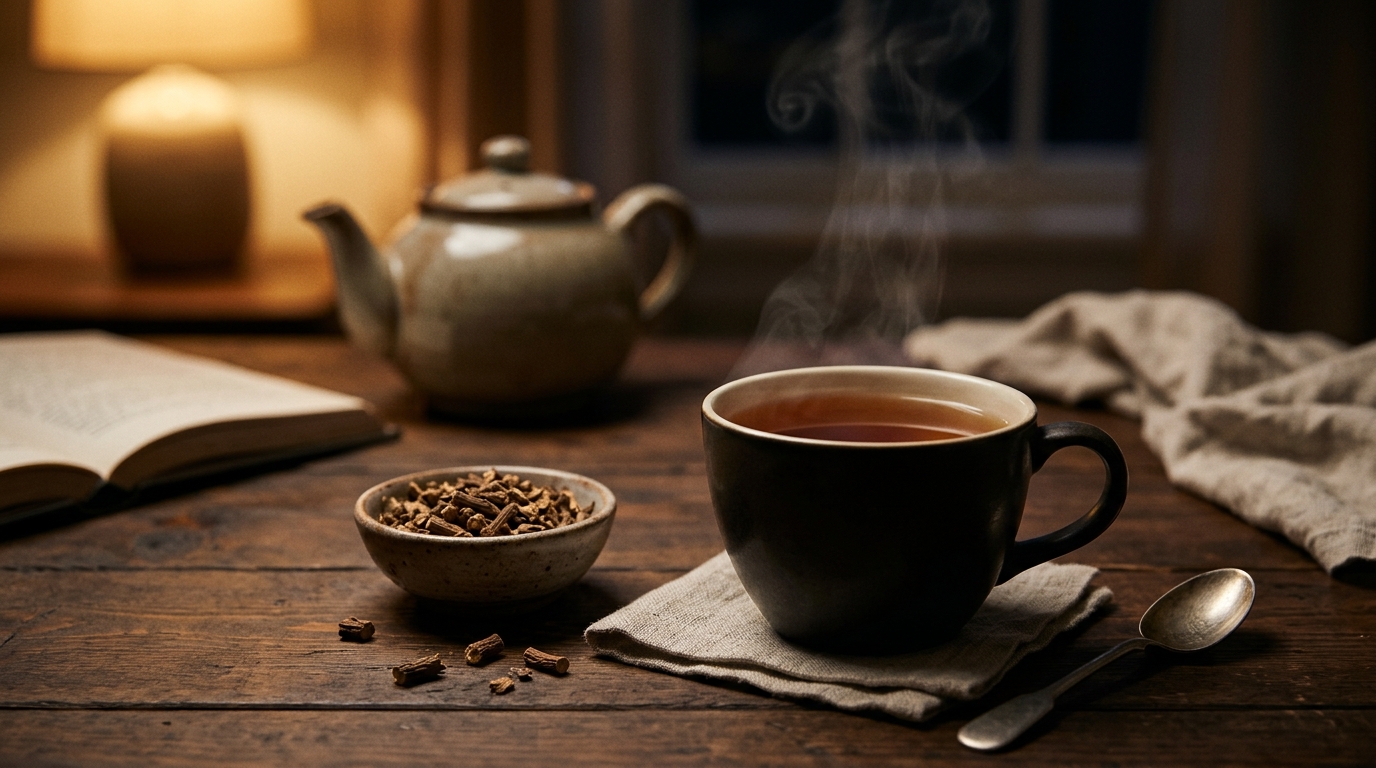
Dandelion root also holds a quiet advantage for evening drinking: it is naturally caffeine-free. Roasted versions have a deep, toasty, coffee-like richness that makes the tea feel like a proper night-time ritual, while unroasted root is lighter, greener, and more delicately bitter. Either way, you get a warming, grounding cup that suits the slow end of the day.
2
cups
Ingredients
- 2 tbspdried, roasted dandelion root (cut and sifted)
- 480 mlwater, just off the boil (95°C / 203°F)
- 1 tspdried orange peel (optional, to soften the bitterness)
- —raw honey or a small piece of cinnamon stick to taste (optional)
How to Brew
Click on an item below to shop for the recommended items for this recipe on Amazon.
As an Amazon Associate, we earn from qualifying purchases.
- Measure 2 tablespoons of dried, roasted dandelion root into a teapot or French press. If you are using the optional orange peel, add it now.
- Bring fresh water to a boil, then let it rest for about 30 seconds so it is just off the boil at roughly 95°C (203°F).
- Pour 480 ml of the hot water over the root, then cover the pot immediately to trap the aromatic oils and warmth.
- Steep for 10 to 15 minutes. Roots are dense and need time, so resist the urge to rush this one.
- Strain through a fine mesh strainer into two mugs. Stir in a little honey if you like, and sip slowly about 30 to 60 minutes after your evening meal.
- Add 3 tablespoons of dried, roasted dandelion root to a clean glass jar. Because cold water extracts more slowly, you need a slightly higher ratio than for hot brewing.
- Pour in 700 ml of cool, filtered water and stir once to wet all the root pieces.
- Seal the jar and place it in the refrigerator for 8 to 12 hours. Starting it in the morning means it is ready by dinner.
- Strain through a fine mesh strainer or a coffee filter to remove all the small root particles.
- Serve over ice or straight from the fridge. Consume within 48 hours and keep the jar sealed and cold.
- Place 2 tablespoons of dried dandelion root into a small stainless steel or enamel saucepan. Avoid aluminum, which can react with plant compounds.
- Add 500 ml of cold water. Starting with cold water allows the root to release its compounds gradually as the temperature climbs.
- Bring to a boil over medium heat, then immediately reduce to a low simmer. Partially cover the pot to limit evaporation.
- Simmer gently for 15 to 20 minutes, until the liquid has darkened to a deep brown and reduced slightly.
- Remove from the heat and let the pot rest, covered, for 5 minutes. Strain into mugs, pressing the root gently against the strainer to extract the last of the liquid.
- Add a cinnamon stick, a slice of fresh ginger, or a little honey while the liquid is still hot to round out the flavor.
Health Benefits
The bitter compounds trigger the bitter taste receptors that signal the body to release digestive juices and bile, which helps break down fats and ease post-meal heaviness. This use is long established in traditional herbal medicine.
Dandelion root is one of the richer plant sources of inulin, a prebiotic fiber that nourishes beneficial bacteria. Tea contains modest amounts, but regular intake can contribute to a supportive gut environment.
Traditionally regarded as a liver tonic, dandelion root is thought to encourage bile flow. Animal and laboratory studies suggest protective effects, though robust human trials are still limited.
Dandelion is classically described as a gentle diuretic, though the leaf is considerably stronger than the root. The root tea offers a milder effect, and drinking it early in the evening avoids disrupting sleep.
Roasted dandelion root has a coffee-like depth with no stimulants, making it a satisfying night-time alternative that will not interfere with rest.
🧪 Key Bioactive Compounds
The Science Behind Dandelion Root
Dandelion root’s reputation as a digestive aid rests largely on its bitter constituents, especially the sesquiterpene lactones such as taraxacin. Humans possess a family of bitter taste receptors (TAS2Rs), found not only on the tongue but also throughout the digestive tract. Activation of these receptors is thought to prompt the release of digestive secretions and influence gut motility, which is the physiological logic behind the traditional practice of taking bitter herbs before or after meals.
The root is also rich in inulin, a fructan-type fiber that can make up a substantial portion of the dried root, particularly when harvested in autumn. Inulin resists digestion in the small intestine and travels to the colon, where it acts as a prebiotic, selectively feeding bacteria like Bifidobacterium. It is worth noting that water-based tea extracts only a portion of the total inulin, so tea is best viewed as a gentle contributor rather than a concentrated fiber source. Roasting also partially breaks down inulin and develops the toasty flavor compounds many people enjoy.
Beyond digestion, laboratory and animal research has examined dandelion’s polyphenols, including chlorogenic and chicoric acids, for antioxidant and anti-inflammatory activity. While these findings are promising, most evidence comes from cell and animal studies, and high-quality human clinical trials remain scarce. The honest summary is that dandelion root has a strong traditional record and plausible mechanisms, with research still catching up.
Brewing Tips
- Choose roasted root for a rich, coffee-like evening cup, or unroasted root for a lighter, greener flavor that is closer to the traditional medicinal preparation.
- Drink your tea 30 to 60 minutes after dinner and finish it at least an hour before bed to give the mild diuretic effect time to pass.
- Reuse the same root for a second, lighter steep. Dense roots often give up more flavor on a second infusion, especially after a decoction.
- Store dried root in an airtight, opaque container away from heat and moisture, where it keeps its flavor for up to a year.
- Buy certified organic root from a reputable supplier, or harvest only from areas you know are free of pesticides, herbicides, and roadside pollution.